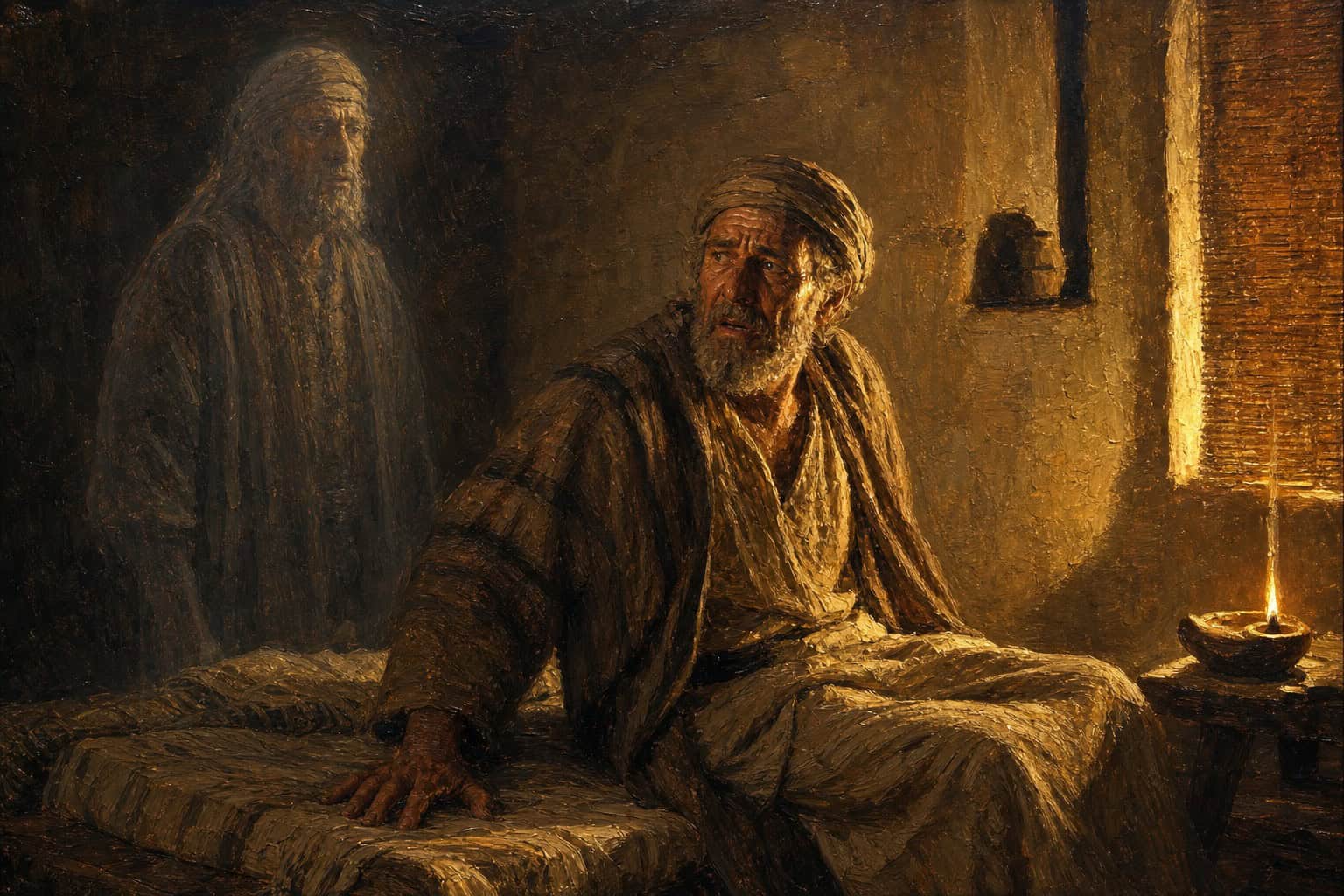
You lose control of your body’s movements in intimacy while your heart stays cold and far. Here’s why the split protects and starves you at once.
When Your Hands Know a Song You Never Agreed To Sing
You have felt your body move without your permission. Someone leans in, the light drops low, a song fills the corners of a small room, and your hands already know the steps before any part of you decided to dance. There is a strange calm in it, almost restful. You go slack and let the current carry you, and somewhere up near the ceiling a cool, dry version of you watches the whole thing like a stranger at a train station, arms crossed, taking notes. Your skin does the labor. Your fingers find their places. Your mouth produces the easy line, the small shrug, the flat okay that costs you nothing because you have spent it a hundred times before. Meanwhile the real you, the one who trembles, who could actually be hurt, stays back behind your own eyes and will not come to the front of the house. You have called this control for years. You told yourself it was strength, that you could hand over the flesh and keep everything else locked away in another room where no key fits. And it works, after a fashion. Nobody gets in. You perform closeness without ever risking being close. But watch what happens when the wanting rises in a place that ought to be tender, when there is real warmth in the air and not just heat—watch how something in you throws a switch and a whole wing of the house goes dark and quiet. You have trained yourself to read that darkness as safety. It is worth asking, plainly and without flinching, what you actually trained. You taught your hands to travel while your soul stayed home with the shades drawn. You made your own body a hired man who acts on your behalf and files a report afterward, so you can read about your own life instead of living it. There is grief buried under that arrangement, though you rarely feel it in the moment. The grief is that you wanted to be present. You wanted to be all the way in your own skin while another person was all the way in theirs. And you could not find the door back inside yourself. You stood outside your own body knocking, and no one answered, because you were the one who had gone. This is where honesty has to begin—not with shame heaped on the pile, but with the plain picture of yourself as two people crammed into one frame. One of you moves. One of you watches. Neither of you is free. Both of you are tired in a way sleep does not touch. And the ache you keep swallowing is the ache of a man locked out of his own home on a cold night, staring up at his own lit window.
A Blade Kept Sharp Long After the War Was Over
This splitting was a gift once. It saved you. Somewhere far back, something happened that you could not survive whole, so you learned the trick of leaving your body while it endured what it had to endure. Or perhaps no single blow but a slow lesson: that to be good, to be spiritual, to be acceptable, meant to be still and yielding and quiet, and that your own hunger was a shameful animal to be shut out in the yard. Either way, you got good at it. You got frighteningly good. You can be touched and remain unreached. You can act out desire while nothing at all stirs underneath. You can lie beside a warm person and be a thousand miles inland, dry-eyed, already thinking about the errands of tomorrow. Here is the cruelty hidden in the whole arrangement: the trick you sharpened to protect a frightened child keeps cutting long after that child has grown and the danger has passed. The blade does not know the war ended. It goes on cutting because cutting is all it knows. You wanted to keep pain out, so you raised walls that were high and clever and hard to fault, and now those same walls hold back the very thing you are starving for—to be known, to be met, to let another face rest its gaze on you and not turn away in disgust. You mistake the numbness for calm. You mistake the cold distance for wisdom. You even dress it in generous words and tell yourself you are sparing others from your darkness, keeping the worst of you from staining someone clean. Sit with that claim a while. Is it truly their protection you guard, or your own? The fear of smearing your shadow onto someone bright can be real and even tender. It can also be a graceful excuse never to let anyone stand close enough to see the whole of you in daylight. You cannot hold both at once. A heart no one can reach is also a heart that reaches no one. The hand you extend through a pane of glass warms nothing and holds nothing; it only fogs the glass. And the loneliness this manufactures is not the clean, spacious loneliness of a quiet room chosen. It is the packed and airless loneliness of being in the room, in the act, inside another’s arms, and still completely unaccompanied—because the one person who never showed up for the meeting, who sent a stand-in in his place, was you. You built a fortress and staffed it with your own absence. And you are beginning to suspect that the drawbridge rusted shut years ago, and you no longer remember how the winch worked, or whether you ever wanted it to.
The Silence After the Song Stops
Grace does not come here as rescue. It rarely does. It comes as noticing. There is a particular minute—often afterward, in the dim, when the music has run out and someone breathes slow and unaware beside you—when the split fails for a single beat and the whole cost of it lands on your chest at once. You realize you were not there. Your body was, your hands were, your voice was, but you had exiled yourself from your own life and done it so smoothly that you nearly walked past your own absence without seeing it. That noticing is not nothing. It is the first true feeling in a long dry season, and it stings precisely because it is real and unrehearsed. This is where the sacred so often finds you—not in the clean, well-lit place where you assumed holiness kept its address, but down in the rubble of your own evading, sitting on the floor with you in the exact spot where you failed to be present. You had imagined that God, if He bothered to come at all, would come as a wall thrown up between you and your worst self, a firm hand catching your wrist. Instead He is quieter and nearer than any wall. He is in the tear you did not schedule. He is in the sudden, unbearable clarity that you have been giving away the one thing you most wanted to keep and clutching the one thing you most needed to give.
The skill you sharpened to keep the pain out is the same blade that keeps the grace from getting in.
He does not stand over you with a raised voice in that minute. He simply lets you see. And what you see is that the fortress you laid brick by careful brick was never a castle at all. It was a tomb. You climbed inside for safety and dragged the last stone across the mouth of it, and the walls that once kept the hurt outside now keep out the air, the light, and every hand that might have reached in to find you. The horror of this is not loud. It does not announce itself. It is a slow, sober recognition, the kind that only arrives when you finally stop moving and hold still long enough to feel your own pulse. You wanted to be untouchable. You succeeded completely. And now you are learning what a terrible mercy it is to receive exactly what you begged for.
The skill you sharpened to keep the pain out is the same blade that keeps the grace from getting in.
The Difference Between a Spoken Yes and a Living One
Once you have seen your own absence, you cannot unsee it, and the seeing does not stay tidy—it spreads outward. You begin to think of the others. The ones who were there while you were somewhere else entirely, up near the ceiling, taking your notes. You told yourself they wanted it. You told yourself they were grown, that they knew their own minds, and maybe they even said as much, out loud, in a bright and easy voice that let you off cheaply. But you were so occupied with managing your own distance that you never once asked whether the yes on their lips matched the truth carried in their body. There is a consent that is spoken and a consent that is lived, and the two do not always agree, and you knew that, and you let the spoken one carry you clean past the quiet hesitation you could feel and chose not to feel. This is the harder accounting, and it does not balance easily. It is one thing to grieve your own numbness, to mourn the man who went missing from his own bed. It is another to admit that your numbness had a price and that someone else paid part of it—that by bypassing your own heart you had also trained yourself to walk right past theirs without slowing down. The tenderness you owe yourself here is not the soft kind that quietly excuses you and hands you your coat. It is the harder tenderness that can hold the whole truth of what you did without either drowning in it or bolting from the room. You look at the man who did these things and you do not spit on him, because contempt is only one more wall, thrown up in a hurry. But you do not wave him through either. You hold him the way you would hold a scared boy who learned too young that his own feelings were a danger and decided the safest course was to feel nothing at all—and who then grew into a man who broke things precisely because he could no longer feel them breaking under his hands. Both are true at once. The wound that shaped you and the harm you caused live in the same body, share the same ribs, and you have to make room for both without letting either one blot out the other. This is the slow, unglamorous labor. Not the confession that dazzles a listener, but the one that stays put, that keeps naming what was real, that refuses the old, warm comfort of the shrug and the flat okay. You are trying, late, to learn the thing you skipped young—how to stay inside your own skin while another person stays inside theirs, so that a meeting can finally be a meeting and not a solo performance for a room you swept empty on purpose.
Learning to Stay Until the Warm Water Reaches You
You will not force this open. The muscle that learned to leave does not surrender to command; it loosens only when it slowly begins to trust that staying will not kill you. So it returns in small, unremarkable ways. You are rinsing a cup at the sink and you notice the warm water running over your hands, and for once you are actually present for it, all the way down to your fingertips. You sit across from someone and instead of drifting up to the corner of the room you let yourself feel the plain animal fear of being looked at, really looked at, and you do not bolt for the door. A tear rises and you let it come and you do not immediately talk it into nothing. Each of these is one step back through the entrance you were sure you had sealed for good. It is slow because the trust it asks was broken so long ago that it cannot be rebuilt by simply wanting it hard enough. And here is the mercy that keeps catching you off guard: you do not have to make this walk with your body as a stranger and your soul out in the yard. There is a presence willing to keep company with you in the very place you were certain was too dark to bring anyone—not to haul you out by the collar, not to hand you a clean and finished ending, but to sit in the numbness with you while it thaws by degrees, to stay in the shame while it softens into something more like honesty, to wait in the crowded loneliness while it turns, at long last, into a solitude roomy enough to hold another person. The self you were taught to despise—the hungry one, the frightened one, the one you hid in the far room—is exactly the one being called back to the table. You stop trying to hand over the flesh while bolting the heart in the cellar. You begin, clumsily, missing steps, to let the two of them live under one roof again, and you discover the house was built for that all along. Anthony Adoré writes straight into this ache in Confessions to the Empty Chair without flinching and without quietly letting himself off the hook. If you have ever stood at the ceiling watching your own hands move while your true self crouched in a locked back room, these pages will feel less like reading and more like being found where you hid. Not fixed. Not scolded. Found—which, it turns out, is the very thing you barred the door against and the very thing you were starving to receive.