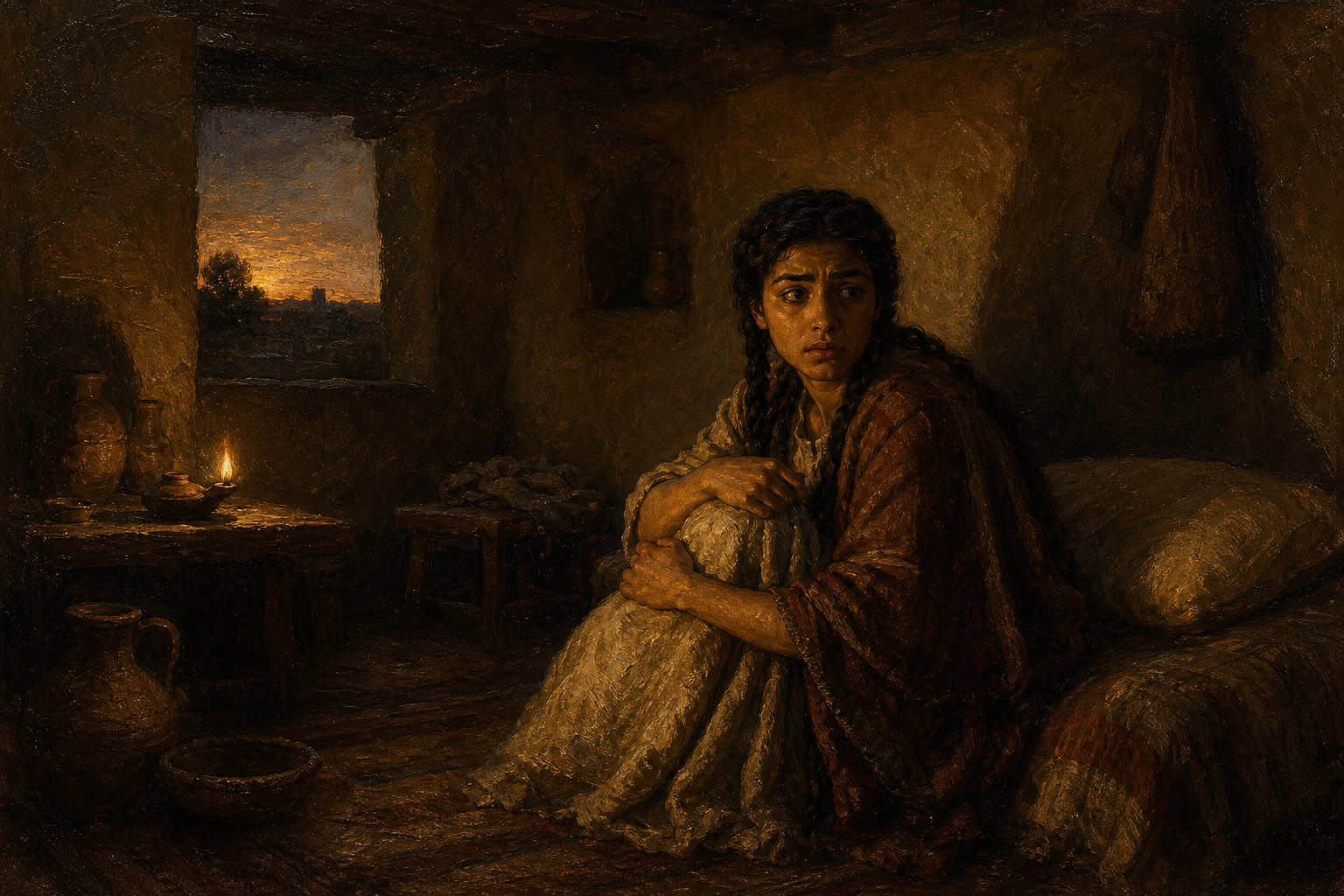
Why does horror rip a scream out of you in a moving car, at nothing anyone can see? A raw look at the thinned veil and the body’s honest terror.
The Report the Throat Files Before the Mind Arrives
You know the sound. It rips loose in a moving car, in a bright kitchen, in a bed at the ordinary hour before sleep, and it has nothing to do with a knife or a fall. It comes from somewhere lower than thought. A scream is not an argument. It is the raw noise a creature makes when something crosses a border the tongue has no map for, when the flesh is handed what the mind cannot hold. In the opening pages of Confessions to the Empty Chair, Anthony Doré sets a small boy in bed on a fall evening. He is three years old. The light is going out. A thing crosses into his room, twelve inches tall, vaporous, thin and lanky, almost laughable in its size. That smallness is the horror. The body does not scream at scale. The body screams at wrongness, at a shape that should not be there, at a seam in the air thinned by another person’s secret hands. Long before that night, a sixteen-year-old babysitter performed something on him in a duplex he could not name and did not choose. She worked in collaboration with something older than herself. The ritual was secret, repeated, and it left the wall between the seen and the unseen too soft to hold its shape. The wall between worlds is not always a wall. Sometimes it is a membrane, and something on the other side leans in. The scream is the honest report of a body that has felt the membrane give. The mind, slower and prouder, wants to file the sound under stress or a bad dream. But the throat knew first. Our worst terrors and our holiest longings both travel through the same nerves, the same shallow breath, the same wet catch behind the ribs. A soul does not tremble in the abstract. It trembles in the hands and the gut. That is why the scream is embodied. It is not decoration on a feeling. It is the only instrument the body has, and in one second it plays the whole terror at once. The sound is not shameful. It is the truest thing present.
Orders He Could Not Read Kept Arriving at the New House
The tension gathers because the thing does not stay quiet. Doré keeps returning to a word: appointment. A summons. Something stamped onto a child who had not yet learned to spell his own name. He describes the mark as enlistment papers pressed into a fist too small to hold a pen. Picture it. A three-year-old handed orders for a war he cannot read, in a language he does not know, signed by a hand that was never his. The family even moved away from the duplex, far from the babysitter’s reach, and still the shadow found the new house months later, near his birthday, and came to him at night. That is the cruel logic. Distance does not cancel it. You can move houses. You can grow years older. The orders keep arriving at the new address, forwarded by a hand you cannot see. What makes it hard to bear is the opposite of grandeur. Not a towering shape of fire and glory, but a small, ridiculous, humiliating figure. The worst of these terrors are not only frightening; they are absurd. They make you sound unwell if you try to say them out loud. Darkness does not merely frighten a child. It mocks him. It leans close, blows a rude, wet noise at his fear, then dares him to repeat that to a grown-up over breakfast. The humiliation is the strategy. If the terror can be made to sound ridiculous, it can be made unspeakable, and the unspeakable is where it feeds and grows fat. So the scream stays trapped behind the teeth. You cannot cry out a thing that will get you laughed at. You swallow it, and it curdles into shame that feels like your own fault. Doré, looking back as a grown man, keeps turning the lens on himself. Was it real, or only a frightened toddler stitching shadows out of the ordinary dark? He does not tie the knot. He lets the question hang, because he knows the demand to prove it is itself part of the mockery, another rude noise blown at real suffering. The scene has the felt tone of being thrown into weather already turned. Finding yourself inside a fear you did not build, holding papers you cannot decode, in a bedroom that has quietly changed its temperature. The air is wrong. The child knows it in his skin, and he cannot say why.
The Ink Pressed Down Into the Skin
The turn comes when you stop asking whether the terror was real and start asking what it made of him. The ritual did not only frighten a boy. It conscripted him. Doré writes of it as a branding, a specific torment handed down: obsession, intrusive thoughts and images pressing on his waking hours and his sleeping ones alike. The orders were not left on a table to ignore. The ink was pressed down into the skin, sealed there, made part of the body he had to keep living in. And here the strangeness deepens, because the mark that terrorized him was also the mark that let him feel everything keener and closer than other people. He confesses that the wound became the very lens through which he learned to read joy and beauty and vision. That is the terrible ambiguity of a hurt that also opens the eyes. There is no thickening the veil selectively, no sealing it against the dark while leaving a slot for grace. If you wall it against the intruder, you wall it against the vision and the wild nearness both. The temptation, when a hurt is this old and this strange, is to despise the child who received it, to insist he should have resisted, to read the mark as a stain he somehow invited. And here the passage forces you to hold something with both hands: he was three years old. He collaborated in nothing. The word Doré reserves for the babysitter is that she collaborated. She made a pact. She partnered with a thing against him. The child was the ground the war was fought on, not a soldier who reported for duty. To scream in a car is sometimes the delayed protest of the small self who was never once permitted to protest at the time. The man’s severity toward himself, which runs under this book like a low steady current, has to soften right here or it becomes one more cruelty stacked on the first. He asks the hard thing anyway: did some part of him keep the mark because it made him feel chosen, set apart, pressing the bruise to feel it answer? He does not flinch, and he does not answer cheaply. A curse can conceal a commission. A summons can be disguised as a hurt pressed into the flesh.
A curse can conceal a commission, and still the child is not the crime done to him.
The Second You Live a Death That Has Not Come
There is a horror worse than seeing a monster in the corner. It is being made to live, in the present tense, a death that belongs to the future. To feel in your body right now the loss of someone still breathing beside you. To have the vital thing torn out of an ordinary moment and replaced with the flat certainty of ending. That is a theft no nerve can absorb. This is why the scream comes in the car and not in the haunted house. The car is safe, mundane, sunlit, the radio low. Into that safety drops the intolerable knowing: this ends, they end, I end, and I am living the ending now instead of later. The mind cannot digest it. So it short-circuits. It collapses. It screams to discharge what it cannot hold, or it goes dark to save itself. The boy had the veil thinned precisely so that terror, beauty, and the burden of vision poured through it out of season, before he was ready, before he had words. To see too early is to be robbed of your own present. Every now leans toward a future it trusts. Take that future away and the now caves in on itself. Notice what this does to desire. The longing for union and the nearness of death are not opposites. They are twins, born of the same hour. We reach hardest for the beloved precisely because the reaching has a deadline stamped on it. The tenderness is sharpened by the ending, the way a candle burns brighter as it shortens. And the horror of the thinned veil is that it delivers the opposite of union: an approach without love, a presence that leans close only to defile, closeness weaponized, nearness turned to insult. The soul built for embrace felt itself touched by the wrong thing, and knew in its skin the touch was wrong. That is why the scream is so lonely. It is grief for the union the intruder counterfeits and withholds. It is the flesh crying out that it was made for a nearness it has not yet found, and that what came near instead was a lie wearing the warm shape of intimacy. The lie fools the eye. It never fools the body.
Someone Sitting Beside You in the Dark You Cannot Explain
After the scream there is the strange flat quiet, the ears ringing, the chest still heaving, the road unrolling ahead as if nothing happened. The pulse slows. Nothing has changed and everything has. This is where discouragement does its patient work, not the sharp strike but the slow leak afterward, the low voice saying the whole thing was nothing, that you overreacted, that you are alone because no one else in the car heard a single sound. The book is unsparing about this order of attack: deception softening what is real, then division prying you from the people who might hold you, then diversion pulling your eye anywhere but the truth, then the crushing discouragement that arrives once the danger has passed and still no one comes. The loneliness after the scream is worse than the scream. And Doré does not spare himself. There is a pride that hides inside suffering. The soul turns inward, makes itself the sole keeper of a horror no one else can enter, and quietly begins to worship its own uniqueness in the mirror of its pain. He names it as the subtlest inversion of all: to make the self a god by making the wound a throne. He asks why he says it at all, why hand strangers a story that makes him sound unwell, a twelve-inch shadow, a babysitter, a ritual over a toddler. Is confessing it hidden pride, a performance, or an old debt finally paid, the older self owing the younger world his darkness rendered into plain speech? He does not let himself off. But he arrives, unsteadily, at this: the most isolating experience, once said aloud with precision, stops being only a private torment and becomes a medicine another person can swallow. Grace does not peel the ink off the skin. The mark stayed. The intrusive thoughts stayed. What arrives instead is stranger and more durable. In these pages God does not remove the dark. He sits down inside it, present in the falling tear, present in the very sin, walking beside the boy in the room where the veil thinned, close enough to hear the child breathing. Not rescue. Accompaniment. To scream and be heard, even by One who does not stop the dark from coming, is the whole difference between a war and an abandonment. Read on, and you will not be told the fear was foolish. You will be shown how one man carried it, named it aloud, and found he was not, after all, sitting in that car alone.