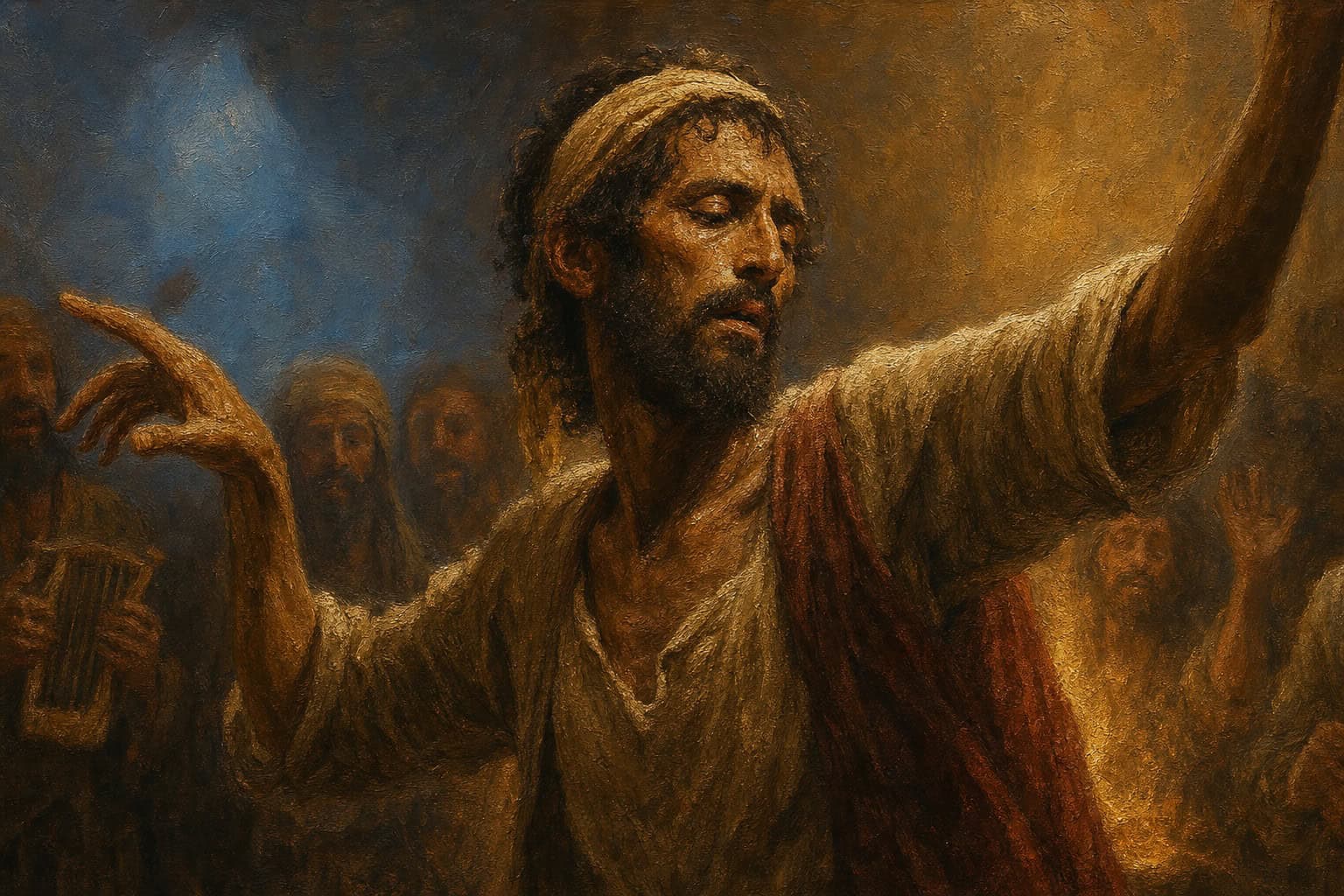
What is it called when you always expect the worst? A memoir’s honest answer, found on a dancefloor where the body outran a mind that never rested.
The Boy Who Danced Because He Could Not Sit Still
You wanted a word, and I will give you the truth before I give you a word. You are asking what it is called when your body tightens before the phone even rings, when good news feels like a trap, when you scan a room for the exit before you have shaken a single hand. There are clinical names for it, and you will collect them later like stamps pressed onto the back of your hand at a door. But I want to meet you where you actually lived it, which was not in a waiting room. It was on a dancefloor at two in the morning, the bass climbing up through the soles of your shoes into your knees and your chest, Adamski telling you to get your body, and you obeyed because your body was the only thing that would still take orders from you. You did not go to that room to be healthy. You went because the beat was faster than your dread, and for a few hours your dread could not catch you. Sweat ran down your spine and gathered at the small of your back, and you were grateful, actually grateful, because sweat meant you had spent something, that some part of the fear had been burned off and dripped out of you onto a slick and crowded floor. You could not sit still because sitting still meant listening to the voice that had already decided how everything would end badly. So you moved. Everyone around you moved, hundreds of strangers breathing the same hot air, and the music did not ask any of you to explain yourselves. That is the first honest thing I can tell you about the name you are hunting: it does not live in the mind first. It lives in the shoulders that will not drop, in the jaw that stays clenched even in sleep, in the animal readiness that never gets to lie down. You called it staying alert. You thought it was wisdom. You thought bracing was the same as being prepared, and being prepared was the same as being safe. And so you kept yourself locked from the inside, even in a room built for surrender, even with your arms in the air and your eyes shut and your whole frame trembling with the low end. You were dancing hard enough to look free. But I watched you, from all these years away, and I saw the truth under the flailing: you were running. The music was a mercy you mistook for a getaway car.
The Portamento Slide of a Night Coming Apart
Watch how the night moved, because the shape of it is the shape of the thing you are asking about. Early on the tracks were sharp and aggressive, all attack, the kind that hit you like a fist you had already flinched from before it landed. That was you at your most guarded, meeting the music the way you met everything, braced for the blow. But as the hours dissolved, the sound bent and softened, and something in your spine began, at last, to give. The Gypsymen track slid toward daylight before the sky did, and you followed it down into a warmer, blurrier place where the edges of things stopped cutting. Portamento is the word for a note that does not step but slides, one pitch bleeding into the next with no clean line between them, and that is exactly how the night lost its outline around you. The recordings you loved most were the ones that refused to stay in one place, that melted, that would not let you keep score of where you were. And here is what I see now that you could not see then, moving in that blue smoke with your feet gone numb: you were not dancing toward pleasure. You were dancing toward forgetting. Each hour stolen from consciousness was another hour you did not have to spend rehearsing disaster. The music was doing for you what you could not do for yourself, which was to stop the endless calculating, the accounting, the scanning of the dark for the shape you feared. You could not simply rest. You did not know how to be at ease in your own life, to let your spirit sink down and settle into where you actually were, in your own skin, on your own night. So you outsourced it to a sound system and a crowd. You paid a man at a door for a few hours of not-bracing. That is the trap of the thing you carry: it convinces you that vigilance is love, that if you worry hard enough you can hold the bad thing off. But the bad thing does not consult your worry. It comes or it does not, and all your dread has bought you is the loss of every hour you spent waiting for it, standing guard over a future that was never yours to control. You thought you were protecting tomorrow. You were only ruining tonight in advance, spoiling the one hour you actually had by grieving an hour that had not arrived. The slide of the music toward morning was mercy dressed up as escape, and you could not yet tell the two apart. You thought you were disappearing into the beat. Something was actually walking beside you in that darkness, patient, unhurried, and you were moving far too fast to feel the hand at your shoulder.
The Word Was Never the Cure You Wanted
So here is the name, and here is why the name will not save you. What it is called, when you always expect the worst, has clinical labels, and they are real, and you should not be ashamed to hear them spoken over you. But underneath the label is something older and more honest, and you have to go down to it or nothing will change. It is a refusal to believe that anything good could arrive unearned. You had decided, somewhere very young, that the world was a place that charged you for everything, that safety had to be bought with vigilance, that if you ever stopped watching the horizon the flood would come and take everyone you loved. You expected the worst because you did not believe you deserved the best, and to hope for good openly felt like inviting a punishment, like leaving the window open in a storm. That is the raw truth of it, and I will not soften it for you. The dread was not a malfunction in the wiring. It was a theology. You had built a small, harsh god who kept accounts in a ledger, who waited for you to relax so He could strike, and you served that god faithfully every waking hour of every day, on the dancefloor and off it. But that god was never the real one. He was a rumor you believed because someone taught you to.
The mind that braces for every blow forgets that mercy does not wait to be deserved before it arrives.
That is the sentence I would carry back to you across all these years if I could press it into your hand while you stood dripping under those lights. You were sweating out your survival, naming every track, keeping perfect records of imperfect nights, and the whole time you believed you were alone in the dark with your dread and your list. You were not alone. The thing you called forgetting was closer to being carried. Grace does not check whether you expected it. It does not audit your vigilance or reward your worry. It comes before you are ready, before you are worthy, into the exact middle of the mess and the smoke, and it does not ask you to stop being afraid first as a condition. You spent years believing you had to earn your rest, and the entire scandal of the rest was that it could never be earned, only received. That is what broke open in you, eventually, and it did not break open by getting the diagnosis right, though you got it. It broke open when you finally understood that the worst you kept bracing for had already been walked through by Someone else, ahead of you, and He had not done it because you deserved it.
The mind that braces for every blow forgets that mercy does not wait to be deserved before it arrives.
What the Sweat and the Records Were Really Confessing
In the morning you would go home with your ears ringing and your legs aching, and you would write it all down, and I want you to see what you were actually doing when you did that. You kept lists. You noted the mix, the pressing, the label, the year the record first came out, as if the exact edition mattered to God, as if He needed the catalogue number. You became an archivist of your own dissolution, cataloguing with scholarly care the very sounds that had helped you disappear the night before. I used to be embarrassed by that precision, by how tenderly you filed the evidence of your unraveling. Now I understand it, and I ache for you. A man who expects the worst is a man who cannot trust his own memory, so he documents everything, he keeps receipts, he builds an evidence file against a prosecutor who lives inside his own skull and never rests. Your lists were a defense. They were you saying, look, I was there, I survived it, here is the proof, dated and ordered and true. But the terrible tenderness of it is that you were preserving the instruments of your own escape as carefully as a man preserves relics of a saint. You could name every song that played while you were coming apart. You did not know that this itself was a kind of prayer, a way of insisting that even the falling apart had been real, had mattered, had happened to a real person who was loved by more than himself. The body had stepped forward because every other kind of speech had failed you, because you had no words left that the fear had not already spent. The soreness in your thighs the next day, the ache behind your eyes, the exhaustion that finally, finally let you sleep without bracing for once, these were not medical curiosities to be managed. They were the exact contour of a soul that could not find another way to be held, so it asked the music and the sweat and the crowd to hold it instead. You went underground to be untraceable, to slip the accounting for one night. But nothing about you was ever untraceable to the One who kept better records than you did, who did not date them or file them by year, who simply stayed. The dread did not leave you that night, or many nights after. That is the honest part, and I owe you the honest part. It walked home with you through the grey streets. But so did something quieter, and it did not require you to stop expecting the worst before it would keep you company. It just kept you company. In the sweat, in the ringing, in the trembling list-making hand at dawn, it stayed, and you never once noticed, because you were still watching the door for the bad thing to come through it.
A Word for the Worst, and a Presence Beneath It
So take the name, whatever clinical word finally fits your dread, and hold it loosely in an open hand. It is useful the way a map is useful. It is not the country. The country is the life you actually have to live, one fragile day at a time, with a body that will not last, that is already spending itself on these dancefloors, with people who came into your nights and went out of them, with a dread that may never fully leave you while you breathe. I will not lie to you and tell you it lifts like morning fog and never comes back. That would be a cheaper comfort than you deserve, and you have been handed enough cheap comforts. What I can tell you is that the story you built underneath the dread was false at its root. You are not being charged for your existence. You do not have to keep the accounts, because the accounts were never yours to keep. The small harsh god who waited to punish your rest was the shape of a wound, not the face of the real One, and the real One was in that dark and crowded room with you the whole time, walking in your very running-away, present in every drop of sweat, near in the exact minute you felt most lost and most alone and most beyond reach. That is the thing this confession keeps circling and cannot let go of, the thing beneath every dated track in Confessions to the Empty Chair. Not a rescue lifting you out of the darkness. A companionship down inside it. The light that some people speak of when they come close to the very end and return is real and it is rare, and it breaks in when it wills and not when we summon it, but far more often the mercy is quieter than any light, and it looks like an ordinary morning after a terrible night, and it looks like still being here, still breathing, still able to write the list. You expected the worst because no one had ever shown you that the best comes free. Now you have been shown. It does not make the dread wise. It makes the dread a liar you have finally learned to recognize by its voice, even on the nights you still believe every word it says. That is where this settles, and it is where the rest of the pages go, further down into the very nights you were sure would kill you and did not. You are still afraid. You are also still held. Both are true at once, and you will have to learn to carry them together. Sit down in the room. Let your shoulders come down from your ears. The flood you have braced against your whole life has already broken over Someone else, and He came out the far side of it, and He is reaching back across all these years toward the boy who could not stop dancing long enough to be found.