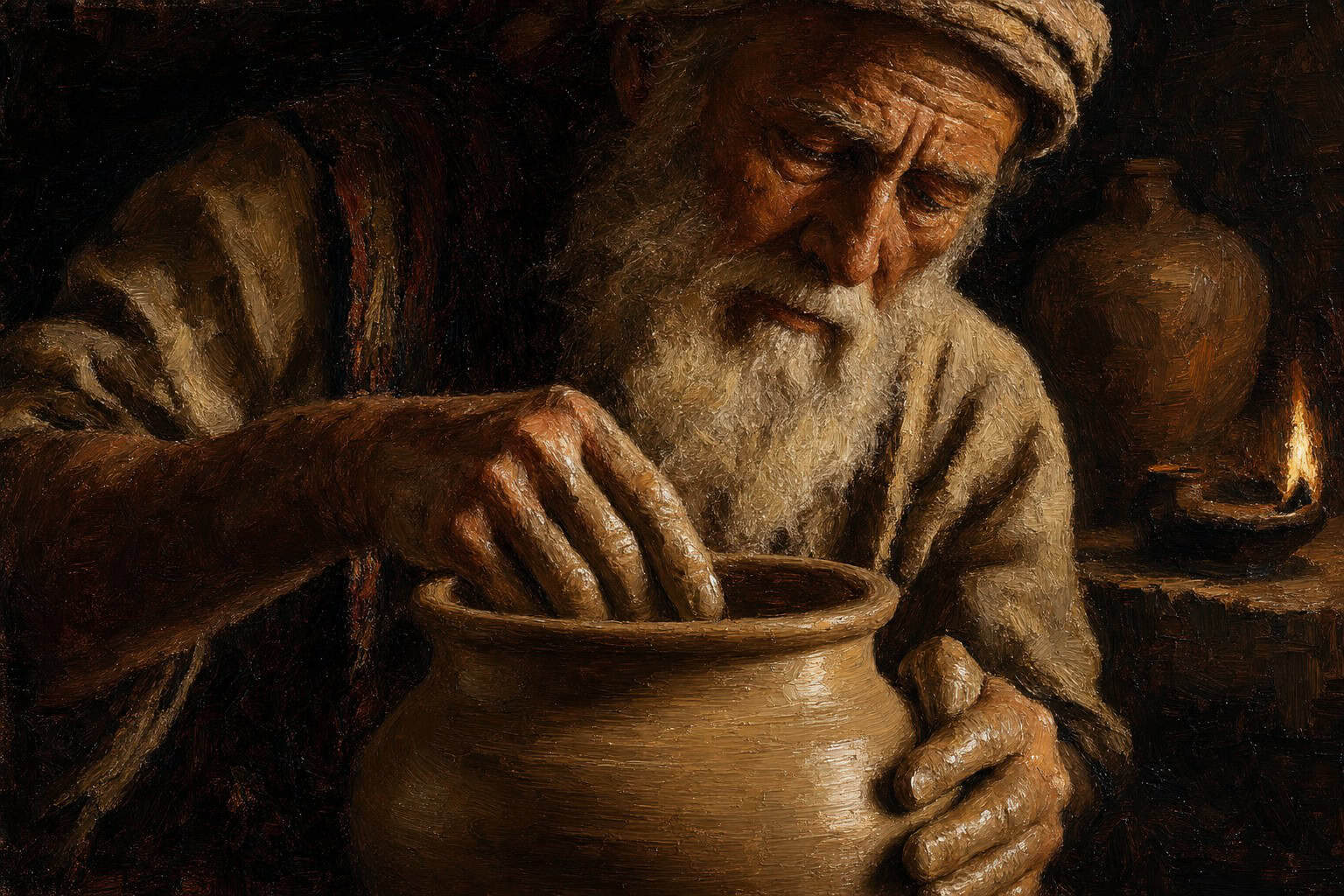
You think walking with God is all comfort and warmth. It is that and far more. Here is what really happens when you lock in.
The Warm Chair You Do Not Want to Rise From
When you lock in — when you finally give yourself over to God and mean it with your whole chest — what happens next? That is the ache sitting under this whole passage. Most of us begin the way any beginner begins, and there is nothing to be ashamed of in that beginning. The warmth arrives first. You feel held. A nearness settles into the ribs and slows the breath, and you mistake that slowing for the entire thing. Prayer feels like sitting close to someone who is glad you came. You talk about the day’s small aches, the worry that woke you at three in the morning, the tenderness you cannot say to anyone else, and something answers back gently. This is real. It is not a trick, not a beginner’s illusion to be embarrassed about later. The narrator of Fractions of the Soul does not sneer at the sweetness; he knows it in his own body, and he says plainly that walking with God is this — the warmth, the ease, the plain talk about heart and spirit. But then he lays down the harder words: and so much more. That short phrase works like a blade slipped between ribs. It tells you the warm chair is only the entryway. There is a whole house behind it, and the house is larger and colder in rooms you have not walked into yet. The body senses this before the mind will admit it. There comes a night when the sweetness thins, when the felt comfort pulls back a little, and you lie there wondering what you did wrong. You did nothing wrong. You simply grew past the entryway. The bond you locked into is not a warmth to be kept at one temperature forever, like a hand kept in a bowl of bathwater. It moves. It presses. It wants more of you than the parts you offered while you were still testing whether you could trust it. This is the tension he sets in front of us early, and it is a frightening one. The same nearness that comforted you is the nearness that will begin to cut. You do not get one without the other. The hand that steadied your chest is the hand that will hold the blade. To stay only in the warm chair is to refuse the very love you claimed to want. So the reflection does not begin in doubt about whether God is kind. It begins in the harder discovery of what His kindness actually holds inside it — once you stop lingering in the doorway and let yourself be led into the rooms behind.
The Blade Grows Sharper as the Clay Grows Willing
Watch what tightens as the relationship deepens instead of loosening. The lessons grow harder, not softer. He prunes more. He expects more. This is the turn that startles the person who locked in expecting an ever-gentler ride, a slow slide into permanent calm. The narrator names it without flinching: as the bond matures, the intensity rises. But he pairs it with a mercy easy to miss on a first reading — the student who receives more pruning has, by then, become capable of more. You are not handed a heavier load while remaining the same small self who could barely lift the light one. You are strengthened first, then asked. The order matters more than almost anything else here. And there is a strange, adult desire buried in it, worth sitting still with. The servant begins to want to give more. Not out of duty alone. Not out of fear alone. The narrator is honest in a way most of us avoid — he says he serves out of both fear and love at once, and that he knows his place. He calls himself the clay and God the sculptor. There is real longing in that image, the longing of something unfinished to be finished, even when the finishing hurts. Think of a body that has trained through a hard season and starts to want the strain it once dreaded — the ache turns into a sign of aliveness rather than a warning of harm. Something like that happens to the soul that has locked in. The pruning stops feeling like punishment and starts feeling like attention. It is the difference between being ignored and being worked on by hands that will not quit until you are made. Underneath it runs a promise he leans his whole weight on: no burden beyond what a person can carry, and with every trial a way through it. Notice what that promise does and does not do. It does not lift the weight off your shoulders. It gives you the strength to carry it and a way out of the crushing. The comfort and the demand arrive together, from the same source, in the same breath — He disciplines and He comforts, He demands and He forgives. And here the longing is not only of the soul. The body itself presses toward a union it cannot yet reach, reaching across time for a wholeness it only tastes in fragments now. That reaching is not weakness to be renamed and disinfected. It is the pulse He is answering. This is the gathering pressure the whole passage builds toward — that the relationship you wanted for its warmth turns out to be a spiritual struggle, mostly waged against yourself, against the part of you that wants to stay small in the chair and call the staying faith.
When the Unchanged Life Becomes the Life You Chose
Here is the turn, and it lands quieter than a thunderclap, but it rearranges everything. There comes a point where you can no longer set the blame for your life on anyone else’s shoulders. The wound was real. What was done to you was done, and no honest voice would ask you to pretend otherwise. But somewhere along the road the wound stops being only the thing that happened and becomes the narrow slot you keep choosing to peer through. You return to the same cramped view, and it keeps confirming how small you are, and you keep mistaking that pinched picture for the whole of what is real. The narrator’s own confession cuts precisely at this seam. Had he not written these words, had he refused to let the rocks and blades grind against him out of fear of being hurt again, he would have wasted what was entrusted to him. That is the accountability, and it is severe. The gifts demand a response. You cannot keep receiving and never once risk. The deeper reveal is about desire itself, and it is worth speaking carefully so no one feels reduced by it. The need to be held is already in you, moving like a pulse under everything, whether you admit it or not — and this is as true of the man writing as of anyone reading him. The temptation, so modern and so tidy, is to stand over that need with a scalpel and rename it into something more respectable — purpose, discipline, self-protection — as if the right word could scrub away the plain human fact that you want to be held, and want to be whole, and want to become someone you are not yet. Men do this one way, women often another, but the hiding is shared. Renaming the need is not strength. It is a quieter cowardice. Locking in means setting the scalpel down and letting the need be seen without a costume on it. It means facing the fact that what stays unchanged in your life is not fate and not someone else’s failure — it is what you are actively choosing, hour by hour, to keep alive. This is the sharpest and most uncomfortable moment in the whole reflection, because it lifts the blame off the past and lays it in your two open hands, today. The clay has a will. The clay can climb back into the warm chair whenever it likes and pull away from the sculptor’s grip. So the real question of locking in was never whether God will be intense with you. He will. The question is whether you will keep choosing the constricted view that keeps you comfortable and small, or walk into the larger rooms where you will be cut, and grieved, and slowly made new.
The hand that steadied you is the same hand now reaching for the blade — and locking in means letting it cut.
What Stands After the Cutting Is Done
After a turn like that, something falls away, and it is worth naming exactly what. What falls away is the fantasy that faith should feel good every hour, that a true relationship with God is a permanent embrace with no correction folded into it. The narrator does not swap that fantasy for a cold severity, and this restraint matters enormously. He does not lurch to the opposite error and make God a hard taskmaster who only demands and never holds. Read him again and both hands are still there in the text. He is patient and He is firm. He leads, and then He shows the student how to follow. This is not a God who prunes and then turns His back to let you bleed on the workshop floor. This is a God present inside the cutting, near in the tears, walking beside the very sin you have not yet been carried out of. That nearness is the one thing that does not fall away. The comfort of the beginning is not deleted when the intensity arrives — it is deepened, folded into something more demanding and also more true. What the fallout leaves standing is a strange, grown intimacy. You stop needing God to be simple. You stop needing Him to be only one thing — only gentle, only warm, only agreeable. You begin to want the whole of Him, the firmness together with the tenderness, because you have learned in your own body that the firmness is itself a form of tenderness. Think of how love between two people ripens over long years. The early season is all sweetness, because you do not yet know each other’s hard edges. Then you do. Then the love either shatters or it becomes sturdier — a love able to bear correction, able to say the hard thing at the right hour, able to stay through the pruning seasons without fleeing. The narrator’s bond with God has crossed into that sturdier country. He knows his place, yes, but knowing his place is not humiliation here. It is relief. It is the peace of no longer having to be the sculptor of his own soul, wearing himself out trying to finish what he was never able to finish alone. What settles in the wake of the turn is not comfort exactly. It is trust — a trust that has been through the fire and stopped flinching at the heat. A willingness to be worked on that no longer reads every hard lesson as proof of being left. The tears are still tears. The pruning still hurts the flesh it touches. But the loneliness inside the hurt has lifted, because the One holding the blade never once let go of the other hand.
Further Up and Further In, Past the Reach of the Flesh
So where does this leave the person who typed the question and truly meant it — the one asking what happens when you lock in? It leaves you facing a whole lifetime, and then something reaching past the lifetime. The narrator refuses to let the education stop at the grave. He asks it plainly: do you really believe death completes your learning, that you cross over already knowing all there is to know? He does not believe it. He imagines the lessons carrying on, only without the limits of the flesh pressing down on them. There is enormous longing packed into that thought, and it belongs to the body as much as to the soul. The body is the very place where you have felt every consolation and every pruning — the steadied chest, the withdrawn warmth, the ache of being worked on by hands that will not quit. And the body is also the place that reaches toward a union it cannot yet grasp, straining across time for a wholeness it only tastes here in scattered pieces. This is time made honest. The past that wounded you persists; it does not simply dissolve because you have grown. The future He is shaping you toward presses in, pulling at you like a current you cannot see. And the present is the narrow passage between them, the thin now where the pruning actually happens and the choice is actually made. You cannot live inside the past’s wound forever and call it your name. You cannot leap ahead to the finished self and skip the cutting that finishes it. You can only stand in the present and let yourself be shaped, or refuse and climb back into the chair. Here I will not tie a neat bow, because the narrator does not tie one either. The despair in his story is raw and it is not cheaply resolved. God does not always lift the darkness; far more often He is found walking around inside it, unhurried, close. The rescue is rare. The nearness is constant. That is the paradox at the very center of locking in — you sign up not for an escape from difficulty but for a companion inside it, and the companionship turns out to be worth more than any escape could have been. If you want to know what it costs and what it gives back, both lie open in Fractions of the Soul, in a voice that has sat in the warm chair and been led past it, that has felt the blade and held tight to the hand that held it. The desire that first drew you — to be held, to be whole, to become more than you are — is not a flaw to be renamed and hidden. It is the pulse He is answering, one lesson at a time, without end.