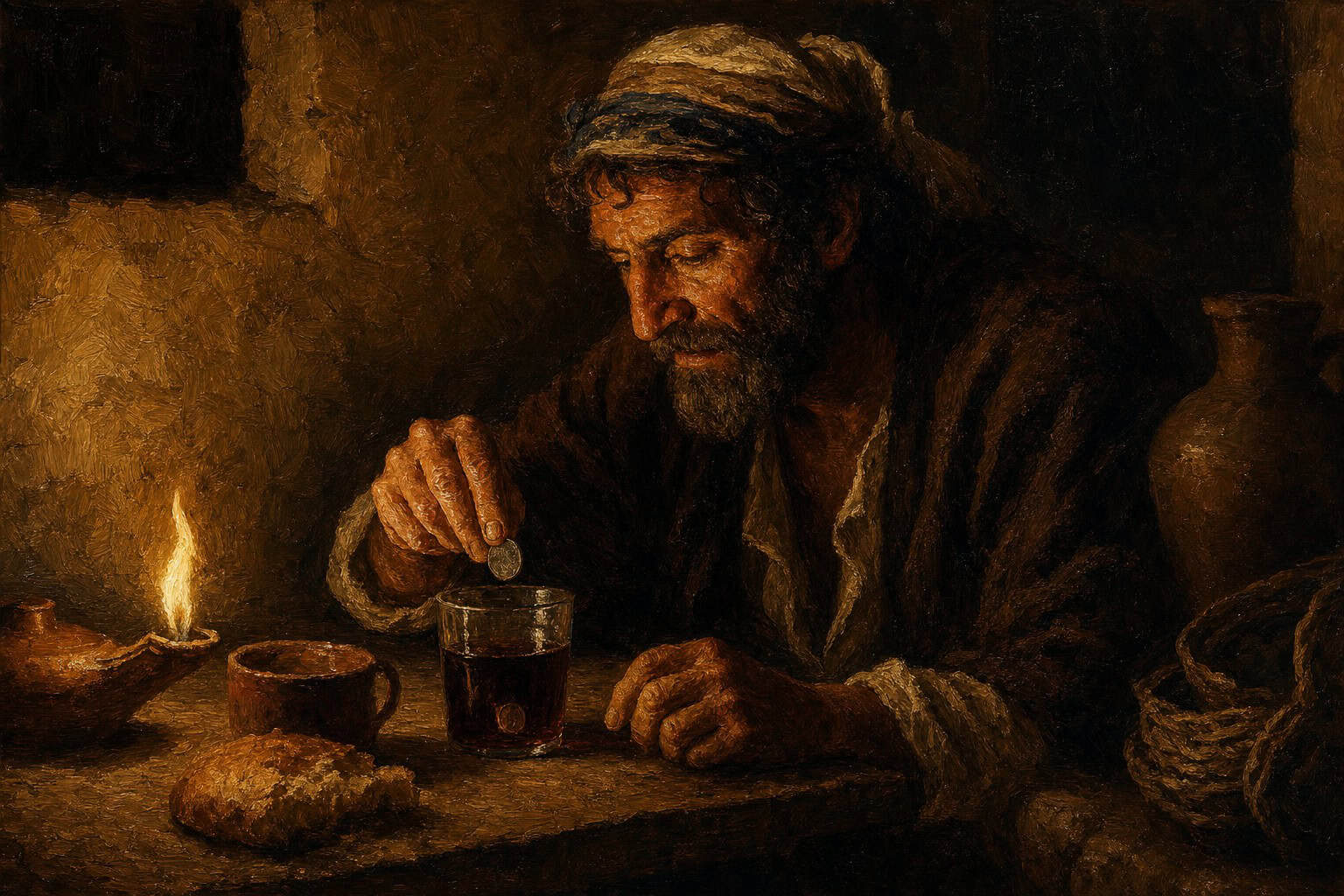
Being silent when someone hurts you—what that quiet costs, what it hides, and why the mouth you keep shut is never as empty as it looks.
The Word That Stops Behind Your Teeth
You feel the hit before you understand it. Someone says the thing, or does the thing, and there is a small cold drop somewhere under your ribs, like a coin sinking through water toward a bottom you cannot see. Your face does not move. That is the first surprise—how still the face can hold while the inside pitches and rolls. The word is right there, the one that would name what just happened, and it stops behind your teeth as if a hand were pressed flat against your mouth from the inside. You swallow instead. You feel it go down hard and dry, the way a pill goes down without water, catching halfway and sitting there. You are silent because you have learned that silence costs less, or seems to at the moment of the blow. To speak is to make a scene, to become the difficult one, to hand the other person a fresh grievance they can hold against you later. So you hold it yourself. You carry the hurt inward and set it down in some dark corner where no one has to look at it, least of all you. There is even a small pride in this. You tell yourself you are the strong one, the patient one, the one who can take what others cannot. But your body keeps a different account than your pride does. Your jaw tightens through the rest of dinner. Your shoulders climb slowly toward your ears without your permission. You answer questions in a voice that is a half-step too even, too controlled, and the person across from you does not notice, because you have made sure they cannot. That night you lie down and the unspoken thing lies down beside you, wide awake, replaying the moment with the volume turned up. You did not let it go. You buried it, which is not remotely the same. There is an old warning about a servant who took what he was given and dug a hole and hid it in the ground, afraid, and thought he had kept it safe—and the one who gave it came back and asked for it, and the burial turned out to be the failure, not the safekeeping. Your silence is like that ground. It looks like careful storage. It is really just a grave with the lamp left on. You did what felt merciful, or wise, or safe. And you knew even as you did it that something was being asked of you that you refused to pay out. This is where the ache begins—in the narrow gap between the word you owed and the quiet you handed over instead. You wanted to be spared the mess of confrontation. You wanted, more honestly than you could admit, to be seen and spared at once: hurt visibly enough that they would somehow notice, silent enough that you would never have to say it aloud.
The Ledger You Keep in the Dark
The silence never stays a single silence. It multiplies. One swallowed hurt is a stone in the gut; a hundred of them is a wall, and you built it yourself, brick by unspoken brick, and now you live behind it and call the airless space peace. This is the strange bookkeeping of the quiet person, and you have kept the books a long time. You believe you are giving. You are giving patience, giving room, giving the other person the benefit of the doubt you would never extend to yourself. But underneath the giving there is a ledger, and you are writing in it in a small tight hand. You mark the slights with dates. You remember who said what and never came back to apologize. You keep the accounts precisely because you never say them out loud; the mouth stays shut and the memory grows teeth in the dark. And here is the part that shames you when you finally hold it up to the light: the silence was never only mercy. It was also a kind of power. To withhold your reaction is to keep something back from the other person, to deny them the honest picture of what they did to you. You let them go on believing the water was calm while you were quietly going under a few feet away, watching them not see it. You wanted them to figure it out on their own. You wanted to be read without having to speak—known through the wall, chosen by someone who would somehow sense, through all that brick, exactly where you were bleeding. That longing runs so deep it can feel holy. It is also a snare. No one can read a sealed book. The people in your life kept offering you their surfaces—their easy talk, their needs, their warm nearness that asked nothing of your depths—and you kept offering them your depth in return, silently, in a currency they never agreed to trade in. So the loneliness gathers around you like cold air pooling in a low room. You are surrounded and unmet. You are generous and unseen. And the cruelest turn is that you cannot fully blame them for it, because you never once told them the exchange was happening. The gift you kept handing over was one nobody asked for; the answer you were starving for was one you never spoke aloud. You wanted the miracle of being fully known without the risk of being fully said. Every quiet person carries this hunger. It sits down at the table with you. It follows you into the rooms where you are supposedly at rest, and it grinds there, low and steady, an ache that never quite manages to become a sentence—only pressure, only the taste of iron at the back of the throat where the word died.
When the Buried Thing Is Called Up for Interest
There comes a moment when the ground opens and what you left in it is called up for an accounting. Not always with any drama. Sometimes it is an ordinary Tuesday and someone says one small thing too many and the wall you built over years cracks clean through in a single afternoon, and you are stunned by how thin it turns out to have been. Sometimes it is quieter than that—a long night when you finally see, with a clarity that frightens you into stillness, that your silence was never the noble thing you told yourself it was. You see that you have been expecting a harvest from a field you never planted, waiting to be understood without ever risking the sowing of one plain sentence. You see the fear underneath the silence, and it is exactly the frightened servant’s fear: I was afraid, so I hid it in the ground. You were afraid of the other’s face changing. Afraid of becoming the difficult one, the one who makes things heavy. Afraid, most of all, that if you spoke the hurt aloud and they simply did not care, the hurt would be confirmed as real, and you would have to live inside a truth you had spent years refusing to let become a fact. So you kept it safe in the dark, and the dark charged you interest the whole time you thought it was free. This is the turn, and it lands like a cold stone in an empty stomach: the silence you were sure was protecting you was the thing wounding you worst, and the wound compounded while you slept. You cannot un-know it once you have seen it. The quiet that felt like strength shows its other face and it is a kind of theft—you robbed the other of the chance to answer for what they did, and you robbed yourself of the chance to be met. You told yourself the burial was safekeeping. It was only a way of never having to hear the answer.
Silence is not the absence of a wound; it is the wound learning to keep its own accounts.
The Coin Sunk in Water, and Who Sat With It
And yet, even here, in the full exposure of it, something else is present in the room with you. Not a rescue. Not a tidy fix that reaches back and undoes the buried years. Just a nearness you did not arrange and cannot explain away. A sense, quiet and certain, that you are not in fact alone with the ledger—that the dark corner where you buried everything is not the empty grave you assumed it was, that Someone has been sitting there in the grave with the lamp left on the whole time, keeping watch over the coin you sank into the water. He does not scold you for the silence the way you scold yourself in the small hours. He does not read your accounts back to you with contempt. He names the thing gently, once, and then simply waits, with a patience that unnerves you more than anger would, for you to hand it over. This is the strange mercy of the dark you have carried: it was never as private as you built it to be. Every night you lay down with the unspoken thing, He was already there, not behind the wall but inside it with you, in the very sin of the withholding, in the cold pooling loneliness, in the iron taste of the killed word. You always imagined that if you were ever truly seen it would come as a bright rescue that lifted you clear of the muck. It does not come that way. It comes as company. It comes as a presence that does not require you to have already spoken well, that meets you in the exact posture of your failure—jaw clenched, shoulders high, the coin still sinking. The exposure does not heal you overnight; that is the honest part nobody wants said. You see the pattern and you keep falling into it a while longer, because a lifetime of swallowing does not unlearn itself in one clear night. There is real grief in this—grief for the words you never said, the confrontations you avoided straight into permanent regret, the people who never knew what they did because you would not tell them, some of them now out of reach, the owed sentence never to be delivered. That is a true loss and no moral tidies it. But you notice the nearness stays anyway, uninvited, patient, sitting where you buried things, watching the coin, waiting for your hand to reach in.
What the Scar Tissue Was Preparing You For
Something changes, slowly, in how you hold the silence—not the silence itself so much as your grip on it. You begin to notice that your sensitivity to being hurt, the very rawness you cursed for years, the thin skin that always felt like a defect, is not disqualifying you from anything. It is scar tissue. It is the mark of someone who has already bled through this exact wound and lived on the other side of it. You can recognize the swallowed hurt in another person’s too-still face precisely because you have worn that face at a hundred dinners. You know the ledger they are quietly keeping because you kept one for decades. And here the terrible gift turns almost tender: your long silence, which cost you so much, has made you fluent in a language most people cannot read at all. You can sit beside someone who cannot yet speak their hurt and not need them to speak it, and also not let them hide in it forever the way you hid. This does not make the buried years worth it. The accounts do not balance that neatly, and it would be a lie to pretend they do. But it means the wound was not pure waste, even in the seasons it felt like water pouring straight through your open hands and changing nothing. What you are learning, unfinished and stumbling, is that going silent when someone hurts you is not a virtue and not a sin in itself—it is a decision about what you will do with a gift you never asked to receive. You can bury it in the ground, afraid, and let it rot slowly into resentment that poisons the rooms you live in. Or you can bring it up into speech, into confession, into the small dangerous act of saying one true sentence to one real person and letting your face be read. Fractions of the Soul lives in exactly this raw place—the long reckoning of a man learning what his silences cost him and what they were quietly forming him to become. It offers no cheap comfort and no clean resolution. It offers something harder and better: honest company in the dark, and the slow, unfinished labor of learning to reach back into the buried ground, lift out the coin, and speak at last the word that stopped for so long behind your teeth. You do not know yet if you will manage it tonight. But the lamp is still burning where you buried everything, and you are no longer sure you were ever the only one keeping watch over it.