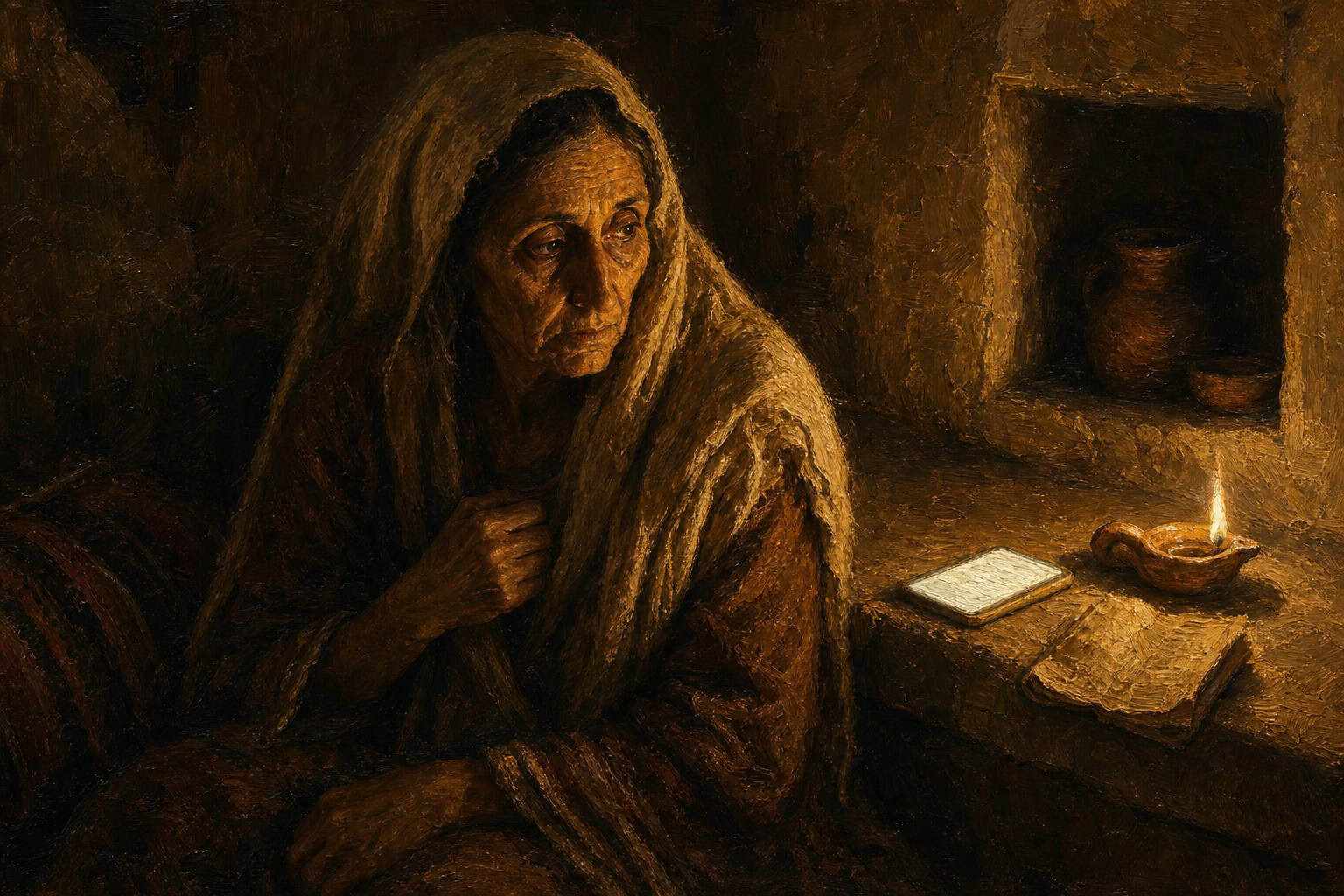
Wondering why ebooks feel better than real books? The honest answer isn’t storage or convenience. It’s what a screen lets you hide.
The Shelf That Watched You Read
You remember the night you stacked the last box of paperbacks by the front door. The tape screeched as you pulled it across the cardboard. The spines inside had gone soft at the creases, some fanned open like broken wings, some with coffee rings pressed into the covers, some with a name written inside the flap in ink you no longer wanted to see. You told yourself it was about space, about the move, about a smaller apartment with thinner walls and no room for a wall of shelves. That was the story you offered anyone who asked. But that was not the whole of it, and you knew it even as you knelt on the floor with the box between your knees. A physical book keeps a record of you. It remembers where you stopped and could not go on. It falls open to the page you read forty times because it named something you were ashamed to feel, and the paper there has gone limp and gray from your thumb returning to it. The dog-eared corner is a confession left in the room for anyone to find. When you hold a real book, you are holding the hours you spent alone with it, and those hours have a texture, a smell of old glue and dust, a weight that pulls at the wrist by the time your eyes get heavy. The screen has none of that. The screen is clean. You can read the most damning sentence ever written about a person exactly like you, and the glass gives nothing back — no crease, no stain, no soft warm spot where the same page opened again and again. This is the first thing you want from the ebook and will never say out loud at a dinner table. You want to read without leaving a body behind. You want the words to enter you and touch nothing that anyone could later pick up and examine. A paper book, propped on the nightstand under the lamp, announces what you are becoming. Someone could lift it, turn it over, read the back, and know. The device, dark and blank and flat, keeps your reading a secret even from the person who shares your bed and even from yourself. You call it convenience because that word costs nothing and asks nothing. But underneath the tidy word is an older wish: to be seen reading nothing, thinking nothing, wanting nothing that could ever be held against you. You have carried that wish since you were small, since a certain book on a certain shelf could mark you as one kind of child and not another. So you chose the format that erases the shelf, and it felt like relief.
A Sentence You Can Erase From the Air
Notice what your hand does with a hard passage on a screen. You swipe. The words that undid you slide off to the left in a quarter second, gone, replaced by fresh ones, and the old ones leave no scar on the surface and no dent in your account of the night. This is the deeper comfort, and it works on you quietly, the way a habit does before you can name it as one. With paper, the wounding sentence stays fixed in its place. You can close the covers, but you know exactly where the sentence lives, three lines down on the right-hand page, and tomorrow it will be there, unmoved, waiting in the same corner of the same paper, warm from no hand but yours. The ebook lets you pretend the sentence never had a fixed home at all. You can search for a phrase, watch it surface, then let it sink again. You can shrink the font until the shape of the paragraph you feared no longer even looks like itself. You are not only reading anymore. You are managing what the reading is allowed to do to you, deciding in advance how deep the cut may go. And this is the quiet violence of it, done gently, with a fingertip. You have learned, somewhere along the way, to break yourself into parts so that no single part has to carry the whole. There is the you who reads for cultivation, who buys the beautiful hardbacks and mentions them lightly over wine, who wants to be thought refined, careful, well-formed. And there is the you who reads at two in the morning for the raw thing, the hunger, the ache no one is supposed to catch you feeding. The screen serves both, and it keeps them from ever meeting in the same lit room. On one slab of glass you hold the elevated and the appetitive side by side, one file beside another, and no one — not the guest, not the lover, not even you — has to admit they belong to the same trembling person. A physical library forces the meeting. Every book on the wall stands in one company, spine to spine, and a visitor’s eyes travel across all of them in a single slow pass. Your intellect and your appetite share the shelf whether it pleases you or not, and the mix tells the truth about you. But the device dissolves that unity into folders. Each title becomes a hidden file behind a passcode. You can be, on glass, a person who has read only what makes you finer, while the rest lies buried where the light of anyone’s glance never falls. This is not refinement, though you have dressed it as refinement for years. It is a fortress built of good preference, and you mistook its walls for taste. The ache underneath is plain: you want to be known, and you have arranged your entire reading life so that no one ever meets the whole of you at once.
The Trial Held in a Locked Room
Here is the turn you have been circling since you first noticed the swipe. The reason a screen feels better is that it lets you keep a private court in session, one where you are the only judge, and the verdict falls on yourself before anyone else can enter to speak on your behalf. You read, and in the reading you decide, minute by minute, who you are permitted to be. The clean glass hands you the instrument for that judgment. Nothing shows. Nothing marks. Nothing accuses from the surface. You hold the trial of your own desire in a room with no windows and no gallery, and you set the date for the execution of your own embodied self before that self has any idea it was ever charged. Think of how you flinch when a stranger’s eyes drift toward your screen on the train. You tilt the device a few degrees toward your chest. You do it without a single conscious thought. That small tilt of the wrist is the whole matter. It is shame moving through the arm faster than the mind can catch it and give it a name. Shame is the felt certainty that you have been seen and found wanting, and the wish that rises with it never changes: to cover yourself and disappear even from your own eyes. The ebook is the garment cut for that exact shame. It lets you read the very thing you cannot bear to be caught wanting, while showing the world a face as blank as a switched-off phone. And the cruelest part is how well it works. No one ever asks. No one ever lifts the cover and reads the back. You win the verdict you were dreading and you win it alone, in silence, with the lamp off and the glass close to your chest, and there is no acquittal anywhere, because there was never a witness to speak for you.
You did not choose the lighter book; you chose the one that carries none of your fingerprints.
What the Blank Glass Cannot Take Away
So the fallout arrives the way most true things do, slowly, and from the side, when you are not braced for it. You keep reading on the device, and one night you notice you are lonelier for it than you were before. The books do not gather around you into a life you can put your hand on. There is no shelf a lover can wander past, dragging a finger down the spines, reading you sideways without your having to say a word about who you are. You have made yourself unreadable, and the plan worked perfectly, and now no one can read you, and neither can you. This is what the covering always costs in the end. Shame made you a promise: hide the wanting self, and you will be safe. It kept the promise exactly. The safety turned out to be a locked cell you built and then furnished. You wanted a relationship with words that was frictionless, smooth, harmonious, free of every complication, full of your own imagination and no one else’s demands. But the friction of a real book is only the friction of being a real person in a real body. The stain on the page is proof you were there. The soft crease is proof the words got into you and changed something. You cut all of that away and won a purity that is only, in the end, an absence with nothing living in it. Consider the mood that settles over you when you read on glass at one in the morning: a strange weightlessness, every book ever written available in a breath, nothing costing anything, and a low hum of unreality running under it all. You are surrounded by more words than you could read in ten lifetimes, and you feel you have read none of them, because not one of them ever pressed against a body or asked a thing of your hands. Reading was meant to be a taking-in, a consuming, a drawing of some quiet peace from the taste of a true sentence. Instead you skim a lit surface that holds no fingerprint, and you rise from it fed and starving in the same breath. The glass gave you precisely what you asked for and stripped the substance out of it in the same motion, and you did not feel the theft happen. And here is the hard question you have to sit inside without any answer soft enough to end it: did you love the reading, or did you love the version of yourself you could press onto a thing that never once argued back? A paper book resists you. It has heft. It will not fold into your pocket. It demands a place in the room and therefore a place in the story you tell about your life. The screen never resists a thing. It bends into whatever you need it to be that hour, and so it can never be a companion — only a mirror angled at your own face. You have been reading into a mirror for years and calling the mirror a library.
The Book You Cannot Delete
None of this settles cleanly, and it should not be forced to. The pull toward the screen is not a small sin to scrub off with a firm resolution and a colder morning. It is a wound wearing the mask of a preference, and the wound is old, older than the technology that finally fit it so well. You learned early that some hungers must be hidden, that to be seen all the way through was to be found wanting and sent from the room, and the glass simply offered you the most elegant hiding place ever handed to a frightened person. You cannot will yourself into loving paper by tomorrow. But you can begin to notice what the noticing itself costs you, and that noticing is already a small mending, a first quiet bringing-together of the reading self and the ashamed self who was sure no one was watching. The strange comfort is not that the shame lifts. It rarely lifts, and anyone who tells you it will is selling something. The comfort is the company you keep inside it, the sense on certain nights that you are not alone in the windowless room after all, that the very appetite you kept trying to swipe out of the air was walked with rather than sentenced. Grace, when it comes at all, does not usually delete the file or clear the history. It sits down beside you while you read the thing you would show no living soul, and it does not reach over and tilt the screen away. That is a rarer and more terrible mercy than the rescue you keep begging for on your knees. You wanted to vanish from your own gaze. Instead you were held inside it, and the holding did not scald you the way you had always assumed it would. Let it rest there, unresolved and honest: the ebook is better if better means safer, and safer means unseen, and unseen means a life no one, yourself first among them, will ever get to read all the way to its last page. There is a book that names this hunger to hide and refuses to look politely past it — Confessions to the Empty Chair — and it will not hand you a clean answer either. It will do the harder work. It will crease under your thumb, take your fingerprint, and refuse to let you go on pretending the wanting self and the reading self were ever two different people living behind two different passwords. You will not be able to swipe the worst sentence out of the air. It will stay fixed on its page, waiting for you to come back to it, which is the very thing you have feared, and the very thing you have been starving for all along.