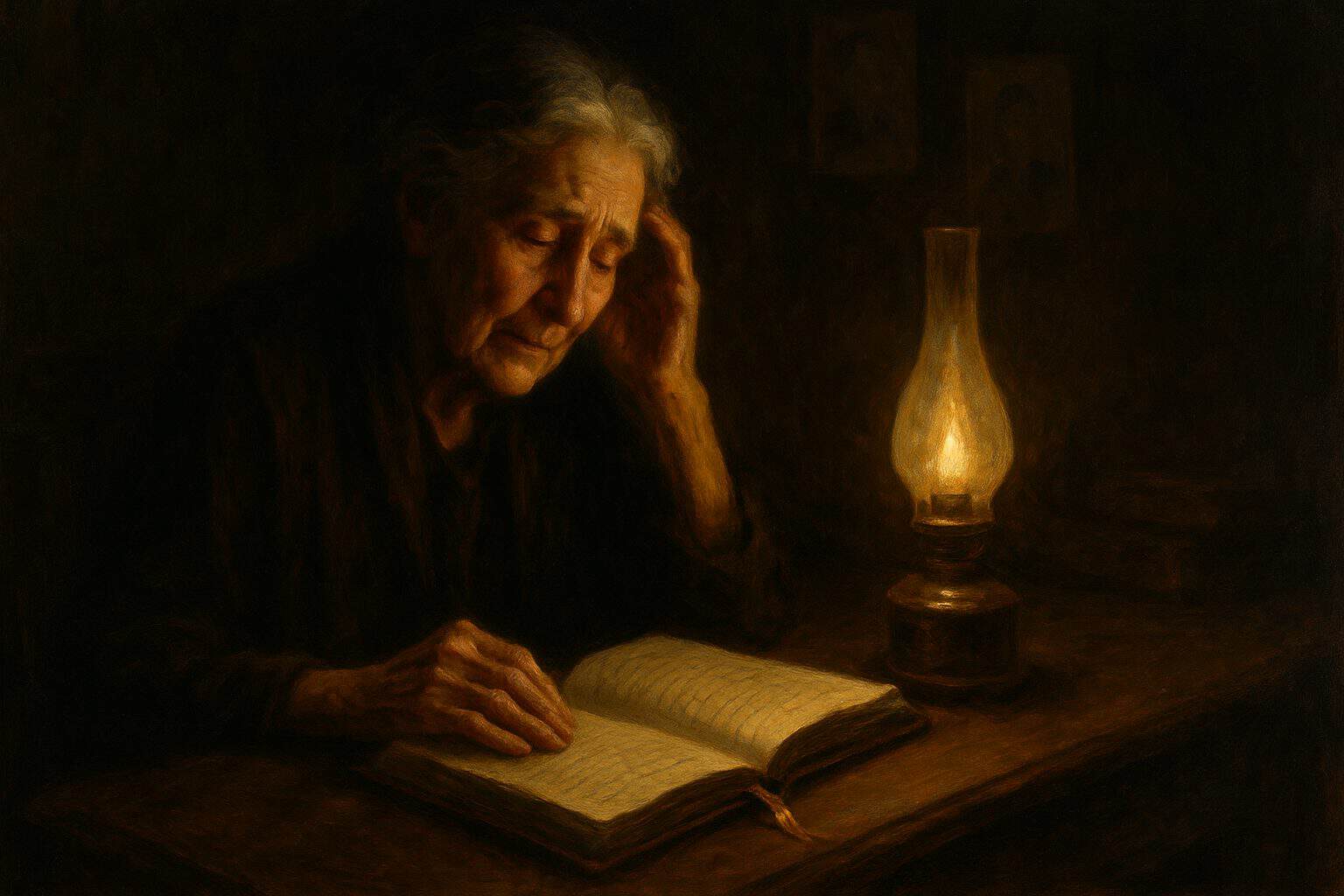
How the same ache teaches differently as we circle back through our own pages
The Compass That Refuses to Point Elsewhere
In Fractions of the Soul, Anthony describes an ache that “once drove me toward the noise of Deep Ellum and the novelty of fleeting touch” yet “did not accuse me; it guided me, a compass refusing to point anywhere but home.” This image captures something essential about how longing operates across time—not as a fixed sensation but as a directional force that reveals different landscapes depending on when we consult it.
The first time through these memoirs, longing appears as raw wound. Anthony rocks on his knees, head bowed, his chest harboring “a chilling hollowness, a void smeared with death’s taste, leaving only dust and shadow.” The body itself becomes the register of absence. Yet returning to these same passages years later, something shifts. The hollowness hasn’t changed—it remains precisely as described—but its meaning has undergone transformation. What once read as pure desolation now carries undertones of preparation, as if the void were making space for something not yet arrived.
The Radio Waves as Mirrors
Anthony’s ritual with Delilah’s late-night radio show demonstrates how repetition itself becomes revelatory. “I used radio waves as mirrors and studied what stared back,” he writes. The soundtrack varied—those playlists echo in Appendix B—”but the ritual remained the same.” Or did it? The sameness exists only at the surface level of action: tuning the dial, settling into darkness, letting strangers’ heartbreaks wash over him.
“Finding Delilah’s show once more, I listened to the stories of the lost and brokenhearted; this time, over five years later…”
That phrase—”this time”—marks the hermeneutic turn. The stories haven’t changed; archived episodes would play identically. Yet Anthony listening at twenty-two inhabits a different world than Anthony at twenty-seven. The lost and brokenhearted speak the same words into different ears. Their confessions land in a consciousness already marked by Lilith’s damage, by Jeannètte’s healing touch, by Angela’s revelation of his incomplete disassociation.
The Grinding of Stones
“All the various love pains and negative relationship experiences in my life,” Anthony reflects, “were the rocks grinding against my rock, spirit against spirit.” This geological metaphor suggests something crucial about rereading one’s own wounds. Rocks don’t grind once and finish—they work through countless rotations, each pass removing another layer, revealing new striations, unexpected minerals glinting beneath.
When we first encounter Anthony’s catalog of romantic devastations, they appear as discrete injuries: Lilith’s betrayal, Jeannètte’s distance, Angela’s departure. The initial reading experiences them sequentially, causally, as plot points in a narrative of damage. But returning to these same episodes after knowing their eventual resolution shifts everything. What Lilith “used to damage me, Jeannètte now used to heal me.” The wound and the healing occupy the same space—not replacing each other but coexisting in layers only visible through temporal distance.
The Flesh as Hermeneutic Lens
Anthony observes that “those with a physical malady… interpret the world from a different point of view… given that the world reveals itself differently to them in light of their flesh.” This phenomenological insight extends beyond physical ailment to encompass the wounds of love. Each heartbreak becomes a new interpretive lens through which all previous heartbreaks reveal fresh dimensions.
Consider how Anthony’s understanding of divine abandonment evolves. “Was He the same?” he asks after witnessing what he perceives as God’s second abandonment. “I thought that He willed suffering to be my purpose, the reason for my creation, that He wanted my frustration, never to possess my heart’s genuine desire.” This theological crisis reads differently depending on where we stand in our own journey. The reader who has never questioned divine benevolence encounters these words as scandal. The reader emerging from their own dark night recognizes the terrible honesty of the question. The reader who has cycled through multiple seasons of faith hears something else entirely—not blasphemy but the necessary prelude to deeper trust.
Eden’s Persistent Decoration
“Memories of Eden decorate the interior landscape of all who feel abandoned, alienated, betrayed, contemplative, curious,” Anthony writes. The verb choice—”decorate”—suggests something more complex than mere haunting. Decorations can be rearranged, recontextualized, seen in new light. The Eden that decorates the landscape of first heartbreak differs from the Eden glimpsed after multiple exiles and returns.
This becomes vivid in how Anthony’s envy of Jeannètte transforms across readings. Initially, when he writes “I envied Jeannètte, for whom love bloomed without struggle,” we feel the raw injustice of unequal suffering. Why should some hearts open easily while others must be broken repeatedly before they learn to love? But returning to this passage after absorbing the full arc of both memoirs, the envy reads differently. We begin to suspect that love without struggle might be its own kind of poverty, that Jeannètte’s ease might have prevented the very depths Anthony was forced to discover.
The Incomplete Evolution
“Angela’s pain revealed a flaw in the system: my evolution into cold disassociation was incomplete.” This confession marks a crucial turn—the moment when a coping mechanism reveals itself as inadequate. But the incompleteness itself becomes instructive across multiple readings. The first time through, we focus on the failure: Anthony couldn’t fully detach, couldn’t perfect his armor against feeling. Returning later, we recognize the incompleteness as grace. The flaw in the system was the system’s salvation.
Anthony had “personified my pain… cast it as an immortal guide, a character, an entity contextualized among timeless stars.” This mythological distancing served its purpose in one season but proved insufficient for the next. The hermeneutic circle reveals how each defensive strategy contains the seeds of its own transcendence. We cannot read about his disassociation without knowing it will fail, and knowing it will fail changes how we understand its temporary success.
The Phantom Limb of Memory
“The memory burned: a phantom limb, a cruel brand searing the remembered sweetness against the mundane bitterness.” This image captures how the past persists not as fixed record but as living presence that changes with each encounter. A phantom limb feels different depending on the weather, the time of day, the body’s overall condition. Similarly, memories of lost love burn differently depending on our current state of longing.
The sweetness that sears against bitterness in one reading might, in another pass, reveal itself as bitterness searing against a sweetness we couldn’t previously perceive. The same memory—unchanged in its factual content—delivers different messages as we circle back through our own story.
Death’s Horizon and the Reverse Engineering
Anthony observes that our orientation toward “eventual death… reverse-engineers to how one conducts themselves in the world in the here and now.” This temporal reversal perfectly captures the hermeneutic nature of rereading our own longing. We read our past from the vantage of a future that has become present, and this reading reshapes not just interpretation but lived experience.
“We are free to regret both the things we have done and the things we have not done within the horizon of ultimate acceptance or denial.” This freedom expands with each return to our own story. The regret that once felt absolute softens into something more complex—still regret, but now shot through with recognition of necessity. The paths not taken remain untaken, but their meaning shifts as we understand more fully why we walked where we did.
The Ability to Cling
“Although the Fall in Eden blemished our access to it and dampened our internal awareness of it, our ability to cling to love still remains.” This observation gains depth through repetition. The first reading emphasizes the blemish, the dampening, the diminishment. We feel the tragedy of reduced capacity. But returning to these words after witnessing Anthony’s journey through multiple devastations and resurrections, the emphasis shifts to what remains. The ability to cling—not to possess, not to secure, but simply to cling—emerges as the crucial human capacity.
Each return to these memoirs reveals new facets of this clinging. Sometimes it appears as desperate grasping, sometimes as gentle persistence, sometimes as the simple refusal to let go even when holding brings more pain than releasing would. The clinging itself doesn’t change, but our understanding of it deepens with each pass through the circle.
The Compass Home
The image returns: the ache as compass “refusing to point anywhere but home.” But where is home? The first reading might locate it in human love, in Jeannètte’s arms, in the resolution of romantic longing. A second reading might find it in divine embrace, in the God who seemed to will suffering but perhaps was preparing a deeper joy. A third might discover home in the longing itself—not as lack but as the very movement of the soul toward what it was made for.
“Loneliness, heartbreak, disappointment, weariness, and misunderstanding strip the soul of every false comfort, leaving it raw and exposed.”
This stripping, revisited across time, reveals itself as necessary work. Each return to these passages of desolation uncovers another false comfort we hadn’t recognized as false, another layer of protection we mistook for skin. The rawness and exposure that once felt like pure vulnerability gradually reveal themselves as the precondition for genuine encounter.
The hermeneutic circle of longing doesn’t close—it spirals. Each return brings us to the same texts but at a different depth, the same wounds but with evolved understanding, the same ache but pointing toward a home we’re only beginning to recognize. The compass hasn’t changed direction; we’re learning, slowly, to read what it has always been showing us.