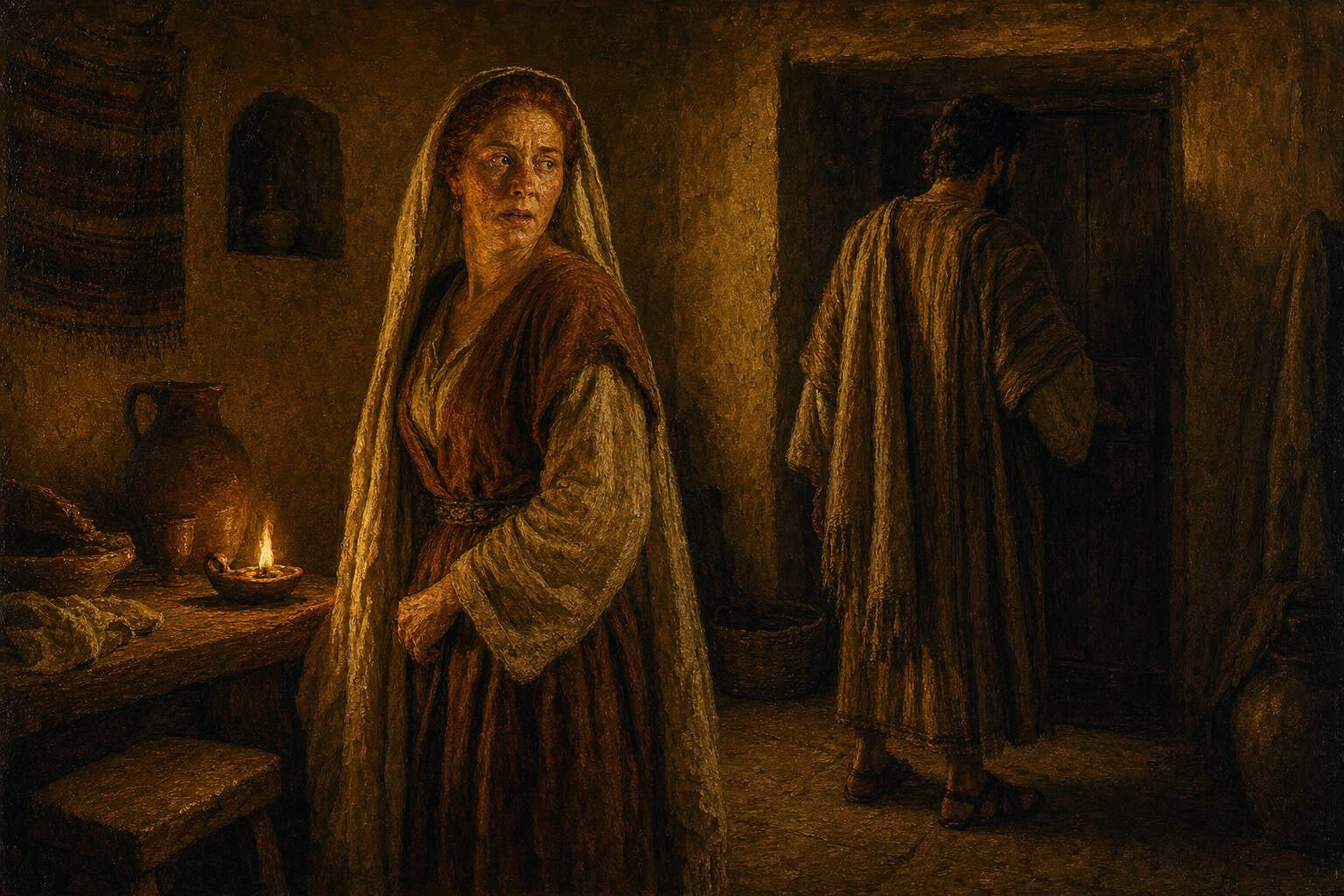
You feel invisible to some, magnetic to others. A memoir’s honest scene reads that ache—and asks who was ever meant to truly see you.
A Locked Door and the Sour Warmth of Someone Else’s Drinking
You feel unseen, and the ache of it is real, so let me take you back to the room where it lived. A friend slipped past you and pulled the door shut behind her, her words running together, her feet unsure of the floor, the sour warmth of alcohol coming off her skin like heat off a stove. She turned and gave you a look you knew at once, a look that said one thing only, and your stomach pulled itself into a knot. You did not want her. That was the strange part, the part you could not explain even to yourself, standing there with your back near the wall. Here was a body offering itself, every component present, and your history said you were not above such nights—yet you wanted her gone. The complication was not the clean moral thing you would later call it. It was that you needed something she could not give in that state: a full, waking, unashamed hunger, a woman choosing you with clear eyes so that afterward she could not lay the blame on the bottle. That is the thing I must say to you gently, older now, watching you sweat in that small space. The invisibility you complain of is not hers tonight. You are the one who cannot see. You cannot see her drunkenness as anything but an inconvenience to your rules, a variable that ruins the equation. You cannot see the friend under the slur, the person who came to you carrying some private wound she was trying to drown. You have already decided how this ends. You are already reaching, in your mind, for the crude word you will throw like cold water across her face. The room feels too near. Her nearness crowds you, presses the walls closer, and you want the door open again, want the drink to be someone else’s problem in some other place. But I ask you, from years down the road: when you feel invisible to people, is it possible you have been standing behind glass of your own making the whole time? You wanted to be seen. You also built your life so that only the right eyes could find you, on the right terms, at the right hour. That is a trade, and you never read the fine print. The one who came to you that night saw something in you. You simply did not like what she saw, and so you called her drunk and blind, and shifted the weight of the not-seeing onto her stumbling body instead of onto your own careful, guarded heart.
The Rule That Wore a Collar and Lied to Your Face
Look closely at the rule you held up like a shield. Never take advantage of someone not in their right mind—you called it the primary law of your codex, and you said it to yourself like a man reciting a creed he half believed. It sounded like decency. It even sounded like the faith you carried loose in your pocket, the old command not to use a soul as a thing. But I have had years to turn this rule over in my hands, and I owe you the harder reading of it. That law was not built to guard her. It was built to guard you. You needed her fully awake not for her sake but for yours, so that her hunger would be genuine, so the conquest would count, so the hollow place inside you would be fed by something that meant it and not by a body too numb to answer. Your ego required unapologetic lust. Read that again, slowly, the way I have had to. The morality you wore was a costume stitched over vanity, and it fit so well you forgot it was cloth. You refused the drunk woman not because using her would wound her but because a drunk yes would not flatter you enough. This is the vertigo I want you to feel now, standing at the edge of your own freedom with nothing under your feet. You thought you were a man with limits. You were a man with appetites so refined they had learned to wear the face of virtue and pass unquestioned. And here is the dread hiding in it: if your goodness was only a better-tasting selfishness, you could no longer tell the two apart. A true boundary and a beautiful performance of one wore the same clothes in you. You could not sort them, and that night you did not. You reached for the vulgar word deliberately, meaning to shock her into fleeing, to make the room so toxic she would run and the friendship would somehow survive—but even that reaching was a maneuver, a tactic, a way to keep your image spotless. The flesh, though, had already begun to answer. You felt it: that terrifying flicker underneath the revulsion, the loyal traitor in you responding to a call your mind was busy refusing at the top of its voice. Your intellect wrote the codex. Your body never signed it. And God—yes, He was there, in that reeking little room, not striking you down, not lifting you out by the collar, just near, watching a young man mistake his pride for his conscience and grieving the confusion of it. He did not fix you that night. He did not empty the room of its danger. He stayed. He walked the small floor with you. That is the part you missed while you were consulting your rules.
The Kiss That Was a Feint, and the Flicker You Feared
She told you she was sober enough to know what she was doing. You said no, and inside you a flare of panic answered louder than your steady voice. When you held your ground she seemed to give way, asked only for one more hug before she left, and you let yourself believe the danger had passed. Holding a woman always felt good to you; you admitted it plainly, and there is no shame in the admitting, only in what you did next. But the hug was a trap laid in soft language. She turned her face up to yours and kissed you, and the whole careful architecture of your rules trembled on its foundation. You pushed her back. And in the half-second between the push and your words, you felt two things at once that had no business sharing one body: revulsion, and desire, braided so tight you could not name where one ended. This is the turn the whole scene had been circling. You had told yourself a story in which you were the one in control, the gatekeeper, the man who decided who entered and who was sent home sober and grateful. The kiss showed the story to be thin as paper. Your flesh had been listening the whole time, and it wanted what your pride would not sign for, and now the two of them—flesh and pride—stood at war in a room too small to hold either. You went cold. You reached again for the vulgar threat, colder this time, a desperate grab at the control that had already slipped through your fingers. But control was never truly yours to grab. The dread you felt in that instant was the dread of your own freedom, the groundless hour when a man understands that nothing outside him is going to decide this for him—not the rule, not the drink, not her mouth, only you, standing on nothing at all, with the walls close and the lamp low and every choice suddenly, terribly your own. That is what I most want you to carry back into that moment. You were not invisible to her. She saw you. In her drunken honesty she named the exact need that drove you—and it was her seeing you, not her blindness, that you could not survive standing up. You had spent years learning to be looked at without being known. Here was someone reaching past the surface, and the panic in your gut was not fear of her. It was fear of the man she had just glimpsed.
The rule you built to prove your goodness was the very thing hiding your appetite from your own eyes; a man can be blindest precisely where he believes he sees most clearly.
After the Cold Word, the Room Refused to Empty
The word you threw did not clear the air the way you had counted on. It rarely does. You imagined the crudeness as a shield, a bucket of ice water, something so ugly she would flee and the friendship would be spared the wreckage. But ugliness hurled at a person does not stay clean in the air; it splashes back onto the one who throws it and beads on his own hands. You reached for the vulgarity of sex to protect a friendship, and in that same motion you handled her—your friend, a person—as a problem to be managed, a complication to be dispatched from your doorway. That is the fallout I want you to sit inside rather than rush past on your way to sleep. She had come to you carrying something heavy. Maybe loneliness. Maybe a wound she was trying to turn into something bearable through your body. Maybe a shaming memory pushed to the edge of her mind that she was reaching for the only distorted way she knew. You never asked. You were too busy consulting your codex, too busy weighing whether an apology for crude words cost less than the chaos of the encounter. You did the sums of self-preservation while a human being stood before you asking, in the only language her drunkenness had left her, to be met and not managed. And here is the reconsideration the years have pressed on me. You were right not to take her. On that narrow point, you were right, and I will not pretend otherwise. But you were right for the wrong reason, and being right for the wrong reason leaves a stain of its own, subtler and slower to wash out than a clean wrong would have been. You spared her body and used her heart. You dismissed her as immature, as someone who could not split sex from feeling—as though that were a flaw in her and not simply her being more honest than you had learned to be. She could not divide the flesh from the soul. You had spent years teaching yourself to, and you called your own damage her weakness and slept better for the mislabeling. God did not send lightning through the ceiling. He let you stand in the rubble of your own cleverness and feel how little it warmed the room. That flicker of desire you feared, the revulsion, the panic—none of it resolved into a tidy lesson you could file away. You went to bed, probably, telling yourself you had done the honorable thing. And a quieter voice, the one you kept trying not to hear breathing in the dark, asked whether honor practiced for the sake of your own reflection is honor at all, or only a mirror you had trained yourself to bow before.
The Homesickness Under Every Room You Entered
So why do you feel invisible? I will not hand you the flattering answer you came looking for. It is true, in a way, that we are not seen by everyone; some eyes slide right off us, and others find us across a crowded dark, and it can feel like a curtain drawn by a hand not our own—as if we were shielded from those who would misread us and revealed only to the few meant to know us. There can be a mercy folded into that, on the good days. But I have grown suspicious of the comfort in it, and I want you to grow suspicious too. Because the invisibility you mourned that night was, in large part, a thing your own hands had made. You walked into rooms already decided. You set the terms, wrote the rules, curated who could reach you and under what conditions, and then you stood behind that glass and wondered why real contact never quite landed, why bodies came and went and left you cold. You thought you were lonely for a woman, or for some version of yourself a woman might finally confirm—the desired one, the man whose ego the night would feed. But under that ache ran an older, deeper homesickness, and it was never for her at all. It was for the one place where a word could be spoken without strategy behind it. Where you would not need the vulgar or the cold, would not need the codex or the maneuver, would not need to be seen on your own guarded terms and no others. You wanted to be known by Someone before whom no performance is required, and you had polished your performances so long that you had forgotten how to stand still and simply be found. So I will not close this off with a neat bow. The room that night was small and sour and frightened, and God was in it—not fixing, not hauling you out, just near, walking beside a young man who had mistaken his loneliness for a woman’s absence. He is near now, too, as you sit typing your question into the dark and waiting for it to answer. You are not invisible to Him. You never once were. The truth you were circling in that room is the same truth this whole confession keeps circling back to, and it waits for you exactly where you least want to look: inside the very appetite you dressed up as a rule and called your virtue. Come back sober, you told her at the door. It is what I would say to you now. Come back without the costume, empty-handed, and see what is still standing when the lamp burns low and the mirror goes dark.