Where flesh becomes the grammar through which grace speaks itself into the world
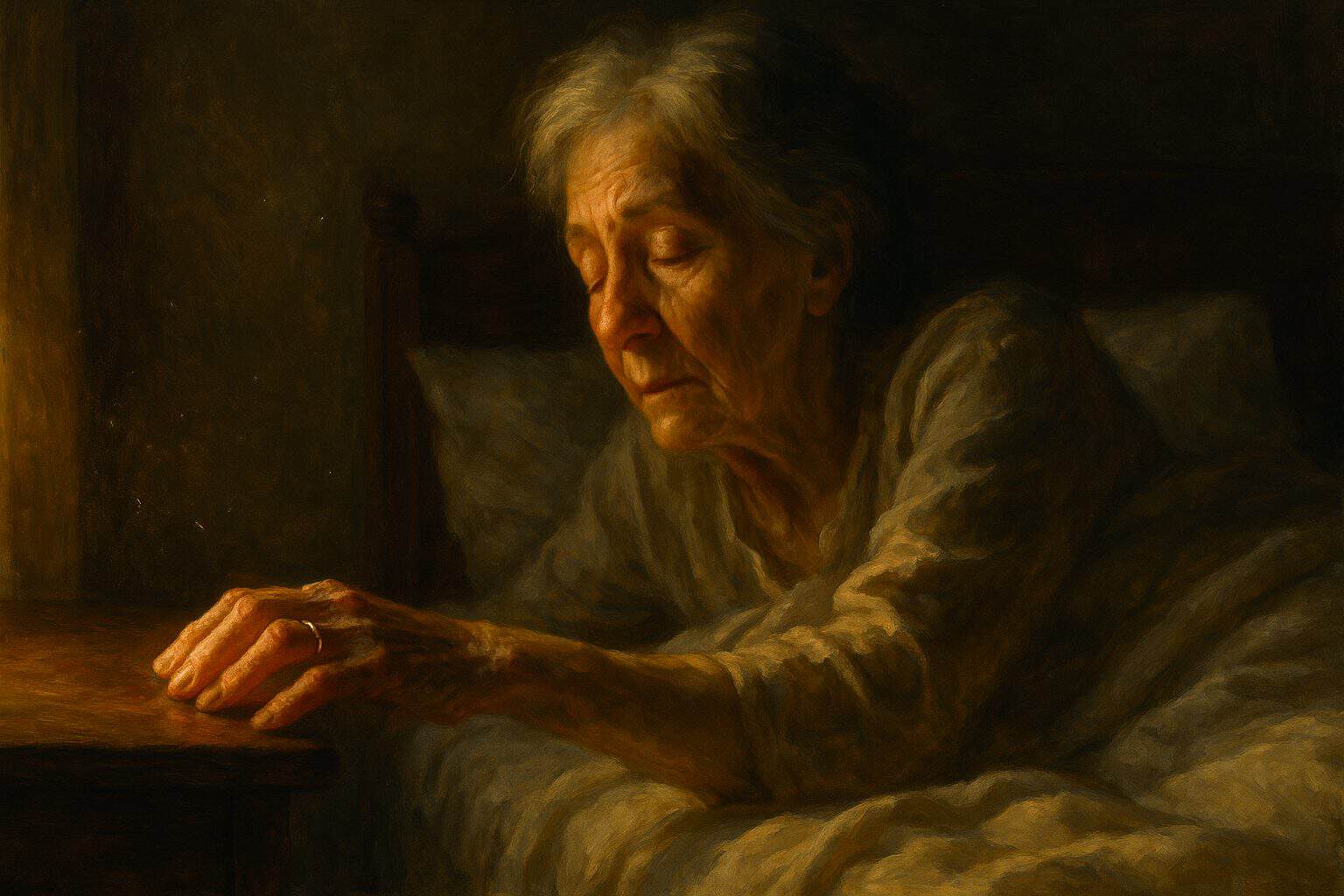
The morning light catches dust motes spiraling through the bedroom air, and for a moment—just before full waking—consciousness hovers between the dream-body that moved weightless through sleep and this heavier flesh that must now negotiate gravity. The hand reaches for the bedside table, fingers knowing their way without sight, and in that reaching, something profound announces itself: we do not have bodies; we are this reaching, this knowing-through-flesh that precedes all thought about it.
The Grammar of Incarnation
To speak of the body as sacrament is not to impose religious meaning onto neutral flesh, but to recognize what already gives itself in the simplest acts of embodied life. When the palm presses against the grain of the table, feeling its particular roughness, its coolness against skin, consciousness does not first think “table” and then feel—the touching is the thinking, the flesh itself a kind of knowing that speaks its own language before words arrive.
“The body grounds our thoughts. The physical anchors the spiritual. Unlike angels, we cannot feel without flesh.”
This anchoring reveals itself most clearly in moments of intensity. In grief, the chest physically constricts; in joy, the whole body seems to lift and expand. These are not metaphors for interior states but the states themselves, given through this flesh that knows before knowing knows. The passions speak their own language, creating the fodder that reason must later digest, but the digesting never captures the original speaking—that primal articulation through muscle and nerve, through the quickening pulse and the caught breath.
The Sanctuary of Skin
Consider how a child learns the world: not through concepts but through this touching and being touched, this tasting and smelling, this whole-body immersion in a sensory plenum that gradually differentiates into objects and meanings. The blanket becomes sanctuary not through any idea of safety but through its particular texture against cheek, its weight across shoulders, its smell that means home before home has a name. Through such embodied encounters, the world comes into focus—not as a collection of things observed but as a field of possibilities for this reaching, grasping, moving flesh.
Even in adulthood, when conceptual thought seems to dominate, the body continues its more ancient knowing. Walking into a room, we sense the Stimmung immediately—tension or ease, welcome or threat—through a bodily attunement that precedes any conscious assessment. The shoulders know to tense or relax; the breath knows to shallow or deepen. Each person brings their body with them to every act of consciousness, beginning and ending from the perspective of this first-person flesh that is never merely first-person but always already interwoven with world and others.
The Copulatory Act
In the meeting of bodies—not only in sexual union but in every genuine encounter—something sacramental occurs. The handshake is never merely the pressing of palm to palm but a whole choreography of approach, pressure, duration, release. Through this simple gesture, two lived bodies recognize each other, not as objects in space but as fellow subjects, each bringing their entire history of touch, their learned patterns of distance and closeness.
The sexual act intensifies this recognition to an almost unbearable degree. Here, the body becomes simultaneously most vulnerable and most powerful, most given and most received. It is, as Anthony’s memoirs suggest, a private language spoken between lovers—not words about intimacy but intimacy itself, articulated through skin and breath, through rhythm and pause. That this language can be corrupted, turned into a leash for measuring compliance rather than a gift freely offered and received, only emphasizes its sacred character. The violation is so profound precisely because something meant for communion becomes an instrument of control.
The Singular Tapestry
Each individual body carries within it a multitude—son or daughter, friend, worker, citizen—yet somehow weaves these threads into a singular tapestry, the self. This weaving happens not in some abstract space of consciousness but through this very flesh that must move from home to office, from solitude to society, carrying all its roles within one skin. The body that embraces a child is the same body that signs contracts, that kneels in prayer, that runs for the train. How does it manage this multiplicity?
“The individual then calls each of their involvements back home to themselves… transcribing the legion of their social entanglements with their singular body.”
Watch someone alone after a day of many encounters. See how they literally shake off the day—rolling shoulders, stretching arms, perhaps changing clothes as if changing skins. This is not mere metaphor but the body’s way of gathering itself back from its dispersion, of remembering its own boundaries after hours of adjusting to others’ proximities and pressures. The flesh knows how to be legion and how to be singular, how to extend into the world and how to return to itself.
The Wound as Revelation
Where the body breaks—in illness, in injury, in violation—its sacramental character paradoxically intensifies. The wounded body forces attention to what healthy flesh allows us to forget: that we are this vulnerability, this capacity for pain that is equally a capacity for healing. The scar tissue that forms is not merely repair but memory made flesh, the body’s way of incorporating experience into its very structure.
In trauma, particularly sexual trauma, the body’s sacramental nature becomes a battlefield. What was meant to be the medium of communion becomes the site of invasion. Yet even here—perhaps especially here—the body’s sacred character persists. The long work of healing is not about transcending the flesh but about reclaiming it, learning again to inhabit this skin as home rather than prison, as sanctuary rather than crime scene.
The Language Before Language
Before words, the infant knows the mother through smell and warmth, through the rhythm of heartbeat heard from within and without. This primal knowing never fully disappears. Throughout life, the body continues to read other bodies with an intelligence that bypasses conceptual thought. We know anger in the set of shoulders, sorrow in the curve of spine, joy in the lightness of step. This reading happens instantly, bodily, before we can name what we see.
In therapy, in spiritual direction, in any genuine encounter, this bodily knowing operates beneath the verbal exchange. The therapist’s embodied presence—their quality of attention, their breathing, their stillness or animation—creates a space that no amount of correct technique could manufacture. The body of the listener becomes a kind of resonating chamber for the body of the speaker, two instruments tuning to each other below the threshold of conscious awareness.
Flesh and Spirit
The distinction between flesh and spirit, so carefully maintained in theological discourse, reveals itself phenomenologically as a distinction within unity. What is born of human nature is human; what is born of the Spirit is spirit—yet both birth themselves through this same flesh that kneels, that reaches, that opens or closes. The spirit does not hover above the body but moves through it, as breath moves through lungs, as blood moves through veins.
This is why the Incarnation remains Christianity’s most radical claim: not that God visited earth but that divinity took flesh, became this touching and being touched, this hungering and thirsting, this capacity for wound and healing. In Christ, the body’s sacramental nature reaches its full disclosure—flesh as the very medium through which infinite love makes itself finite, graspable, embraceable.
The Renewed Language
If sex is indeed a private language created by God, as Anthony’s memoir suggests, then its renewal cannot come through suppression of the body but through its deeper honoring. The path leads not away from flesh but more fully into it—into this grain of table under palm, this rhythm of breath moving from belly rather than throat. Each return to simple bodily presence is a small resurrection, a choosing of incarnation over abstraction.
The renewed language emerges not through learning new words but through inhabiting old gestures differently. The same hand that once grasped in desperation learns to hold gently. The same body that once knew only transaction discovers gift. This transformation happens slowly, through countless small returns to embodied presence, through the patient work of reclaiming flesh as home.
The Altar of Presence
We need not surrender our individuality on the altar of another—this would invalidate the very insights born from embodied encounter. Instead, the body as sacrament means that each flesh becomes an altar where presence meets presence, where the infinite particularity of one life recognizes itself in the infinite particularity of another. Not fusion but communion; not dissolution but deeper distinction within unity.
The body grounds this paradox in the simplest ways. Two people walking together must adjust their pace to each other, yet each maintains their own gait. Lovers sleeping side by side breathe in counterpoint, not unison. Even in the closest embrace, skin remains the boundary that makes touching possible—we touch precisely because we cannot merge.
The Living Sanctuary
In the end, the body as sacrament means recognizing flesh itself as sanctuary—not a prison for spirit but its living temple. Every gesture becomes potentially liturgical, every touch a possible communion. This does not spiritualize the body away but returns us to its earthiest reality: this weight, this warmth, this capacity for pleasure and pain that we do not have but are.
The morning light continues its slow progression across the room. The hand that reached for the table now holds a cup of coffee, feeling its heat through ceramic, tasting its bitterness that is also comfort. In such ordinary moments, the body performs its quiet miracle—making the infinite finite, making the abstract tangible, making love incarnate through the simple fact of flesh that feels and is felt, that reaches and is reached for, that breaks and heals and breaks again, each wound and healing adding another thread to the singular tapestry of a life lived in and through and as this body that is, always and already, sacrament.