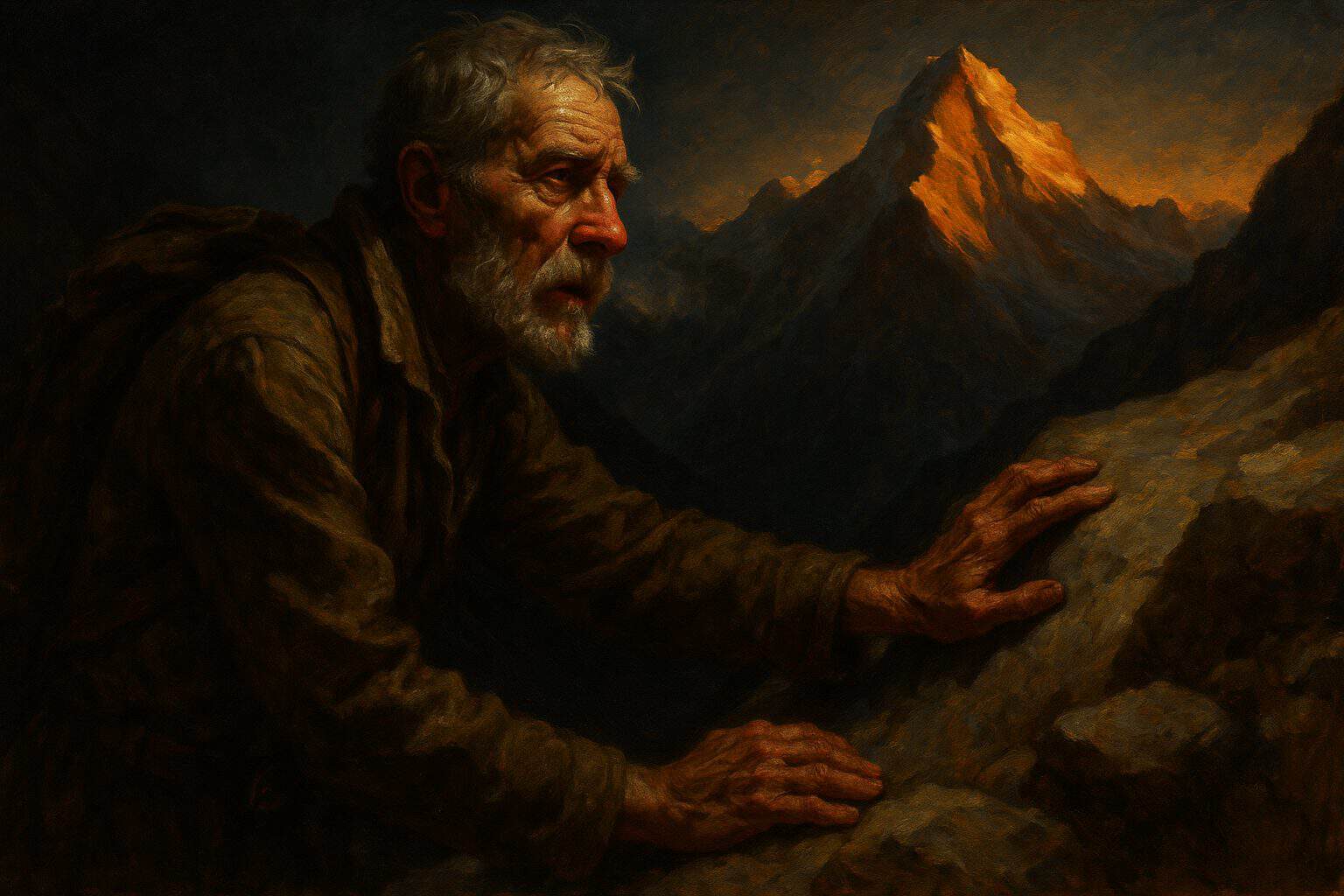
Where flesh meets spirit, the human drama unfolds in its most intimate register
The body presents itself first as boundary. Not the abstract limit of philosophical speculation, but the lived edge where I discover both my reach and my restriction. When my hand extends toward the cup of coffee, the gesture carries within it the whole architecture of human finitude—this arm that stretches only so far, these fingers that grasp with particular pressure, this need that drives the reaching itself. The body grounds our thoughts, anchors the spiritual. Unlike angels, we cannot feel without flesh.
In the morning’s first movements, consciousness returns to find itself already situated, already thrown into this particular configuration of muscle and bone. The sheets press against skin with a specific weight. Light enters through eyes that must blink, must focus, must choose where to direct their gaze. Even before thought properly begins, the body has already begun its dialogue with the world—breathing, adjusting, sensing temperature and texture. This is not the body as object, as thing among things, but the body as the very medium through which world appears.
The Grammar of Limits
Every gesture inscribes a circle of possibility. When I reach, I discover simultaneously what I can touch and what remains beyond my grasp. When I run, I encounter both my capacity for movement and the eventual arrival of fatigue. The athlete knows this grammar intimately—how the body speaks its limits not as abstract concepts but as the burning in the lungs, the trembling of overtaxed muscles, the sudden wall where will cannot push flesh any further.
“All human beings perceive through their limits, with their limits, and because of their limits.”
This is not merely restriction but revelation. Through the body’s finitude, the world gains texture and meaning. The mountain appears as mountain precisely because my body must labor to climb it. The beloved appears as beloved because my flesh responds with quickened pulse, with warmth spreading across skin, with that peculiar ache of longing that lives somewhere between chest and throat. Without these bodily registers, experience would dissolve into abstraction.
Consider how illness teaches this lesson with particular severity. In fever, the familiar world transforms. The bedroom ceiling, observed countless times, suddenly seems to pulse with strange significance. Time dilates and contracts according to the body’s rhythms rather than the clock’s measure. What seemed solid—the boundary between self and world—becomes porous, uncertain. The feverish body reveals what health conceals: that our entire grasp of reality passes through this fleshly medium, and when the medium shifts, so does the message.
The Double Life
Yet the body is never simply flesh. From the earliest stirrings of self-awareness, we discover ourselves as beings who both have and are our bodies. The child who first recognizes their reflection encounters this paradox in its most primitive form—that face in the mirror both is and is not “me.” This fundamental doubleness structures all subsequent experience.
In moments of intense physical pleasure or pain, this double life becomes particularly visible. The athlete in peak performance sometimes speaks of watching themselves from outside, even as they remain utterly absorbed in the body’s movement. The lover discovers themselves both lost in sensation and somehow observing this loss, both dissolved in flesh and maintaining that mysterious distance we call consciousness. The body becomes a threshold where spirit and matter meet without merging, touch without becoming identical.
This creates what we might call zones of negotiation. The teenager discovering their sexuality navigates constantly between flesh that insists with its own logic and a consciousness that attempts to direct, interpret, resist, or surrender to these insistences. Every blush tells this story—the body announcing what consciousness might prefer to conceal, flesh speaking its own truth despite our attempts at mastery.
The Gateway of Others
Through the body, others appear not as concepts but as presences. The infant knows the mother first through warmth, through the rhythm of heartbeat, through milk and holding. Before any idea of “mother” forms, there is this bodily knowing—skin against skin, the particular weight of being held, the specific quality of that voice vibrating through flesh as well as air.
“The place of their bodily union is also the gateway for channeling the creation of new souls, hence each is drawn there in the flesh.”
In the lover’s touch, this primal recognition returns in new register. Touch becomes a separate dialogue, a communication that runs parallel to words but speaks its own language. The hand that rests on another’s hand carries meanings that no amount of verbal elaboration could capture—reassurance, claim, invitation, farewell. In the moment of intimate union, bodies attempt something that consciousness alone cannot achieve: to overcome the fundamental separation that defines human existence.
Yet even in deepest intimacy, the body maintains its threshold nature. We reach toward the other through flesh but find that flesh itself maintains distance even in closest proximity. The mystics know this paradox when they speak of divine union—how even in moments of apparent dissolution, some kernel of separation remains, must remain, for without it there would be no experience, no one to experience.
The Architecture of Restraint
The body teaches through its very structure the necessity of boundaries. The skin itself is boundary, keeping inside in and outside out, maintaining the integrity necessary for life. Every orifice is guarded—eyes that can close, mouth that can refuse, hands that can push away. The body knows what consciousness sometimes forgets: that openness requires closure, that receptivity depends on the capacity to refuse.
In gesture, we see this architecture made visible. The hand extended in greeting simultaneously offers and withholds—presenting the palm while keeping the rest of the body at careful distance. The embrace calibrates precisely how much to give, how long to hold, when to release. Even in passion’s apparent abandon, the body maintains its careful negotiations. She arrested momentum with a gentle hand movement—a restraint like a sea wall holding a wave before its crash.
This is not mere social conditioning but something deeper—the body’s own wisdom about preservation and dissolution. The same flesh that yearns for union also insists on distinction. The same skin that hungers for touch also needs its untouched spaces. In this tension lives the whole human drama of intimacy and solitude, connection and autonomy.
The Wound of Division
Sometimes the threshold tears. Trauma inscribes itself in the body as a fundamental disruption of this careful balance between opening and closing, between flesh and spirit. The violation forces a new kind of division—not the natural doubleness of embodied consciousness but a violent splitting. This forced living in two places at once, separating the world of the flesh from the world of the spirit, creating new realities where connection and feeling become severed.
The body remembers what consciousness would forget. In unexpected moments—a particular scent, a quality of light, a stranger’s gesture—the flesh suddenly recalls what the mind has carefully archived. The stomach clenches, the heart races, the skin grows cold, all before thought catches up to understand why. The body keeps its own accounts, maintains its own memory, speaks its own truths.
In response to such wounding, elaborate architectures of protection arise. Physical intimacy becomes strategy rather than communion. The promise of touch transforms into currency, something to hold close all those in orbit from inside carefully constructed boundaries. Sex without love emerges as possibility—or necessity—the flesh continuing its functions while something essential withdraws to safer ground.
The Return
Yet the body also knows healing. In the safety of trusted touch, frozen places begin to thaw. In the rhythm of walking, breathing, swimming, the scattered self gradually gathers. The body offers its own forms of prayer—not through words but through gesture, posture, breath. The genuflection, the upraised arms, the prostration all speak what words cannot quite reach.
Death-dust mandates separation of flesh and spirit, yet even this ultimate boundary appears differently through the lens of embodied life. The dying body teaches its own lessons—how gradually or suddenly the threshold can shift, how the spirit that seemed so bound to flesh can begin its mysterious loosening. Those who sit with the dying often speak of witnessing this transition, seeing something indefinable but unmistakable change even while the body still breathes.
And in grief, we discover how deeply the absence of another’s body affects our own. The empty chair, the unslept-in bed, the clothes that still carry scent—all these testify to how thoroughly we know others through their fleshly presence and how that knowing persists even in absence.
The Sacred Flesh
If your only method of perception is through the limits of the flesh, then all you will be able to see is the flesh. How you look shapes what you see. Yet this very limitation becomes gateway. Through accepting the body’s boundaries, we discover what lies beyond them. Through embracing incarnation fully, spirit finds its proper expression.
The great traditions have always known this—that the body is not obstacle but vehicle, not prison but temple. In bread broken and wine poured, in water that cleanses and oil that anoints, matter becomes bearer of meaning that transcends matter. The body that kneels discovers something the mind alone cannot grasp. The voice that chants opens chambers that silent thought cannot reach.
This tension teaches a final lesson: that the desires woven so primally into flesh demand holy boundaries, for their unmastered fruit is always ruin. Yet these same desires, properly ordered, become pathways to transcendence. The same flesh that can drag spirit into darkness can also lift it toward light. The threshold swings both ways.
In the end, we return always to this fundamental condition—spirits who cannot feel without flesh, flesh that means nothing without spirit. We live the threshold, are the threshold, that place where visible and invisible meet without merging, touch without becoming identical. Every breath inscribes this boundary. Every heartbeat maintains this distinction. Every gesture toward another human being crosses this bridge that we ourselves are.
The body remains mystery precisely because it is so ordinary, so constantly present that we forget to wonder at it. Yet in moments—the first cry of a newborn, the last breath of the dying, the shudder of ecstasy, the shock of pain—the veil lifts briefly and we glimpse what we are: these impossible beings who exist at the junction, who are ourselves the place where earth and heaven meet, where time touches eternity, where the infinite finds finite expression.
This is the threshold of the body—not a problem to be solved but a mystery to be lived, not a limitation to be overcome but the very condition through which overcoming becomes possible. In accepting this threshold fully, we discover not confinement but the precise shape of our freedom.