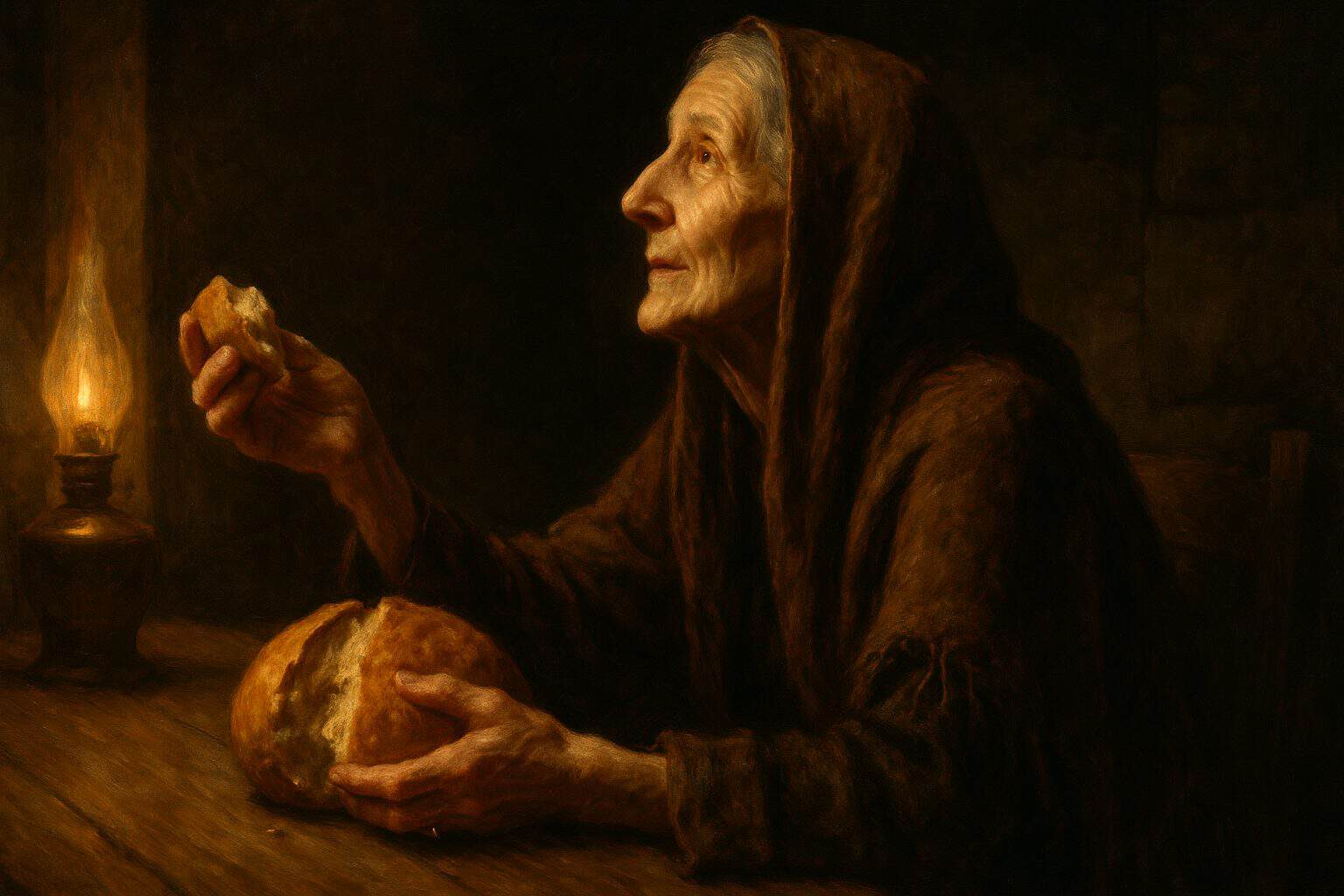
Where flesh becomes the grammar of grace, and communion speaks through skin.
The bread breaks between fingers that have learned to hold and release. In that gesture—ordinary, repeated ten thousand times—something shows itself that thinking alone cannot reach. The hand that extends the fragment knows the weight of what it offers: not symbol merely, but presence given through the most basic act of human sharing. Here, in this simplest motion, the body reveals itself as the original language of gift.
The Grammar of Presence
In the half-lit room where lovers first discover each other’s minds still growing, still reaching, something essential about embodiment declares itself. Touch becomes a separate dialogue, its own syntax of approach and withdrawal, question and response. The hand that reaches across the space between two wine glasses doesn’t merely signal desire—it is desire made articulate in flesh. Before words form, before thoughts crystallize, the body has already begun its confession.
This is not the hollow pleasantry of beautiful surfaces meeting, where physical existence—beautiful and shallow—beckons only toward consumption. When penetration becomes merely masturbating with the other’s warm tangible parts, the body’s capacity for gift collapses into use. The flesh then speaks only reflexively, curved back upon itself, a closed circuit of sensation that never truly touches the other.
But when touch culminates in that sensuality where the spirit of each resonates in the flesh, the body reveals its sacramental structure. Here, at this threshold, the physical becomes porous to meaning without ceasing to be physical. The place of bodily union opens as gateway—not away from flesh but through flesh toward something flesh alone makes possible.
The Weight of Limits
The decision that Adam and Eve made occurred within the boundaries and limits of the flesh, a far more restricted platform to experience and understand. This restriction is not accident but essence. The body gives us to ourselves as finite, as creatures who must choose within horizons we did not choose. Every gesture carries the weight of this original limitation: we can only be in one place, touch one surface, speak one word at a time.
“Jesus was not high or drunk on the cross. He suffered with a sharp mind. The least I could do is try to do the same.”
In Gethsemane, divinity embraced real human limits—hunger, thirst, fatigue, sorrow, and time-bound growth. The long hidden years of Nazareth speak this same acceptance: hands that worked wood, feet that knew dust, a head that found nowhere to lay itself. The Incarnation doesn’t transcend these limits but hallows them, reveals them as the very medium through which love becomes actual rather than abstract.
Death-dust mandates separation of the flesh and spirit before heaven-spirit reanimates the flesh. This separation marks the ultimate boundary of embodied existence, yet even here the body asserts its irreplaceable dignity. We do not shed flesh like worn clothing but await its transformation, its gathering back into the fullness of what we are meant to be.
The Eucharistic Structure
“This cup is the new covenant in my blood poured out for you.” When we deny God’s love for us, we deny its tangible proof in the bread-body and the wine-blood shared with us. The Eucharist doesn’t merely represent divine self-gift—it enacts the very structure of how gift happens: through material presence offered and received, consumed and transformed.
In that private fiefdom where beer and cigarettes were the sacraments, always in constant and generous supply, even the parody reveals the original. We cannot escape the eucharistic structure of human existence: we must take the world into ourselves to live, must offer ourselves to be taken. The question is not whether we will eat and drink, but what spirit animates our consumption.
Rather than perform a lie before God and ask for performative forgiveness, accepting what one is and, out of a strange respect for the sanctity of the Eucharist, abandoning it completely—this too speaks a kind of truth. Better the honest absence than the false presence. The body cannot lie in its deepest registers; it either gives itself or withholds, opens or closes, but it cannot pretend what it does not embody.
The Appetite and Its Orientation
“An appetite to drink the pleasure of consenting women, in itself, did not violate a heart that walked with God”—so goes the self-deception that mistakes consumption for communion. The clear exception claimed for a heart that worships lust as a god misses the subtler idolatry: treating the other’s body as sacrament of one’s own pleasure rather than recognizing it as gift that remains gift even in the giving.
We descendants make choices already contaminated by sin and therefore cannot choose anything outside of its imposition without grace. The body carries this contamination not as idea but as lived inclination, as the pull toward self-curvature that must be continually resisted and reoriented. Yet this very resistance happens through the body, not despite it. The flesh that inclines toward sin is the same flesh that learns to kneel, to extend the hand in blessing, to embrace rather than grasp.
The Yearning to Repay
Motivating desire was a yearning to repay Him for visiting and healing, to show gratitude and devotion, hoping to earn another encounter—another infusion of His presence, for all else tasted sour after sampling heaven’s sweetness. This yearning lives in the body as restlessness, as the inability to settle for lesser satisfactions once the greater has been known. The flesh itself becomes witness to transcendence, carrying the memory of touch that exceeded touch.
“Treasured are you who seek to see the world as I once saw it, to stand where I once stood, so that mine is the wisdom you inherit.”
To stand where another stood—this is the body’s way of knowing. We understand through placement, through occupying the same space, breathing the same air, feeling the same sun or shadow. Wisdom passes not through concepts alone but through this embodied inheritance, this taking up of another’s stance toward the world.
The Refusal and the Return
While still contemplating Him in private, under the moon and stars, refusing to worship among hypocrites—this speaks the body’s integrity, its inability to perform what it does not feel. The faithful attend church to “feel good” about themselves when churches do not encourage Christ’s followers to seek truth, but the body knows the difference between genuine presence and its simulation. It withdraws from false communion not out of pride but out of its own wisdom, its sense for what rings hollow.
Yet the body also knows its need for return, for the gathering that makes communion possible. The solitary contemplation under stars, beautiful as it may be, cannot replace the bread broken between actual hands, the wine shared from common cup. The body draws us back, eventually, to the place where gift happens through the most ordinary gestures—the extended hand, the opened door, the shared meal.
Flesh as Threshold
What is born of human nature is human; what is born of the Spirit is spirit—yet these two natures meet and mingle in the flesh that is neither purely one nor the other but the threshold between them. The body stands as the place where spirit becomes tangible without ceasing to be spirit, where matter becomes meaning-bearing without transcending its materiality.
This threshold character means the body is never simply object to be used nor pure subject using, but the living intersection where self and world, self and other, self and God encounter each other. In every gesture of genuine gift—the extended bread, the opened arms, the tears that fall unbidden—the body reveals itself as the original sacrament, the first and continuing place where the invisible becomes visible, where love takes flesh.
The distinction between flesh attuned more to spirit than to artificial transcendence through forbidden means marks the difference between authentic embodiment and its counterfeit. The body knows its own limits and, in accepting them, discovers not imprisonment but the very condition for genuine transcendence—not out of flesh but through flesh toward that communion flesh makes possible.
In the end, the body teaches us that we are given to ourselves as gift, and that this gift only completes itself in being given again. Every genuine embrace enacts this mystery: arms that open to receive already begin the gesture of giving, and in that double movement, flesh speaks its deepest truth—that we are made for communion, and that communion happens here, in these hands, this bread, this wine, this irreplaceable and holy flesh.