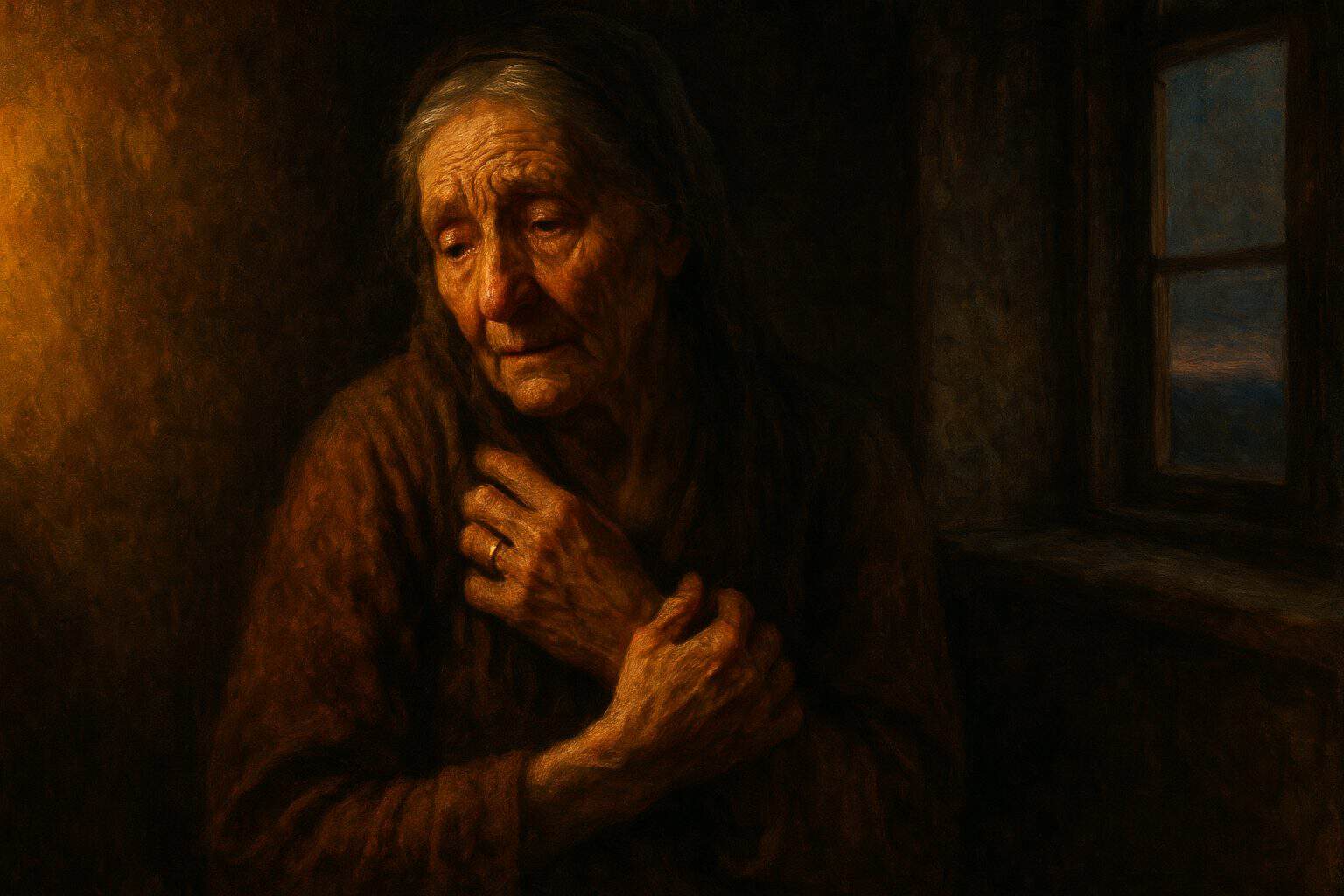
Where flesh learns to trust what spirit already knows
The Wound’s Teaching
The infant reaches toward the mother’s breast, and in that primordial gesture, everything begins. Not merely hunger—though hunger moves through the small body like weather through a landscape—but the first negotiation between flesh and world. The tiny fingers grasp, the mouth seeks, the whole being arcs toward what it needs. And here, in this most basic exchange, she either learns to trust the world or to distrust it, depending on her parent’s response to her hunger.
This is where tenderness begins, or fails to begin. Not as sentiment, not as feeling, but as the body’s first lesson about whether the world receives or rejects its need.
Watch how distrust settles into the musculature itself. The shoulders that learned early to brace against disappointment carry that bracing forward through decades. The chest that discovered how to armor itself against the absence of touch maintains that armor even in embrace. Battle-worn and cynical in those days, Anthony writes, I harbored contempt for any woman who presumed control over me through such elementary means. But notice—the contempt lives not in thought alone but in the very stance of the body, the way it holds itself apart even while seeming to draw near.
The flesh remembers what the mind would forget. Every betrayal leaves its signature in the tissues, every abandonment its particular tension. These revealed more than betrayals; they delivered the instruction: shared thoughts do not secure shared hearts, and reason alone fractures. The body knows this teaching before consciousness can name it. It knows in the way it flinches at certain gestures, tightens at certain tones, withdraws at the first hint of what once brought pain.
The Body’s Double Life
Experience taught me that while a woman’s words might deceive, her body never lies; trust in what she does, never in what she says. Here surfaces a strange paradox: the very flesh that learned distrust becomes the only thing trusted. The body that closes against tenderness becomes the sole arbiter of truth.
But observe more carefully this supposed truth-telling of the body. The flesh speaks, yes, but in a language already shaped by wound. The body that never lies is the same body that learned to lie—to present itself as timid while harboring calculation, to offer skin while withholding soul. From my point of view, our relationship retracted to a mutually beneficial exchange—knowledge for skin, passion for detachment. The body participates in this exchange, but notice how it participates: as currency, not as presence.
“The ancient Hebraic mind saw a human as a holistic soul, a unified creation of flesh and spirit that God declared ‘good.'”
This ancient understanding haunts every modern fracture. We speak of having a body, as if it were possession rather than presence. We speak of using the body, as if it were tool rather than self. But in the lived moment—in the actual breathing, reaching, touching moment—no such division holds. My mind—the architect of my rules, the captain of my will, the guardian of my heart—stepped aside. But my flesh, that loyal traitor, answered her call.
Loyal traitor. The phrase captures perfectly the divided life we force upon our own flesh. We make the body bear the burden of our distrust while simultaneously demanding it perform trust’s gestures. We ask it to open while commanding it to close, to yield while insisting it resist.
The Fortress and Its Failure
I forged the Codex to manage risk—with Jeannètte and Jane as my two muses… a shield against confusion, a human system erected where trust failed. The mind constructs its elaborate defenses, its protocols and systems, its rules for engagement. But the body cannot live by protocol. It exists in the immediate, the present, the now-moment where all systems dissolve.
Watch what happens when the fortress fails. The carefully constructed boundaries, the meticulously maintained distances—they crumble not through argument but through touch. A hand on the shoulder, unexpected. A glance that lands before defense can rise. The scent of someone familiar entering a room. The body responds before the mind can marshal its objections, and in that response, something shows itself: the hunger for tenderness that no amount of theorizing can satisfy or suppress.
It was a sharp, bitter taste of a truth my new science had no equation for: that the greatest risks are sometimes the sole path to the grace we claim not to need. The body knows this risk in its very tissues. Every gesture toward another carries the possibility of rejection. Every opening courts closure. Every reach risks the empty air.
Yet the body reaches anyway. Despite everything it has learned, despite every wound inscribed in its memory, it reaches. This is not naivety—the body that has been wounded knows exactly what it risks. This is something else: a kind of wisdom that lives beneath or before the mind’s calculations.
The Look That Knows
They could not deceive me; I knew the darkness they concealed, for it hid within me as well. The wounded recognize the wounded. Not through signs or symptoms, not through words or confessions, but through something more immediate—a quality of presence, a way of holding space, a particular tension in the air between bodies.
But the core reason was much simpler: I trusted no one. I told myself I could not. I should not. Loving Jeannètte led to this desolation. Notice the progression: from the lived catastrophe of lost love to the mental declaration “I could not,” to the moral imperative “I should not.” The body’s wound becomes the mind’s law.
Yet even in this law-making, something else persists. The very fact that trust must be refused, must be actively rejected, reveals its continuing presence as possibility. We do not need laws against what we are incapable of doing. The commandment against trust testifies to trust’s ongoing availability, its perpetual offer, its refusal to simply die.
Remember, the enemy has studied you all your life and has vast knowledge of the human heart… He will customize your temptation just for you. But perhaps the greatest temptation is not toward trust but away from it—the temptation to close what wants to open, to refuse what wants to receive, to armor what longs to be touched.
The Cuneiform Scars
I forged this new protocol of deceptive power by translating the cuneiform scars she left on my heart into thoughts and then into words. The movement from wound to word—notice how it travels through the body. The scars are not metaphorical; they are lived, felt, carried in the chest’s constriction, the throat’s closing, the stomach’s perpetual knot.
These scars become a kind of writing, a script the body reads and rereads. Each new encounter gets interpreted through this script. Each gesture toward intimacy gets measured against these marks. The body becomes a palimpsest where old wounds show through every new experience.
But translation changes what it carries forward. The wound, rendered into thought, rendered into word, becomes something other than itself. It becomes manageable, discussable, theorizable. Yet something essential gets lost in this translation—the immediate, lived quality of the wound itself, its presence as presence rather than as concept.
“If you gaze upon me resting in my coffin with eyes of the flesh, all you will see is the flesh of my hollow corpse—but I am not there.”
The flesh without spirit is corpse. But equally, spirit without flesh is ghost. The living human is neither and both—the impossible, necessary unity that we are but struggle to be. Tenderness toward the body means recognizing this unity not as idea but as lived reality. It means attending to the body not as container or tool or possession, but as the very medium of our existence, the how of our being in the world.
The Return
This, then, constituted the true betrayal: not of some spoken promise… but of the perceived purity of that initial, unguarded… authentic desire. Before the wound, there was openness. Before the scar, there was skin that could be touched without flinching. Before the armor, there was a body that knew how to yield.
This is what haunts: not just what was lost but the memory of having once been capable of what now seems impossible. The body remembers its original openness even as it maintains its learned closure. It remembers trust even in the midst of suspicion, remembers tenderness even in the grip of cynicism.
And perhaps this is where tenderness toward the body begins—not in forcing it open, not in demanding it trust, but in recognizing what it has endured. The body that flinches has good reason. The flesh that armors itself knows what it knows. Tenderness starts with honoring these reasons, these knowings, while also recognizing that they are not the only truth the body carries.
Somewhere beneath the scars, the original skin persists. Somewhere before the wound, the capacity for trust remains. Not as something to be recovered or returned to, but as something that continues to live in the very tissues that seem to refuse it. The body that learned to distrust is the same body that once knew how to trust, and that knowledge, however deeply buried, cannot be entirely erased.
Watch how tenderness moves when it finally arrives—not as feeling imposed from without, but as recognition rising from within. The body knows its own hunger for gentle touch, for unhurried presence, for being met without demand. It knows because it has always known, even in its most fortified state, even in its most elaborate refusal.
The flesh speaks its need in the very form of its resistance. The tension tells of what it guards against. The armor reveals the shape of what it protects. And in this revelation, something becomes possible: not the undoing of what has been done, but the slow, patient work of teaching the body that what it learned in wound is not all there is to learn.
Tenderness toward the body is finally this: letting it be what it is while also knowing what it might become. Honoring its history while not condemning it to repeat that history forever. Recognizing that the flesh which seems to betray is also the flesh that remains faithful—faithful to its own deep knowledge of what it means to be human, to be vulnerable, to need and be needed in return.
The body never lies, but neither does it tell only one truth. It speaks wound and healing, closure and opening, distrust and the hunger for trust, all at once, all in the same gesture, the same breath, the same beating heart that refuses to stop hoping even when hope seems impossible, even when the mind has concluded otherwise, even when every reasonable calculation counsels against it.
This is tenderness toward the body: listening to all its truths at once, holding space for its complexity, refusing to simplify what insists on remaining intricate. It is approaching our own flesh with the same patience we would offer a wounded animal—knowing it may bite, understanding why it might bite, while also seeing beneath the bared teeth to the creature that longs to be touched without fear, held without agenda, known without judgment.
The infant reaches toward the mother’s breast, and in that gesture, everything begins. But also, in every gesture thereafter, everything begins again. The body that learned distrust can learn otherwise. The flesh that closed can open. Not through force, not through will, but through the slow, patient work of tenderness—offered first to ourselves, to this flesh we are, this unified soul the ancient Hebrews knew we could never escape being, no matter how hard we try to divide ourselves against ourselves.
The body waits. It has always been waiting. Not for permission—it needs no permission to be what it is. It waits for recognition, for the moment when we stop trying to transcend or escape or manage it and simply let it be: wounded and whole, closed and opening, scarred and sacred, all at once, all in the same breath, the same heartbeat, the same impossible and necessary unity that we are.