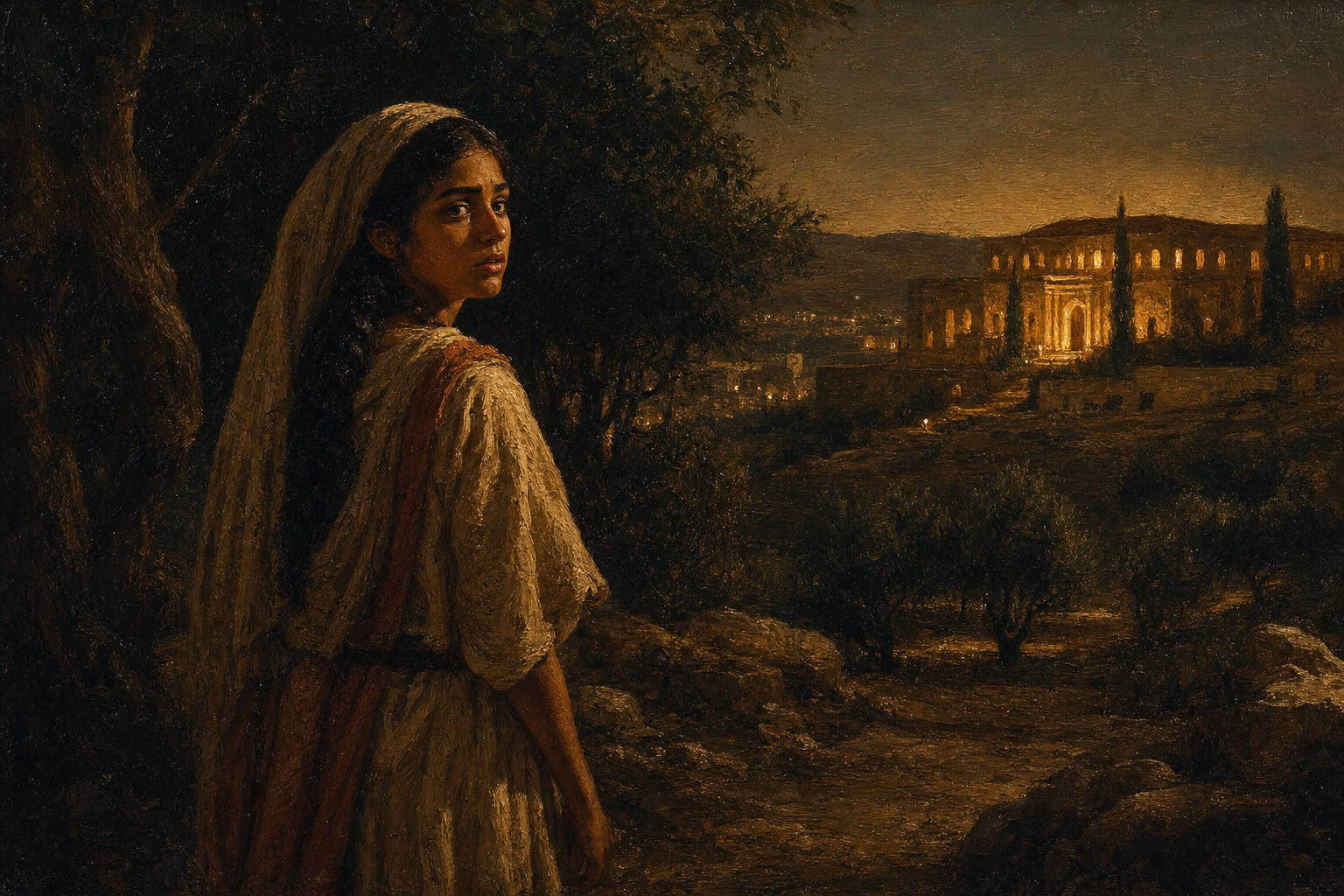
What makes people feel like they belong? A hard, honest look at exclusion, God’s silence, and the ache of watching a feast you can’t enter.
The Boy Who Learned the World’s Grammar Too Late
Why does everyone else seem to know the words, and you only the silence? That was the question gnawing at a fifteen-year-old boy in the summer of 1993, standing at the edge of another school year with the same worn feeling of being outside the glass. He watched the others move the way water moves—no effort, no hesitation, no need to translate. Popular boys and girls found each other by some grammar he had never been handed, a language of glance and ease, and he stood there parsing every gesture like a foreigner mouthing a phrase he could not pronounce. There was hatred in him, yes, and he names it plainly now; the older man reading this scene does not soften the word. He hated the different rules the fortunate seemed to live by, the way beauty summoned suitors without depth of talk or charity of heart, the way people swapped one another like partners in a game with no stakes and no cost. Their conversations struck him as hollow pleasantries, small coins spent before the real transaction. But underneath the hatred was something more shameful to admit: envy. He wanted the very thing he despised. He despised the very thing he wanted. In Confessions to the Empty Chair, this is where the ache begins to show its double face, and where the question of belonging first curdles into something toxic. What makes a person feel they belong? He did not know, and worse, he suspected he lacked whatever the answer required. He carried an obsessive, over-thinking mind that could not simply be, that had to investigate, to understand, to stand back and study the feast rather than sit at the table. His attention would not rest. It circled and circled, cataloguing every slight, every closed circle, every conversation he was not part of. And so belonging became for him not a warmth but a mystery he was locked out of, a room whose password he had never been given. The mood of it was not sadness so much as a low, permanent dread—the sense that he had been thrown into a world already in motion, its rules already agreed upon by everyone but him. He looked back on a childhood dotted with early cruelties, the confusions of adults who could not master their tempers, the sting of being looked through, and it all seemed to point one direction: outward, away, apart. He could describe the party in perfect detail. He could never enter it. That gap, that thin unbridgeable distance between the boy and every lit window he passed, was the whole shape of his loneliness that summer, and it followed him into September like a shadow that never shortened at noon.
Watching the Feasting Hall From the Cold Outside
There is an old image he reaches for in this passage, and it fits the wound too well: the creature in the dark who watches the lighted hall where others eat and laugh and belong. He saw himself that way—a contemplative monster crouched at the treeline, staring in at the warmth, both starved for it and sickened by it. That is the cruelty of exclusion the older narrator now understands better than the boy could: it does not only leave you hungry, it deforms you. It teaches you to hate the feast and to crave it in the same breath. The child punished at daycare, the small boy confused by grown-ups who could not hold their own emotions, the schoolboy who felt dehumanized by girls who looked past him as though he were furniture—all of it had accumulated into a posture. He had learned to stand apart, and standing apart had slowly become who he was, not a wound he carried but a bone he was built from. What frightens the older man reading this is not the exclusion itself but how the boy metabolized it. He did not merely feel left out. He built a whole architecture of resentment, and every barrier he raised to keep the pain from reaching him became one more wall of the cell he would live inside for years. He thought the hardness protected him. In truth it sealed him in. The masculine script he had absorbed told him a man endures alone, that need is weakness, that the strong do not whimper. So when his soul cracked in his chest, he did not cry out. He swallowed the sound. He converted the crack into proof of strength and wore the abandonment like an ornament, a heavy medal of endurance pinned over the exact place that hurt. And here is the terrible confusion he could not see then: he mistook his isolation for integrity. He thought his distance from the shallow feast made him deeper, more faithful, more real than the beautiful ones swapping partners in their careless circle. Maybe some of that was true. But most of it, he now suspects, was pride dressed as piety, envy wearing the mask of principle. He wanted to believe he was refusing the world for God’s sake, standing apart because he was called to stand apart. He was often just refusing it because it had refused him first, and calling his sulking a vocation. The register of the whole scene is dread—the vertigo of a young soul standing before his own freedom, finding no solid ground beneath his feet, no steadying hand, no voice to tell him who he was or where, in all that motion, he was ever meant to fit.
When Heaven Went Quiet and Left Him the Whole Weight
Then there was God, who had once, he says, come near in a way he could not explain—and then went silent. That silence is the true center of this scene, the pivot on which the boy’s whole world tilted. He had done what the church told him. He had tried not to be shaped by the world, to stand apart, to seek the good and pleasing thing, to keep his mind turned toward what was true. He had asked for bread. What he felt he received was a stone in the hand. He had asked for a fish and felt a snake pressed cold into his palm instead. Obedience did not feel like peace; it stung, it hurt, it left him more alone than before he had bothered to obey. He had gone to the girls of the world seeking comfort, acceptance, a little warmth against the cold, and had found conflict and misunderstanding waiting for him instead. He had gone to God seeking meaning and found a wall and a voice that had gone miles away, so far he could no longer tell whether anyone was listening. This is the abandonment that runs deeper than any social wound, deeper than any locked hall, and the older narrator does not pretend to explain it away. He will not hand you the easy comfort that God was obviously there all along in some warm, felt way. That would be a lie about how it actually felt, and this book does not lie about how things feel. The silence was real. The absence was real. The boy interpreted it as being flung into darkness, abhorred, forgotten by the one voice he had trusted most. He had knelt in the quiet and waited and heard nothing come back, and the nothing was worse than a rebuke. And yet—here is the thing he can only see now, decades on—the silence was not empty. It was severe, but it was not desertion. God had gone quiet the way a teacher goes quiet during the test, not to abandon the student but to make him find the answer in his own trembling hand.
The wall you build to keep the pain out becomes the room in which you are sentenced to live.
The Cold He Made While Trying to Escape the Cold
But the boy did not read the silence that way, and the older man will not rewrite the boy’s misery to make the theology tidy. What actually happened next is the sad, understandable thing: he decided to figure it out himself. If God would not speak, he would build his own manual. He would turn himself into a machine that did not need to feel, did not need to belong, did not need to risk the vulnerable act of asking another person to love him. He took the raw, frightening freedom of being a self among other selves and tried to cage it in a code of rules he could control. He would decide in advance what everything meant so that nothing could surprise him and nothing could wound him again. And the awful irony, the thing the older narrator sees with painful clarity, is that this effort to escape the cold only manufactured more of it. Like a trapped thing beating its wings to get free and only fanning the freezing air around itself, every motion he made to warm himself left him colder than before. The intellect he trusted to save him became the very apparatus of his imprisonment. He split himself in two. He held his pain at arm’s length by treating it almost as a separate companion, a bitter guide who walked at his shoulder and never left. He retreated into imagined conversations because real ones asked too much of him, because a real face could turn away and a fictional one never would. He mourned not only what he had already lost but the phantom lives he would never have—the futures, the affections, the children of the imagination that died before they were ever conceived, small ghosts of a warmth he had already decided he could not risk. All of it was grief, and much of it was self-inflicted, and the honest man cannot fully separate the two. Was he a victim of a world that shut him out, or an accomplice in his own exile, bolting the door from the inside and blaming the lock? He does not know. He suspects the answer is both, braided so tightly he cannot pull one strand from the other without tearing something. What he wanted was mercy, and what he chose, again and again, was the sword—the hard, defended, self-sufficient posture that felt like power in his hand and was actually the slow, patient closing of a fist around his own warmth until the last of it went out.
The Password Was Never a Password At All
So what does make people feel like they belong? The boy that summer believed it was a secret grammar the beautiful and the easy had been born knowing—a language of effortless charm that he had somehow been denied at the counter where the others were handed theirs. The older man reading the scene now knows that was the wrong question, or rather the right question aimed at the wrong door. Belonging is not a password you crack or a language you finally master. It is not earned by becoming more like the feast you envy. He spent years trying to solve belonging as a problem of the intellect and the will, treating it like a lock with a solution, and it left him exactly where the defended posture always leaves a soul: alone, correct, and frozen through. What he could not see at fifteen is that the very silence he read as abandonment was a strange kind of nearness—that God was not absent from the dark room but sitting in it with him, quiet, present in the cracking of his chest, walking beside him even in the pride and the hatred and the sword. Not fixing it. Not lifting him out. Just there, in the cold, unwilling to leave. Belonging, he would learn slowly and at great cost, does not begin when the world finally admits you to its hall. It begins when you stop needing the hall to tell you who you are, when the barrier you built to keep the pain out is at last allowed to fall, when you let yourself be seen and loved not for the grammar you have mastered but for the trembling, unfinished self behind it. He is not there yet in this scene. He is nowhere near it. He is a boy in the shadows, watching the light spill from windows he will not approach, hating what he wants and wanting what he hates, certain he has been forgotten. That is the honest place Confessions to the Empty Chair leaves him, and it does not rush him out of it or dress his suffering in a moral he has not yet earned. If you have ever stood at the edge of a warmth you could not enter and wondered why the door would not open for you, this is a book that will lower itself into the cold ground beside you and refuse, gently, to pretend the cold is not real.