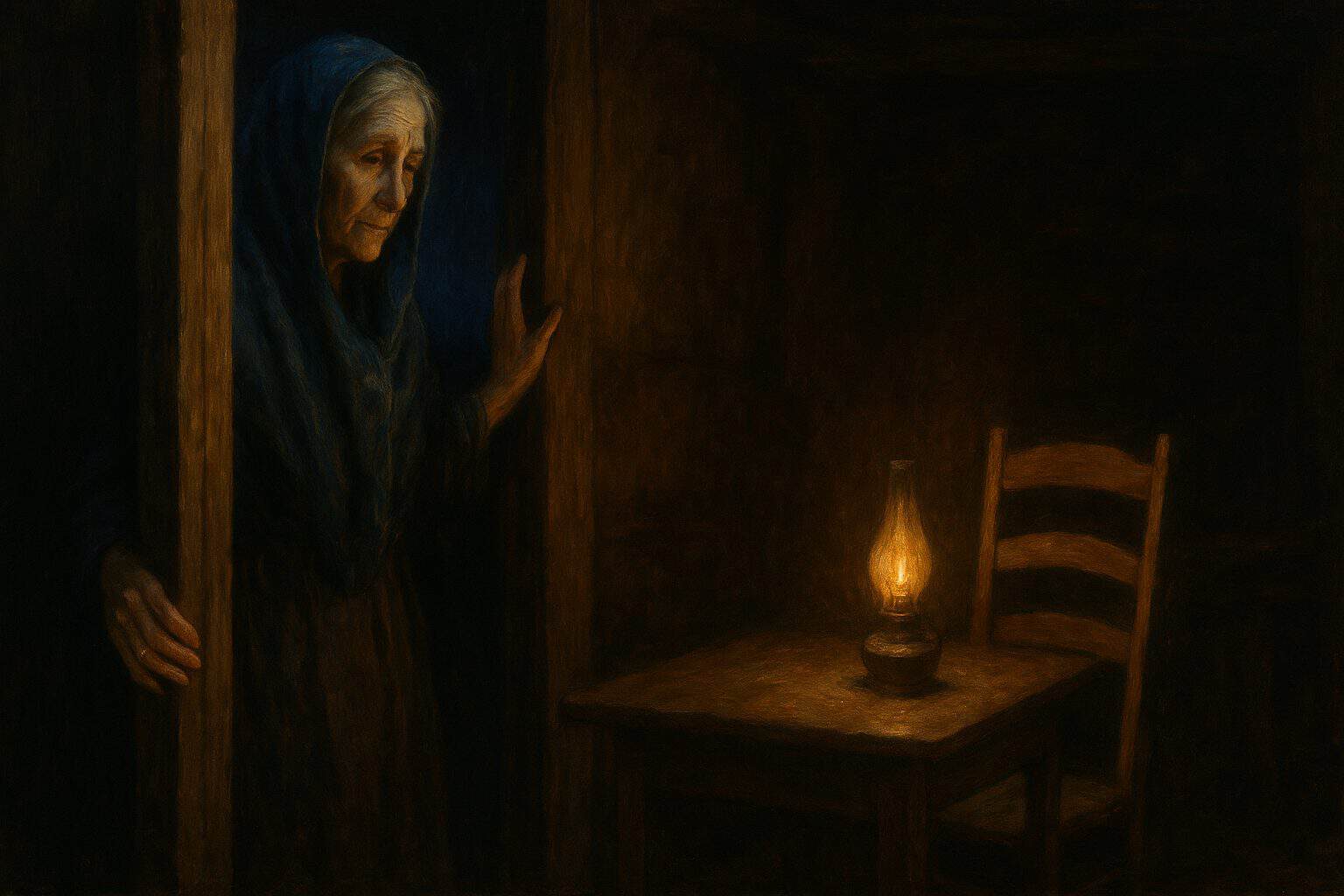
Where crossing becomes dwelling, and absence holds more than presence ever could
The Door That Opens Both Ways
One Friday evening, lost in the solitude of my room, wrestling academic texts, a sharp knock broke the silence. It was Jane. The phenomenon begins here—not with the knock itself, but with how the threshold suddenly materializes between us. The doorway, which moments before was merely the unremarkable edge of my room, transforms into something charged, something that holds us both in its frame while keeping us apart.
“Well, are you gonna come over here?” she questioned and commanded at the same time, words imbued with intent. But notice: the crossing has already begun before any foot moves. The threshold extends itself through her words, reaches across the space between us. I am already there in her invitation before I am physically there. The door frame holds this doubling—I remain in my room even as I am pulled toward what lies beyond it.
When I stepped inside, she closed the door behind me, turned the lock, drew the shade, and put on background music. Her scent clung to everything. Each gesture—the turning lock, the drawn shade—does not merely secure a space but transforms it. The threshold we crossed continues to reverberate in these acts of enclosure. We have not simply moved from one room to another; we have entered a different order of being where ordinary boundaries dissolve and reform.
The Restaurant’s Teaching
Suppose that a person walks through the door of a restaurant and pauses at its threshold. From their perspective, they might see various tables and chairs. But this seeing is not neutral observation. Standing at the threshold, one does not merely see the interior—one reads it, feels its invitation or resistance, senses where one might belong or remain foreign. The tables and chairs arrange themselves not as objects in space but as possibilities of encounter, zones of inclusion and exclusion.
The interior of the restaurant from the position of its threshold reveals something essential: we never simply enter a space. We enter a field of relations, a web of gazes and possibilities. At first, your general experience and intelligence prepared you for what you might encounter, but the threshold holds you in that moment before commitment, before the space claims you as surely as you claim it.
I felt like a late arrival squeezing through the door after the music started, trying not to trip on the beat everyone else already knew. The threshold here is temporal as much as spatial—it marks not just the boundary between outside and inside but between those who belong to the rhythm and those who must learn it. The door frame becomes a kind of judgment, holding me in my awkwardness even as it admits me.
The Empty Chair’s Vigil
Before sleep, I often pull the empty chair close in the dark. Little did I know He would join me this night. The chair—this particular chair that holds no one—becomes itself a threshold. Not between rooms but between presence and absence, between the seen and unseen orders of being. Its emptiness is not lack but invitation, not void but capacity.
“The empty chair speaks more truthfully than any occupied seat—it holds the shape of every possible arrival, the weight of every potential presence.”
The phenomenology of the empty chair reveals something profound about thresholds: they are not merely passages between spaces but dwelling places in their own right. The chair pulled close in darkness creates a threshold-space where the invisible might become present, where absence itself becomes a mode of encounter.
Lucifer was one among them, observing from afar, as God denied him permission to interject himself directly into them. Even the cosmic order knows this law of thresholds—to observe from the boundary, to be held at the edge of direct encounter. The empty chair participates in this same structure. It holds open a space for what cannot yet cross over, for what must remain at the threshold of full presence.
The Stickman’s Mark
Stickman crossed the threshold and marked me with his flame, calling for grace to pursue me unasked as darkness claimed its ground. Here the crossing is not voluntary, not invited. The threshold can be breached, violated, and yet even in this violation, it maintains its essential structure. To be marked by what crosses uninvited is still to be marked at the threshold, to carry the boundary’s trace in one’s very flesh.
The night the room went silent before the crickets did—this teaches us something crucial. The threshold announces itself through atmospheric shift, through the sudden weight in the air before an unseen arrival. We feel the boundary before we see it, sense the crossing before it occurs. The inexplicable clarity that cuts through mundane noise is the threshold making itself known.
Inches from my face. Less than a heartbeat later, a deafening thunderclap exploded, then rumbled into the distance. Someone heard my thoughts. The threshold here is not spatial but ontological—between thought and world, between the inner and outer. When this boundary suddenly collapses, when what should remain interior suddenly finds response in the exterior world, we discover that all thresholds participate in this more fundamental boundary between self and cosmos.
The Keyhole’s Lesson
Shall you return to the same keyhole as before, look through it, and continue to believe that everything you see is everything that there is to see? The keyhole presents the threshold in miniature, concentrated. It is not a passage for bodies but for vision, and in this concentration, it reveals something essential about all thresholds: they frame not just what we can cross but what we can perceive.
The keyhole teaches us that every threshold is also an epistemological boundary—it shapes not just where we can go but what we can know. To look through is already to accept the frame’s limitation, to mistake the bounded view for the whole. Yet this very limitation is what makes seeing possible. Without the frame, without the boundary, there would be no perspective at all, no position from which to witness.
As I opened the door and entered, I heard them all listening to a recording they had made of her moans. The crossing of this threshold brings not liberation but deeper entanglement. To enter is to become complicit in what the room contains. The door that admits us also implicates us.
The Razor’s Edge
Searching for the razor’s edge—the interpersonal space where women’s behavior suddenly, silently, and inevitably shifts from enthusiasm to silence. This names another kind of threshold, one that exists between people rather than between spaces. It cannot be mapped or measured, yet everyone who has lived knows its reality. The moment before the shift, the space still hums with possibility. The moment after, something irreversible has occurred.
“Walk with me a little further and consider what I have to say”—every invitation to cross a threshold together is also an invitation to trust, to risk the irreversible.
It was Angela. Inebriated, with words slurred, behavior erratic. I knew that look. A knot of anxiety tightened in my gut. The threshold here is not architectural but embodied—it lives in the knot of anxiety, in the recognition of what approaches. We carry thresholds within us, boundaries that activate when certain presences draw near.
The Chair’s Patience
The empty chair does not wait—waiting implies anticipation of a specific arrival. Instead, it holds open. This holding open is not passive but requires a kind of vigilance, a maintaining of the space against all that would fill it prematurely. The chair beside the bed in darkness embodies this vigilance. It keeps watch not for what will come but for what might come, for what needs the space held open in order to appear at all.
Meet the threshold potential of the associated neuron, the neuron does not fire and the signal does not pass along to the other neurons. Even our biology knows thresholds, knows that not everything that approaches deserves passage. Some stimuli, although real as proven through animal physiology and scientific instrumentation, exist beyond our threshold of perception. The empty chair reminds us that presence too has its thresholds—not everything that is real can cross into appearance.
The chair’s emptiness is therefore not absence but a kind of reserving—it reserves the space for what cannot yet appear, for what needs the patience of emptiness in order to gather itself into presence. Every empty chair is a threshold held in suspension, a doorway that opens not between rooms but between orders of being.
The Dwelling Place
The threshold and the empty chair—these are not two phenomena but one phenomenon seen from different angles. The threshold is the empty chair of space, the place that belongs to no room yet makes all rooms possible. The empty chair is the threshold of furniture, the seat that belongs to no one yet makes all sitting possible.
Both teach us that crossing and dwelling are not opposites but intimates. We dwell most fully at the threshold, in the space between spaces. We cross most completely when we remain, like the empty chair, open to what has not yet arrived. The membrane between inside and outside, between presence and absence, between self and other—this is not a barrier but our most intimate dwelling place.
In Confessions to the Empty Chair, Anthony Adoré does not fill the chair with imagined presence but lets it remain empty, lets it teach him how absence itself can be a mode of encounter. The chair pulled close in darkness becomes the threshold where the invisible might speak, where what cannot appear might still somehow arrive.
The door frame holds us even as we pass through. The empty chair receives us even in its emptiness. Between them—between threshold and chair—our lives unfold in that strange space that is neither inside nor outside, neither presence nor absence, but something more original than both: the opening where existence itself takes place.