Are casual hookups healthy? A raw, honest look at desire, loneliness, and what the body reaches for when it will not stop short of the divine.
Half-Remembered Names in the Morning Light
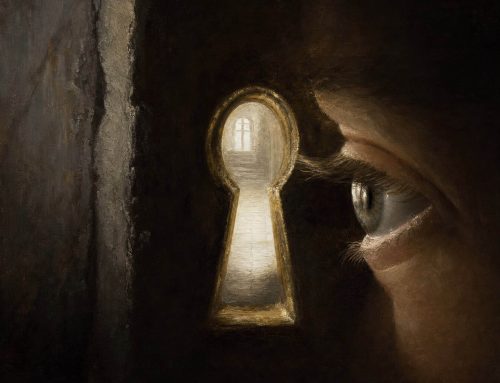
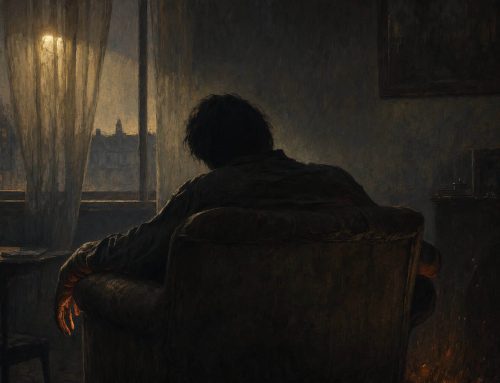
There was a stretch of years, before I could name what I was doing, when I kept returning to the same kind of night. Colored light, low and thick as syrup. Bodies close enough to feel the heat coming off them. Music turned up loud enough to drown out the small voice that asks who you are becoming. I would leave with someone whose name I already half-remembered, and in the morning the emptiness would be waiting, patient, sitting exactly where I had left it the night before. I told myself this was freedom. I told myself the dull ache under my ribs was just the ordinary cost of being young and alive and unattached. Looking back through the pages of Fractions of the Soul, where I try to write this pattern down without softening it, I see a young man who mistook motion for progress. He moved from one warm body to the next the way a child recites the alphabet, A to B to C, always stopping short of the letter that would have changed everything. That is the trap, and it is a subtle one. A casual encounter hands you a taste of the thing you were made for without ever handing you the thing itself. It gives closeness without knowing. Touch without covenant. Heat without the fire that actually warms a person through. So you go again. And again. Chasing the same insufficient dose, the way a thirsty man drinks salt water and wonders why his throat still burns. If you have typed the question into a search bar at three in the morning, are casual hookups healthy, I suspect some part of you already feels the answer settling low in your chest. The real question hiding under it is lonelier than the one you typed. Will this ever be enough. I lived a long time inside that room, and I can tell you plainly what the light there does to a person. It flatters you. It lets you believe the hunger is manageable, that you are the one choosing the pleasure, when in truth the pleasure has quietly begun choosing you, thinning you out one night at a time like water wearing down stone. The body keeps a ledger even when the mind refuses to open it. Every encounter I could not remember was a page torn out of something I could not name, and the torn pages piled up. I did not yet understand that longing is not a puzzle a stranger can solve. It is a mystery, suffering and pleasure braided into a single cord, permanent and slippery at once, pointing somewhere no bed has ever reached.
Running Toward Each Other Since the Garden
Men and women have been sprinting toward one another since the first garden, and I count myself among the runners who tripped over their own hunger and got up and ran again. We look at another person and see the missing piece, the shape that would finally fit the hole worn into us. That is the oldest mistake there is, older than any nightclub, as old as the first two people who walked and talked with Love itself and still turned to reach for something they had convinced themselves was better. For most of my life I read that old story as a fable about breaking a rule. Now I read it as a mirror held up to my own face. If the sinless failed while standing beside perfect Love, what real chance did I have, warming my hands at women I never intended to actually know? I wanted the pleasure they gave. I wanted the reassurance their attention lent me, the way a look across a room can make you feel briefly solid. And I called all of that love, which was a lie I told with a straight face and clean hands. I will not pretend the tension here is simple. There is nothing shameful in desire itself; the body’s ache for union is holy at its root, planted long before anything fell. A woman who chooses a man for one night is not a mechanism, not a riddle to be cracked open by some cold theory of appetite. She is a whole other consciousness, living her own hunger from the inside, carrying a loneliness of her own that no clever talk of instinct can fully hold. And yet. We both walk into that room hoping the stranger across it will fill an emptiness that neither of us was ever equipped to fill. One reading says we are each seeking advantage, safety, proof that we are wanted. Another reading, gentler, says we are simply cold and want to be held before the night ends. Both are true at the same time, and holding them together without crushing either into the other is the honest labor. What I refused to see, for a long stretch of years, was my own hand in the trade. I was no victim of desire. I was its willing merchant, swapping tenderness for comfort and stamping the receipt with the word intimacy. Beneath all of it lay the fact we spend our whole lives dodging. We are mortal. We are running out of time and the body knows it before the mind admits it. Every casual encounter is, in part, a small clenched rebellion against death, a grab at warmth before the dark closes over. That is why it feels so urgent in the moment. That is also, precisely, why it never delivers what it promises. You cannot outrun your ending in a stranger’s arms. You can only borrow a few warm hours against a debt that always comes due.
The Blade I Could Not Hold Steady
The turn came the way most real turns come, not in a burst of triumph but in a moment of plain exhaustion. I remember lying awake beside someone in the gray hour, listening to her breathe, matching my breath to hers without meaning to, and feeling more alone than I had ever felt in a genuinely empty room. That was the revelation, if a thing that quiet earns the word. The problem had never been the absence of another body. The problem was the sickness filling the hollow inside me, the growth of unmet longing I kept trying to numb with pleasure instead of cut cleanly out. And here is the thing I finally had to admit: I could not hold the blade steady myself. I did not even know where the sickness lived in me. I had spent so many years fleeing the pain that I had lost the ability to find it, to lay a finger on the exact spot and press. The tools for this kind of work are not tools you can always wield alone. Only when I stopped hunting for the good in another person, and turned instead toward the solitude I had spent a decade sprinting away from, did anything begin to move. Not comfort. Movement. There is a difference the search results will never hand you. The genuine meeting with another human being, the kind that mends rather than distracts, only becomes possible after you have knelt alone in your own hollow and asked for something reasonable, something real, something larger than warm skin in the dark. Casual encounters are not healthy in the way you were hoping they might be, because health is not the same thing as the absence of loneliness. Health is what quietly begins the day you stop demanding that a stranger be your savior.
The body cannot lie about what it is starving for, and no stranger’s warmth has ever fed it.
Living Inside the Mess Each Idol Left
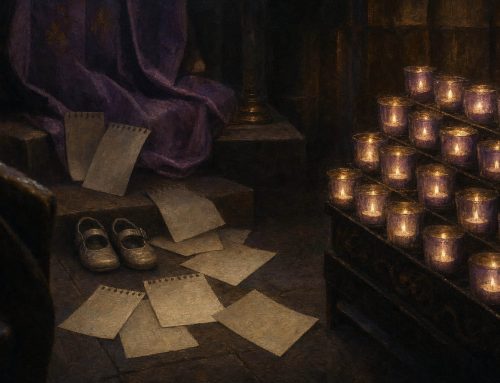
After the seeing comes the wreckage, and I want to be honest about the wreckage, because the tidy version helps no one at all. Naming the sickness did not cure it. I did not walk out of that room a new man with a clean chest. I walked out the same man who now knew exactly what he was doing, which is a heavier thing to carry than ignorance was, not a lighter one. For a long stretch the nights kept happening. Only now they carried shame where the old thin excitement had been, and shame, I learned, is a far worse companion than plain loneliness. This is the point the neat self-improvement talk gets wrong. It promises that insight leads straight to freedom, that once you understand the pattern you simply stop repeating it. In my life understanding was only the first cut. The wound stayed open long after. What I slowly found in those raw years was not rescue. God did not reach down and pluck me out of my hunger the way a hand lifts a drowning man clear of the water. If anything, He met me down in the middle of the drowning, in the sour morning light, in tears I did not want a single soul to witness. He was there in the very room I was most ashamed of, walking beside the exact version of me I most despised, saying nothing, going nowhere. That nearness undid me more thoroughly than any lecture on virtue ever could have. I had braced for judgment and found company instead. I had expected to be ordered to stop, and instead I was simply not left alone in it. The idol I kept building out of other people, the stubborn belief that some perfect mortal vessel would finally anchor me for good, kept cracking apart in my hands, and I kept wandering the mess it left behind. Each shattered idol was another pile of rubble I had to live inside for a while. Desire did not vanish. It does not vanish, and any book that swears it will is selling you a lie. What shifted, slowly and against my will, was the thing my desire kept reaching toward. The longing itself stayed the same fire it had always been. It only learned, over years I would not wish on anyone, that no human body was the cool water it kept mistaking for the flame. I wish I could tell you the wandering ended clean and fast. It did not. Grace, in my experience, is rarely a bright morning that arrives on schedule. It is far more often a companion who lowers himself down beside you in the dark and refuses, gently, to pretend the dark is anything other than dark.
A Small Fire Steadier Than Borrowed Heat
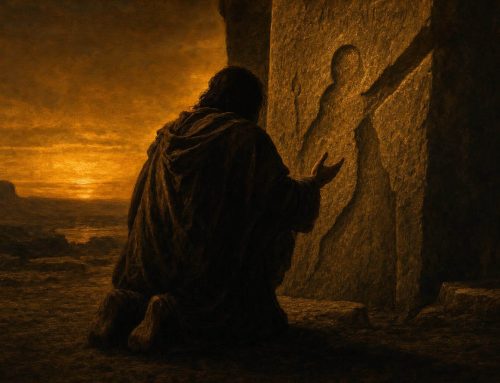
So, are casual hookups healthy. I have walked around the question long enough now to offer the only answer I trust, which is that they are a symptom, not a sin to be scolded and not a freedom to be waved like a flag. They are the sound your longing makes before it learns its own true name. The body reaching for a stranger in a dim room is the very same body reaching, blindly, for a union it cannot yet see. That reaching is not the wrong thing. It is a holy thing pointed at the wrong target. What I have come to believe, and I hold it with open hands because I am still learning it every week, is that desire is a compass with a needle knocked slightly loose. It points, always, toward union. But a wounded soul reads that trembling needle as pointing at the nearest warm person in the room. The long work of a life is to let the needle settle toward its true north, which no lover can ever be, though a true lover can stand beside you and point the way there. This is not a summons to loneliness. It is a summons to a solitude deep enough that when you do finally reach for another person, you reach as a whole being toward a whole being, not as a hollow groping for a plug. In Fractions of the Soul I trace this whole slow descent and the strange grace I stumbled into at the bottom of it, and I do not tie it off with a ribbon, because my own life did not tie off with a ribbon. The old ones who walked out into the dark night described going with nothing but a small fire burning steady in the chest to guide them, and I have come to think that quiet fire is the real answer to what you searched. It is not that the encounters are good or that they are bad. It is that they can never burn as bright as the thing you are actually starving for. One night, out among the rubble of everything you were sure would save you, you may finally feel that smaller, steadier flame and understand it had been the one leading you the whole time. I am still following it. I still lose the trail. But I no longer confuse a stranger’s borrowed heat with the fire that made me.