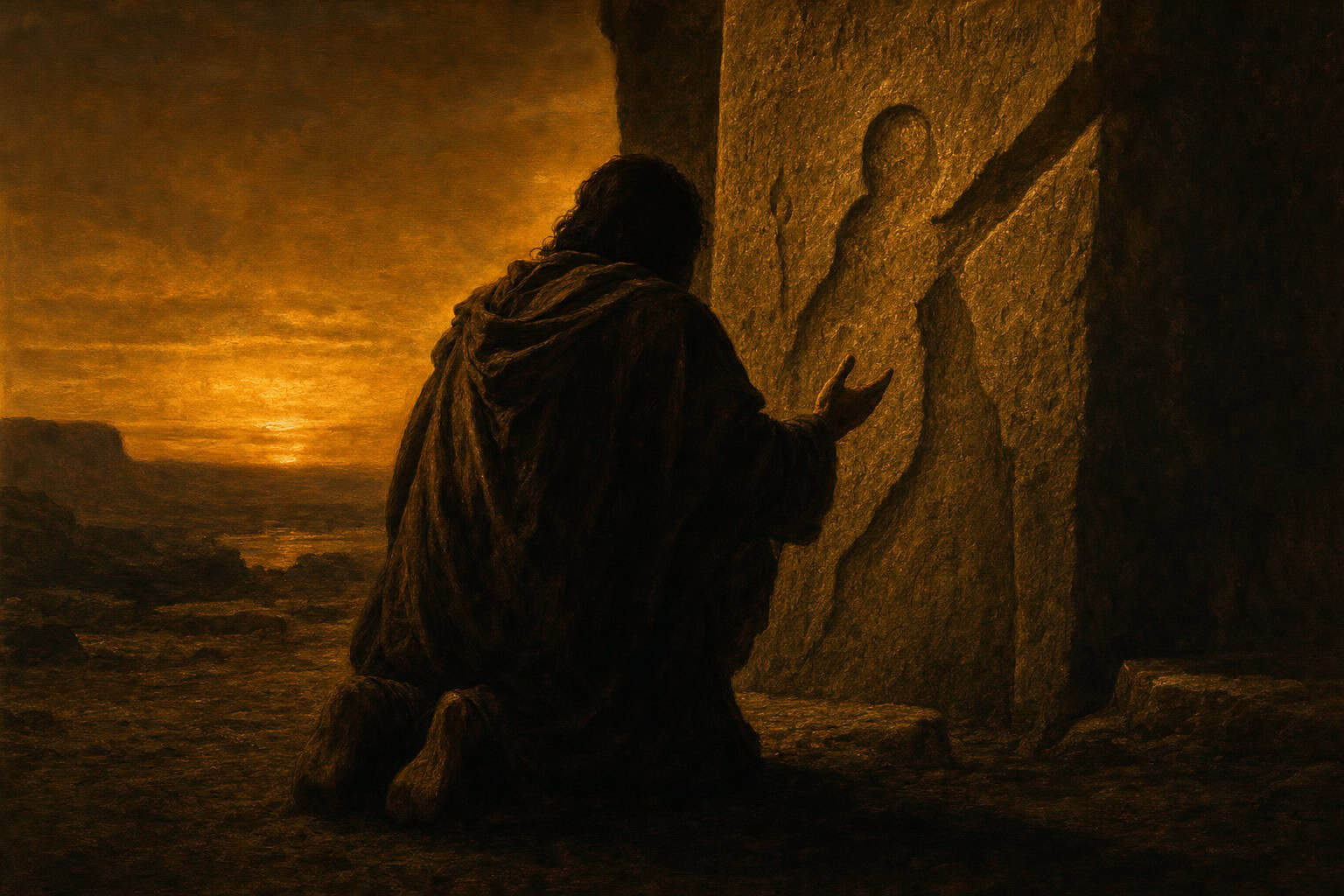
He kneels in the wet grass and pours out to the granite the honesty he never risked on the living, staging for the dead a courage that now costs him nothing.
Knees in the Damp Grass, Mouth Against the Stone
Knees press into wet earth, the kind of cold that seeps through denim and bone, while a forehead nearly touches carved granite. A name, two dates, a small symbol cut into rock stand in for a whole history of breath and warmth that no longer answers back. Here, words finally rush out—the apologies, the unspoken gratitude, the plain confession of love that never made it past clenched teeth when eyes still met eyes across a kitchen table. The only listener now is lichen and polished stone, a surface that will not flinch or forgive, cannot interrupt, cannot say, “I know.” This is courage after the danger has passed, a performance staged for an audience that has been lowered into the soil. Yet the body still leans in as if sound might travel downward, as if muscle and marrow could bridge a distance the coffin has made absolute. In that posture, hunched close to granite, the shame of delay hangs heavier than the gray sky above.
Cowardice Hidden Inside Careful Silence
What breaks open at the grave is not new feeling but feeling that was kept under lock while the other body still moved and answered. The same tongue that stayed stiff and clumsy at hospital bedsides now flows, because nothing can come back from the earth to contradict or embrace it. Distance once felt holy, a way of “not making a fuss,” a way of staying safe from rejection, from tears, from the hot exposure of being truly seen. Now that distance shows itself as plain fear—a heart that preferred controlled scenes to real encounters, polite banter to the risk of saying, “I need you,” and waiting under the weight of their gaze. The stone cannot look away, and yet there is no real gaze to endure, so the speaker feels brave while paying no cost. This moment presses a hard truth: our silence with the living was never neutral. It was an active refusal to let love be mutual, to let another’s freedom answer us in joy or in hurt.
Cold Granite Where Warm Flesh Once Stood
The same hands that trace letters into rock once brushed past a living shoulder, shrugged away a hug that lasted a second too long, waved off a story heard a hundred times before. Now they move slowly along the etched edges of a last name, trying to pull warmth from what feels like a refrigerator door. Every sentence spilled onto this slab rises from a body that knows, in its muscles, that it is too late. The chest tightens, not only with missing the dead, but with the memory of flinching from their nearness, of rolling eyes instead of answering words, of choosing phone screens over actual faces in the same room. Each remembered refusal rubs against the present contact with stone, like a blister that keeps catching on rough fabric. There is no gesture now that can be received, no awkward laugh to ease the heaviness. The body leans, touches, speaks—but every movement hits that unyielding surface and falls back, piling pressure on a heart that cannot find a place to land.
We save our fiercest honesty for the graveside, where the cowardice we practiced on the living curdles into desperate theater with the dead.
When Your Own Throat Knows the Names You Never Spoke
Anyone who has stood at a grave after years of half-hearted affection can feel this scene in their own neck and shoulders. The tightness comes not only from grief but from the backlog of words that lived too long in the chest and never crossed the lips when it could have mattered. Ordinary life trains us to keep things smooth: to shrug off offenses rather than forgive, to assume people already know we care, to treat time as an endless field where another chance will always appear. This graveyard monologue exposes that lie in the most concrete way. The body in the ground cannot be called back for a better conversation, a braver afternoon, a simple, “stay a minute longer.” For a reader, the stakes land here: either speech happens now, with people whose breath still fogs the air, or it is offered later to rock and grass where no ear waits. The same throat now shouting at stone is the one that stayed quiet at the table; that recognition does not let you walk away unchanged.
Grass-Stained Knees and a Heart That Will Not Settle
As the visit drags on, clothing soaks through and dirt clings to skin, yet leaving feels like betrayal, and staying feels like circling the same locked gate. No miracle cracks the granite. No sudden warmth rises from the ground to answer. The body shifts from knee to knee, fingers numb, voice growing hoarse, but the urge to keep talking remains, as if speech itself could rewind time far enough to place both bodies back at the table where honesty was still possible. There is a strange loyalty now, expressed too late—promises made to a plot of land, vows to “do better” with others that tremble on the air but have nowhere to land but the listener’s own conscience. This passage refuses to tie that vow with a ribbon or guarantee it will hold. It leaves a figure finally standing up, brushing soil from their legs, heart still pounding against the ribs, while the stone keeps its place and the grass slowly rebounds under the weight that was just there.