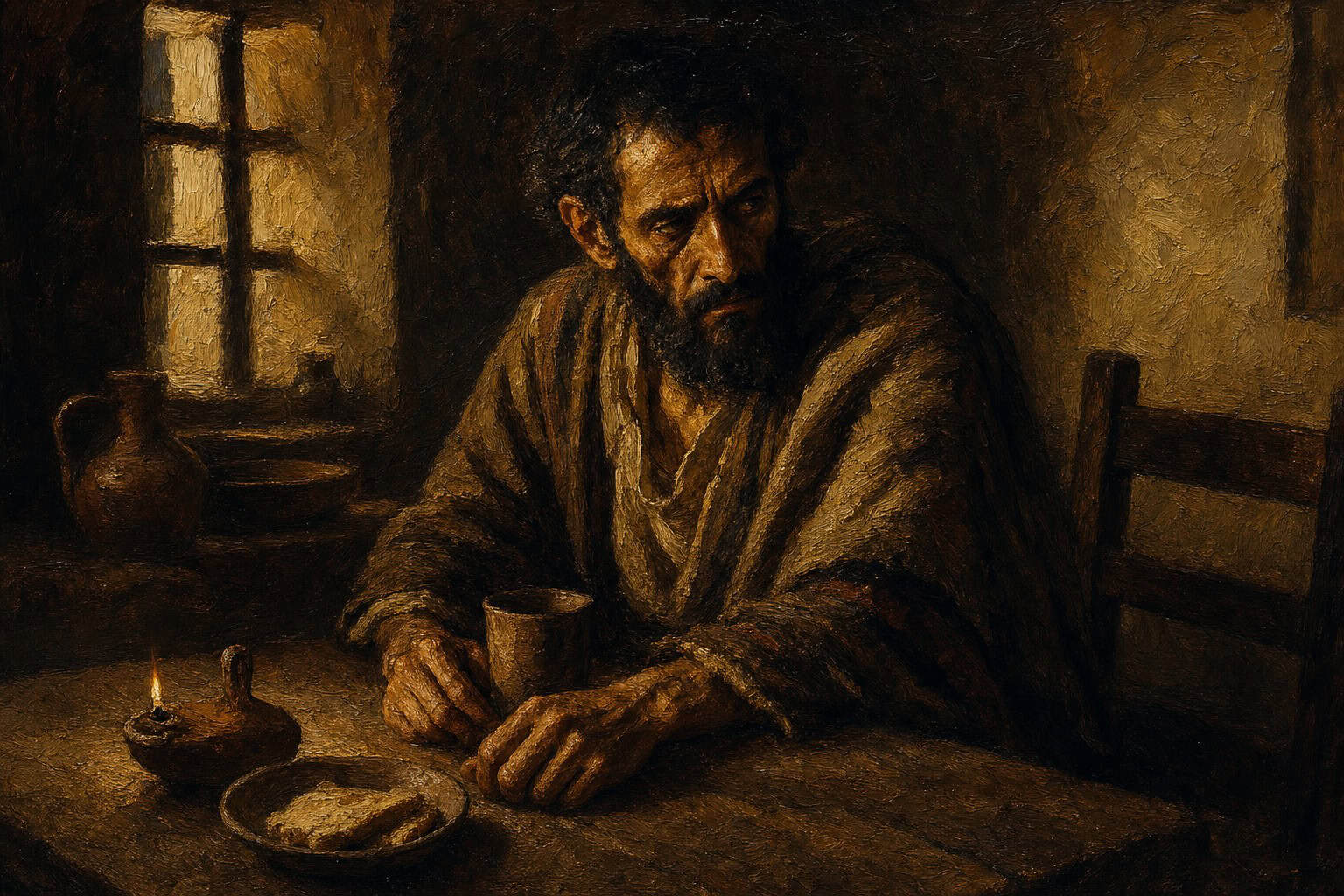
You want to forget your ex girlfriend. Here’s the honest reason she keeps returning, and what her memory is really asking of you.
Warming Your Hands at a Flame That Went Out
You lie awake and her name is still in your mouth. The bed feels wider than it did, and the extra space is not restful, it is loud. You reach for your phone in the dark, not to text her, just to look at the old messages, and your thumb knows the way before your mind agrees. This is the thing no one tells you about forgetting someone: the body will not cooperate with the plan. It remembers her weight beside you, the exact pitch of her laugh, the smell of her hair on the pillow you have washed three times and still cannot wash clean. Your chest tightens at a certain hour without asking permission. You tell yourself you want to move on, and you mean it, but every quiet hour you walk back to the ashes and hold your hands out as if there were still heat there. There is a passage early in Fractions of the Soul that names this without mercy. The narrator watches two people at a nightclub table and sees that the warmth they feel is often not the other person at all, but their own hope working itself up, their own desire feeding on what is not there. He calls it a ghostly warmth from a phoenix’s flame, and the word cuts because it is honest. You are not warming yourself at her. You are warming yourself at the story you keep telling about her. The relationship, the real living thing with its arguments and its long silences and the way she chewed her thumbnail when she was worried, is gone, and what remains is a fire you tend alone with your eyes shut. And here is the harder question the narrator forces on himself, and now on you. Is any warmth better than none? He grants that it might be. A man freezing will take the smallest heat and be grateful for it, and there is no shame in that. But then he turns the knife slowly. To believe the first warmth is also the last, that nothing better could ever come, and to cling to what you already know rather than reach for something more, that is not love and it is not faithfulness. That is fear wearing better clothes. You are not so much grieving her as you are afraid of the cold that arrives after her, the cold of the unchosen room. Naming that will not make you stop reaching for the phone tonight. Your hand will still move. But it may make you honest, for the first time in weeks, about what your hand is really doing in the dark and who is guiding it.
The Face Under Her Face
Sit longer inside it. When you close your eyes and see her, are you seeing her at all? The book presses a strange and uncomfortable truth here, and it does not flinch from applying it to the narrator first. We do not meet anyone fresh. His feelings for a woman rise up against a whole crowded background, his mother, his sister, an aunt, a past lover, a room full of ghosts from his life who arrived long before she did. He did not fall for the woman across the table. He fell for what she rhymed with. And she, in the same seat, was doing the same to him, seeing her father, her brother, some older ache, rearranging his features in the low light until they fit an old shape she already carried. This should unsettle you, because it means the woman you cannot forget may not be the woman you actually lost. You may be mourning a role she played in a story that started when you were small and could barely speak. Ask yourself the thing the narrator asks himself, plainly and without cushioning it: what did I need her to be, and did I ever once see the person she really was, her own weather, her own dread, her own wants that had nothing to do with me? The trembling honesty of these pages is that they refuse to let him off the hook. Maybe he loved the relief she gave him from an older loneliness more than he loved her. Maybe he loved being chosen and mistook that for loving the chooser. Maybe her real self stayed hidden the whole time behind what he required her to mean, and he never noticed the trade he was making. That is a hard confession, and it does not make the loss smaller. It makes it stranger and more particular. Because if you were partly in love with a familiar wound wearing her skin, then forgetting her is not the task in front of you at all. The task is finding the face under her face, the pattern you have been chasing since childhood, the one that keeps handing you the same person in slightly different clothes. Longing, at the root of it, is a real thirst to connect all the way down, to be known and made whole by another soul. That thirst is holy and it is yours and you should not despise it. But it is easily fooled. It will keep offering you the same warmth and calling it love, because that warmth is what you learned first, before you had language for any of it. This is why you keep choosing the same kind of person and swearing each time that this one is different. It is not a weakness of will. It is a lens you were handed, already smudged, and looked through for years without ever seeing the smudge. She is not the whole problem. The lens is.
The Séance You Keep Holding Alone
Here is the turn, and it will hurt where it lands. You are not trying to forget her. You are trying to keep her. Everything you do in the name of moving on, the scrolling, the replaying, the imagined conversations where you finally say the right thing and she finally understands, is a séance held at a table set for one. You are calling the dead relationship back and pulling out its chair. The narrator names the machinery of this with a precision that stings. He says certain choices are not really our own at all. They are hollow, false, when something other than our own awareness is quietly running us from underneath. Read that slowly, twice. When you cannot stop reaching for her, ask who is actually reaching. Is it you, the man awake at three in the morning, choosing freely to grieve a person you loved? Or is it fear, the old dread of the empty room, the terror of being unchosen and revealed as ordinary, moving your hand for you like a puppet’s string? Because if fear is doing the choosing, then it is not really you choosing at all, and no amount of willpower aimed at the wrong target will free you. That is the revelation the book lays bare, and it changes what forgetting even means. You will not forget her by force. You cannot delete a person the way you delete a file. But you can stop being governed by the thing that keeps summoning her to the table. The warmth you feel is your hope working on your desire, whispering that tomorrow will finally be different while you stay exactly, precisely the same. That is the lie underneath all the others. Not that you loved her, that part was real. The lie is that clinging to the memory is the same as being faithful, when it is really just being afraid and calling the fear devotion. And the fear has a shape far older than she is. It reaches all the way back to the first time you wondered, without words, whether you would be held or dropped, whether the world could be trusted or would let you fall. She did not put that fear in you. She only happened to stand in the place where it already lived, and when she left, the place stood empty and ancient again.
To warm yourself at a ghost is not fidelity; it is fear wearing the face of love.
Once you see the séance for what it is, you cannot un-see it, and the table starts to look emptier and more honest at the very same moment, which is its own small unbearable mercy.
To warm yourself at a ghost is not fidelity; it is fear wearing the face of love.
What the Empty Chair Actually Holds
So the fire is a ghost and the séance is you alone in a dark room, hands out, warming them on nothing. What now? This is exactly where the false comfort would arrive, the tidy step-by-step, the promise that seeing clearly ends the pain. The book refuses to hand it over, and so will I. Seeing the truth does not lift the ache. You will still miss her tomorrow, sharply, at some ordinary moment like reaching for two mugs out of habit. Grace, in these pages, almost never comes as rescue. God does not usually reach down and pluck the man out of his sorrow into a bright dry room. Far more often He is simply present inside it, quiet, walking beside the narrator in his own mess and even in his own sin, near in the tears rather than in the wiping of them away. That is the strange, stubborn mercy running under this book. It does not promise that understanding will make the missing stop. It promises you are not alone in the missing, that Someone is standing in the cold with you. And it asks you to do something braver than forgetting. It asks you to let her become a whole person again, separate from your need, no longer a role in your private story. To do that you have to grieve two things at once, and this is the fallout no one warns you about at the start. You grieve the woman, yes, the real one who walked and breathed and disappointed you and delighted you. But you also grieve the version of her you built in your own hands, the warm familiar ghost, and that second grief lands heavier because it was yours alone, you made it, and it never once breathed on its own. You have to let both of them die. The narrator says something stark about death being the ocean around the island of the living, that wisdom only passes between people who are alive together, sharing the same air, the same language, the same longing to understand. The relationship is on the far shore now. It cannot pass anything back to you across that water. Every conversation you rehearse with her is a letter mailed to an address that no longer receives mail. That is not cruelty. It is the plain weather of loss, cold rain that does not care whether you are ready. Sitting inside it, without the phone, without the story, without the false heat, is the hardest thing and the only real beginning. The body will keep remembering when your guard is down. The trembling will still rise when a song plays or a certain slant of afternoon light hits the kitchen counter where she used to stand. You do not fight that. You let it move through you like weather, and you notice, almost with surprise, that you are still breathing steadily after it passes.
Sitting Where the Cold Comes In
Where does this settle. Not in triumph, and you should distrust anyone who sells you triumph. You will not wake one morning cured, her face finally gone, whistling at the mirror. Forgetting was never the real goal, and the book gently takes that goal out of your hands and sets something truer in them instead. The goal is to stop being ruled by the fear that has been dressing itself up as love this whole time. The goal is to sit in the cold room she left and not immediately grab for the next warm body or the next old wound in fresh clothes, but to let the cold simply be cold, and to ask it, without panic, what it has come to teach. Because the narrator’s deepest confession is that the thirst underneath all of it, the longing to be joined all the way to another soul, is real and good and given by God, and it was only ever aimed a few degrees wrong. It kept settling for the first warmth and swearing it was the last. It kept mistaking the familiar for the true, comfort for home. When you can finally feel that longing without lunging at the nearest ghost to quiet it, something in you loosens, like a fist you did not know you were clenching. You become hopeful again, not about her, but about yourself, about the wild possibility that the pattern is not a life sentence written before you could read. That is the quiet turn the book keeps circling back to: becoming hopeful about another person is really, underneath, becoming hopeful about your own life. And the reverse holds too. Learning to sit in the empty room without flinching teaches you that you can be wanted or unwanted and still exist, still breathe, still be carried by a love that does not hang on being chosen by her, or by anyone at any nightclub table anywhere. This is not a technique. There are no steps to number and tape to the fridge. There is only a man in a room learning to be honest about whose hand was moving in the dark, learning to grieve the real woman and bury the invented one, learning that the cold is not his enemy but the plain, honest ground where God is quietly standing beside him without saying much. If you want to know how far that honesty can go, and what it costs him, and what it slowly cracks open, the pages are there. Not to help you forget her faster. To help you grieve her true, and to find, in the very center of the cold, that you were never as alone in it as those long nights spent convincing you. Begin there, in the plain cold, with nothing warming your hands. The warmth comes later. It will be real, and it will not be a ghost.