What happens when your parents curse you? A raw reading of inherited cowardice, love that hurts, and grace that arrives before you earn it.
A Stone Swallowed Before You Could Name It
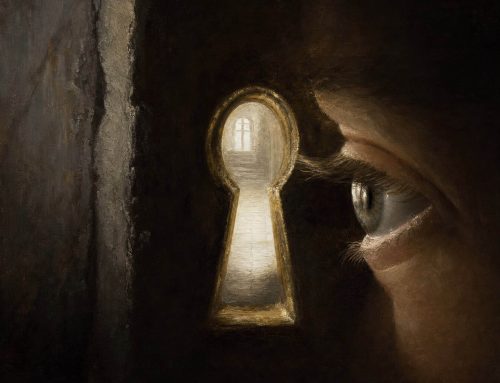
You did not ask for the fear you carry. It was already there when you were small, before words, coiled low in the stomach like a stone swallowed whole. A parent’s curse rarely arrives as a shout or a raised hand. It comes quieter than that. It comes in a shrug that says you will amount to nothing. It comes in a silence that teaches you your love costs too much. It comes in the way a father stiffens when his son reaches for him, so the boy learns to stiffen too, to pull his own hand back before it can be refused. In Fractions of the Soul, this fifth chapter reaches back further than any single childhood. It reaches to the first man, and to the first terror of standing alone before God with no other hand to hold. That terror, the book insists, did not die with him. It passed down through every generation like an inheritance no one signed for, a weight settling into the marrow of sons who never met the man who first surrendered. You feel it whenever loneliness presses in and feels exactly like dying. You reach for another body, another voice, anything warm, because the cold of being alone seems worse than any sin. The chapter names this reaching not as a fresh crime invented in you but as a cowardice already ancient, a groove worn deep before your grandfather drew breath. There is a strange mercy in learning this. Your weakness is not proof that you alone are broken past all others. It is proof that you are a son of a long, wounded line, one more link in a chain of men who traded trust for flesh because the flesh was near and God felt far. But mercy and comfort are not the same thing. To learn the curse is inherited is to face a harder truth: you cannot simply blame the ones who bent you. The bend is real. You can trace it with your own hand. But the choice each morning is still yours to make. The book will not let you rest in either extreme. It refuses the excuse that whispers my parents made me this way, and it refuses the pride that boasts I built myself from nothing. What it offers instead is a slow, uneasy looking. You turn the stone over in your gut and you ask whose hands placed it there. Then you ask, harder, why you keep swallowing it fresh each morning, as if the wound were something you needed to survive. The past does not stay behind you. It presses forward into every room you enter, sitting down at the table before you do, taking the chair across from your own.
The Command That Lands Like a Lash
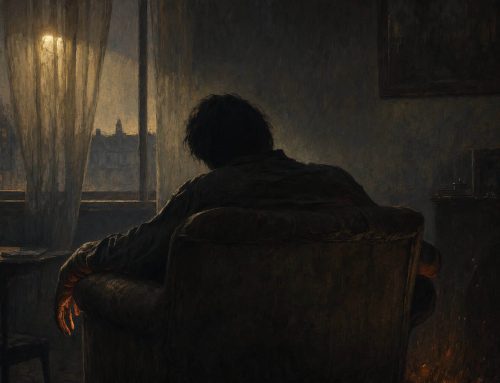
Here the ground begins to tilt beneath the reading. The chapter sets a religious man in the center of a contradiction he cannot solve on his own strength. He has been told God loves everyone. He has been told he must love his neighbor as himself. He has been told, hardest of all, that he must love the ones who wounded him. He believes this. He wants to obey with his whole chest. But he keeps a private ledger of the cost, and the numbers frighten him in the dark. Every time he opened his heart, someone reached in and left a bruise there. Vulnerability brought him bitter fruit he could taste for years. Honesty was answered with disappointment, over and over, until disappointment felt like the natural weather of his life. Now the divine command asks him to keep opening, keep loving, keep offering the soft underside of himself to hands that have already struck it once. The tension is not an idea floating somewhere above him. It lives in his chest like a breath held too long, a pressure behind the ribs that will not ease. To obey God feels like agreeing to be worn down to powder. To guard himself feels like betraying the very God he loves. There is no clean middle path, the chapter warns, no third road where the heart stays both soft and safe. The tender heart either hardens into a wall or it is ground away by patient use. This is where the manuscript refuses easy religion. It does not clap the man on the shoulder and promise that love always heals if only he endures a little longer. It looks straight at the terrible thing. The command to love your tormentor can itself become a torment. Forgiveness and self-preservation pull the same rope in opposite directions, and his arms are not strong enough for both. And the parents who cursed him are among the ones he is commanded to love. That is the cruelest fold in the whole cloth. He must somehow love the very people whose disappointment lodged the stone in his gut before he was old enough to fight back. So he asks himself, honestly, whether his loving is even love at all, or just a frightened boy still begging the ones who hurt him to finally look up and approve. Is his forgiveness holy, or is it hunger wearing the shape of forgiveness? The chapter does not answer quickly. It makes him sit in the question without a floor beneath it. It makes us sit there too, uncomfortable, exposed. Loving those who curse us is not a sweet duty here. It is a fire that consumes something real in us, and we are meant to feel the burn rather than pretend the heat is only warmth. The man who loves this way is never safe. He stands open before a God the book calls a consuming flame, jealous and exacting, no mild kindness that keeps its distance.
Building on Sand and Calling It Rest
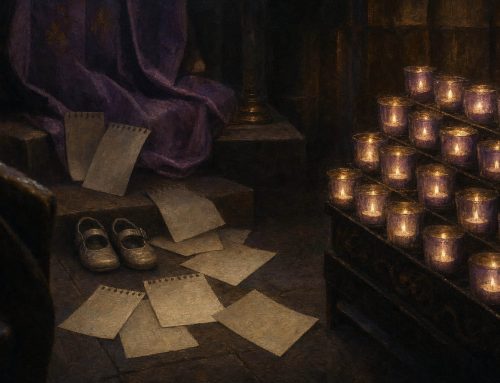
Then the turn arrives, and it lands squarely on the man’s proudest choice. Some men, the chapter says, simply keep falling in love, again and again, taking the sting each time, until at last they stumble onto a woman who does not wound them. They call her wife. They believe their long endurance has finally purchased peace, that the years of bruising earned this quiet harbor. But the book strips the triumph bare with a terrible gentleness, the gentleness of a hand that will not lie to you. This man never grew wiser through his pain. He never became stronger or better for having suffered under it. He only kept walking through the fire until he found a body that did not burn him, and then he clung to it with both hands. What looks like the reward of patience is really the last stop of a frightened search for the mother’s arms, the unconditional welcome he never stopped needing since the cradle. He built his whole life upon his own weakness and named the ruin love. He built a house on sand and called it home. For a while it stands. For a while the two of them comfort each other in the dark, and the comfort feels like arrival, like the end of a long road. But the chapter warns that a day comes when he reaps what he buried. The deep need for a woman’s approval, the need he never faced or named, rises up through the floor of his happy home like water through sand. This is the revelation that cuts deepest. The curse from his parents did not vanish when he married. It hid. It went quiet and dressed itself in the clothes of contentment. The wound his father and mother opened simply found a softer place to keep bleeding, out of sight, where he could pretend it had healed. A curse is not a word spoken over you; it is a weakness handed down, waiting in your bones for the day you mistake surrender for love. And yet, even here, the book will not surrender the whole floor to despair. Because if the man ever stops and sees the sand shifting under his house, if he finally lets himself grieve the child who only ever wanted to be held without earning it, something else can begin. Not a fix. Not a rescue that lifts him clean out of the ache. Something quieter and stranger. The chapter’s harder wisdom is that the unconditional love was never truly absent from his life. It lay buried under his layers of fear and refusal and half-lived days. He rejected the painful parts of himself, and so he lived only a partial life, a life with rooms he never entered. The love he chased through every woman was only a symbol of a fire he was too afraid to walk into directly. To see this is not to be healed. It is to stand, for the first time, honestly awake inside the wound, eyes open in the dark.
A curse is not a word spoken over you; it is a weakness handed down, waiting in your bones for the day you mistake surrender for love.
What the Ground Keeps When the Walls Go Down
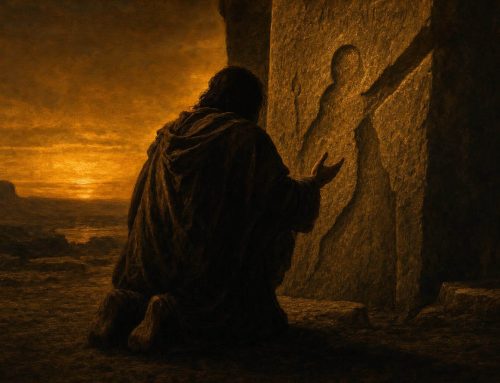
The fallout does not come as thunder. It comes as a slow understanding that grinds against the mind and will not stop. The chapter describes other men, the ones who could not swallow the pain all at once, who could not bury it under a marriage. They carried it forward into every year that followed, turning it over and over in their hands long after the one who caused it was gone from the world. This is the truer picture of a cursed son. He does not marry his way out of it. He does not build a wall clever enough or high enough to keep it in the yard. He carries the disappointment like a coal that never fully cools, examining it in the sleepless hours, asking what it meant and who he became because of it. And this is where the memoir’s honesty grows almost unbearable, because it turns the lens back on the narrator himself. He does not stand above these men, pointing. He is these men. He asks whether his own love of God was ever pure, or whether he wanted God the way a small child wants a parent who will never leave, a security so total that no disappearance could ever threaten him again. He wonders how much of his faith was only a hunger for a mother’s unconditional arms, dressed up in the language of prayer and kneeling. He does not tie this off with a bow. He lets it stay open and raw and bleeding a little. The earned love, the deserved love, always trembles with the fear of loss, always carries the low ache of being used for something. Only the unconditional does not tremble. And the man cursed by his parents spends his whole life trying to earn what should have been given freely, never understanding that the earning itself is exactly what keeps the gift beyond his reach. But here, precisely in the ruin, the book locates its strange grace. God does not appear to sweep the wreckage of the fallen house away and hand back a clean lot. He does not erase the curse. He does not return the stolen childhood. Instead He is described as near, close as the fire itself, present in the very tears the man sheds over the sand where his house once stood. Grace, in this telling, is not deliverance from the dark. It is company inside it. It is the astonishing fact that the consuming flame did not wait for the man to be worthy before it drew near to him. It came first. It came while he was still building on sand, still lying to himself. The mercy arrives before the deserving, and that unearned nearness is the only thing that could ever begin to break the long inheritance of fear.
The Fire That Was There Before You Earned It
So what happens when your parents curse you? The chapter offers no clean deliverance, and that refusal is its integrity, the thing that makes it trustworthy. The curse is real. It sleeps in the bones and it shapes how you love, and whom you cling to, and what you mistake for peace when peace finally seems to come. It presses forward out of the past into every relationship you enter, and you will spend years believing you have escaped it, only to find it seated at your own table one evening, wearing new clothes, smiling at you with your father’s mouth. Fractions of the Soul does not pretend otherwise. It will not sell you the lie that forgiveness comes easy, or that a good marriage repairs a broken childhood, or that enduring pain by itself makes a man wise. It looks at all of that and quietly calls it sand. But it leaves one thing standing when the walls come down. The love the cursed son was always starving for was never truly gone from him. It lay hidden under his fear, buried beneath the parts of himself he could not bear to feel or name. And the God the book describes is no mild well-wisher watching from a comfortable distance. He is a consuming fire, jealous and exacting, and He does not wait for the son to wash himself clean first. He comes near while the man is still swallowing the stone, still confusing hunger with faith, still lying to himself about why he loves the way he loves. That nearness is the whole gift, the only gift that matters. It does not lift the son out of his ache; it walks beside him inside it, step for step, in the dark. This is the current the chapter leaves running beneath everything, the question it presses into your hands and will not answer for you. If the unconditional love you have hunted through every wounded relationship was always there, freely given, before you earned one moment of it, then what have you been doing all these years, hauling wet sand up from the shore and packing it into walls? The book does not resolve it. It sends you deeper into its pages carrying the question like the coal that refuses to cool in your palm. Read on. You will not find a spell that lifts the curse from your bloodline. You will find something harder and far more merciful: a man learning to stay honestly awake in the dark, and a fire that burned close beside him before he ever deserved its heat, and burns there still.