Christian struggling with lust? A raw, honest look at the ache beneath the sin – and how God stays near inside it, not just above it.
The Cold Glass Between You and the Feast
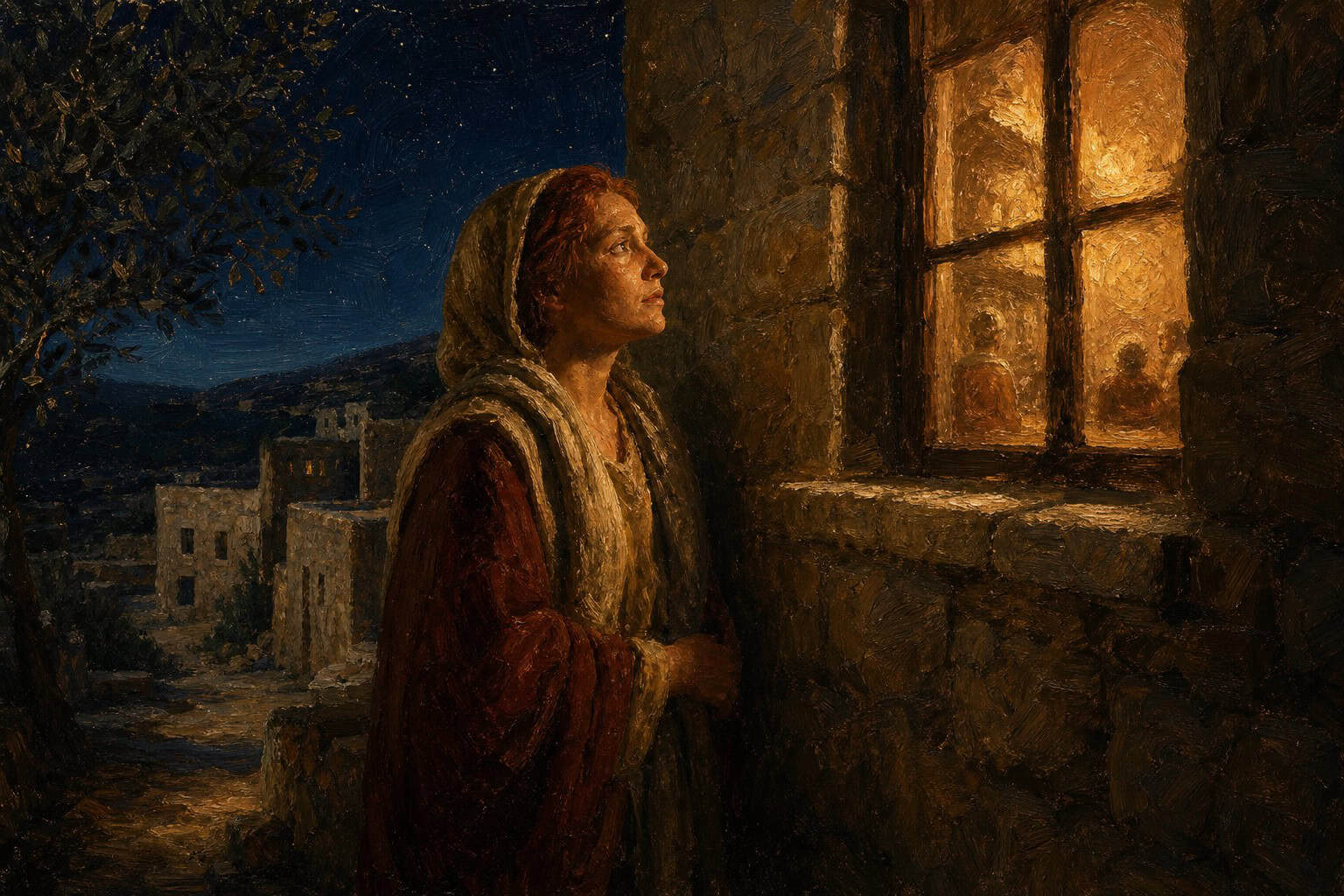
You know the feeling before you have words for it. You are standing at the edge of a lit room, watching people move easily inside it, and something in your chest tightens like a fist. Their laughter reaches you through glass. Their hands find each other without effort, without a single sentence traded, and you count the distance between where your body stands and where their warmth pools. You are not invited. Worse, you are not even noticed, and being unnoticed is a colder thing than being turned away. A person turned away at least registered. You did not even register. Lust, for a Christian, almost never begins as a bare hunger for skin. It begins here, in the ache of exclusion, in the sting of watching others feast on a belonging you were promised and never handed. You have prayed. You have tried to keep the rules, to stand apart from the world while still living inside it, and the result has not felt like peace. It has felt like being given a stone when you asked for bread. You wanted comfort, acceptance, the plain animal relief of being wanted, and you did all of it while trying to love God, and what came back was conflict and misunderstanding. The misunderstanding is its own wound. You were sincere, and your sincerity read as strangeness. You loved carefully, and your care was mistaken for something less than a man. So the desire that rises in you at night is not simple. It is tangled with resentment, with the memory of every time your interior life counted for nothing next to a good jawline and a confidence you never learned to fake. You watch the easy ones swap partners like a game of musical chairs, consuming each other and moving on to fresh meat, and you feel two things at once that will not sit together. You want in. You also despise the whole shallow performance, the hollow pleasantries that pass for conversation before the bodies do their trading. That contradiction is the first honest thing to name. The lust is real, yes, but underneath it runs a deeper wound: the suspicion that your body, your face, your quiet depth, are simply not currency in the only market that seems to matter. You are rich in the wrong thing. You have investment capital and the wrong coin. And so you stand at the glass, breath fogging it, wanting and hating what you want, and you have not yet begun to ask what you are really hungry for. You think the answer is a body. You are wrong, but it will take the whole night to learn how wrong.
The Body That Learns Its Shape by Being Left Out
Notice what your body does while you watch. Your shoulders round inward. Your breath goes shallow, held at the edge of a room you cannot enter. Your jaw sets. Every nerve maps the gap between your flesh and theirs, and this is how the excluded body comes to know itself – not by touch, but by the ache of no touch. You learn your own shape by pressing against a wall you cannot see. This is the strange cruelty of lust that grows from loneliness: it makes the body sharper, hungrier, more aware of itself precisely as it is denied. You begin to imagine that if you could just become irresistible, if you could perform the right strength, tell the right stories, wear the right skin, you could buy your way into the feast. The market has taught you its terms, and you have started to believe them. You study seduction the way a starving man studies a menu behind glass, memorizing what you cannot taste. But here is the part that costs you. In wanting to be wanted so badly, you begin to erase yourself. You collect your own deepest affections and offer them cheaply, like loose change scattered on the ground, hoping someone will bend to pick them up. You make yourself into a utility – the good listener, the safe one, the emotional battery someone plugs into and unplugs at will. You are the brother, the orbiter, the shoulder. Affection arrives precisely when you pull away, just enough to keep you tethered, and you mistake the tether for hope. You give what costs you everything and watch it consumed like a renewable resource, a minor convenience worth stooping to gather. And still you are not kept. This is the quiet devastation beneath the lust: not that you are refused, but that you are used and set down again, that your interior world – the very depth you were proud of – is treated as ambient labor rather than a sacred offering. It is dehumanizing, and you know the word applies to you, and you cannot say it aloud without sounding weak. The body remembers this. It stores every dismissal, every glance that slid past you toward someone brighter, every time you sat close enough to smell someone’s hair and knew you were furniture. So when desire flares in the dark, it carries all of that freight. It is not clean appetite. It is grief wearing appetite’s face. You are trying to prove, in the crude arithmetic of the flesh, that you were enough all along. That someone would have chosen you. That your body was not the flaw you feared. The tragedy is that lust cannot deliver this proof. It can only rehearse the wound. Each surrender leaves you more convinced that you are only your usefulness, only your surface, and the deeper self shrinks further behind the wall, unseen, un-kept, spinning threads that no longer transform anything – they only entomb the thing they were meant to protect.
When the Beggar Dreams of Becoming the Monster
There comes a night when the ache curdles. You have watched from the shadows so long that watching itself becomes a kind of dark power. You stop being the beggar waiting for scraps and start imagining yourself as something else – the creature outside the hall who could, if he wanted, tear the whole feast apart. The disgust you feel toward the shallow ones hardens into a secret superiority. You tell yourself you chose this exile. You tell yourself their pleasure is empty and your suffering is deep, and depth is worth more than warmth. This is the moment lust stops being weakness and starts pretending to be strength. You rewrite rejection as chosen distance. You lean into the darkness on purpose, and the darkness feels, for the first time, like it belongs to you, like a coat that finally fits. And here is the revelation you must not flinch from: the disgust you aim at the feasting crowd is really disgust at your own wanting. You hate them because you hate how badly you still hunger for what they have. Your freedom has twisted into resentment, and resentment feels almost like power because at least it is yours. It is the one thing no one can take. But it is a counterfeit. The monster you imagine becoming is still standing outside, still cold, still starving, only now he has traded the honest pain of longing for the slow poison of contempt. This is where the Christian struggling with lust often actually lives – not in simple animal weakness, but in a deformed care, guarding what he cannot touch, despising what he cannot join, mistaking his shadow for his self. He calls his bitterness insight. He calls his exile a verdict he handed down instead of one handed to him. And the terrible mercy is this. God does not wait at the edge of the lit hall for you to clean yourself up and walk in. He comes out into the cold, into the shadow where you crouch with your contempt and your want. He does not first remove the darkness. He walks into it beside you.
Lust is rarely first about bodies; it is the old hunger to be seen, gone feral because it was starved.
He sits down in the dark with the monster you have decided you are, and He does not recoil. He does not scold. He does not hand you a program. That nearness – not the removal of the ache, but His presence inside it – is the thing that begins, slowly, to unmake the counterfeit. Not by argument. Not by fixing anything you can point to. By company, plain and unhurried, in the one place you were sure no one would ever come.
Lust is rarely first about bodies; it is the old hunger to be seen, gone feral because it was starved.
What Stays When the Contempt Burns Off
The falling away does not come as rescue. You do not wake one morning cured, the hunger gone, the wall dissolved, the feast finally opened to you. That is not how grace usually works in the real dark. What comes instead is smaller and stranger: a slow loosening of the contempt, a moment when you catch yourself mid-resentment and feel, underneath it, only sorrow. The monster costume gets heavy. You are tired of guarding a fortress that has become a tomb. And in that exhaustion something honest surfaces. You admit that you never wanted to tear the feast apart. You wanted to be welcomed to it. You wanted someone to see the interior you kept building behind the wall and to find it worth entering. This is the confession the flesh was always trying to make and could never say straight. You reconsider the people you watched with such envy. Were they really shallow, or did you flatten them so your exile would hurt less? Did you dehumanize them the way you felt dehumanized, turning them into surfaces so you would not have to grieve that they, too, were persons who simply did not choose you? These are hard questions and they do not resolve cleanly. You gave your love like loose change and then blamed them for gathering it, when you were the one who set the price so low. You made yourself a utility and then hated being used. The self-deception runs in both directions, and the honest reckoning is that some of the wound was inflicted on you and some of it you built with your own hands, night after night, brick by brick. The lust did not appear from nowhere. It grew in the soil of every unmet longing you refused to bring into the light, everything you tried to solve by performance instead of by prayer, every conversation you rehearsed but never dared to have. And through all of it – this is the part that undoes you – God was not absent. He was not withholding bread and handing you stones. He was in every tear you shed at the glass. He was in the cold with you, walking your fragmented nights through a dark city that mirrored your own darkness back at you, past neon and closed doors and other people’s warmth. You did not feel Him because you were looking for the wrong thing. You were looking for rescue, for the wall to fall, for the feast to open, for the girl to finally turn and see. He was offering something quieter and, at first, less satisfying: to be with you where you were, unseen by everyone else, seen entirely by Him, contempt and hunger and all. You wanted the darkness lifted. He gave you Himself inside it, which is harder to receive and slower to trust.
Seen First, Then Slowly Kept
So you are still here, in the body that remembers every dismissal, with the hunger that has not vanished. Let no one sell you the lie that faith will erase it overnight. It probably will not. The ache may walk with you a long time, and the lust may keep offering its counterfeit proof that you were wanted after all, its cheap receipt for a debt it cannot actually pay. But something has shifted, and it is worth naming plainly. You are no longer trying to be seen by the crowd in the lit hall as the price of your existence. You have been seen in the dark, without performing, without seducing, without becoming irresistible – seen exactly as the cold, contemptuous, hungry creature you had decided you were, and not turned away. That is the only ground on which lust ever actually loosens its grip. Not by willpower. Not by hating your body harder or starving it into submission. By discovering that your body was never the disqualifying flaw you feared, that your depth was never wasted capital, that your interior life is not ambient labor but a real offering that God, at least, bends to gather – not as loose change, but as treasure worth stooping for. The renewal Scripture speaks of, the making-new of the mind, does not happen behind the wall in isolation. It happens in the slow work of letting yourself be known by the One who was already in the shadow with you before you noticed. You still live in the world. You still walk past feasts you are not invited to. You still feel the old fist tighten in your chest when two strangers lean toward each other with an ease you never had. But now there is a companion in the tightening, a hand on the same cold shoulder. And you begin to suspect that the whole game of who fits best, the whole musical-chairs marketplace of consumed and discarded bodies, was never the feast you actually starved for. You wanted to be kept. To be chosen and not set down when someone brighter walked in. To have your full humanity received rather than harvested. This is the ache the memoir walks straight into without flinching and without cheap comfort – a man learning that the hunger of the flesh was, all along, the soul’s cry to be seen and not erased. If you have stood at that cold glass, if you have felt yourself dissolve under someone’s absence, if your desire has become tangled with grief you never let yourself name, Confessions to the Empty Chair will not hand you a tidy cure. It will do something rarer. It will stay in the cold with you, and turn you gently toward the One who got there first.