Scream 6, the run for the car, and why that pounding dread stays with you – a reflection on being chased, being seen, and wanting to be caught.
The Popcorn Goes Cold in Your Lap
You leaned back into the seat hours before the chase, when the previews still rolled and the room smelled of butter and rubber soles. You had come to be scared on purpose. There is a strange comfort in choosing terror, in paying for it, in sitting shoulder to shoulder with strangers who chose the same. You picked this. That is the part that matters. All week you have not chosen much. The job chose you, the traffic chose you, the small dishonesties of the day chose you. Here, in the dark, you elected your own fear, and there is a dignity in that, a small pretend mastery. Then the screen tightens. Someone is alone. Someone is being watched, and does not yet know it. Your popcorn goes cold in your lap because your hand forgot to move, forgot it was even a hand. The salt dries on your fingers. Your knee has stopped bouncing. The fear you feel now is not really the knife or the mask. It is something older, something that lived in your chest long before any movie taught it a face. It is the fear of being seen when you are not ready to be seen. It is the fear of a gaze that arrives too soon, before you have arranged yourself, before you have chosen your words, before you have practiced your smile in the dark glass of the bathroom mirror. You know this fear from the party you did not want to attend, the one where you stood near the coats and counted the minutes until leaving would look polite. You know it from the elevator where a stranger stood too close and you studied the buttons like scripture. The character on screen runs for the car because staying still means being found, and being found means the whole performance collapses. You lean forward without deciding to. You want them to make it. You also, in some hidden fold of yourself you would not admit to the person beside you, want the chase to catch them, because the running is unbearable and the caught is at least an end to the running. That contradiction is the seat you sit in. That is the popcorn gone cold. The chair beneath you has stopped being furniture and become a held breath. You are no longer watching a stranger on a screen. You are watching the part of yourself that stands at every edge of every room, calculating the distance to the exit, rehearsing the escape, certain that if you can only reach the car, the door, the lock, you will be safe from the terrible thing every real closeness asks of you, which is to be seen without warning, mid-fumble, mid-flinch, with no time at all to prepare your face.
Your Keys Are in the Wrong Pocket
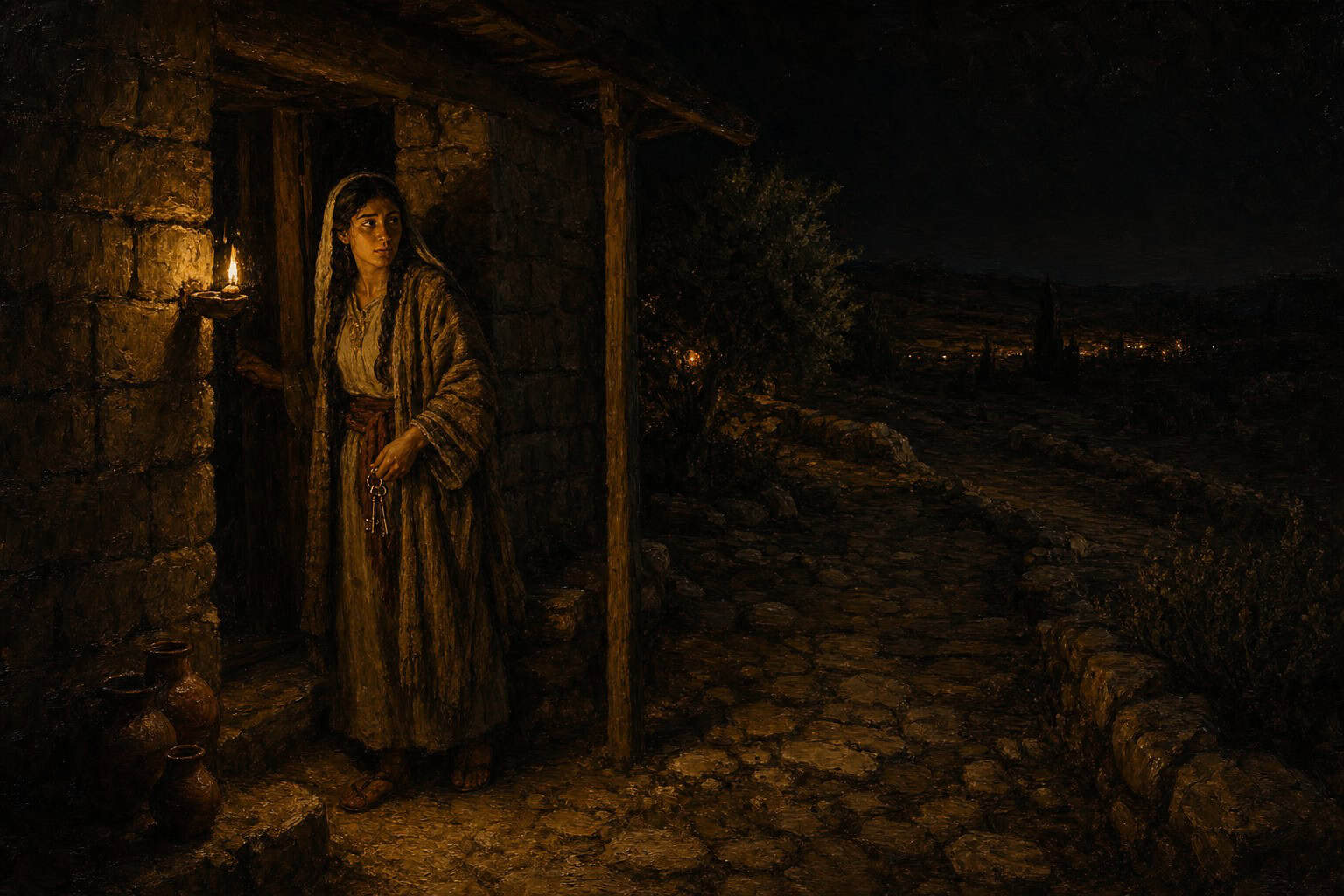
The chase begins and the physics turn against the body. In the film the driveway is too long, the gravel is loud under running feet, the keys are in the wrong pocket, the hand shakes too hard to fit the metal into the slot. Your own body tightens in sympathy without asking your permission. Your jaw sets. Your feet press the sticky floor as if they could push the character faster, as if your muscles were wired into theirs. This is the part that makes people cry out at the screen, because the failure is so intimate, so human, so much like every panicked moment you have ever lived. But sit inside it a moment longer. The dread is not only about the pursuer behind. It is about the exposure of the fumbling itself. To be watched while you fail at the simplest task, to have your competence dissolve under a seeking eye, to reach for the ordinary object and find your hands no longer obey you. That is the private horror underneath the loud one. That is what makes the scene feel personal rather than merely thrilling. You have fumbled the keys before, not at a knife but at a doorway, at a name you forgot the second you needed it, at a touch you did not expect and had no plan for. Someone reached for you when you had planned to reach first, and every clever thing you had rehearsed went slack in your fingers like a rope let go. The chase on screen simply amplifies what you already carry. It shows you a body stripped of its control, running toward a machine of escape that will not cooperate, while behind it comes the thing that will not stop, will not negotiate, will not wait for you to be ready. The car is not really the car. The car is the last locked room of the self, the place where you are alone and unwatched and therefore, you have told yourself for years, unharmed. But notice the loneliness sitting quietly at the center of that goal. To make it to the car is to be saved into solitude. To be safe is to be alone again behind glass, engine turning, no one touching you, no one leading you, no one able to reach across the console and slide the weight from your shoulders. The scene wants you to want that escape with your whole body, and you do, you want it desperately, your feet still pressing the floor. And somewhere beneath the wanting, a quieter grief rises through the noise, because the safety you are sprinting toward is the very same isolation you were trying to escape when you first left the house tonight and paid a stranger for a ticket into the dark.
The Body Screams Before the Mind Decides
Then comes the turn, the moment the whole sequence was built for. The pursuer is close. The distance collapses. Your heart is not obeying you, has not obeyed you for minutes now. And here is the thing the movie knows that you may not have let yourself admit in the daylight: the terror and the longing use the same muscles. The pounding chest, the held breath, the narrowed sight, the whole body pulled toward one single object with a force it did not choose or consent to. This is the exact shape of dread. This is also the exact shape of desire. You do not decide to feel it. It registers in you before you can weigh it, before you can vote on it, before the mind arrives with its opinions. Fear comes as a command, not a request, the same way certain people, certain presences in a crowded room, take hold of your attention before you have agreed to give it away. Your eyes go to them. Your breath shifts. You did not plan that either. The film has trained your body over ninety loud minutes to reach for the car with the same helpless urgency with which a body reaches, in other and quieter rooms, for the very thing it swore it did not want. That is why the scene grips you by the sternum and will not let go. It has found the buried place where survival and hunger are wired to the very same nerve, where running for your life and reaching for another person are the same lunge of the same animal. You are not merely afraid of dying in that seat. You are afraid, and you are drawn, and you cannot pull the two apart, because both of them ask the identical thing of you. Both ask you to surrender the careful self you have spent your whole life building plank by plank. Both threaten to lead you somewhere you did not choreograph, did not rehearse, could not control. And in that sudden collapse of your own steering, in the moment the strategy simply fails, something in you is laid bare that the party and the crowd and the polished, practiced performance have always, always been built to hide.
We think we are running from death, but half of us aches to stop and be caught in someone’s certain hands.
After the Scream, the Silence in Your Ears
The scene ends and the room lets go all at once. People laugh the shaky, embarrassed laugh of the survived, the laugh that says I knew it wasn’t real. Your hands unclench finger by finger. The popcorn is still cold in the paper bucket. But the release is not clean, and you feel the seam of it. Something has been touched that a horror film has no obligation to heal, and so it simply leaves it open in you, bleeding a little, as you file toward the aisle. You came to be frightened and you were, gladly, but underneath the fright you brushed up against a truth you did not pay to meet and cannot now unmeet. All that running, all that fumbling for the keys, all that lunging toward the locked door of the car, it was the same motion you make in every room where you fear being found before you are ready. You retreat to the shadows at the gathering. You hover at the edge, glass sweating in your hand, watching the exits, telling yourself the distance is protection, that solitude is a fortress and not a cell. But the film just showed you, without meaning to, the loneliness waiting at the end of that logic. To reach the car is to be alone and unreached. To keep running is to keep every warm hand too far away to touch you. And here is the reversal the credits do not spell out, though your body already knew it before the lights came up. What you dread is also what you long for, and you can no longer pretend otherwise. You are exhausted by the running. You are tired down to the bone of calculating the distance to every exit, tired of arranging your face before you enter a room, tired of the endless quiet performance that never once lets anyone step close and lead you, unasked, into the center of the floor. The horror of being caught and the ache of being held are, in the dark of that theater, very nearly the same ache wearing two coats. You wanted to make it to the car with your whole thudding heart. But some deeper and lonelier part of you, the part that has been by itself too long, wanted instead to be caught by hands that knew exactly where to rest, that did not stop to ask your permission, that made all your careful strategizing suddenly and mercifully irrelevant. That is the residue the scream leaves ringing in your ears as you push through the lobby doors. Not just fear. A grief for the thing you keep on outrunning.
Where the Chase Was Always Heading
Drive home from the theater and the streetlights pass over your windshield in a slow, tidal rhythm. You are safe now. You made it to your own car, the real one, and checked the back seat out of habit, and no one is behind you but taillights. And yet the dread has not fully drained out of you, because the dread was never really about the mask on the screen. It was about the question the chase kept asking without words the whole time your feet pressed that sticky floor: are you running toward safety, or away from being known? The saved self, sealed inside the car with the engine warm and the doors locked, is also the abandoned self, unreached, unheld, breathing its own recycled air. This is the quiet ache no thriller resolves and none is obligated to, and it is precisely the ache that runs beneath the confessional pages of Confessions to the Empty Chair, where a man who has spent his whole life calculating the perfect approach to every room, every conversation, every woman, is caught flat-footed when a stranger closes the distance and slides his jacket from his shoulders without asking, and discovers to his shame and his relief that his careful solitude was never the protection he believed but a prison he had mortared shut with his own two hands. There is a grace hidden inside being led like that, inside the collapse of the strategy, inside the moment another person’s certainty makes your defenses pointless and you no longer have to perform anything at all, only stand there and be present in your own skin. But it is a terrifying grace, and the book does not soften that. It requires the very thing the chase scene taught your body to dread: to be found before you are ready, to be seen with no time to arrange your face, to be embarrassed and led and small in another’s sure hands. The pages do not pretend surrender is easy or that it arrives clean, without the secret sting of being dominated, without the flush of shame. They sit down inside the fear and stay there honestly. And they suggest, gently and without ever tying it off, that the presence we most dread, the one that closes the exact distance we spend our lives maintaining, may be the very presence that walks with us in the dark, not to lift the dread away but to be near us inside it. You reach your own driveway. You cut the engine. The silence rushes in, total, and your ears still ring faintly. You sit there a moment longer than you need to, keys warm in your palm, wondering whether the thing you have spent your whole life running to the car to escape was ever the danger at all, or whether it was the only thing that could have found you.