You feel like you belong. But belong to whom, and why? A chapter that dissects the ache under that feeling – and where it truly points.
The Lid Bolted Down Over a Boiling Pot
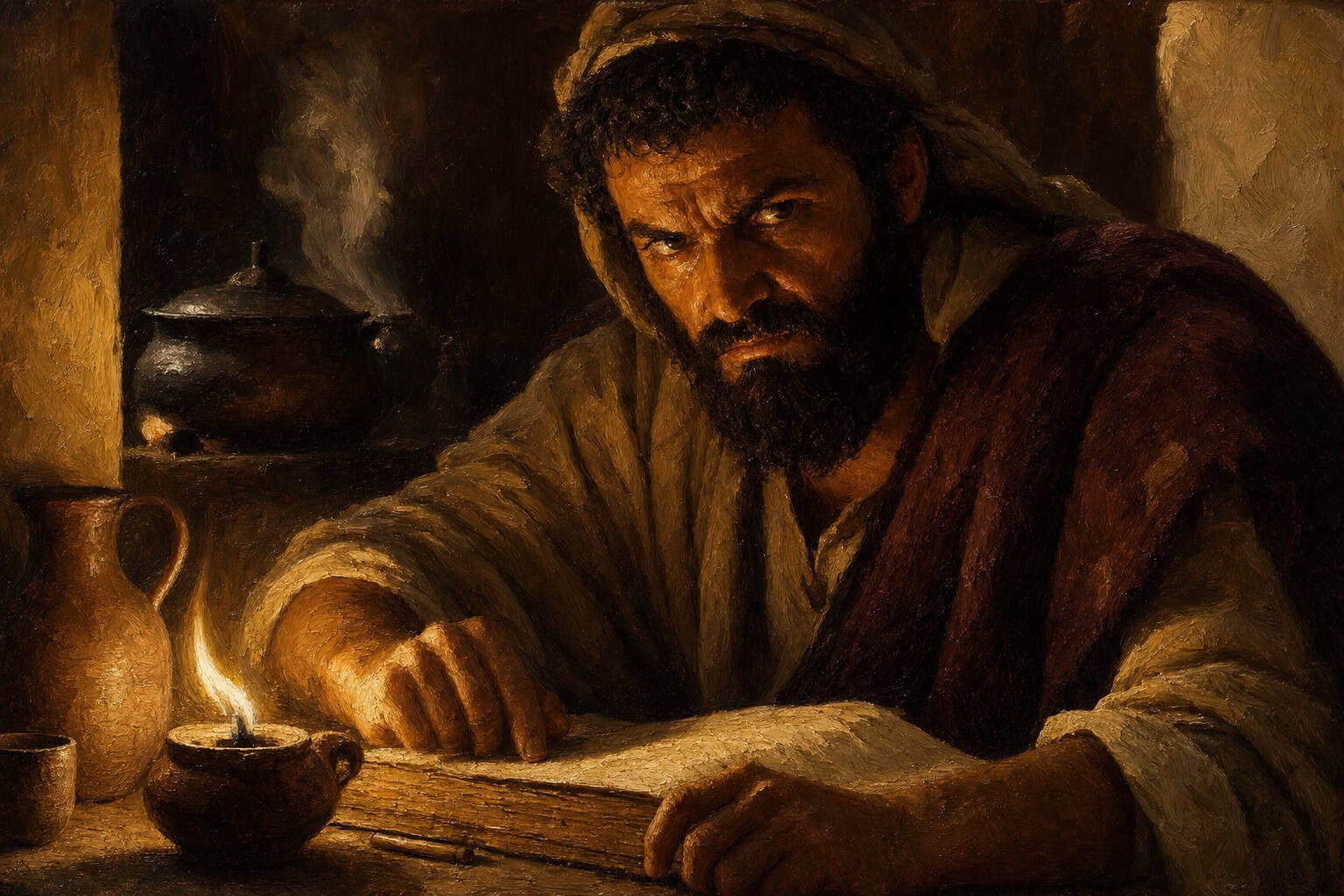
There is a moment early in Fractions of the Soul where the narrator sits with everything he has not said, and he reaches for the image of a lid clamped tight over a pot that will not stop boiling. Seal it too well and the steam builds until the metal jumps and clatters and scalds whoever stands near. He knows this about himself. He would rather write a book than scream, rather turn feeling into careful sentences than let it break loose in the kitchen of his own chest. That is where this chapter begins, with a man who trusts reason the way other men trust their fists, and who half-suspects the trust is misplaced. He calls emotion a mountain and reason a needle. The needle is supposed to pierce the mountain, and both of us reading know how absurd that math is. A needle does not move a mountain. It bends against it and breaks. When you tell me you feel like you belong, I hear the same held breath under the words. Belonging is a warm steam rising in you, and part of you is already reaching for the lid, wanting to name it, discipline it, prove it before it burns. You do not want to be the fool whose feeling boils over and floods the room. The narrator wants exactly that too. He wants his longing to sit still and answer his questions in order, one at a time, like a witness under oath. Instead it keeps boiling, quiet and hot under everything he says about anatomy and evolution and the differences between the sexes. What he cannot admit at the start is that the feeling of belonging arrived before he ever chose it, the way steam gathers before you notice the lid has begun to rattle. He is trying to think his way into a home his body already believes it has found. He is disciplining a thing that came unbidden, standing over it with reason the way a nervous cook stands over a stove, one hand near the heat, ready to lower the flame the moment it climbs too high. That gap between the felt thing and the reasoned thing is the whole ache of the passage. You feel you belong. Good. But the feeling came first, without permission, and now some cold and careful part of you has bolted a lid over it and is deciding, slowly, whether the thing is safe enough to let live. He suspects that if he ever took his hand off the lid, the force underneath would tell him something about himself he is not ready to hear.
Sorting Bodies Like a Man Reading Ledgers
Watch what the narrator does next and you will recognize yourself in it, uncomfortably. He starts to sort. He says that anatomically men and women share far more than divides them, that the differences come down to physical accidents – height, weight, the color of eyes and skin, the plain facts of hair and flesh. For the raw reproductive mandate, he claims, one woman is as good as the next, interchangeable, a matter of biology doing its blind and ancient work. But that cannot touch what he names the loneliness problem, and so he turns to the mind and the spirit, and here his voice sharpens into something close to cruel. He grades women. He says most of them sculpt the body and neglect the mind, that they build just enough intellect to control or seduce a man and never chase wisdom for its own sake, never rise past the level of the one they want to keep. He is drawing up a ledger, pricing flesh in one column and spirit in another, hunting for a person whose combined worth matches or exceeds his own. Read it and you feel the chill of a man shopping for a soul as if souls came with a tag. Yet under the arrogance there is a wound so plain it hums. He is dividing everyone into rocks and blades, into those worth the effort of sharpening and those to be passed over, because he cannot bear to admit the sorting is really about him and his own fear of being found unequal. If belonging is a feeling you have learned to trust, ask what ledger you keep in the dark. We all keep one. We scan a face across a table and something faster than thought has already tallied whether this is shelter or excitement, whether this person raises our standing or exposes what we lack. The narrator’s cruelty is only his ledger read aloud with the shame filed off. And the lonelier truth is that he is not describing women at all. He is describing the impossible thing he needs another person to be – a body that satisfies the animal pulling him toward death and the spirit straining to build meaning against that pull, both at once, in one warm and breathing person, so he never has to reconcile the war inside himself. There is an old lie hidden in that hope: that the right complement will offset your weakness, that her strength will cover the exact place where you are hollow. He wants to be relieved of the labor of becoming whole. That is not love. That is a draft notice. He is conscripting another soul to end an exile he built with his own hands, and calling it a search for the ideal.
The Home He Wants Her to Be
Here the whole scene turns, and it turns inward, which is where his sharpest turns always go. The narrator says a human being is one of three things – a spiritual creature living inside evolutionary biochemistry, a biochemical organism living inside a divine world, or a biochemical organism in a world with no God at all, inventing whatever meaning it can on the road to death. Whichever it is, he insists, you must choose a narrative. You must pick a lens or you will have no way to sort what arrives, no ground under your feet, no first thing against which to measure the next thing. He says you must begin somewhere, with anything, to have even a primitive basis for comparison. It sounds like cold philosophy laid out on a table. It is actually a confession dressed in a lab coat. Because the search he has been running all along – the ledger, the grading, the hunt for a mate who excites flesh and spirit at once – is his attempt to make another person into that narrative, that first ground, that home. He wants a woman to be the lens through which the whole confusing world finally resolves into sense. He wants her to answer a question that is his alone to answer. He wants her body and mind to become the place he begins. And this is the ache under your feeling too, the thing you cannot quite trust. When belonging arrives, we want to hand the entire weight of it to the one who seemed to carry it in. We want them to be the door we walk through into rest, the end of the wandering, the redemption of our own divided nature. We want to stop choosing between the animal and the angel by finding someone who is somehow both, so the war can end without us doing the hard work of a peace treaty. But no person alive can bear that load. Flesh depreciates daily; he knows this, he says it plainly, and still he gambles his own declining worth against her promised future value as if the market could save either of them. To ask a human being to be your first ground and your final home is to build an idol out of a person and then resent the idol for being too small to hold you.
We hand another person the task of ending our exile, then blame them for a homecoming they were never able to give.
The Bill That Comes Due at the Table
So the trade breaks, as it always breaks, and the narrator is left at the table with his ledger and his cooling pot. What follows in the chapter is not triumph. It is the slow ache of a man discovering that the person he priced so carefully was never the problem, and never the solution either. When the flesh disappoints, he blames the flesh. When the mind fails to inspire him past his own limits, he blames the mind. He does not yet see that the failure is written into the transaction itself, that you cannot buy permanence with something that decays, cannot end an inner exile by importing a stranger into it. The other soul he conscripted did not consent to be his homeland. She had her own boiling pot, her own held breath, her own fear that this man was the last one, that if he turned away her whole world would end while he simply walked off to his work and his stability and his purpose and recovered by morning. Two people at a table, each secretly reading the other as a rescue, each disappointed that the rescue never came. That is the fallout, and it is quieter and sadder than any fight. The narrator’s exhaustion here is real. He is tired of everyone’s undisciplined convictions, tired of feeling too much and trusting it too little, tired of the needle bending against the mountain. And underneath the tiredness there is something he circles but will not name outright: that he did this. He made a person into a lens and then complained the world stayed blurry. He asked her to be God and then grieved that she was only a woman, only flesh, only spirit, only human. He cannot recover the self who first felt that warm steam of belonging rise, because that self believed the feeling was a homecoming rather than a demand. Now he knows the demand was his, and the knowing does not comfort him. It just sits there, honest and unfinished, the way the true things sit. He does not resolve it with a lesson. He lets it ache.
A Lamp Left Burning in the Wandering
Where does this leave you, holding your own feeling that you belong somewhere, to someone, at last? Not with an easy blessing. This chapter of Fractions of the Soul will not tell you the feeling is proof, will not hand you the relief of certainty. It does something harder and kinder. It shows you the feeling for what it is: a real thing, a good thing, arriving before your reason can vet it, and dangerous only when you make it into a bill you hand another person to pay. Belonging that rests entirely on a mate becomes conscription. Belonging that rests entirely on your own clever narrative becomes a keyhole you mistake for the whole sky. The narrator learns, slowly and against his will, that the home he was hunting in another body was the shape of a homelessness he carried inside. And here is the strange mercy the book keeps circling back toward. In the very middle of the exile, in the sin of the sorting and the cruelty of the ledger, something walks with him. Not a rescue that lifts him out of the dark and sets him down clean. A presence that stays in the dark with him, near his tears, near his failure, near the man reading souls like accounts and hating what he has become. Grace here is not the flame lowered on the pot. It is the company at the table while it still boils. If you feel that you belong, hold the feeling gently, the way you would cup a small lamp against a wind. Do not blow it out with suspicion, and do not set the whole house on fire trusting it to light everything. Let it be a lamp, not a sun. This memoir will not end your wandering for you. It will do the truer thing – walk beside you in it, and show you the one companionship that was there the whole time, quiet, unbought, waiting to be recognized in the very place you thought you were alone. Read it not to be told you belong, but to learn who was already keeping vigil in the exile with you, and why the ache in your chest might be a summons rather than a wound.