How to deal with someone you hate—when the person you loathe shares your air. A confession about disgust, cleanliness, and what the loathing hides.
The Humid Air Around Another Man’s Bed
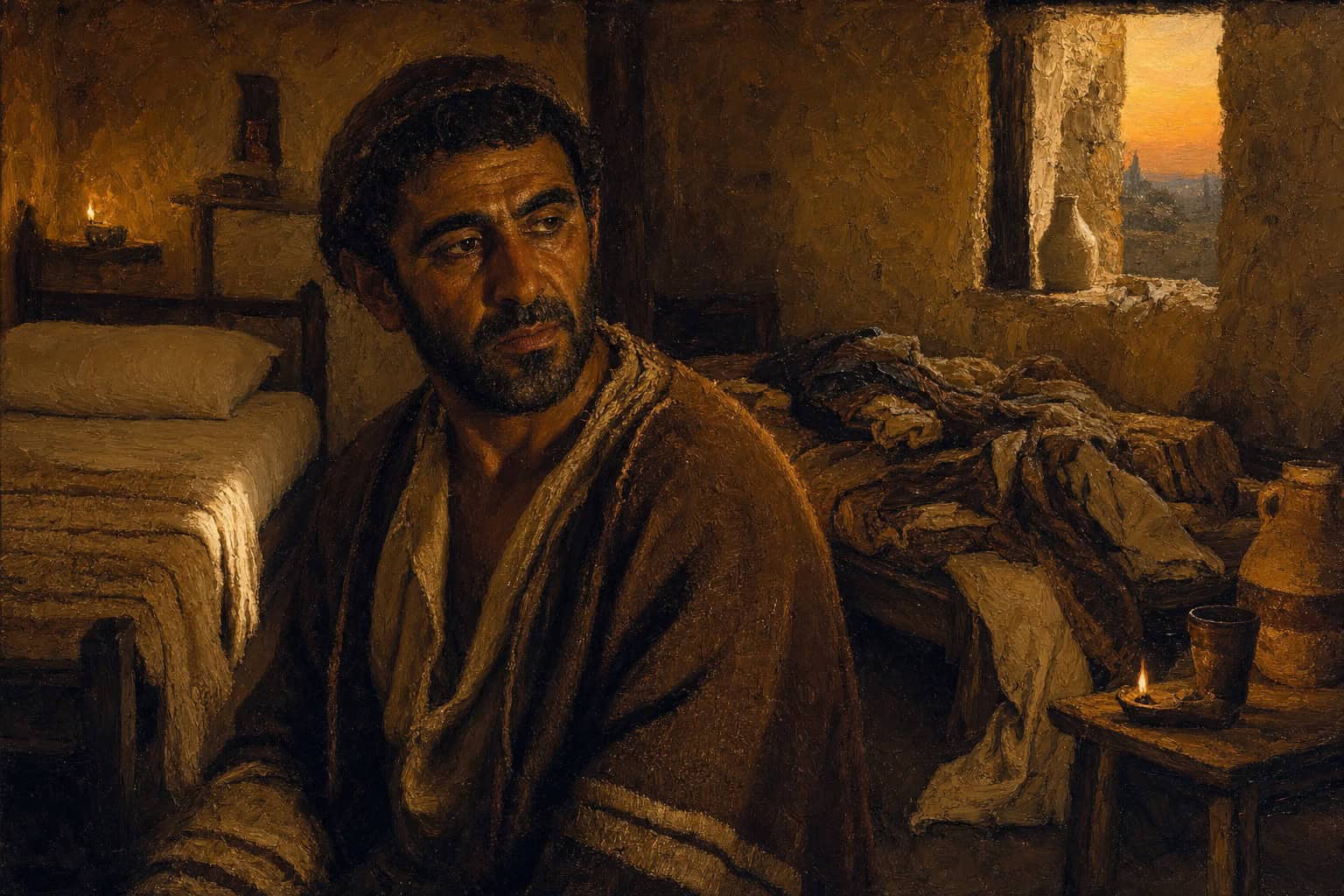
You know the feeling of a body you cannot escape. In Confessions to the Empty Chair, the young narrator shares a small dormitory room with a rugby player from New Orleans whose teammates call him Swamp. The name points to the city, but it carries a second, private truth for the boy who has to sleep near him. His smell hangs in the air like weather. It thickens near his bed and turns the whole room humid, and no window seems to move it out. The narrator lies a few feet away and breathes it in every night, and the disgust becomes a fact of his life, steady as the ceiling above him. This is the plain question so many of us type in the dark: how do you live with a person you cannot stand, when leaving is not an option and the door shuts you both inside the same four walls. The narrator does not hate a distant enemy he can avoid. He hates a man who sleeps close enough to hear him breathe. He hates a man’s laundry left where it falls, a man’s flat indifference to books and grades, a man’s careless body built and softened by a lifetime of drinking. He watches Swamp slouch through the day with a bottle never far from his hand, never once bent over a page, and something in the narrator tightens like a fist. And already, before he speaks a single hard word about himself, you can feel that the loathing is not only about his roommate. It is about the narrator’s own hunger for a clean, controlled world, a world that reflects him back the way he wishes to be seen by others. The dorm has its rules—co-ed hours during set times, closed doors watched, drinking forbidden to the underage—and the students learn tact, the fine art of never arousing suspicion, of conducting themselves so politely no one comes looking. The narrator learns this tact too, but a colder and more inward kind. He learns to hide his contempt behind good manners and a mountain of work. He does not raise his voice. He does not throw a punch. He scrubs. The older man writing this book looks back at that cramped room and refuses to let the young man off the hook. He sees a boy who dressed up his revulsion as virtue. He sees cleanliness sharpened into a weapon and stacked into a wall. And he begins to ask the harder thing, the thing that stings—not what was wrong with the man across the room, but what the narrator’s disgust was covering in himself, which part of his own body and soul he could not stand to smell.
Bleach on Thursdays, Scouring the Weeks He Traveled
The narrator keeps a ritual, and the ritual tells on him. Every Thursday he deep-cleans the room, anticipating the visitors who might come the following evening, arranging the world so nothing could ever incriminate him. When Swamp travels for rugby matches, the narrator seizes the empty room and cleans aggressively, wielding bleach and hard scouring agents, trying to scrub the man’s lingering smell out of existence. Notice the words he reaches for. Not tidy. Not freshen. Scrub from existence—as if the goal were to unmake a presence, to erase it so completely the air would forget it had ever breathed there. That is not housekeeping. That is a wish to annihilate something he cannot govern. And here the older narrator turns the lens on himself with a severity that draws blood. He was studying to become a priest. He was afraid of failing, gnawed by a sense of intellectual inferiority, and he exercised control wherever he still could reach it. He could not control his fear of falling short, so he controlled the floor and the counter and the smell. The bleach became a bitter kind of prayer, a private liturgy performed against another man’s body. The tension underneath is easy to miss if you only see a neat boy and a slob. Both of them are hiding. Swamp hides his muscles under a layer of fat, hides from his studies, hides behind a drink. The narrator hides too—hides his terror of failing, hides his loneliness, hides his own flesh behind a wall of soap so nothing living can press against him. There is even a thread here that reaches past this one room, into the narrator’s convictions about intimacy itself, about washing before and after, a cleanliness that not even the heat of passion could interrupt in him. He holds it as a matter of politeness, but the same reflex runs through everything he touches. He cannot let a body simply be a body—warm, flawed, near, unmanaged. He needs it sterilized before he can bear it. And a body you must sterilize before you can stand it is a body you are afraid of. The older man sees this plainly now, from the far side of many years. He sees that the smell he could not scrub away was never fully Swamp’s to begin with. It was the smell of being human, mortal, animal, a body decaying slowly the way every body decays toward its end. The narrator wanted to be pure. What he actually wanted, underneath the wanting, was to not be a body at all—to slip free of the flesh that sweats and rots and dies. And no amount of bleach on any Thursday, no scouring agent bought at any store, could grant a boy that impossible mercy.
The Smell You Cannot Reach Is Your Own
Here is the turn, and it lands on the narrator like a hand laid flat on his shoulder. The thing that repelled him most was never really another man—it was the reminder of what he himself was made of. Swamp’s humid presence forced the narrator to smell the truth about all bodies, his own first among them: that we sweat, we rot, we carry a swamp behind the ribs, and the grave waits with an even patience for each of us. The narrator wanted to build a fortress of cleanliness and stand inside it alone, sovereign, untouchable, above the ordinary reek of the living. But a fortress is also a cell. The very walls that held the smell out held the boy in, locked with his own loneliness for company. He mistook that isolation for holiness. He named his fear of contact devotion and wore it like a cassock. And underneath the disgust ran the oldest thing of all—shame, the dread of being seen and found wanting, the wish to cover yourself and vanish from your own gaze. He scrubbed the room so hard because he could not scrub himself. He aimed the bleach at the man across the room because he could not aim it at the parts of his own soul that shamed him. He was ashamed of his fear. He was ashamed of his hunger to be admired, of the inferiority that gnawed at him, of the ordinary animal fact of his own aging flesh. And a boy that ashamed of himself will always find someone nearby to carry the shame for him, someone whose visible mess makes his own hidden mess feel manageable. Swamp was that someone. The disgust was real, but it was also convenient, a way of pointing outward so he never had to turn the light inward. The older narrator refuses to soften this. He does not say the boy was secretly kind. He says the boy was frightened and proud, and that his contempt was a coward’s way of grieving what he could not accept about being alive.
We scrub hardest at the smell of others because we cannot reach the swamp inside ourselves.
The Library Where the Dead Say Mass
This is the plain answer to the plain question, and it offers no comfort. The person you cannot stand is often holding up a mirror you did not ask to look into. Their carelessness shows you your own contempt. Their soft, aging body shows you your own mortality. Their indifference to everything you have staked your worth on shows you exactly how much you have staked, and how frightened you are of losing. When you learn to hate someone in a room you share, you learn something you never meant to learn about yourself. After the room, the narrator flees to the page. Withdrawal, he names it. Driven by the fear of failing, stung by that same sense of intellectual inferiority, he stays in the dorm or the library every weekend for an entire semester, breaking only to eat in the cafeteria. He devours texts. He imitates authors until his own hand learns to write. And this too is loathing turned into fuel—the same reflex that scrubbed the floor now drives him into books, away from bodies, away from the humid air and the man who fills it. The older narrator sees the double edge of it clearly. On one side, the flight into the library is another escape from human contact, another sterile chamber, another wall of soap built out of paper. He goes to the stacks partly because the dead do not smell, do not slouch, do not drink beside him and leave their laundry to sour. On the other side, something genuine is breaking open in that flight. His childhood faith is fracturing under the weight of what he is learning, an abrupt and disorienting shock to his sense of himself. The floor of his old certainty drops away beneath him. And in the library he begins to find a strange new chapel, where great minds say a kind of mass and the page becomes something close to bread on the tongue. He is not losing God among the books. He is meeting God somewhere darker and less comfortable than the church of his boyhood. But the shame does not lift because he reads well. The loneliness does not close over because he learns to write like the masters he copies. He is still the boy who cannot bear the smell of another man, still the boy afraid to be touched, only now his loneliness wears a scholar’s robe and calls itself discipline. The books cannot do what he asks of them, any more than the bleach could. They cannot make him clean. They cannot make him unafraid of the flesh he is stuck inside. Everything he built to protect himself—the Thursday ritual, the scouring, the endless reading through empty weekends—was one long attempt to dodge the ordinary risk of being a body among other bodies, breathing the same thick air. He wanted to rise above the swamp. He kept sinking back into himself.
What the Grounding Foot Knew Before He Did
So how do you deal with someone you cannot stand. This book hands you no technique, no trick to make the loathing manageable. It hands you a harder and truer thing: the loathing is information, and most of it is about you. The narrator wanted a method to make his roommate disappear from the air. What he received, slowly, across years he could only read backward, was the knowledge that the man he despised was carrying something he badly needed. There is a grace hidden inside the people we would never choose, a steadiness that comes to us through the very bodies we push away. When the young man’s whole world was spinning—his faith cracking, his fear climbing, his pride mortaring its cold walls higher—the wisdom that steadied him did not fall from heaven in a clean shaft of light. It came, when it came at all, from low and close, from the ordinary and the unwashed and the near, from a foot set flat on a floor. The man whose smell repulsed him was also, without either of them ever naming it, part of the ground beneath his feet. That is the unsettling mercy of this chapter of Confessions to the Empty Chair. It refuses to let you win the argument against the roommate you hate. It turns you gently by the shoulders and shows you your own face in the puddle you were trying to bleach away. And grace here does not arrive as rescue. God does not remove the roommate. God does not clear the air or reward the boy’s revulsion with a cleaner, quieter companion. The nearness of God in this book is stranger and quieter than that. He is present in the very room the narrator wants to purify, present in the humid dark, walking beside a proud and frightened boy in the middle of his contempt—not lifting him out of it, but not abandoning him in it either. The mercy is not a clean room. The mercy is that the boy was never as alone as his bleach pretended he was. The narrator does not end this scene reconciled. He does not learn to love the man across the room in a tidy final paragraph. He is still proud, still afraid, still raising fortresses he will have to watch crumble in the chapters to come. But the older man writing now can name what the younger one could not: that his need for a spotless room was a fear of his own flesh, that his contempt was a coward’s form of grief, and that the God he was studying to serve was already there in the humid dark, unremoved and unremoving, keeping company with a boy who could not yet bear to be a body. If you came here hating someone, this book will not tell you they are good. It will ask you what your hatred is hiding, and it will keep you in the room until you have smelled the truth about yourself—which is severe, and is also the first raw edge of being known.