Family betrayal shattered the house you lived in. Here is how to heal — slowly, honestly, one incision at a time, without hemorrhaging.
The Afternoon I Meant to Fix Everyone at Once
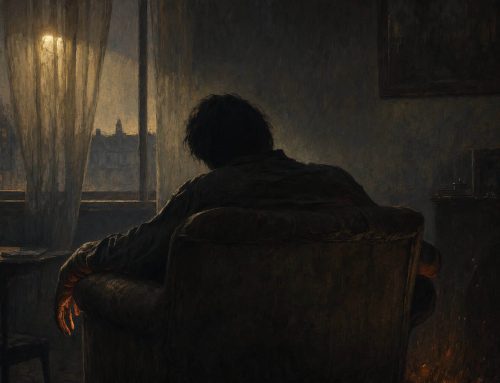
There was an afternoon I decided I would name every lie in one sitting. I had the whole accounting in my head — who had lied, who had looked away, who had let the years pass without correcting the story I was living inside. I meant to lay it all out and be done, the way you cut a rope that has bound your wrists too long. I thought that was what healing was: one clean stroke through everything false, fast, so the pain could finally end. I did not yet know that a soul cut too deep and too fast does not close over and mend. It goes into shock. It empties itself the way a body empties when it loses too much blood at once, and then it lies pale and shaking, unable to hold even the good that is offered to it. The narrator of the fifth chapter of Fractions of the Soul turns this exact instinct over in his hands, and he finds it wanting. He speaks of a scalpel, of laying a person on a table, of piercing them with truth — and then he catches himself, because he has watched what a scalpel does when it moves without mercy. The betrayal that sends someone reaching for language this severe is almost never a stranger’s cruelty. It is the people who set the table with you. It is the mother whose voice you knew before your own, the brother you shared a floor with, the ones whose absence you never once imagined because they were the ground you stood on. When they turn out to have been somewhere else all along, living inside a story you were never written into, the whole quiet arrangement of your ordinary days caves in at once. You thought you lived in a house. You learn you lived inside a tale two people told together, and now even the chairs feel like strangers set out by a hand you no longer trust. The narrator sits down inside that collapse and refuses to pretend it away. He does not rush toward forgiveness so the hurting will stop sooner. He looks at the blade in his own hand and asks the harder thing: not only what was done to me, but what do I intend to do with the truth now that I am holding it. That question is where the healing actually starts. It does not start when you understand the wound. It starts the moment you decide you will not become one more careless edge drawn across the people who remain. The table stays scarred. He does not sand it down. He learns instead to sit at it again, this time with steadier hands and a slower breath.
How Much Truth a Body Can Lose Before It Dies
After betrayal there is a hunger to demand everything at once. You want the full confession, the whole hidden record set on the table in a single afternoon, every buried year named aloud so you can finally know the shape of the thing that broke you. The narrator knows this hunger from the inside. He does not scold it. He warns against feeding it whole. Strip away too many diseases in one cutting, he says, and the soul suffers the same collapse the body suffers when it bleeds too fast to clot. This is the part no search result will tell a grieving person. Healing is not a flood you stand under until you are clean. It is a slow bleed you have to control with your own hand, because you can only take in so much truth before the truth itself begins to kill you. I have sat with people who tried to swallow all of it in a night — the betrayal, the years of pretending, the sudden unbearable knowledge that the person they trusted most had been with someone else, somewhere else, the whole time — and I have watched the color drain from their faces. They stopped eating. They stopped sleeping. They were honed so far past their strength that nothing held them together anymore. A blade worked too long against the stone loses the very metal that binds its edge. Stop too soon, though, and it stays dull and useless when the fight comes. The narrator lives inside that impossible balance and never once pretends it is comfortable. He knows the danger cuts both directions. Refuse to face the betrayal at all, and you carry a dull ache that can never defend your own life. Face it too fast and too fully, and you sever the sinew that keeps you upright. So he counsels rest between the incisions. Not every conversation has to reach the deepest place. Not every hour must burn with grief and reckoning. There has to be a joke somewhere in the ruined week, a small unearned kindness, a shared meal, a touch that asks nothing back. These things rest the blade and the stone at the same time. Here the mood of the whole chapter settles into your chest — a tired, watchful patience, the tone of a man who has been cut too often to trust a quick cure. He is not offering relief. He is offering a rhythm slow enough to be survived. The ache does not lift. It becomes bearable only in measured portions, taken the way a nurse gives water to someone who has been too long without it. And beneath the surgical talk there is a quiet charge he lays against himself: how many times had he demanded the whole truth from someone before their soul could stand to give it, and dressed his own impatience up as honesty.
The Stone That Draws Every Edge but Its Own
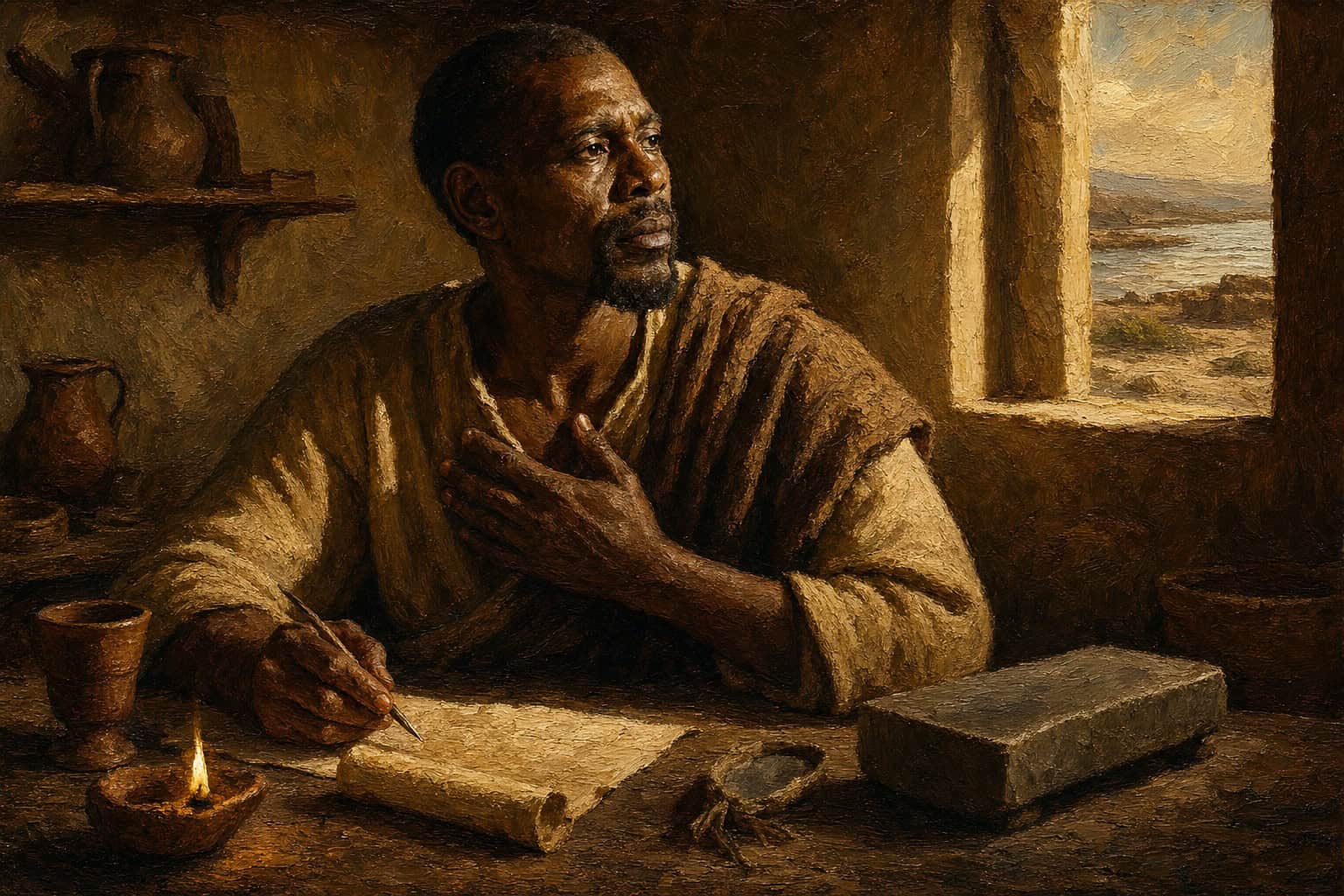
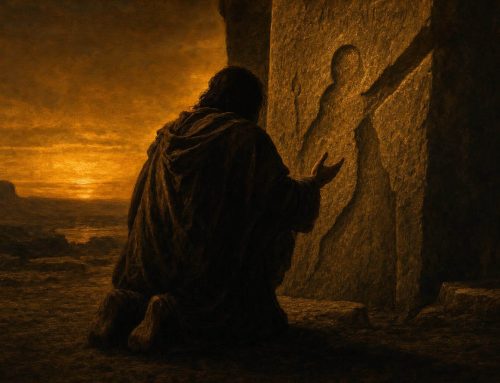
Here the chapter turns, and the turn is bitter to swallow. The narrator confesses what he has become. He is the whetstone. He is the surface on which everyone else grinds their dull and broken lives back to a working edge. He counsels, he pierces, he refines, and every single stroke across him carries off a fraction of his own substance. He has made himself the family’s mender and has no one left with hands steady enough to mend him. This is the loneliest admission in the passage, and he refuses to soften a word of it. To spend your life repairing the very people who wounded you, to become the one who forgives and steadies and holds the whole thing from flying apart, is to accept a labor that hollows you and returns almost nothing. The stone wears thin. It cannot lay an edge against itself. He says he has grown better at the work as he has aged — and you feel the cold irony in it, because growing better at bearing everyone’s weight means drifting further from anyone able to bear yours. He speaks of leaving childish ways behind, of no longer seeing the world through a child’s eyes. But there is grief folded into that maturity. The child expects to be held. The adult learns he is the one who must do the holding, and the arms grow tired, and no one thinks to ask. And yet — this is the strange grace that breaks in right here — he is not entirely abandoned in the emptiness. When every human teacher has been outgrown, when the people he trusted have shown they cannot carry him, there remains a companion who walks with him in the dark and does not turn back. Not a rescue. Not a hand that hauls him out into the sun. A presence that stays down inside the suffering with him, quiet in every tear, close in the exact place where the betrayal cut deepest. He does not claim God lifts the wound away. He testifies that God is found within it — beside him in his exhaustion, in his tiredness of being the stone everyone leans on, present even in his sin. That is the sharpest thing this chapter reveals, and it does not arrive like a light switched on in a dark room. It arrives like a hand set quietly on the shoulder of a man too spent to look up.
The soul, like the body, can only bleed so much at once; even truth must be rationed to the wounded.
Ebb, Flow, and the Rock Ground Down to Powder
After the confession the chapter loosens its grip a little, the way a fever breaks and settles into ordinary sweat. The narrator starts to speak of currents. Every bond between people has its ebb and its flow, he says, tides that lift and fall, and anyone who wants to heal has to learn to read the water. There are seasons when a hard conversation will bear real fruit and seasons when the same words only grind stone into dust. This is where the aftermath of betrayal is actually lived out — not in one dramatic reckoning at the table, but in the long tidal weeks afterward, when you must decide again and again whether you will trust. He is honest about the price of either choice. Trust the other’s good intentions, and natural openings appear to carry the difficult truth forward without wounding. Withhold that trust, and you grind the whole relationship to powder with your own suspicion. But he is not naive about it. He knows the sweet rush of reconciliation rarely covers the hidden root so fully that the fear ever wholly leaves. Even after the tears, even after the apology accepted, a low dread stays behind, watching the treeline for the enemy to come back. This is the thing no one warns the betrayed about. Healing does not return you to the easy, unthinking trust you had before the ground gave way. That trust is gone and will not come back. What you are given instead is trust with its eyes open — trust that has counted every cost and still chooses, trembling as it chooses. The narrator turns the lens on himself again here, and it is not easy to watch. He asks what part he played in the grinding. How often had he mistaken his own withholding for wisdom — kept his options open, declined to commit to the slow labor of staying, and called that patience. How often had he been the stubborn rock rather than the whetstone, resisting every stroke of correction meant for his own good, then blamed the other for the dust between them. The mood is a spent, clear-eyed sorrow, the temper of a man walking a field the morning after the flood, counting what the water carried off and what somehow still stands upright in the mud. He will not tie it into a lesson. He lets the fear stay visible, the root unhealed, the reconciliation both partial and genuine at once. And in that partial thing — trust with open eyes — there is more truth than any spotless forgiveness could ever hold.
Walking the Line Toward G While the Ground Turns to Dust
By the chapter’s close the narrator releases the one thing the betrayed cling to hardest: control. We cannot govern the rocks, he says, nor the blades, nor even the stones we submit ourselves to and command. And more than that — we ought not want to. He describes standing on a line, moving toward a point he simply calls G, moving there whatever anyone else decides to do. There is a strange freedom buried in that, and it is not the freedom of running away. It is the freedom of a man who has finally stopped trying to bend the people who betrayed him into the shape of his own longing. You cannot heal another person into loyalty. You cannot draw an edge on someone who has decided to stay a rock. You cannot make the mother, the brother, the beloved become who you needed them to be at the moment they were needed most. What you can do is keep walking the line you were handed, toward the end you were made for, whether or not they ever fall into step beside you. This is the resolution the fifth chapter offers, and it is no comfort in the ordinary sense. It does not promise the family restored or the wound closed clean. It promises only that your worth is not held hostage to their choice. The man who set out to fix everyone at that scarred table has learned, by the final lines, that healing was never the total remaking of everyone around him. Healing was the slow, rationed work of becoming someone who could hold the truth without being destroyed by it, and who could keep walking even when the ground behind him had turned to powder underfoot. The soul that binds itself to perishable things — to a person, to a family that was never as solid as it looked — is torn wide when it loses them, and finds in the tearing the poverty it was already carrying, hidden, all along. But there is a companion on that line. Quiet. Unhurried. He does not lift the pain away; he stays inside it, matching the pace of a limping man. That is where the book leaves you: not mended, not whole, not emptied of fear, but walking — steadier, poorer, more honest, and no longer alone in the dark. It hands you no cure for what the people you trusted did. It hands you a truer question, a slower rhythm, and a presence that does not leave when the water rises. Whether that is enough is the thing you will have to open the pages to find.