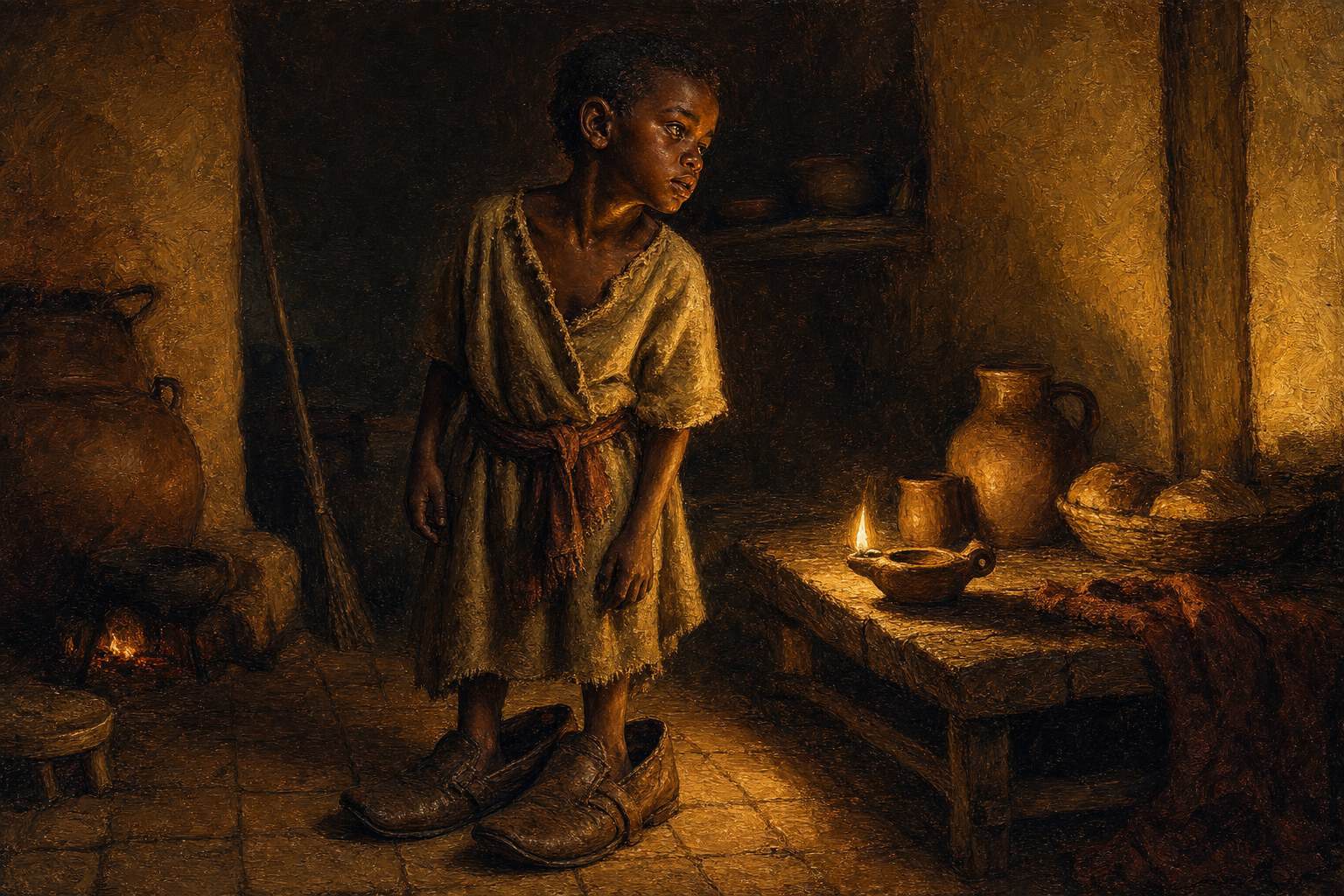
Feeling younger than your age, like a child playing adult? Why the gap between your years and your inner self isn’t a flaw but a truth about the soul.
The Shoes That Never Fit
You were maybe nine, standing in your father’s shoes, the leather cold and cavernous around your small feet. You clomped across the kitchen tile and everyone laughed, and you laughed too, but something in you filed the moment away. That is what growing up would feel like, you thought. One day the shoes would fit. One day the body would catch up to the size of the responsibilities poured into it. Now you are decades past that kitchen and the shoes fit and nothing else does. You pay the bills and sign the forms and speak in the confident voice adults are supposed to have, and inside there is still a boy clomping across the tile, hoping no one notices the gap between the sound of the shoes and the smallness of the feet. This is the ache you carried into the search bar, though you would never say it out loud to anyone who knew you. Not a joke about immaturity. A real bewilderment. Everyone around you seems to have completed some passage you missed. They inhabit their years. They order coffee like people who belong to the world, sign leases like people who trust the future, laugh at their own age like it is a warm thing to own and not a costume. You are wearing yours like a borrowed suit at a funeral, itchy at the collar, too long in the sleeve, and you keep waiting for someone to point and say you do not belong here. The strangeness is that the child never left. He did not graduate into you. He hid behind your ribs and watches from there, and sometimes at three in the morning he is the only one awake, asking why the man he became still feels like a rumor. You have inherited a self you did not build. Its patterns were pressed into you before you could refuse them, its fears set in place before your voice could form the word no. To feel younger than your age is partly to feel this: that the deepest part of you was formed by hands that were not yours, in a time you cannot remember, and that you have been improvising an adult over that foundation ever since. The foundation does not age. That is the secret nobody warned you about. The floor of you stayed nine years old while the house grew taller, added rooms, took on the weight of jobs and vows and other people’s needs, and every so often you feel the whole structure sway because it was built on a child who never agreed to hold this much. You did not fail to grow up. You were simply never told that no one does, not all the way down.
The Fraud Behind the Steady Voice
Watch how the fear gathers force in ordinary rooms. You are in a meeting, or across a dinner table, and someone defers to you as though you know things. You answer well. Your voice is steady, measured, adult. But under the table your hand is doing something small and secret, pressing a thumbnail into a fingertip, and the pressure is the only thing keeping the boy from bolting. Because here is what you dread: that at any moment the mask will slip and they will see how young you actually are inside. Not young in a charming way. Young in the way of not knowing, of being unprepared, of having faked your way this far and expecting the bill to come due. This is why the feeling tangles so tightly with shame. It is not merely that you feel young. It is that you feel found out, or about to be. The dread lives in the chest, in that hollow place behind the sternum where the breath gets short when someone looks at you too long. You have felt it there, a real pressure, as if a hand were leaning on the door of you from the inside. The room tilts toward you and you want to shrink until the walls stop noticing. There is an old truth beneath this, and it is not flattering. We all begin compromised. None of us started with a clean slate. The self that feels too small was handed to us already bent, already carrying wounds it did not choose, already prone to the exact weaknesses we most want to cover. And something in the dark seems to know those weaknesses with terrible precision. Your temptations are not random; they are aimed. Whatever you are most ashamed of, whatever makes you feel most like a child caught with his hand somewhere it should not be, is the thing pressed on you again and again as though someone has studied you since birth and catalogued every flinch, every unguarded second, every time your face gave you away. That intimacy of attack is what makes shame feel personal, targeted, deserved. You are not fighting a stranger. You are fighting something that seems to know the smallness better than you know it yourself, that reads the script written on you before you could read it. And so the steady voice performs while the boy hides, and the exhaustion of holding both at once is its own kind of loneliness. You cannot tell anyone you feel nine. You have too much to lose, too many people leaning on the version of you that speaks well. So you carry the fraud like a stone lodged behind the sternum and pray the meeting ends before your hand gives out, before the thumbnail breaks skin, before the boy stands up in front of everyone and admits the shoes were always too big.
The Foundation You Did Not Pour
Then comes the turn, and it does not arrive as comfort. It arrives as a demotion of the whole question. You have been asking why you have not grown up, as though maturity were a threshold you failed to cross, a shoe you failed to fill through some private laziness of the soul. But what if no one crosses it? What if the adults around you are wearing borrowed suits too, pressing thumbnails into fingertips under their own tables, lying awake with their own boys behind their own ribs? The clean slate was always a lie. We do not begin as blank, capable beings who either succeed or fail at becoming ourselves. We begin already contaminated, already inheriting patterns we never agreed to, making choices that arrive pre-bent before we are even conscious enough to bend them the other way. The corruption runs ahead of the will. It was there before you could name it, older than your first memory, part of the flesh you were handed without a vote. The foundation you did not pour is not yours to be ashamed of. It was poured before you woke. This changes the shape of the ache, though it does not lift it. The child behind your ribs is not evidence that you failed to grow. He is evidence that you were formed, like everyone, by hands and times you could not control, and that the crack in the floor of you runs deeper than any effort could ever reach. You cannot renovate your way out of it. You cannot become mature enough to seal a fault that was there from the first breath. There is no age that finally closes it, no salary, no title, no marriage that pours new concrete over the old. And here is the severe mercy hidden in that hard fact: if the smallness is not a personal failure but an inherited condition, then the shame loosens its grip, just slightly, just enough to breathe. You are not the one fraud in a room of the finished. You are a compromised soul among compromised souls, all of you improvising, all of you waiting to feel grown, all of you carrying a floor that stayed young while the house went up. The forgiveness you keep withholding from yourself was never yours to withhold. You did not commit the original crack. You only inherited the house.
The child you still are is not the fraud you fear; he is the witness who knows you were never as strong as you pretended.
What the Child Behind the Ribs Was Guarding
So the question turns inward, and it is not gentle with you. If the boy has been there all along, watching from behind the sternum, what has he been guarding all this time? Perhaps he is not the weakness you took him for. Perhaps he is the one part of you that never learned to lie. The adult you built learned to perform, to hold the steady voice, to press the thumbnail and smile through the tightness. But the child does not perform. He simply knows. He knows you are not as strong as you pretend. He knows the confidence is a costume you iron each morning. And maybe the reason he will not leave, the reason he keeps waking you at three in the morning with his small insistent presence, is that he is the last honest witness you have left inside yourself. This is where the self-questioning cuts to the bone. You have spent years resenting the boy, wanting him gone, treating your own smallness as a defect to be surgically overcome. But what did you refuse to see in him all that time? That he was never trying to sabotage you. He was trying to keep you from forgetting what you actually are underneath the ironed voice. The demand that you feel your age, inhabit your years, wear the shoes without noticing the gap, may itself be the deeper fraud. It asks you to bury the truest thing about you under a performance of competence, to trade the one part that could be genuinely seen for a version that only gets admired. And the cost of that burial is precisely the loneliness you feel even in full, warm rooms, because the self that could really be met is the self you keep locked away where no one, not even you, looks at it straight. There is a strange grace here, though it fixes nothing you wanted fixed. God does not seem to arrive to make you finally feel grown, to hand you the age you have been missing like a delayed inheritance. The despair does not lift on schedule. But somewhere in the dark, walking beside the child you tried so hard to leave behind, there is a presence that does not require the costume, that did not come for the impressive man in the good shoes. It sees the smallness and does not recoil. It does not wait for you to become worthy of being looked at. It sits with the boy behind the ribs at three in the morning and does not laugh at the borrowed shoes. This is not rescue. It is accompaniment, which is stranger and harder to trust than rescue, because it leaves you exactly where you are and simply refuses to leave you alone there. You wanted to be delivered from the child. Instead you are met inside him.
Met in the Kitchen at Three in the Morning
You will not wake tomorrow feeling your age. That deliverance is not coming, and it is a real mercy to stop waiting for it, because the waiting was its own long imprisonment, a life spent postponed. The boy in the borrowed shoes will still clomp across the tile of you. The chest will still tighten when someone looks too long, and your thumbnail will still find your fingertip under the table. But something has shifted in how you hold it. The gap between your years and your inner smallness is not the crack in a defective self. It is simply the human condition seen honestly, the truth that we are all built on a foundation we did not pour, all improvising the adult over a child who never agreed to carry this weight. To feel younger than your age is, in the end, to feel unfinished, and to be unfinished is to still be reachable. The finished have nowhere left to be found; they have sealed themselves off in their own completeness. You have not. That is not nothing. That is the one part of you still capable of being touched. What settles, if anything settles, is a quieter relationship with the witness behind your ribs. You stop trying to evict him. You let him tell the truth when the room asks you to lie for it. And you notice, in the honest dark, that you are not entirely alone with him after all. There is another presence in the kitchen at three in the morning, one that does not measure you against the years you failed to inhabit, one that knows the exact size of your smallness and stays anyway, patient, unhurried, unimpressed and unrepelled. This is the strange country the memoirs I keep returning to map so unflinchingly. In Fractions of the Soul, the narrator does not solve his own woundedness or grow finally into the man he was supposed to be by the last page. He learns instead to be seen in the exact place he most wanted to hide, and to find that the seeing, terrible as it is, is not the end of him. The shame is real. It is not cheapened or tied off with a lesson. But it is met, held, walked with. If you have carried this gap in silence, believing yourself the only one still waiting to feel grown while everyone else moved on without you, the book will not flatter you with an easy resolution. It will do something rarer and more lasting. It will sit down beside you in the kitchen, in the borrowed shoes, under the low lamp, and let you understand that the child you tried so hard to bury was the part of you God never once mistook for a fraud.