Looking for lonely people to talk to online? What that hunger really is, and the mercy waiting inside it – read before you type the next message.
The Phone Held Above Your Chest at Two in the Morning
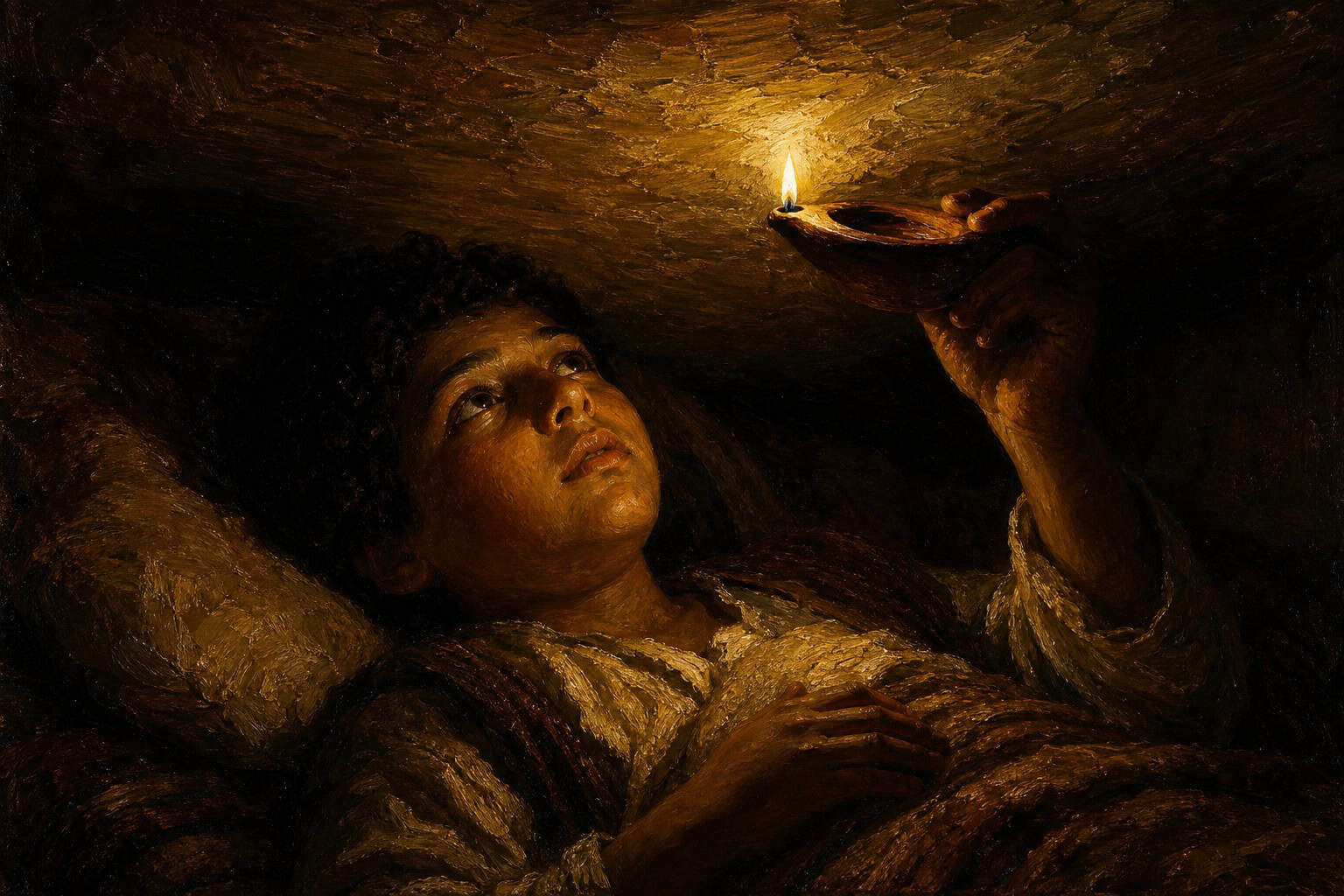
Who will listen if I never let them close enough to leave? That is the question you carried to the glowing rectangle, though you would not have said it plainly. I remember you there, younger, flat on your back with the phone held up above your chest, your arms tiring, the room black except for that one square of light. Your thumb kept moving. The screen printed its glow onto your face and onto the ceiling, a pale bruise of light that shifted when you shifted. You typed because the houses near you had gone silent and no voice in them was calling your name. You went hunting for lonely people the way a hungry man reads a menu he cannot pay for, hoping some stranger’s ache would fit against your own and cost you nothing to hold. One word hung over all of it, and the word was unappreciated. You felt your care insufficient. You felt your table too plain, the food you offered too thin to keep anyone seated at it. So you went looking for tables where no one had yet tasted your cooking, where you could be new and undisappointing for one more hour. There is a moment in Fractions of the Soul that names this hunger without flinching, a passage about a woman who parcels herself out, who gives some men her body and others only a bright surface, who keeps each one waiting at a different gate. Reading it, I saw you were doing the same thing turned inside out. You were the one at the gate now, hoping to be let in cheaply, hoping for warmth you would never have to earn. The strangers offered exactly that: a presence you could close with your thumb. I want to be gentle with you, because your loneliness was true and it was not your crime. But I also have to tell you what you could not see with the light in your face. You were not looking for people. You were looking for surfaces that would answer back. And a surface, however kind its words, cannot forgive you. It cannot feed you. It cannot stay in the room when the battery dies and the true dark floods back and you lie there with your arms aching and your chest still hollow. That is the dark I need to walk into with you now, before your thumb finds the next name and presses send, before you convince yourself again that one more stranger is the one who finally counts.
Doses of Yourself Measured Out Like a Compound
The woman in the book does something exact, and you have to see it, because you were learning her trade without a name for it. She sends one man an image of her body, another a joke, another only a silence sharpened into longing. She weighs out closeness the way a chemist weighs a compound, handing each the precise amount that keeps him on his knees. She names this survival, and the book does not sneer at her; it takes her fear seriously. Her secrecy is her roof. If every man saw everything she gave the others, the whole arrangement would collapse and she would stand alone in the wreckage. So she stays partial to all of them and whole to none. Now turn the mirror and look at yourself in the two-in-the-morning glow. You were not measuring out your body. You were measuring out your grief. You showed one stranger your sorrow and another only your quick tongue, and you kept every window shallow enough that nobody could ever gather up the whole of you. You told yourself this was caution. You told yourself these involvements were harmless because they were thin. But the thinness was the whole design. A person who holds only a fraction of you cannot leave the rest, because the rest was never set on the table. I understand now what you were afraid of. Not simple rejection. The particular rejection of being fully known and then walked away from. So you refused to be known first, to save yourself the second wound. The sorrow the book names is not the lie told outward; it is the soul sliced into survivable pieces, each piece dancing for a different room. You were doing that to your own soul, feeding fragments into a dozen open windows at once. The interstellar cold of it never reached you at the time because you kept moving, kept typing, kept the frantic little motion running so you would not have to feel how still and empty the center had gone. The motion felt like connection. It was closer to a man jogging in place in a freezing room because he has no fire and cannot bear to stop and admit it. And underneath all of it, quiet, unmeasurable by any instrument you owned, sat the one thing you could never learn: whether a single one of those strangers cared at all whether you woke tomorrow. You could not know. That was the entire appeal. Not knowing meant you never had to grieve a real, spoken no. Not knowing let you keep the hope alive by keeping the truth out of reach, and hope with the truth removed is only a cleaner kind of hunger. You mistook the cleanness for peace. It was only distance dressed up as safety, and it left you exactly where you started, alone with a warm little light and a cold, waiting room.
The Face You Kept Switching Off Was the One That Could Hold You
Here is the turn, and it is not the one you were braced for. You went online to find lonely people to talk to, and your deepest wound was never that you failed to find them. You found them in every window. The wound was that you did not want them to become real. A real person has a face. A real face makes a claim you cannot dodge; it says here I am, you cannot boil me down to what I take from you, you cannot swipe me away when I let you down. That claim frightened you, and you spent whole nights avoiding it by keeping everyone flattened into text, into a fraction, into a surface that gave your ache back to you and demanded nothing in return. But a surface cannot forgive. Only a face can. And this is where God comes into the dark room with you, and I need you to hear how quietly He comes, because He does not arrive to fix you. He does not haul you up out of the loneliness and drop you into some bright warm crowd. He comes down into it. He sits inside the very sin of your fractioning, inside your cowardice, inside your endless reaching for cheap warmth, and He does not get up and leave. That is the mercy you walked right past. You were begging strangers for a crumb of being seen, and the whole time you were already seen, entirely, by the one witness your thumb could never switch off. He knew every fraction. He knew the version of you that wept and the version that joked and the version that lied by leaving things out, and He did not reduce you to any single one of them. He held them all at once, the whole aching sum of you, and did not turn away. The stranger costs you nothing, which is exactly why he can never save you. Grace runs the other direction. Grace costs everything and spends itself first, before you have earned one syllable of it. It does not wait at the gate for you to prove yourself worthy of entry. It walks through the gate into the dark room while you are still hiding your face in the light. I wish I could have leaned down to you at two in the morning and said it plainly: the very presence you were trying to buy in fragments was already standing behind you in the dark, free, unbought, aching to be received by a soul brave enough to stop performing and simply turn around. You would not have believed me. You were too busy typing. But it was true then, and it is true now, and the not-believing did not make Him less near.
The stranger costs you nothing, which is exactly why he can never save you.
The Battery Drains and the Ceiling Goes Black Again
So the phone finally died. It always did. The battery drained or the last stranger stopped answering, and the pale bruise of light on the ceiling blinked out, and the room came back to its true face: cold, plain, yours. In that returning dark you felt the ache you had been running from all night, the hollow one no amount of typing had filled, only pushed a few hours down the road. I will not lie to you about what came next, because this memoir does not trade in tidy rescues. You did not suddenly close the windows and walk into a room full of loving faces. The habit held. The next night your thumb found the search bar again. The pull was strong precisely because it was easy, because the ordinary hum of the scroll, the familiar sameness of it, dulled the sharper hunger underneath. That dulling is its own quiet violence. It kept you from the leap, the terrifying leap of showing one whole self to one real person and staying in the room when they finally saw all of it. What began to change, and it changed slowly, was not the loneliness itself but how you stood inside the dark it lived in. You started to notice that the ache did not kill you. That you survived the second the light went out. That something remained when every stranger vanished, something that had never once depended on the phone. The woman in the book keeps her worlds from touching because collision means exposure and exposure feels like death. You had built the same walls, and I watched them begin to crack, not from any blow but from plain exhaustion. You were simply too tired to keep performing for a dozen empty windows. And in that tiredness, in the surrender of the frantic motion, a stillness opened that you had feared your whole life. In the stillness there was no crowd. There was no scrap of borrowed warmth. There was only you, and the cold ceiling, and a presence in the dark that had never once stepped out of the room, that had watched every fraction and loved the whole thing anyway. That was not comfort in the soft, easy sense. It was rawer than comfort and harder to name. It was company. It was someone in the dark with you who would not be switched off and would not be bought. And slowly, faintly, against everything you expected, it began to feel like it might be enough to hold a night together.
What Stays When You Stop Dealing Yourself Out in Pieces
Let me speak to you now not as a narrator but as the man you became, still unfinished, still tempted by the glowing rectangle on the worst nights. I cannot promise you the loneliness ends, because that would be a lie, and this is a book that refuses to lie to spare you. What I can tell you is that the answer to finding lonely people to talk to online was never more people or better strangers or a cleverer opening line. It was learning that the hunger under the search was holy, that it was your soul stretching toward something real outside yourself, and that you had been feeding it counterfeits and calling yourself fed. You wanted to be known. That is not a flaw in you. It is the truest thing about you, and it was never meant to be answered by a fraction but by a whole meeting, by a face that refuses to be shrunk, by a God who came into the dark room and stayed through the night. The strangers could give you nothing because you asked them for nothing that would cost either of you a thing. Cost is where love actually lives. The willingness to be seen and possibly wounded is the price of the crossing, and grace pays the first coin, walks in first, loves first, before you have done a single worthy thing. I want you to sit with the hard questions I still sit with, because I have not tied them off. Whom did I use those nights, treating other lonely souls as surfaces instead of faces, spending their loneliness to numb my own? What did I refuse to see because seeing it would have obligated me to stay and be real? These do not resolve. I carry them still. But I carry them now in the company of the one who never once switched off, and that alone changes how heavy they sit in my hands. Fractions of the Soul is a book about people who cut themselves into survivable pieces and the long cost of never being whole to anyone. If you have ever held a phone above your chest at two in the morning, hunting a voice that would not leave, this is the page that finally answers back with something true, and then, mercifully, stops being a surface and becomes a face. Read it not to be comforted but to be found. The light on your phone will die again tonight, the way it always does. The only question left is what you will let remain in the dark when it does, and whether you can finally believe you were held there the whole time.