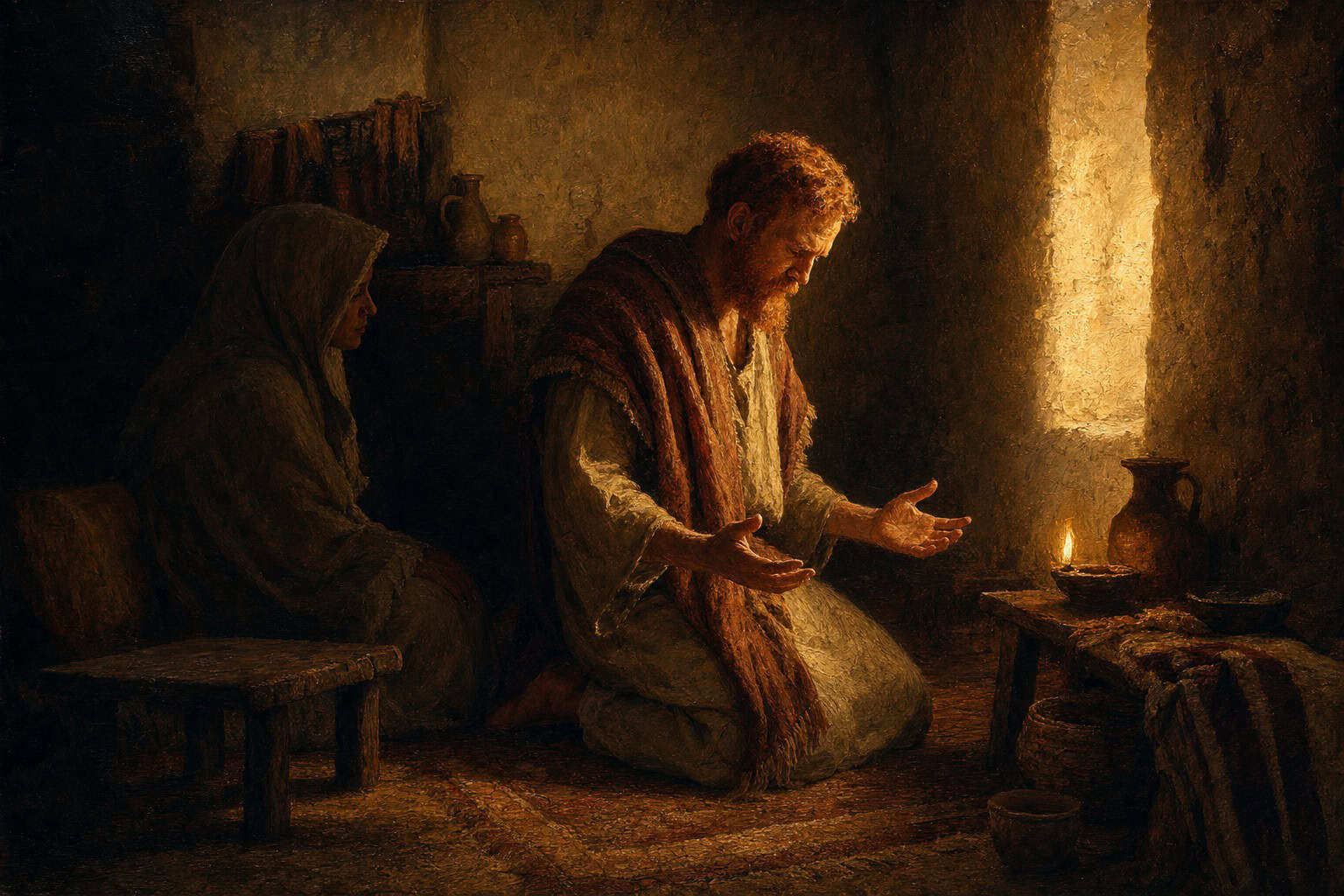
Searching for the truth about surrender? A raw, honest look at what it means to give up—not to weakness, but to grace found in the dark.
The Ledger You Keep Beside the Bed
You have kept accounts your whole life. You remember the exact hour it started—maybe a room with the blinds half drawn, maybe the cold glow of a screen against your face, maybe a single glance you never once confessed—and ever since you have been adding columns in your head. So many days clean. So many falls. So many prayers said with the taste of failure still coating your tongue. Surrender, you were told, is the thing you are supposed to do, and so you sit on the edge of the bed in the dark and try to perform it like a chore that must be checked off. But your body will not cooperate. Your hands are still clenched at your sides. Your jaw aches from a night of clenching. Your chest is tight with the old arithmetic of what you owe and what you lost, of opportunities that were denied you and the few you seized and cannot stop replaying. This is where most people arrive at the word surrender: worn thin, counting, certain that giving up means signing a confession that you are weak and worthless. You picture it as a white flag lifted over a ruined position, a defeat, one more black entry in the ledger of your shame. And so you dig in your heels against it, because you were taught to despise the very self that would need to lay down its arms in the first place. The truth is stranger and far gentler than that. Surrender does not begin on some future morning when you finally feel strong enough to release your grip. It begins in this exact posture—hunched over your knees, exhausted, quietly furious at a God who intervened where you did not want Him to and went silent where you begged Him loudest. You wanted rescue. You wanted the appetite lifted clean off your shoulders and gone, the desire evaporated, the war ended by simple decree. Instead you got a kind of prevention that felt like punishment, a hand pressed flat against your chest holding you in place for a fight you never once volunteered to join. That frustration burning in you right now is not proof that you have failed at surrender. It is the raw material out of which surrender is made. Sit here inside the tightness. Feel how your fingers curl toward your palms without your permission. Notice that the thing you have been calling surrender is not surrender at all yet—it is negotiation, a haggling in the dark. You are still keeping the columns. You are still guarding the one small thing you refuse to lay down. The first honesty of this whole slow journey is admitting you have not yet released anything, and that the room where you sit doing sums is far smaller and closer than you have let yourself feel.
The Enemy You Cannot Locate on the Map
Watch what happens the moment you try to name the thing you are surrendering. You reach instinctively for the obvious enemy—the appetite, the image burned behind your eyes, the craving that comes visiting after midnight when the house has gone quiet. You point at it the way a frightened soldier points at a treeline, sure the danger is out there, at a fixed distance, wearing a face you can see. But the closer you lean into it, the harder it becomes to say where the enemy actually stands. Were these desires yours, born from the deep soil of your own heart, or were they whispered into your flesh by something older and colder that wanted nothing less than your ruin? You cannot tell. And the not-telling is a torment of its own kind, a fog that swallows the map you were trying to read. This is the trap that keeps surrender feeling impossible: you believe you are handing over a behavior, when the real war is fought over what your eyes are permitted to feast upon, and therefore over what your heart has quietly begun to worship. The old king who paced his rooftop in the cool of the evening and saw a woman washing below did not fall by a single act; his eyes fed his imagination, his imagination raised an altar, and the altar demanded a corpse before the night was through. His son, who gathered a thousand women around him, did not provoke God by the sheer count of bodies but by the rival temples his hunger built with his own hands, brick by foreign brick. That is the terrible geography of this thing you are trying to surrender. Lust is never merely lust. It is the first altar of a wider apostasy, the earliest visible sign that your attention—your deepest, most tender capacity to adore—has been quietly turned and pointed somewhere else. So when you go to surrender the appetite, you find your hands come up empty, because the appetite is only a branch, and the root sinks down into ground you have not dared to look at. This is why the fight feels endless, why you are drafted again into it each gray morning. You keep hacking at the symptom and the disease keeps breathing beneath it, patient, unbothered. You cannot find the front line because the front line is inside you. And a whisper keeps working at you in the dark, murmuring that a divided devotion is fine, that you can love God well enough and still keep one small rival shrine tucked in a back room of the heart, that surely your heart is large enough to hold two altars at once. That is the lie that makes surrender feel like an amputation. Because you sense, even now, that what is being asked of you is not the trimming of a bad habit but the tearing down of a whole hidden temple—and you honestly do not know if you are willing. The horror is not that you are weak. The horror is that you have doubled: one self who reads and prays and works by day, another who slips out by night, each insisting it is the real you while eyeing the other with disgust.
The Hand That Held You Was Never a Fist
Here is the turn, and it does not come down on you as thunder. It arrives quietly, the way understanding sometimes settles at the end of a long, circular argument you have been having with yourself for years. All this time you have believed surrender meant handing yourself over to a God who would crush the thing you love, who intervened only ever to deny you, who blocked your falls out of pure severity and nothing warmer. You read His prevention as cruelty and filed it that way. But look again, honestly, at what actually happened across those years you spent quietly resenting Him. He did not orchestrate more encounters to seduce you deeper into ruin. He did not deploy flattery and easy pleasure to capture your heart and drag the whole of it down. He stopped things. He closed doors you had already begun walking through. He denied you opportunities you were sure you wanted. And in your youth you named all of this frustration, disappointment, a heavy hand pressing down on your chest just when the air felt sweetest. You never once let yourself consider that the hand was not a fist. That the prevention which felt so much like punishment was, underneath, the only tenderness available to a soul that could not yet carry one ounce more of temptation without breaking. Something wanted your total undoing and was quietly refused it—and the refusal that once enraged you was the mercy your eyes were not yet cleared to see. This is what surrender actually is, when you finally reach it. It is not laying your weapons at the feet of a conqueror. It is the moment you see, with a jolt that empties you out, that the One you were fighting had been standing beside you the entire time, walking your dark road in your very sin, keeping His hand on your chest not to keep you from joy but to keep you from a fall you would not have survived.
Surrender is not the moment you stop fighting; it is the moment you stop lying to yourself about who you were fighting.
That single sentence rearranges everything standing behind it. Because if the hand was never a fist, then the war you resented for so long was never a war waged against you at all. It was a war waged for you, fought in a place too dark for you to make out the ally crouched at your side. And surrender, seen from there, is not defeat in any sense you were taught. It is the terrible, buckling relief of setting down a resistance you had only ever been aiming at your own rescuer. You wept in that room and were sure you wept alone. You raged and were sure He had left. But the tears themselves were the exact place He had chosen to be nearest. Not the wiping-away of the tears—the nearness held down inside them, in the salt and the shaking, while you were still convinced of His absence.
Surrender is not the moment you stop fighting; it is the moment you stop lying to yourself about who you were fighting.
What Loosens When the Fists Come Open
Do not expect the room to change the instant you understand this. That is the first hard thing surrender teaches you in the aftermath: the darkness does not obligingly lift. You have been sold a version where light floods the room the moment you let go, where the appetite quietly dies in its sleep, where the nights turn calm and the war is simply declared over. It does not happen that way. You surrender and you are still bone-tired. You surrender and the old craving still comes to the door after midnight, still knocks, still murmurs about the one acceptable rival altar you could surely keep. The circumstances have not moved an inch. The difference is not out there in your life. The difference is in your hands. They have come open. And an open hand cannot keep a ledger; the columns spill out of it and scatter. This is the strange fallout of a real surrender—it does not solve your problem so much as dissolve the whole accounting apparatus you built up around the problem for years. You stop tallying days clean against days fallen, because you have finally admitted the truth that the count was never the point. The direction of the heart was the point. Where your eyes wandered, where your worship quietly leaked away, which temple your attention kept faithfully rebuilding in the dark while you slept. And now, with your fingers uncurled and your palms turned up, you notice something you never once permitted yourself to feel: a strange tenderness toward the self who lost all those years to the fighting. That younger man who felt cheated and denied, who nursed his disappointment over opportunities he never even knew were being kept from him, who looked God’s mercy in the face and called it frustration—you were trained to despise him. Surrender lets you stop. It lets you look steadily at the self who could not tell his own desires apart from the whispers sent to destroy him, and instead of the old contempt you feel something closer to grief laced through with mercy. He did not know. He could not have known. He was a boy held in place by a love wearing the mask of denial, and he mistook the mask for the true face beneath it. The body still betrays; the old carnal attachment still squats in the ruins like a tenant who never received the eviction notice. But you are no longer the same self screaming at the walls until your voice gives out. You are quieter now, and the quiet is not the same as victory. It is the loosening that comes over the muscles only after you finally stop clenching against the very hand that had been carrying you the whole way. The road ahead is still dark. Most days the companion is felt more as an ache of absence than a warm presence. But you walk it now with your hands hanging open at your sides, and that, it turns out, is the one thing that changes the walking.
Walking Without the Weapons You Carried
So this is where surrender finally sets you down, and it is not the place the brochures promised. You are not lifted off the battlefield and set on some far green hill. You are not carried up out of the desire, the doubling, the nights that still rise up to test you. What has changed is smaller and far more permanent than deliverance. You have stopped firing at the wrong enemy. You have laid down the weapons you were aiming, without ever knowing it, straight at your own heart and at the God walking patiently beside it. The relief in your chest is real, but it is not the relief of a war ended by treaty. It is the relief of a soldier who discovers, when the smoke thins, that the figure he had been shooting at was the one bending down to bind his wounds. You still hunger. The soul that loves without possessing still howls low in the dark, still groans for a fire it aches to seize in its fist and cannot. Surrender does not switch off that hunger; it turns it. It teaches you, slowly, that the hunger itself was never the sin—the sin was raising altars to feed it, and the surrender is letting those altars come down brick by brick so the hunger can finally lean where it was always meant to lean. You no longer grab at the wounds to prove they are real, the way a doubting man lunges to seize a thing and hold it in his fist. You open your hands and you receive. That is the whole distance between the man you were and the man surrender is patiently making of you. One reached out to take the divine life by force and called that grasping faith. The other holds his empty hands up in the dark and lets it be laid there like bread. If you came here searching for information on surrender—what it truly is, how a person actually does it, what it will cost you—the honest answer is this: it costs you the ledger, the false map of the wrong enemy, and the long, proud illusion that you were ever fighting alone in that room. What it hands back is not a way out of the dark. It is company inside it. This is the whole spine of the confession running beneath these pages—the slow, unwanted discovery that grace almost never arrives as a rescue and almost always as accompaniment, a warm nearness folded into the very tears you were certain proved His absence. If you want to walk further down that dark road beside a companion who names it plainly without ever cheapening it, you will find him in Confessions to the Empty Chair, still on the road, hands at last hanging open, still learning that the nearness had been the mercy the whole time.