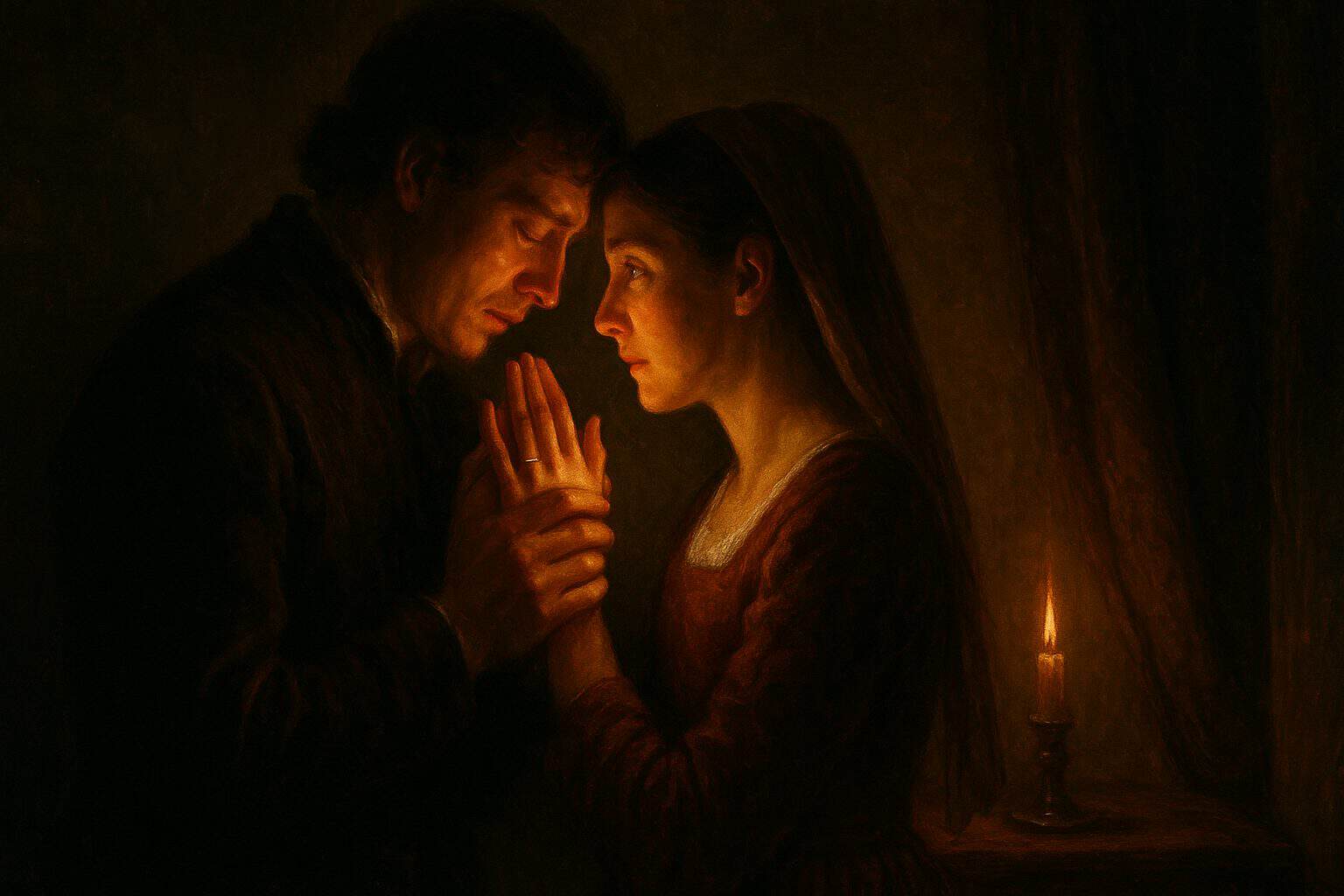
Where flesh becomes the visible grammar of invisible grace
The Gateway of Union
The body knows before the mind understands. In that place where two become one flesh—that ancient, primordial gateway through which new souls enter the world—something more than biology unfolds. The flesh draws us there, yes, but not merely as appetite seeking satisfaction. Rather, the body carries us toward a threshold where the visible and invisible meet, where matter becomes the vehicle of spirit, where human touch opens onto divine presence.
Watch how lovers approach each other. Not the practiced gestures of those who have reduced intimacy to technique, those “beautiful and shallow” encounters that move from pleasantry to consummation without ever touching the depths. But observe instead that first trembling approach when soul recognizes soul through the medium of flesh. The hands that reach out carry more than nerve endings; they bear the whole history of human longing, the memory of Eden when Adam’s loneliness terminated in the discovery of his mate, when isolation gave way to communion.
The Banquet of Bodies
She gathers the fruits of her encounters—not promiscuously, but with the careful attention of one preparing a feast. Each involvement, each connection with another human being, leaves its trace in her flesh. These are not mere memories stored in the mind but inscriptions in the very tissue of her being. When she returns to her beloved, she brings this harvest with her, “prepares the banquet of her body” where all she has gathered becomes gift.
“The individual then calls each of their involvements back home to themselves… transcribing the legion of their social entanglements with their singular body”
This is not infidelity but its opposite—the recognition that we never come to another person empty-handed. Each brings their entire world, their whole history of touch and tenderness, wound and wonder. The body remembers every kindness, every cruelty, every moment when skin met skin in greeting or goodbye. And in the act of love, all of this becomes offering, becomes feast, becomes sacrament.
The flesh speaks what words cannot. In those intimate moments when bodies entwine, something more than physical union occurs. The tangible becomes transparent to the intangible. Just as bread becomes more than bread, wine more than wine—”This cup is the new covenant in my blood poured out for you”—so too does human flesh in the act of love become more than flesh. It becomes the living sign of covenant, the visible seal of invisible grace.
The Freedom to Discover
God could have created automatons, beings programmed for worship, incapable of refusal. Instead, He “endowed the angels and humanity with intelligence, awareness, decision-making, and freedom—not for His benefit, but for our own, so that we might come to discover Him in our own way on our own terms.” This freedom extends even into the realm of eros, especially there, where the risk is greatest and the potential for both degradation and sanctification most acute.
Consider how desire operates in us. It “is not meant to be an end in itself… but instead requires an object outside of itself, ‘knowing,’ to pursue in order to actualize its purpose.” The body’s hunger drives us outward, toward the other, toward communion. But this movement can take many forms. It can become the hollow consumption of “fresh meat,” the reduction of persons to objects of appetite. Or it can become the pathway to genuine encounter, where through the flesh we discover not just another body but another soul, another universe of experience.
The modern world offers us countless substitutes—digital intimacies, curated images, “nude pictures and videos” that promise connection while maintaining distance. These fragments of flesh divorced from presence reveal the poverty of disembodied desire. They show us bodies without souls, surfaces without depths, arousal without encounter. The screen becomes a barrier even as it pretends to be a window.
The Plural Perspective
“Each brings their bodies with them to every act of consciousness, beginning and ending from the perspective of the first-person plural.” This is the mystery that unfolds in genuine intimacy—the discovery that the “I” was always already a “we,” that consciousness itself is never singular but always intertwined with others.
In the moment of union, this truth becomes flesh. Two bodies joined reveal what was always true but hidden: that we exist in and through each other, that the boundaries we imagine between self and other are more porous than we suppose. The flesh knows this before the mind admits it. The body reaches out, touches, holds, enters and is entered, teaching us through its own grammar that isolation is illusion, that we are made for communion.
“Treasured are you who seek to see the world as I once saw it, to stand where I once stood, so that mine is the wisdom you inherit”
This inheritance passes not through words alone but through bodies—through the generations of flesh begetting flesh, each new soul entering the world through that same gateway where bodies unite in love. The wisdom of the flesh is ancient, older than language, older than thought. It remembers Eden and anticipates the New Jerusalem, where we shall not be “disembodied souls in heaven but reunited and purified body-souls.”
The Sacramental Body
What distinguishes sacramental from merely sensual union? Not the absence of pleasure—God forbid we should imagine holiness as the enemy of joy. Rather, it is the presence of recognition, the awareness that in this act something more than flesh touches flesh. When lovers approach each other sacramentally, they understand themselves as ministers of grace, their bodies as chalices containing something precious beyond measure.
The distinction between flesh and spirit—”What is born of human nature is human; what is born of the Spirit is spirit”—does not mean division but rather distinction within unity. The flesh remains flesh even as it becomes vehicle of spirit. The body remains body even as it becomes temple. This is the scandal and the glory of incarnation, played out in miniature every time two people come together in love.
Watch how the beloved’s face changes in the moment of climax—that instant when control dissolves, when the careful masks we wear slip away, when something ancient and eternal flashes across the features. This is apocalypse in its truest sense: unveiling, revelation, the hidden made manifest. The soul shows itself through the flesh, not despite the flesh but precisely in and through its most intense experience.
The Wound That Heals
Every body bears its history of wounds. Some visible in scars and marks, others invisible but no less real—the cellular memory of rejection, abandonment, violation. When bodies come together in love, these wounds meet. Sometimes they clash, reopening old injuries. But sometimes, in those moments of genuine sacramental union, something else occurs: the wounds become doorways.
Through the cracks in our armor, grace enters. Through the places where we have been broken, light shines. The lover’s touch finds these tender places not to exploit but to heal, not to wound further but to anoint. This is why true intimacy requires such courage—we must allow ourselves to be seen not just in our strength but in our fragility, not just in our beauty but in our brokenness.
The body remembers every touch—cruel and kind, violent and tender. But in sacramental union, these memories can be transformed. New touch overwrites old trauma, not erasing it but layering it with new meaning. The body that was once site of wound becomes site of healing. The flesh that was once violated becomes consecrated.
The Eschatological Body
Our bodies point beyond themselves, not away from flesh but toward flesh transformed. The promise is not escape from embodiment but embodiment glorified. Every moment of genuine union between lovers prefigures this ultimate transformation, gives us a foretaste of resurrected flesh.
In those moments when time seems to stop, when two bodies moving together create a rhythm that participates in something eternal, we glimpse what awaits. Not the dissolution of self into other, but the perfect communion where difference remains even as separation ends. The “I” and the “thou” persist even as they unite, creating something new without destroying what was.
This is why the language of mysticism and the language of eros so often intertwine. The soul’s union with God finds its most apt metaphor in the body’s union with the beloved. Not because God is reduced to human terms, but because human love at its most intense participates in divine love. The finite bears the infinite, not containing it but channeling it, becoming transparent to it.
The flesh is not obstacle but opportunity. The body is not prison but temple. And in those moments when two people come together in full recognition of this truth—when they approach each other not as objects to be consumed but as mysteries to be entered, not as problems to be solved but as sacraments to be received—then eros reveals its deepest nature: not as appetite seeking satisfaction, but as love seeking incarnation, as spirit seeking flesh, as the invisible God becoming visible in the tender touch of human hands.