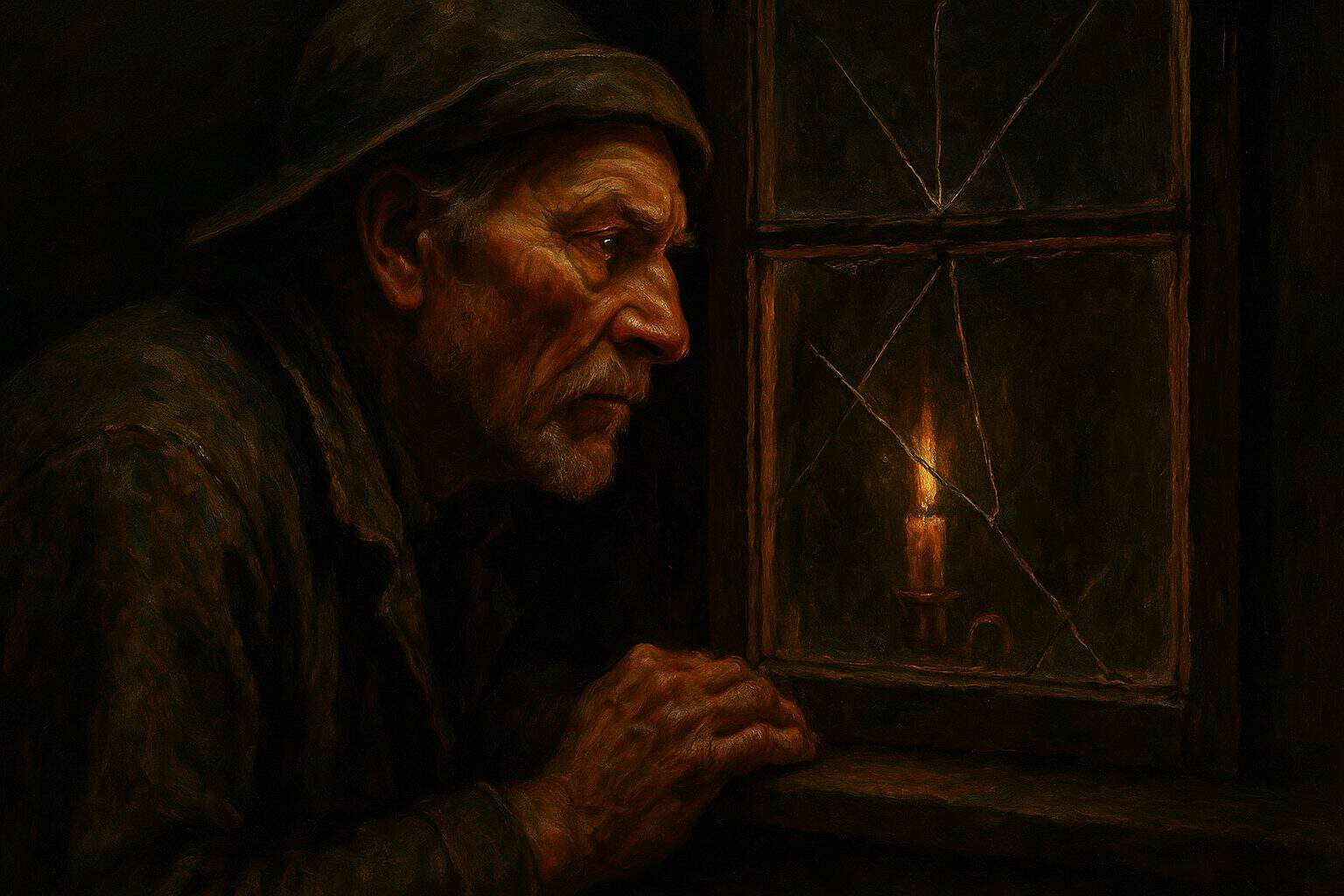
How the wounded learn to see through cracked glass, finding in their very damage a terrible clarity
The Architecture of Suspicion
The scar tissue forms its own lens. In the wake of profound betrayal—what Anthony names through Lilith’s devastation—the eye learns to see differently. Not merely cautious now, but restructured in its very capacity for sight. The cuneiform marks she carved into his heart become a new alphabet, each wound translating into a protocol of perception that reads danger in every gesture of approach.
This is not paranoia but something more precise: a phenomenology of the damaged instrument still attempting to perceive. Like looking through glass that has been struck but not shattered, where the spider-web of cracks creates its own prismatic distortion. Every image arrives already fractured, already multiple, already suspect.
The vigilant consciousness emerges not as choice but as the body’s own reformation after trauma. Merleau-Ponty would recognize this pre-personal restructuring—how the lived body itself becomes the bearer of a new intentionality, one that reaches toward the world through the medium of its wounds. The scar, as Anthony discovers, does not merely mark where damage occurred; it becomes an active principle of perception, poisoning new relationships with its bitter skepticism even as it attempts to protect against further harm.
The Codex as Shield
“I forged the Codex to manage risk—with Jeannètte and Jane as my two muses… a shield against confusion, a human system erected where trust failed.”
Here the phenomenology reveals itself most starkly: where organic trust has been destroyed, an artificial system must be erected. The Codex emerges as both map and fortress, a human construction that attempts to navigate territory that has become fundamentally unreliable. Not merely a set of rules but a new organ of perception, forged in the gap where natural faith once resided.
The forging itself—that word Anthony chooses with such precision—suggests both creation and deception, both making and falsifying. The new protocol of deceptive power translates wounds into words, scars into syntax. What Lilith destroyed at the level of immediate trust must be reconstructed as elaborate architecture, each relationship now requiring its own careful engineering.
This is Sartre’s radical freedom turned desperate: consciousness recognizing its absolute responsibility for meaning-making in a world where given meanings have proven treacherous. The pour-soi cannot rest in any natural faith but must perpetually constitute its own ground, create its own protocols, forge its own instruments of navigation.
The Phantom Limb of Memory
Memory itself becomes an instrument of vigilance. The burned recollection—that cruel brand searing remembered sweetness against mundane bitterness—does not fade but intensifies. Like a phantom limb, it aches in its absence, more present in its ghostly persistence than when it was flesh.
This is not simple remembering but a kind of temporal vigilance where past betrayal continues to sound its alarm in every present moment. The memory does not recede into the past but projects forward, colonizing future possibility with its warning. Each new encounter arrives already shadowed by what happened before, already read through the lens of that first devastation.
The phenomenology here is precise: trauma does not create memory but transforms the very structure of retention and protention. The past does not stay past but bleeds through, staining each present moment with its particular hue of caution. Time itself becomes blemished, no longer the neutral medium of experience but actively distorted by what has been suffered.
The Blade and the Whetstone
In one of Anthony’s most enigmatic images, the blade requires careful grinding against the whetstone’s face—both time and a delicate hand needed for proper sharpening. This is not metaphor but phenomenological description of how vigilance itself must be honed, how the damaged eye must learn to see with precision rather than mere suspicion.
After interpreting signals from the blade, intimacy becomes possible—but an intimacy already marked by the instrument that makes it possible. The blade that cuts also opens, the edge that threatens also reveals. Those guarded, secret, shameful things emerge only in the presence of this carefully maintained danger, this vigilance that has learned to read the finest signals of approach and retreat.
The delicate hand Anthony mentions is not gentle but precise—knowing exactly how much pressure to apply, how to maintain the edge without destroying it. Too much grinding and the blade becomes brittle; too little and it cannot cut through to truth. The phenomenology of vigilance requires this constant calibration, this perpetual maintenance of an instrument that is simultaneously weapon and tool of discernment.
The Limp as Purpose
Jacob’s limp emerges in Anthony’s reflection not as wound but as purpose itself—the permanent physical reminder that human strength and cleverness prove insufficient. Here the blemished lens reveals its deepest truth: the distortion is not merely damage but a kind of terrible gift, a mark that prevents the fatal forgetting of our fundamental vulnerability.
The limp changes the gait permanently. Every step now carries the memory of the wrestling, of the night encounter that left its mark. So too with the vigilant consciousness: every perception now moves through the awareness of what perception itself can suffer, how the very capacity to see can be wounded and reformed.
This is not healing in any simple sense. Jeannètte may use what Lilith used to damage, may transform the instruments of harm into vehicles of restoration, but the scar remains. The eye that has learned to see through its cracks cannot return to innocent sight. Instead, it must learn to see truly through its distortion, to find in its very damage a different kind of clarity.
The Bodies of Followers
“Lilith used the bodies of her followers to mar my soul, forever changing its shape”
The phenomenology reaches its most disturbing articulation: how betrayal can use not just the betrayer but others as instruments, how the soul itself can be permanently reshaped through what bodies do to bodies. The followers become extensions of Lilith’s intent, each encounter leaving its mark not on flesh but on something deeper—that pre-personal ground of trust that Merleau-Ponty locates in our incarnate being.
The soul’s shape changes. Not metaphorically but in its very structure of reaching toward others, in its fundamental orientation toward the world. What was open becomes guarded; what reached out now pulls back. The vigilant consciousness emerges not as psychological defense but as ontological reformation—being itself restructured by what it has undergone.
To leave something behind after each encounter—that lingering ache low in the belly—is to inscribe dominance at the level of flesh, to mark territory in the most primitive way. But this marking works both ways: the one who marks is marked, the one who wounds is wounded. The vigilant consciousness carries not just its own scars but the terrible knowledge of its capacity to scar others.
The Shield Against Confusion
The human system erected where trust failed—this is perhaps the most poignant phenomenological truth Anthony’s memoirs reveal. Not that trust can be rebuilt but that something else must be constructed in the crater where trust once stood. The Codex, with Jeannètte and Jane as muses, emerges as this artificial construction, this elaborate scaffolding erected around the absence.
But scaffolding serves a purpose: it allows building to continue even where the foundation has been damaged. The vigilant consciousness does not simply defend but actively constructs, creates new protocols of connection even as it maintains its watchful distance. The shield against confusion is also a framework for new possibility, distorted perhaps but not without its own integrity.
The confusion that must be shielded against is not simple uncertainty but the vertigo that comes when the ground itself has proven unreliable. When relationships built on mutual existential fear replace those built on faith, when codependent attachment becomes the only form of connection that feels secure, the soul needs some organizing principle, some way to navigate this new territory where every step might be trap or gift, where love and damage use the same instruments.
The Entering Through the Chest
At first exterior to the flesh, then entering through the chest—this phenomenology of invasion captures how vigilance attempts to track threat, to catch the moment when what seems outside suddenly penetrates the most intimate interior. The chest, that cavity where heart and lungs perform their vital work, becomes the site of terrible vulnerability.
The vigilant consciousness knows this entering, has felt it before. Now it watches, waits, attempts to catch that moment of transition when the exterior becomes interior, when what seemed safe reveals itself as danger. But this watching changes the very nature of encounter—every approach now potentially an invasion, every intimacy possibly a penetration that will leave its mark.
Yet desire, as Anthony reminds us through his philosophical reflection, requires an object outside itself to pursue. The vigilant consciousness cannot simply close itself off, cannot achieve perfect defended solitude. It must reach toward knowing even as it guards against being known, must risk encounter even as it maintains its protective protocols.
The Distorted Eye’s Gift
What does the blemished lens see that the clear eye cannot? Perhaps this is the deepest phenomenological truth Anthony’s memoirs approach: that certain truths only become visible through damage, that the crack in the glass creates its own form of revelation.
The vigilant consciousness sees the vulnerability in others because it knows vulnerability from within. It recognizes the subtle signs of guardedness because it has learned to guard. It can read the finest signals of approach and retreat because it has mapped this territory in its own flesh, traced these patterns in its own scars.
This is not wisdom exactly, nor simple experience. It is something more precise: a perceptual capacity born from wound, a way of seeing that emerges only through having been broken and reformed. The distorted eye sees distortion everywhere—but this means it also sees past the facades of wholeness, recognizes the hidden damage that the innocent eye would miss.
The Permanent Transformation
Real change, Anthony tells us, reflects extreme response to extreme stimulus—death or its threat, loss, profound betrayal. The vigilant consciousness emerges from such extremity, and its transformation is not temporary adjustment but permanent restructuring. The soul that has been marred, forever changed in shape, cannot return to its original form.
But this permanence is not simply loss. In the movement from Lilith to Jeannètte, from the one who made hatred possible to the one who made love possible again, we see not restoration but transformation. The same instruments, the same vulnerabilities, the same capacity for wound—but now turned toward different purpose.
The blemished lens cannot be made clear again, but it can learn to see through its distortion. The vigilant consciousness cannot return to innocence, but it can develop its own forms of trust—elaborate, careful, constructed rather than given, but not therefore without meaning. The Codex may be artificial, but it makes possible forms of connection that natural trust, once betrayed, can no longer support.
This is the phenomenology of the wounded healer, the one who knows damage from within and therefore can minister to damage in others. Not despite the distortion but through it, not overcoming the vigilance but incorporating it into a new way of being with others who have also been marked, who also see through cracked glass, who also know that the limp is not the failure but the purpose—the permanent reminder that our own strength was never sufficient, that we always needed more than we could provide ourselves.