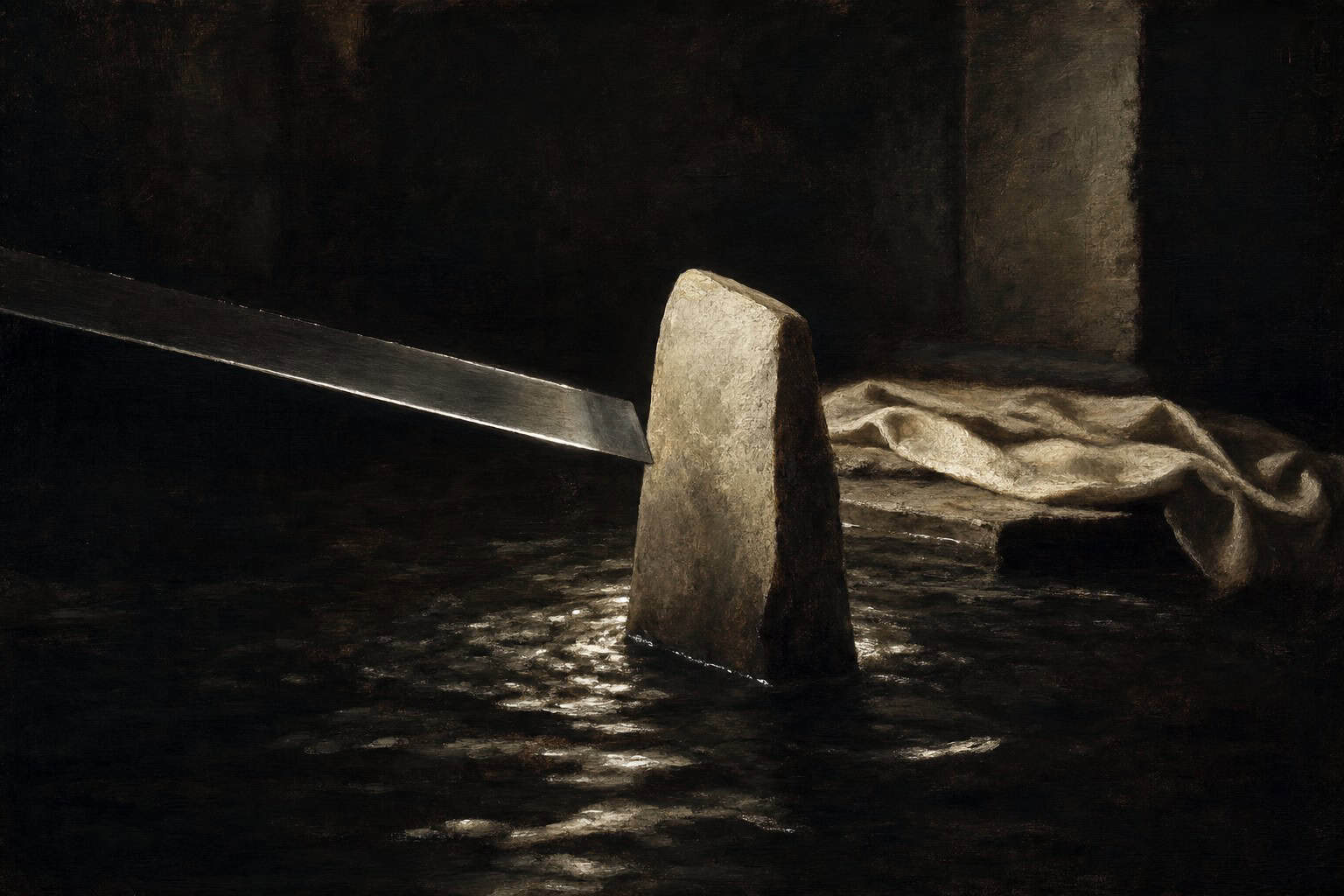
She breaks the surface of the dark water like a jag of stone, cutting the current, and two wounds press together and mistake a closed circuit for a cure.
Her Edge Rising Through Black Water
She does not stand on safe ground here; she rises out of it. The scene holds her like a jag of stone breaking the surface of dark water, a presence that cuts the current rather than floats on it. Men have tried to swim toward that edge and found themselves pulled under, lungs burned, strokes failing long before they reach her. It is not cruelty that drowns them, but mismatch: their easy, rounded selves meeting water that demands discipline and lungs trained for depth. Beneath the surface, her life has pressed her into something hard and narrow, meant to take dull metal and give it an edge. In the quiet of this passage, the narrator sets her there, surrounded by water that keeps the casual away. Then, in that same depth, something moves that does not thrash or choke. Another form, cutting the same lines through the same current, comes near enough for edges to sense each other before any word is spoken.
The Comfort of Matching Cracks
Around this image of deep water, the passage turns to a smaller, more common scene: two people sitting close, trading stories like gauze. Their cuts look alike. Each time one names a wound, the other nods and adds a mirror line, and for a while the air softens. Shoulders drop. There is relief in not having to translate pain for someone who already speaks it. But under that relief sits a hard truth the book will not spare us from naming: they can clean each other’s bandages, they cannot knit the skin. Their bond rests on a limit neither of them chose and neither of them can break from the inside. It feels like intimacy because nothing is hidden, yet nothing is altered. They have found in each other the same fracture pattern, and that likeness becomes both their shelter and their ceiling. The current here does not drag them under; it simply moves in a circle.
Sparks Waiting in Unused Steel
From that circling comfort the passage pushes into a harsher image: metal against stone, the shrill scrape that throws off sparks. The narrator holds up two pieces of the same earth—rock and blade—and insists the difference between them is not origin but consent. One allows itself to be dragged, edge first, along a surface that will bite back. Molecules are shaved away. Heat rises in a line no wider than a breath. The other stays lumped, heavy, insisting on its right to remain “itself,” calling its refusal strength. In the shadow of the woman in deep water, this becomes a judgment on more than tools. Capability without willingness goes blunt, no matter how strong the alloy. Tenderness without edge cannot cut through scar tissue, no matter how sincere the touch. The pressure in this passage lies here: the sense that most hearts would rather stay whole and dull than risk the pain of that thin, bright grinding.
Broken souls seek broken souls and call it recognition, but two wounds pressed together often make only a closed circuit, not a cure.
Where Your Own Edge Hesitates
Away from the page, the same patterns show up in smaller, quieter ways. You sit across from someone who understands your story down to the small humiliations, and you feel that wash of ease: no need to justify, no risk of being doubted. The bond forms around what both of you lack, and for a time that is a mercy. Yet days later, nothing in you has actually changed; you are simply less alone with the same old ache. Or you know a different kind of encounter—the person whose presence unsettles you, not by cruelty but by clarity. Words with them leave a sting, like skin rubbed raw, and part of you wants to label that threat, arrogance, coldness. Underneath, another part recognizes the edge you do not carry yet. This passage presses that recognition against your ribs: are you choosing people who echo your fractures, or people whose very sharpness could reshape them? And if the latter, will you stay in the water long enough to let them reach you?
The First Draw of Steel Along Stone
The final lines of this small window do not give the comfort of a finished tool, gleaming and ready. They hold the moment just before the first pull of metal along stone, when everything that could happen is packed into one simple decision. The woman in the dark water remains what she is: edge, density, history compressed into function. The other presence moving toward her has to decide whether it will meet her as common metal seeking shelter in her shadow, or as equal hardness willing to risk the scrape. Around them, the familiar pairs of shared wounds keep tending their unhealed places, warming each other without mending. Nothing in the passage resolves who will dare that first grinding contact. It leaves us poised at that point of contact, the air still cool, the steel still clean, the sound of sharpening not yet split from the silence of untouched stone.