Where the father’s absence carves the shape of every seeking
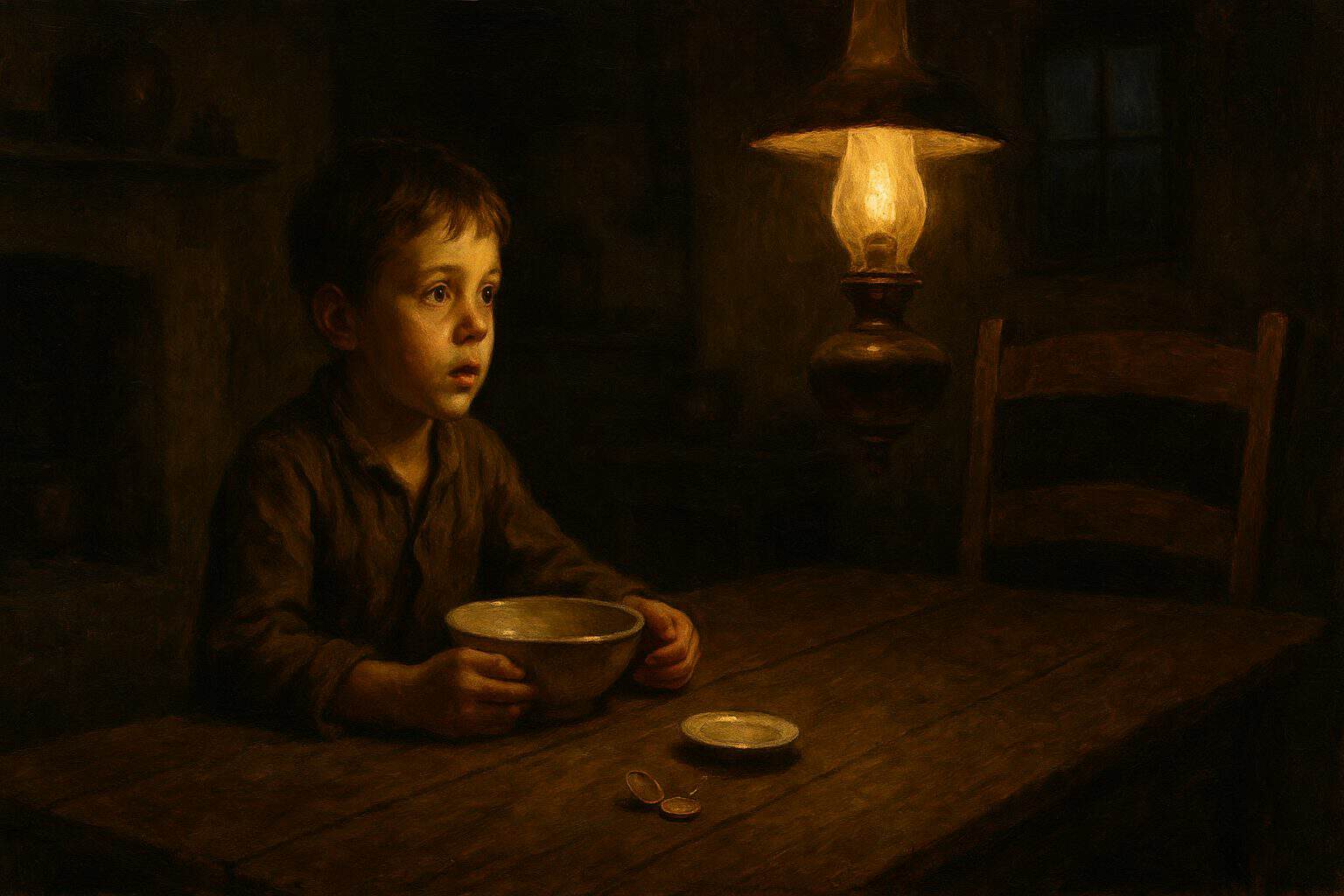
The empty chair at the dinner table holds more presence than any occupied seat. It draws the eye, commands the room, shapes conversation around its void. This is how absence works in the memoirs of Anthony Adoré—not as simple lack but as a structuring principle, a gravitational center that organizes all movement in its field.
The Architecture of Absence
In Fractions of the Soul, Adoré writes: “She sat opposite me—not in a room, but as a ghost I could not exorcise, living behind my eyes.” The absent one takes up residence in the most intimate space—not external but internal, not in the world but behind the very organs of perception. Every glance outward passes through this ghost. Every face encountered gets measured against this phantom template.
The phenomenon shows itself first in the body’s habits. The child wakes in an empty bed, reaches across cool sheets, finds only fabric where warmth should be. “She manufactured distance through long absences, leaving me to wake up in an empty bed.” The body learns absence before the mind comprehends it—skin registering cold, arms closing on air, the muscular memory of embrace meeting nothing. This is how the hole at the source gets carved: through repeated bodily disappointment that sediments into expectation.
What Merleau-Ponty called the body-subject reveals itself here in its most vulnerable aspect. The child’s body extends itself toward the parent and finds… nothing. This reaching-toward-nothing becomes incorporated into the body schema itself. The adult Adoré will later recognize this pattern everywhere: “the first time I encountered what would become a familiar archetype: the one who stirs the heart and then vanishes, leaving me to interpret her absence.”
Eden’s Empty Garden
The theological imagination provides Adoré with his deepest image for this originary absence. Eden after the expulsion—this becomes the template for all subsequent dwelling. “God ‘walked’ with Adam in Eden; Adam did not walk with God in Heaven.” The directional specificity matters. The divine comes to the human, enters human space, makes itself present in the garden. Then comes the banishment: “So Yahweh God expelled him from the Garden of Eden, to till the soil from which he had been taken.”
“His fear of a life without Eve was stronger than his trust in God. And all of his sons since inherited his original weakness.”
This inheritance structures Adoré’s entire phenomenology of absence. Adam’s choice—clinging to human presence rather than trusting divine promise—becomes the template for every subsequent grasping after vanishing love. The fear of abandonment proves stronger than faith in presence. Every son inherits not just sin but this specific weakness: the terror of being left alone.
What Heidegger named Geworfenheit—thrownness—takes on particular coloration here. We are thrown not just into existence but into existence-after-expulsion, into the memory of a garden we cannot reenter. “Although imperfectly remembered through the veil of sin, memories of Eden decorate the interior”—the incomplete manuscript fragment itself performing the incompleteness it describes.
The Furniture of Loss
Absence materializes itself through objects. “From his point of view, the furniture itself reminded him of her absence every time he walked through the door.” The chair she sat in, the cup she drank from, the pillow that held her scent—these things become monuments to void. They hold space for what is no longer there, maintaining the shape of presence through its outline.
This is more than memory; it’s what Sartre would recognize as the négatité at the heart of consciousness—the nothing that allows something to appear. The furniture doesn’t represent the absent one; it presents absence itself. Every object in the abandoned apartment becomes a specific mode of not-being-there.
“The silence of that empty apartment was another forge.” Silence here is not mere absence of sound but active presence of absence—a forge that shapes, that transforms through heat and pressure. “In the wreckage of the realization—that I was a placeholder—I abandoned the hope of love.” The recognition strikes: I was never the one truly seen, only a space-holder for someone else, someone absent. The placeholder discovers he is holding place for another placeholder, absence all the way down.
Phantom Children
The most devastating absence Adoré describes concerns children who never existed: “I mourned them as Job mourned his sons and daughters—phantoms in the ashes of my imagination, children who lived only in the womb of possibility. I became a father never meant to be, grieving heirs who had already perished in spirit.”
Here absence achieves its purest form—mourning what never was, grieving the ungiven. These phantom children exist more powerfully than many actual beings precisely because they remain pure possibility, uncollapsed potential. “Death did not just take a child but also took away all the years they would have had living and every small and great feeling threaded to it.”
Viktor Frankl’s insight into meaning-making through absence finds its limit case here. How does one make meaning from the death of what was never born? Yet this is precisely what the father-wound demands—to mourn not just the absent father but all the moments, teachings, recognitions that his absence prevented from coming into being.
The Pride of Abandonment
“A strange pride took root in this isolation: pride in the world’s perceived abandonment and its utter disinterest in my spirit’s movements.” This represents absence’s final transformation—from wound to identity, from deprivation to distinction. The abandoned one begins to cultivate abandonment, to perfect it, to make it his signature.
Kierkegaard knew this movement intimately—how suffering can become a source of perverse elevation, how the wound can become more precious than healing because it makes one exceptional. The one marked by absence bears a special knowledge: “I know my internal states; this was not generated from within.” The encounter with genuine otherness—even the otherness of absence—marks one as different from those who have known only presence.
“I confronted sorrow’s full measure, admitting to my role in the regrets now defining me; I was and am the primary architect of my suffering.”
This admission doesn’t diminish the original absence but recognizes how one has built upon it, elaborated it, made it the cornerstone of an entire architecture of being. The absent father provides the foundation, but the son builds the cathedral of lack.
The Traveler Condition
“The ghosts of Dallas… vanished in the rearview mirror as I re-entered the monotonous rhythms of the family business.” Physical departure attempts to escape absence but only multiplies it. Every place left behind becomes another site of absence, another ghost-populated landscape.
What Frank M. Buckley called the dialectic of at-homeness and the traveler condition reveals itself here in its most acute form. The one marked by original absence can never fully dwell anywhere because every potential home recalls the first unhoming. Yet this very condition of perpetual travel, of never quite arriving, becomes its own mode of being-in-the-world.
“The emotional architecture of our connection had collapsed, but the physical structure remained, and I resolved to inhabit its ruins like a squatter.” To squat in ruins—this becomes the fundamental posture. Not rebuilding, not abandoning, but dwelling in collapse itself, making a home in what remains after home has fallen.
The Lens of Lack
“Experience carves out their presence in the world, announcing itself to others, revealing a particular situatedness or attunement.” But what kind of presence does absence carve? What attunement does the void create?
Adoré’s memoirs suggest that absence becomes a lens—”a lens through which the world comes into focus.” Everything seen gets seen through the hole at the source. Every presence gets measured against the original absence. Every love gets tested by its potential for vanishing.
This lens doesn’t distort so much as reveal. “Adam’s loneliness was pure, without evil, and that it was something woven into the human soul by God.” The absent father, the vanishing mother, the phantom children—these don’t create loneliness but reveal the loneliness that was always already there, woven into the human pattern from the beginning.
The Impossible Return
“Yet simultaneously, His perceived absence after that encounter brought tears to my heart, casting a melancholy veil through which I now viewed the world.” Even divine presence, when it comes, only intensifies awareness of absence. The momentary visitation makes the usual emptiness more acute.
This is the cruelest aspect of the father-wound: healing itself hurts. Presence, when it finally arrives, doesn’t fill the hole but reveals its true dimensions. The absent father who returns remains absent in his presence because the son has learned to perceive through absence, to organize reality around the void.
C. S. Lewis, writing after his wife’s death, knew this paradox—how the beloved’s absence becomes more present than presence ever was. The hole at the source doesn’t get filled; it becomes the source itself, the wellspring from which all subsequent experience flows.
Dwelling in the Wound
“With this understanding, physical reality, created after time and heaven, distinguishes itself yet coexists and commingles with spiritual reality.” The wound exists in both registers simultaneously—physical absence creating spiritual presence, spiritual absence manifesting as physical symptom.
The memoirs don’t resolve this tension but inhabit it. Like Bernd Jager’s vertical and horizontal dimensions of lived space, absence operates in both axes—the horizontal absence of the other who should be facing us, the vertical absence of the ground that should be supporting us.
To read Adoré’s memoirs is to encounter absence not as problem to be solved but as structure to be described, not as lack to be filled but as presence to be acknowledged. The hole at the source reveals itself finally not as damage but as opening—the space through which something other might enter, even if that something is only the fuller recognition of the absence itself.
The father who wasn’t there shapes the son more definitively than any present father could. His absence becomes the son’s presence in the world—the specific quality of seeking, the particular tone of longing, the exact shape of the soul’s reaching toward what it cannot grasp. This is the patrimony of absence: not goods or guidance but the gift of an orientation, a direction of yearning that points always toward what is missing and finds, in that very pointing, its most authentic gesture.