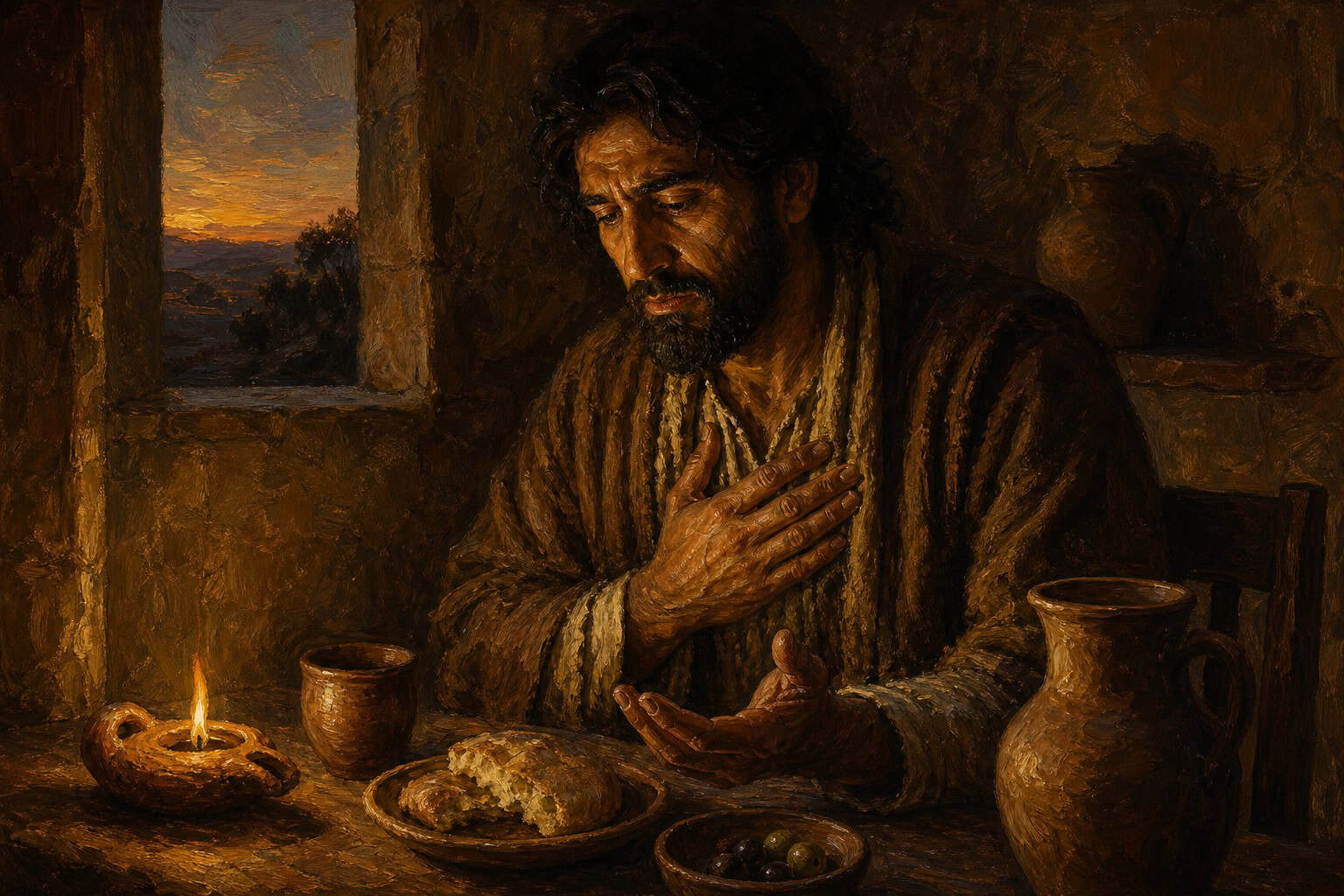
Why did she break up with me? A raw reading of the crumbs you mistook for love, and the desire that outran its object.
The Breadcrumbs You Called a Feast
You are asking the wrong question, and I know that because I asked it for years. Why did she break up with me. The mind wants one clean reason, a single sentence you can carry in your pocket and take out to inspect under the light like a coin. But the answer was never a sentence. It was posture. It was word choice. It was the exact distance she kept when she sat beside me, close enough to be present, far enough to remain uncaught. In the pages of Confessions to the Empty Chair I write of a woman I call Jane, who moved through her days as if she were a queen descending from a high tower to walk among her court, then climbing back into a solitude I was never once permitted to enter. When I begged her to speak of the others, she told me flatly to ask less. And I did, because I was afraid of what more would cost me, afraid the whole fragile arrangement would break if I pressed a finger against it. Here is the first thing you must hear plainly. She did not leave because you failed her. She left, or she was already gone while your body still shared her bed, because you were never the thing she wanted. You were the thing she could tolerate. You set the table. You lit the room. You poured everything you had into a meal she picked at with polite indifference, moving the food around the plate, while she saved her real hunger for men whose crumbs, in her mind, tasted better than your whole spread. She told me as much without ever saying it. Their scraps fed her more than my banquet. That is the sentence I could not write for years, and it is the sentence that answers your search now. The question why did she break up with me assumes there was a moment of leaving, a clean cut with a date attached. Often there was no moment. There was only the slow surfacing of what had always been true, the way a photograph rises up out of the tray in the dark, the image already there before your eyes could read it. You were her comfort. You were her intellectual companion. You were the warm room where she came to shower and change and think out loud, and then went elsewhere to be desired. You spent your whole devotion trying to become the thing she wanted, believing that if you gave enough, cared enough, argued well enough, the wanting would eventually arrive at your door like a delayed guest. It does not arrive. It was never once on its way, and the sooner you stop setting a place for it the sooner you can stand up from the table.
When the Teacher Kneels to His Student
Before Jane there was another woman, and with that one I held the power. I was the teacher. She learned from me, leaned toward me, and I felt myself the larger presence in the room. Then Jane reversed it, and I let her, and I mistook the reversal for love. This is the part your question circles around without ever landing on. What kept me bound to her was not chiefly the body, though the body kept us anchored through covert nights strung end to end, her slipping back to her dorm at dawn only to return by evening. What truly kept me was her mind. She operated on a level above mine, and I knew it, and I envied it, and the envy became a kind of hunger that felt indistinguishable from adoration. Every conversation was a duel I lost gracefully. Her attacks came precise and piercing, aimed under the ribs, and I built defenses just to stay in the room with her, sharpening my own language against hers until I could hold a thought steady long enough to say it. I told myself this was intimacy. I told myself that two minds locked in exchange were two souls made close. But intellectual submission is not being loved. It is being trained like an animal that comes to love the hand that measures out its food. I knelt, and I called the kneeling closeness. Ask yourself the hard thing now, the thing I refused to ask for far too long. Were you in love with her, or were you in thrall to what she could do to your mind that you could not do for yourself. Did you want her, or did you want the version of yourself that survived her scrutiny, that grew sharper under her, that felt chosen precisely because she was so impossibly hard to please. I suspect you already know. I suspect the not-knowing is the more bearable place, and you have been living there because the true answer indicts you right alongside her. A superior mind, offered in withheld doses, is a drug more potent than any embrace. It whispers that if you only climb a little higher, prove yourself a little worthier, the withholding will finally end and the wanting will turn toward you at last. It never does. The intelligent woman who said she could lose herself in the arms of an intelligent man was speaking of a father she never had, of a childhood powerlessness she had spent her adulthood converting into grasp and reach and control. You were the training ground for that grasp. You were never once its home. And I have come to believe God was in that dorm room the whole time, quiet, watching me confuse being humbled with being held, not lifting me out of it, only sitting near while I learned the difference at a terrible speed I would not wish on anyone.
What the Flesh Knew Before the Mind Allowed It
Here is the turn, and it will not comfort you. You already knew. Your body knew before your mind would sign the paper. This is the thing I now see clearly that I could not see then, standing inside the fog of it. Betrayal registers first in the flesh, long before the mind consents to read what the flesh has written. It arrives in micro-shifts you cannot name, in the half-second delay before she reaches for you, in a word she chose one shade too carefully, in the way she turned her shoulder a few degrees while telling you she loved you. Your animal awareness clocked every bit of it. Your instinct read the truth of her divided heart and filed it away, complete, sealed, waiting. And your civilized mind, the part that wanted the relationship to be exactly what you had decided it was, simply refused to open the file. I recognized Jane’s unfaithfulness on some low floor of my consciousness long before I let it climb up into words. She was too smart to be caught. After a certain rupture she quietly withdrew that side of herself from men I might actually know and redirected it toward men who had already graduated, who lived near, whom I would never meet or question or corner at a party. She built a wall of deniability I could not breach with any amount of asking. So all I had was suspicion, and suspicion that cannot find its evidence turns inward and begins to eat the one who holds it, quietly, from the inside. I would lie beside her in the dark and run the day back like a tape, hunting for the one gesture that proved what my gut had already sworn to. There was never a single gesture. There was a whole climate, a weather I lived in and refused to name, and the refusing cost me more than the truth ever would have. What I ignored then only came clear with the slow passing of years, when it could no longer wound me the way it would have wounded me then, and could only instruct. That is the bitter mercy of hindsight. It hands you the answer once the door has already shut and the answer can do nothing but teach.
You cannot caregive your way into being wanted; devotion given to the indifferent only sharpens how easily they can spare you.
The Table Set for a Guest Who Never Came
So what do you do with the wreckage of having played house for someone who was only passing time. Because that is what it was, and I know the particular hell of it from the inside. You performed every single duty of care. You were the companion, the listener, the steady body beside her while she read and thought and unfurled her introspective depths for hours in the lamplight. You gave her the domestic warmth she wanted between her real appetites, the safe harbor she returned to before setting out again. And the more devotedly you served, the more clearly you announced how easily you could be spared. This is the cruelest arithmetic of one-sided love, and it took me years to say it out loud without flinching. Caregiving cannot manufacture desire. It never has and it never will. You cannot cook, comfort, forgive, and endure your way into being wanted, because want does not answer to merit. It is not earned by good behavior or long suffering or patience. The man who gives everything to the indifferent partner is not building intimacy stone by stone. He is furnishing a waiting room she sits in until her train arrives. And when it arrives, she rises and goes, and she is not even cruel about it, which is its own separate wound, because open cruelty would at least confirm you mattered enough to injure on purpose. Now comes the fallout you are living inside of at this very hour. The apartment holds her absence in ordinary objects. The chair she sat in to read, still angled toward the light. The mug she never washed, gone filmy at the bottom. The particular quiet of a room that was built in your mind for two and is occupied now by one. You replay the conversations looking for the exact word that lost her, turning each one over, and there is no such word, there never was, and the search itself is only a way of keeping her present a little longer, of refusing to let the table clear and the candles gutter out. I did this. I kept my own hopeless seekers out searching long after the searching had any purpose, because to call it off was to admit she was truly gone and had been gone before she ever physically went. The theater of your foolishness plays its final act in an empty house, and you are both the fool on the stage and the only spectator left in the seats. But hear this before you sweep it all into the bin. To have loved with your whole devotion, even wrongly aimed, even spent on someone who could not receive it, is not nothing and never was. The devotion was real. It came out of you and it was yours. Its misdirection does not render it counterfeit. It makes it a wound, and a wound is a form of honesty about how much of yourself you were willing to hand across the table to another human being.
The Longing That Outlived the Woman
Here is where I have settled, though settled is far too final a word for a thing that still aches on certain grey evenings when the light goes soft. She was never the true object of the reach. I know exactly how that sounds to you now, with her face still so vivid it hurts. You loved a specific woman, with a specific voice and a specific mind that could lose itself in the arms of an intelligent man. But look closer, harder, at what you were actually reaching for through her body and her cutting brilliance. You wanted to be seen entirely and held anyway. You wanted a wholeness you could name but could never quite close your hand around, and you decided her sharp, piercing intelligence was the door that opened onto it. She was not the door. She was one more finite person carrying her own inherited hunger, her own powerlessness converted to a grasp for power, unable to give you the infinite thing you kept demanding of her because no single person alive can give it to another. This is the discovery that took me years and cost me more than I can fit into one paragraph without cheapening it. The longing she awoke in me was always larger than she herself was. It always is, with everyone. Every human beloved is too small for the hunger we haul to them, and when they leave, we mistake the sheer size of our grief for the size of their worth, when in truth the grief is the shape of a longing that has finally lost its face and stands there in the open, exposed, reaching past everyone in the room toward something it cannot see. Why did she break up with you. Because she was human, and divided, and wanted elsewhere, and could not be the ground of your whole being no matter how good you were to her across those long nights. And underneath that hard answer lies a stranger, harder one. She left so that the reach in you could keep traveling past her, on toward the only place it was ever truly aimed. I do not say this to tie a bow on your pain. The pain is real and God does not seem to be in any hurry to lift it off your chest. But He was in the room the entire time, quiet, close, not sparing me the lesson, only refusing to leave me alone inside it while I learned it. That accompaniment is the whole of what I keep writing toward. The woman is gone. The longing remains, and it was never once hers to satisfy, nor hers to carry out the door when she walked away from you into the dark.