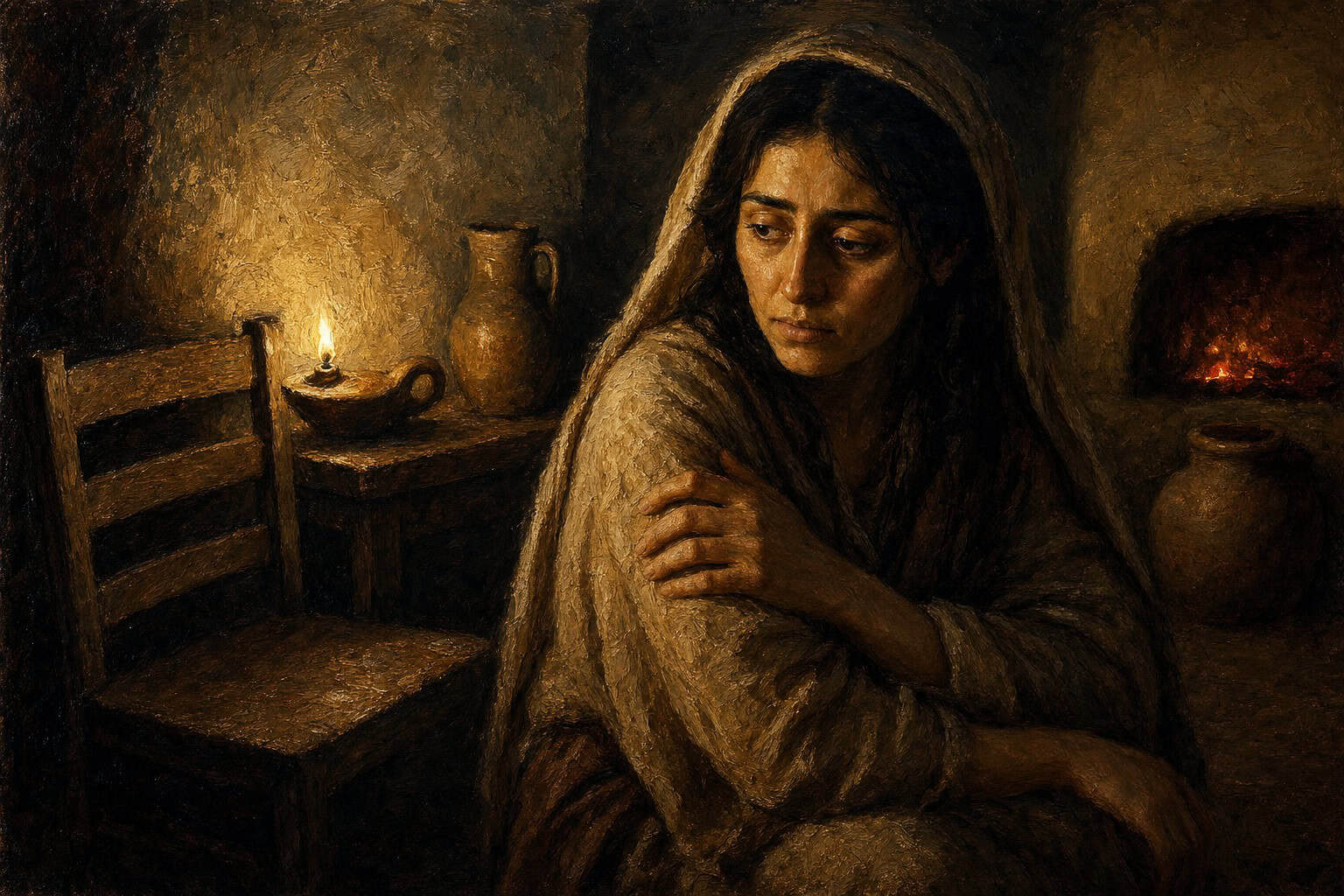
We are richer for having lost him. How grief can leave you fuller, not emptier – the gift that arrives after someone is gone, and why it is real.
The Chair That Still Holds His Shape
You wake one morning and the grief has shifted its weight. It no longer sits on your chest like a stone; it has moved into your hands, your habits, the way you butter toast the way he taught you. That is the strange sum no one warns you about: a person can be gone and still leave you larger than he found you. You expected the loss to hollow you out, to leave a hole shaped exactly like him. Instead you find the hole has been furnished. His phrases live in your mouth now. His way of squinting at a problem lives behind your own eyes. You catch yourself defending a position he would have defended, gentling a stranger the way he once gentled you, and you feel a dizziness at being richer for what should have made you poorer. This is not comfort. It is not the tidy thing people say at wakes, the soft lie that everything happens for a reason. It is rougher than that, more honest, more disturbing. You did not want to be enlarged this way. You would trade every gift he left for one more ordinary afternoon of his voice going on about nothing, the radio low, the kettle ticking. And still the fullness is real. You cannot deny it without lying to yourself. The love he poured into you did not drain into dry ground and vanish; it took root somewhere below the frost line and kept growing after his hands were gone. So you stand in your kitchen, holding a mug he never touched, in a house he never saw, and feel the impossible thing at once: that the very absence which cut you has also fed you. The mood of it is not gratitude, not yet. It is more like standing up after a long fever and finding, to your surprise, that your legs are steadier than before, that the stillness did something you never chose. You did not earn this. You did not ask for it. It arrived while you were busy weeping into your sleeve, while you were still angry at the empty half of the bed and the phone that would not ring. And that is the first hint of what this loss actually is. Not a subtraction performed on your life, but a strange, unwelcome, undeniable addition. You are more, and he is gone, and both are true in the same breath, in the same aching chest, and you must learn to hold them together without forcing one to swallow the other. The morning light falls on the counter. The toast cools. You stand there, changed, and do not yet have a name for the change.
When the Grand Speeches Fall Silent
At the service there were pronouncements. There always are. People stood and said large true things in large trembling voices, and the words hung in the air like smoke that would not clear. You noticed how staged it all felt, even the sincere parts, even your own throat when it was your turn. Grief pushes us toward the grand gesture, the sweeping eulogy, the declaration meant to seal the meaning of a whole life in five clean minutes. But you knew, standing in your borrowed black with the program shaking in your fist, that the man himself had lived in the small register. He had not loved you in speeches. He had loved you in the quiet fidelity of showing up, in the truth told gently across a table, in the way he waited for your yes before he ever pressed. His whole life had been a rebuke to the performative. And so the speeches, however true, rang slightly false against the memory of the actual man who used to hum while he washed dishes. This is where the tension sharpens under your ribs. Because now that he is gone, you feel the pull to memorialize him grandly, to make his loss mean something enormous, to convert the raw fact of absence into a lesson you can grip and carry. And something in you senses that this is exactly the wrong direction, a betrayal dressed as honor. He would not want the monument. He would want you to butter the toast, tell the truth to the person in front of you, guard the small consents, keep showing up when it is dull. The richness he left is not a doctrine to recite. It is a set of daily gestures now carried by your hands instead of his. Yet the mind rebels against so plain a legacy. The mind wants resolution, wants to know what it was all for, wants the grief to gather into a clean chord that plays once and then falls quiet. Instead the grief keeps sounding under everything, and beneath it you begin to hear another note you never expected. A low warmth. A yearning that turns past him toward something larger than him, something you have no map for. You did not manufacture this note. You would not know how. It grew in you the way heat grows in banked coals, slowly, without your permission, becoming a hunger you cannot name and cannot feed with any speech, however grand. The confessional voice knows this ground. It knows the difference between performing loss for a room and the long private work of being changed by it in secret. And it refuses to let you seal the meaning too soon, to trade the loss for a moral and be finished. The account stays open. The chord keeps ringing in the empty kitchen at night. You are still learning what he was to you, and the learning does not stop because the visits stopped.
The Coals He Left Still Warm the House
Here is the turn that breaks the easy story open. The richness is not something you dug out of the loss by being brave or patient. It was given. It arrived before you deserved it, before you even knew to want it, while you were still furious at the emptiness and half-blaming God for it. That is the scandal of the thing. You did not climb out of the pit and find treasure waiting at the top like a reward for good grieving; the treasure was pressed into your hands down in the pit, by hands you could not see, in the very hours you were cursing the dark and begging it to lift. This is what confounds the neat account of grief as a wound that either heals or festers. The love he gave you did not switch off when his heart did. It went on working in secret beneath the floorboards of your days, turning the very dissonance of his absence into something you can only call, without flinching, a more wonderful and complex beauty than you knew before. The loud, vain chord of your loss was not silenced, not annihilated. It was woven into a larger music that holds it, that even needs it, that would be thinner and falser without it. You are richer not in spite of losing him but somehow through the losing itself. Not because loss is good, it is not, it is a real theft. But because a love strong enough was already at work beneath the rupture, folding even the tear into the pattern it was weaving all along. And you begin to suspect the love was never only his to give. That behind his fidelity, his gentleness, his refusal to force you, stood a larger Fidelity that had been present the whole time, in every tear you did not think anyone counted, in the dry kitchen, in the sleepless three a.m. hours, not removing the darkness but sitting down inside it and staying. This is the confession that Confessions to the Empty Chair has been circling from the start.
Love does not vanish when the person does; it changes address and keeps paying.
Carrying the Fullness Back Down Into the Ordinary Days
After the revelation comes the descent, and no one prepares you for how ordinary it is. You do not get to stay on the height. You go back to work. You answer the same emails. You stand in line at the pharmacy behind a stranger who coughs into his hand, and the great warm certainty of last week feels impossibly far off now, almost embarrassing, like a dream you told at breakfast and wished you hadn’t. This is the part that feels like failure. You touched something real in your grief, a sense that you had been given more than taken from, and now the daily friction has scraped it thin again, and you wonder if you imagined the whole thing. You did not. But you are learning, slowly, that the fullness was never meant to be kept up on the mountain like a private hoard. It was meant to be carried down into exactly this: the pharmacy line, the coughing stranger, the tired grey afternoon with the fluorescent light. The gift he left, and the larger Gift standing behind it, does not want to live in your quiet consolation. It wants to be spent. And spending it hurts more than keeping it. You pour the patience he taught you into people who do not notice you are pouring. You tell a hard truth gently and watch it land badly and the person walk off angry. You show up for someone and they take it for granted, the way you once took his showing up for granted, God forgive you. The love bleeds out of you into ground that stays dry, and the old temptation leans close and whispers that it accomplishes nothing, that you are emptying yourself for no return anyone will ever repay. This is the necessary struggle, the kiln where the soft clay is fired into something that will hold, and you resent it. Of course you resent it. You wanted to stay inside the warm certainty where everything made sense. Instead you are sent back down into the world where faith gets tested by boredom and love has to learn endurance instead of ecstasy. But the reflective voice, the one that keeps turning the lens back on itself, catches something here worth sitting inside a while. Was your grief ever purely for him? Or was there always, braided into it, a grief for yourself, for what his going cost you, for the comfort and the mirror you lost when he stopped looking at you? You cannot fully pull the strands apart. The love and the self-pity were twisted together, as they always are in us, and pretending otherwise is one more performance. And the strange mercy is that the descent works on this too. Carried down into the daily friction, the love slowly sheds its self-regard. It learns, against the grain, to give without watching for the reflection to come back.
A Lamp Still Burning in the Deepening Night
You will not resolve this, and that is the last hard truth to make peace with. The two facts do not melt into one comfortable feeling you can carry lightly. He is gone, and you are richer, and the goneness never once stops being a real subtraction while the richness never once stops being a real addition. You live in the tension strung between them, and the tension itself, uncomfortable as a stone in the shoe, becomes the place where your soul quietly grows strong. Some evenings the loss wins outright and you weep like the first raw week, ambushed by his handwriting on an old list. Some evenings the fullness wins and you laugh out loud at a memory and feel almost happy, then feel guilty for the happiness. Most evenings both sit at the table at once, a complex chord that will not resolve into either pure sorrow or pure hope, and you stop demanding that one cancel the other out. The lamp still burns on the counter. The night still deepens past the window. Both at once. And you stop insisting that one of them lie down and die so the other can rule. This is where the honest voice refuses to flatter you. It will not tell you the loss was worth it, as if you had struck a shrewd bargain and come out ahead. You struck no bargain. He was taken, and grace did not wait for your permission before it began working the ruin toward something a person could actually bear to live inside. The most it offers, and it is not small, is this: that even in a life fractured by loss, even in a heart still marked by all you refused to see about him while he was alive to be seen, a Love persists that lets nothing be finally wasted, not the toast, not the tears, not the coughing stranger. It draws all things, broken and beloved, toward somewhere your eyes cannot yet follow. You are not asked to understand the destination or to draw the map. You are asked only to keep carrying the fullness down into the ordinary days, to keep spending what he gave you on people who will not thank you, to keep trusting that the pouring-out is not the disappearance it looks like from inside. So you sit at dusk with the tea going cold. The chair across from you holds his shape and holds no one. You feel the ache and the fullness press together in your chest, and you no longer try to make them shake hands. Outside a bird settles for the night. You are not empty. You are carrying more than your two arms can hold, and some of it is his, and some of it was never his at all, and all of it is being carried somewhere ahead of you, into a house you have not yet walked into.