You think you’ll never find another love. Here’s what that certainty is really made of, and why it may be lying to you.
The Verdict That Comes When the House Goes Quiet
You know the hour. The dishes are done, the phone has gone dark, and the house has that late stillness where your own breathing sounds loud. You are walking the floor or lying flat under the covers, and a thought arrives with the weight of a sentence handed down: you will never find another love like that one. Not that it will be hard. Not that it will take years. That it is finished, foreclosed, over, and that you have become a person to whom love simply no longer happens. The certainty is what unsettles you. Fear you could argue with. This feels colder, more like counting, like a fact you have discovered about yourself the way you might discover a scar you had forgotten was there. You run your thumb over it in the dark. The skin has healed wrong. It puckers and pulls when you move. And you tell yourself the truth as you now understand it: the damage is done, the softness is spent, and whoever meets you next will meet only what is left of you, the ruin after the fire. This is not self-pity, or you do not think it is. It carries the texture of honesty, and that is exactly why it frightens you more than plain grief would. You have loved. It cost you. You paid. And the currency love asks of a person is gone from your pockets. You check them again out of habit, the old reflex of a hand patting a coat, and find nothing. Somewhere in the body a belief has quietly settled that you know too much now, that you trust too little, that experience has hardened into a kind of blindness. You have seen behind the curtain and cannot unsee it. Every new face would arrive already under suspicion. Every warmth would be held up against the one warmth that broke you, found thin by comparison, and dropped before it could take root. So you stop looking. Not with any drama. Just with the quiet economy of someone protecting a shrunken estate, closing rooms, turning off the heat in the parts of the house no one visits. You spend less. You risk nothing. You call this wisdom, and some part of you knows it is closer to a wound that has learned to talk in the calm voice of reason. The certainty feels ancient, as though it had always been sitting in the corner, waiting for you to grow tired enough to hear it speak. But listen to how sure it is. Nothing that honest should be that confident. The truest things about tomorrow are the ones you cannot see coming, and this thing claims to see everything, which is precisely why you must not believe it yet.
The Flinch That Comes Before You Decide Anything
The mind announces the sentence, but the body carries it out. You notice it first in small refusals, things beneath the level of choice. A hand reaches for yours and your shoulders draw up before you can think a single word. A voice drops into warmth and your stomach tightens, already braced for the turn you are sure will come. This is not reasoning. It is faster than reasoning, older than it, lodged down in the muscle and the held breath. Your flesh remembers what your mind has half forgiven. It remembers the particular room where love went cold, the exact temperature of that afternoon, the way the air seemed to thin out and change. And it has decided, without asking your permission, that it will never be caught standing there again. So it flinches. It pulls back before anything touches it. Over months you have built a whole architecture of managed distances, a careful life arranged so that nothing can loosen the beams, because nothing is allowed near enough to try. You eat less, or you drink a little more than you mean to. You discipline yourself for having been foolish enough to hope once, and the discipline can turn against the body itself. Maybe you drive it hard, keep it lean and useful and unloved, as if working it to exhaustion could scorch out the tenderness that made you easy to wound. Maybe instead you let it go slack, stop tending it, because what is it even for now. Either way the body keeps telling the story the mind cannot finish. It is the flesh that remembers. It is the flesh that keeps the ledger. And here is what almost no one says out loud: the incapacity you feel is not seated in your soul but in your skin, in the animal reflex that learned to guard you and never learned how to set the guarding down. You are not unable to love. You are braced against it. There is a real difference, though from the inside the two feel identical. A clenched fist and a paralyzed hand look the same until you notice that one of them is choosing, moment by moment, not to open. Your body is not broken. It is faithful, terribly faithful, to a lesson it should never have had to learn. It stands watch over a threshold no one is even trying to cross anymore. You could tell it the trouble has passed, but it will not believe you, because you do not believe you. The sentry keeps his post long after the danger has gone quiet. So you go on, tender everywhere and touching nothing, someone with working hands held carefully out of use, warmth kept in a drawer like a thing too precious and too dangerous to wear.
The Ache the Dead Do Not Feel
Here is the fact that ruins the whole clean argument. You still long. If you were truly emptied out, the longing would stop, and it does not stop. It comes uninvited, a low pulse underneath all the reasoning, and it refuses to be talked down. You have argued with it plenty. You have called it foolish, reckless, a setup for another fall. You have tried to starve it with work and distraction and the grim little pride of needing no one. And still, on an ordinary night, at the first bars of a certain song you almost turned on purpose to reopen the sore, it reaches. Before you can name it hope or name it bitterness, there is only the raw pull of it, reaching toward contact with something, anything. That reaching is the tell. The dead feel no ache. Only the living long, and the longing is proof that something in you has quietly refused the verdict your mind read aloud. You may not want that to be true. It would be simpler to be finished, to close the account and owe the future nothing. But you are not finished, and the ache is exactly how you know. It sits right at the seam where the old loss meets some stubborn expectation of tomorrow, a life you cannot picture and cannot stop leaning toward. Sometimes it arrives as an image so faint you nearly miss it: a life you have not lived, a face you have not met, a presence like a slight breeze on a night walk, unnoticed at first and then, all at once, undeniable. You feel it in the chest, in the throat, in the sudden shallowness of your breath. This is not weakness. This is the body’s other loyalty, the one that runs beneath the guarding, the pulse that will not let you die all the way into safety. And the strange thing is that it does not argue back at you with reasons. It simply persists, dumb and warm and unkillable, outlasting every case you build against it. You cannot reason your way into it and you have not managed to reason your way out. It was here before your grief and it will be here after, older than the wound that tried to silence it.
The heart that swears it can no longer love has not stopped loving; it has only started guarding.
What the Guarding Was Really For
So you begin to see the certainty for what it is. It was never a diagnosis. It was a guard posted at the gate, and guards are stationed to protect something that still lives inside the walls. If nothing remained worth defending, the sentry would have gone home long ago. The very ferocity of your bracing is testimony against the verdict it was built to enforce. You told yourself you had grown incapable, and all the while you were spending enormous strength to hold shut a door that only wanted to open. That takes love, or the memory of it, or the refusal to admit it is gone. Now the fallout of all that guarding settles on you like fine dust. You have been so careful. You have kept yourself lean and closed and correct, and you are lonelier than the loss itself ever made you, because the loss was at least honest and the guarding is a lie you keep repeating in a reasonable voice. You look at the shrunken life you built for safety and you cannot honestly call it peace. It is only quiet, and quiet is not the same thing. Peace has warmth in it. This has none. You wonder, in the honest hours, whether the darkness you carry would poison anyone who came close, whether your skepticism would sour the very tenderness you crave, whether you would ruin a good thing simply by not trusting it. These are not cheap fears. They are true possibilities, and pretending otherwise would be its own kind of cowardice. You do carry an accumulated darkness. Anyone who loved you would have to withstand it, and you have no right to hand them that burden lightly. But here the honesty cuts both ways. If you are sure they would carry darkness of their own, then you are not the only broken thing in the room, and brokenness meeting brokenness is not automatically ruin. Sometimes it is the only recognition that goes all the way down. You have imagined that your damage disqualifies you from love, when it may be the very thing that lets you meet another damaged person without flinching from their scars. That is not a rescue. It does not undo the wound or scrub the past clean. It only means the future you swore was closed was never as sealed as your fear needed it to be. The dust settles, and underneath it the ground is still there, still holding, still able to bear weight if you would only step out onto it.
A Prayer Sent Ahead of You
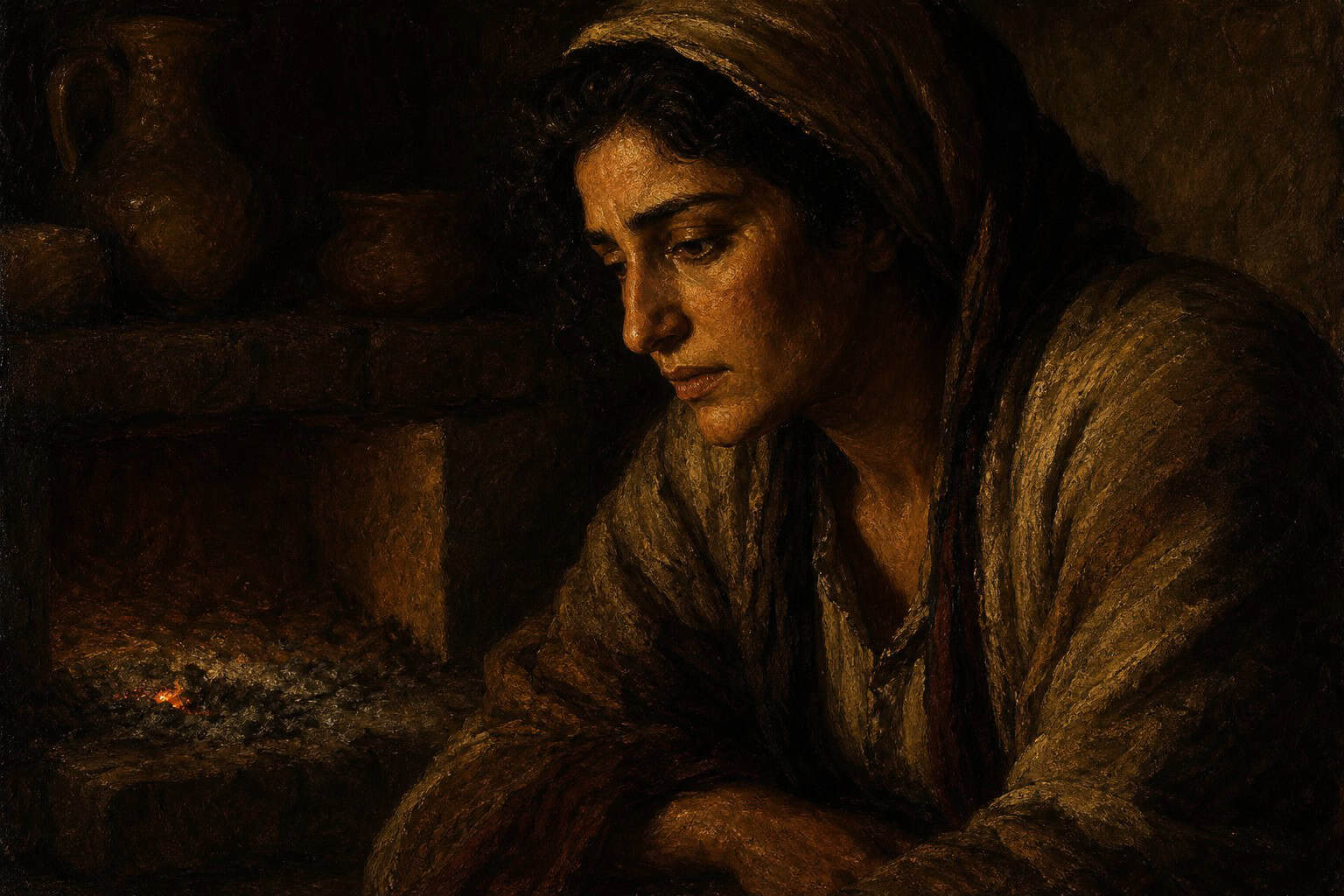
What remains, when the arguing goes quiet, is stranger and gentler than either the verdict or the guarding. You find yourself thinking of a person you have not met. Not with hunger, exactly, and not with the old wildness. More like a slow tenderness aimed at someone still hidden in the future, someone who will one day have to stand near your darkness and not be destroyed by it. You catch yourself wanting them cared for now, before you ever arrive, wanting whatever hard nights they are walking through to be a little less alone. It surprises you, this outward turn. You expected to want comfort for yourself and instead you find yourself wanting it for them. That is a small resurrection. The heart you buried has moved without your leave, has begun to love a stranger it cannot see, and love that reaches toward someone unknown is not the love of a dead man. It is the first sign of a body coming back to feeling after a long numbness, the pins and needles of a limb you thought was gone for good. You do not know their face. You do not know if the meeting will heal you or cost you again, and it will probably do both. But the longing has quietly rewritten itself from an ache backward into grief and become an ache forward into hope, and you did not choose that and cannot fully explain it. Perhaps you are not being asked to fix yourself before you are fit to be loved. Perhaps you are only being walked with, in the dark, exactly as you are, darkness and all, by a nearness that does not flinch from what you carry. This is the terrain that Confessions to the Empty Chair moves through without cheapening any of it, the long slow work of a heart that swore it was finished and finds, against its own testimony, that it is still capable of praying for someone it has not met. The verdict said the fire left only ash. But run your hand through the cold hearth some late night and feel it. Down under the gray, an ember is still warm.