Counting years and days by old songs? A reflection on the playlists that catalog our survival, and the grace hidden in every marked date.
A List of Songs That Is Really a List of Nights
Why can I name the year a track was pressed but not the name of the friend who drove me home? That question sits under the long, patient list of songs in the sixteenth chapter of Confessions to the Empty Chair — a catalog of records reaching from the late eighties into the middle nineties, each one stamped with its year like a coin. A song from 1990. Another from 1991. A remix folded inside a compilation, its original date carefully noted, as though the exact pressing mattered to God. On the page it looks like the work of a scholar: labels named, mixes distinguished, the parenthetical year sitting there like a small dry fact. In the body it is something else entirely. Each of those dates is a night I lived through, a floor I stood on, an hour I stole back from a life that felt too heavy to carry straight. I did not learn those years from a calendar. I learned them from the beat that carried me across them. When I read the list now, older, quieter, my pulse steady where it once raced, I feel the strange tenderness of a man looking at his own handwriting from a fever. The particulars are precise: the underground rooms where the air was thick and warm, the low slide of a synth bending upward and folding back, the compilation someone mixed under a title I could still say in my sleep. I catalog them the way another man might list the surgeries that saved him. There is no shame in the precision. There is only the ache of recognizing how much I needed those exact sounds, how carefully I have preserved the very instruments of my own undoing. The dates are not decoration. They are notches cut into wood by a hand that was not sure it would live to cut the next one. I want to be honest about what that hand was doing. It was not keeping a record for pleasure. It was proving, over and over, that the boy holding the pen had made it to another year. And so the plain question a person types into the dark — how do you count years and days — meets me here in the plainest possible way. I count them the way many people do and rarely admit: by the songs that were playing when I was falling apart, and did not quite fall all the way. The list is not nostalgia. It is a receipt. It says, in the exact currency of pressed vinyl and named mixes, that I was here, and that being here cost me more than I could then afford.
The Beats That Kept a Frightened Heart in Time
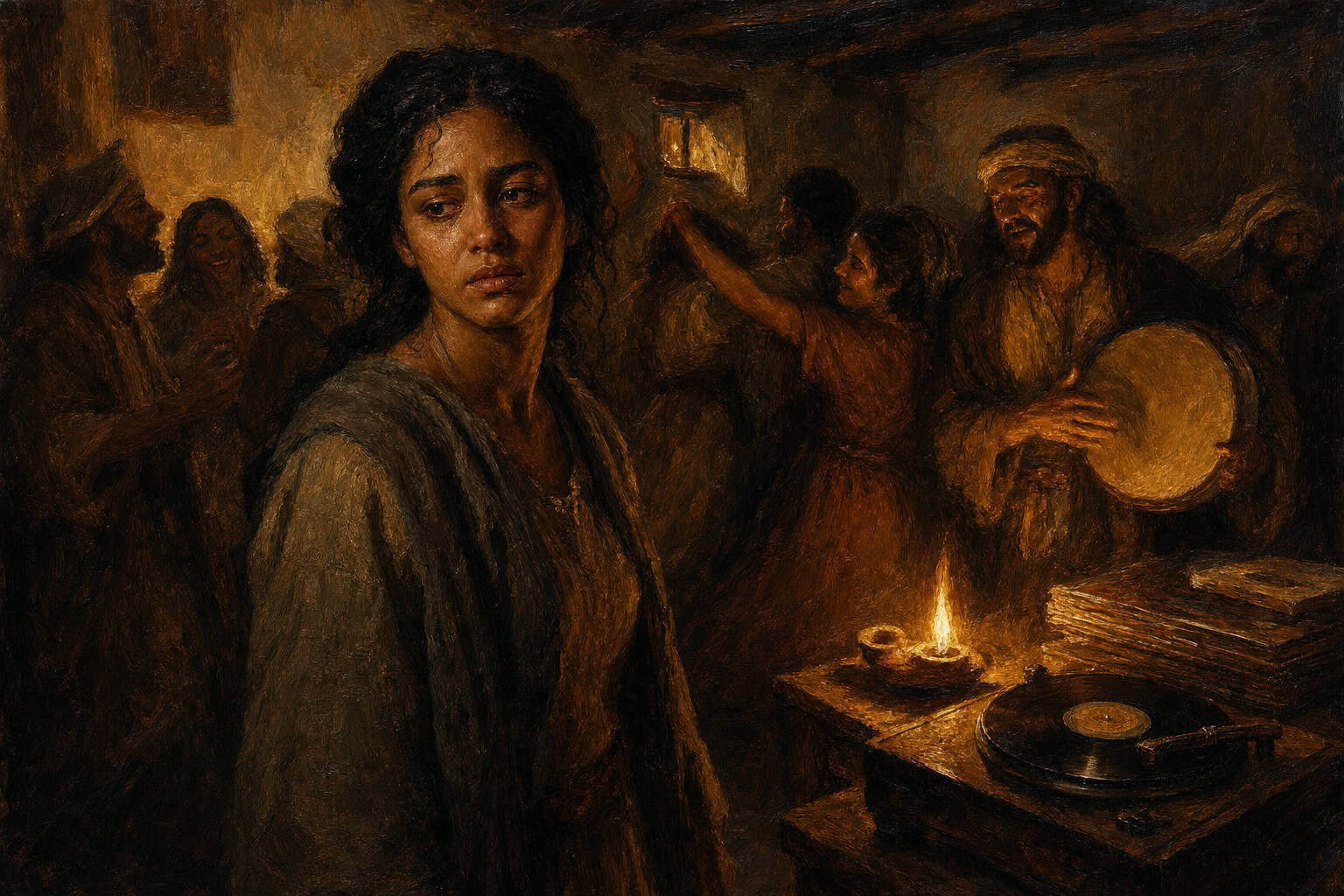
There was a season when I took my own pulse constantly, two fingers pressed to my wrist under the table, counting. My heart skipped and stuttered, an arrhythmia that woke me from dreams of sinking into thick sludge, certain I was dying in the dark alone, with no hand reaching down. In those years the steady thump of a bass line did something no doctor could. It gave my heart a rhythm to borrow. Stand near a speaker large enough and the beat enters the chest; the whole body is tuned like a string to a fixed pulse. I did not understand then that I was using the music this way, that the floor beneath the dancers was a splint for a heart that had lost its own time. I only knew I felt safer in the crowd, in the noise, than anywhere quiet. The shape of the list tells the truth of it. The early tracks are aggressive, jagged, all forward motion — the sound of a young man running from something he could not name. Then the mixes lengthen and soften, the tempo turns hypnotic, the synths slide upward and fold back on themselves, hour after hour, until waking thought begins to thin. Each remix was another hour lifted out of the day, another thin layer of the self gently rubbed away. I was not looking to feel better. I was looking to stop feeling for a while, to be carried past the parts of the night I could not survive awake. That is a hard thing to admit about oneself, and harder to admit without contempt. The tenderness comes in seeing, now, that the frightened boy taking his pulse in the dark was not weak. He was inventing a way to stay alive with the only tools within reach. I want to be gentle with him. Somewhere I was taught to despise that boy — to call his escape a failure of nerve, his need a defect, his fear an embarrassment. But he found the one rhythm that would not skip, and he held to it with both hands. He borrowed a heartbeat from a machine because his own could not be trusted, and there is more courage in that than shame. I sit with the harder question and do not close it: was the beat healing him, or only postponing the hour he would have to feel? I think it was both, tangled past separating. If God was anywhere in those rooms, He was not standing in the doorway waiting to lead me out. He was down on the floor beside me, keeping time in the dark, present in the sludge of the dream, hidden inside every borrowed beat that stood in for the heartbeat I feared I was losing. He did not slow my racing pulse. He kept vigil with it.
An Archivist of My Own Dissolution
Here is the turn, and it undid me the first time I saw it plainly. I keep these records the way a devoted scholar keeps a bibliography — original publication dates restored, remixes set apart from their sources, the recording labels named with care. It is meticulous, reverent, almost loving work. And what am I curating with such devotion? The exact sounds that once helped me disappear. I have become the faithful archivist of my own dissolution. I can name every track that played while I was coming apart, and I catalog them now with the seriousness a man might bring to relics laid out on white cloth. This is the thing I could not see then and can barely bear now: the same precision I once used to erase myself, I now use to remember myself. The counting never stopped. It only changed direction. Once I counted beats to leave the world; now I count dates to hold onto the boy who was leaving it. Both are acts of love, terrible and exact. Underneath the whole list runs a question I have never fully answered — does the exact pressing matter? To me it does. It matters that it was the 1990 version and not the later one; it matters which mix, which room, which year. That fanatical attention to the specific is how the wounded keep faith with themselves. I could not tell you, back then, why the version mattered so fiercely. I only knew that a lesser copy felt like a lie, and a lie about those nights would have been a lie about my own survival. The scholar’s care I bring to the list is not vanity. It is the last, stubborn honesty of a man who spent years erasing himself and cannot afford to blur a single date now. Each restored year is a small refusal to let the boy vanish into a haze. I set them down exactly, one after another, the way you would speak the true name of someone you were afraid of forgetting. And in that stubborn exactness there is something that begins to look, from a distance, like reverence — a liturgy of dates said slowly over the wreckage, until the wreckage itself becomes something worth keeping.
We do not count our years in birthdays; we count them in the exact songs that kept us breathing when nothing else would.
What the Counting Left Undone
When the music stopped and the years piled up, I was left holding the bill for all that borrowed rhythm. The catalog is complete; the friend who drove me home is nameless. This is the plain fallout of a life built on escape: the erasure worked, and now there are holes where a person’s name should be. I mastered my earliest griefs the way a man learns to manage a wound he refuses to feel — I chose beauty, chose motion, chose the next mix, and told myself it was living. I remember choosing beautiful faces the way I chose the next record, one after another, each meant to prove I had risen above the boy who once felt too much. What I called freedom was often flight. What I called a good phase, a stretch of quiet with someone, I now suspect was only the pause between hostilities, mistaken for tenderness because I had never learned what tenderness actually was. I hoarded those quiet moments like rationed goods, sure they would run out before morning. The list of songs is honest in a way I was not. It records what I did to get through, and it does not lie about how much of myself I spent doing it. Reading it now, I have to sit inside the hard questions without the comfort of an answer. Was the boy who danced till dawn saving his life, or delaying the reckoning? Both, I think, and I cannot pull them apart. He kept the flame alive by the only method he had, even as the method hollowed him out. The dates mark real nights I would not undo, and they mark hours I can never give back to whoever I might have become had I stayed home and faced the quiet room. I feel both griefs at the same time, and neither cancels the other. There is no clean lesson here, no moral to pin the years down with. There is only the strange fact that the record of my near-drowning is also the record of my endurance — the two written in the same hand, on the same page, in the same dry parenthetical years. The frozen scenes gather as I read: the invisibility of an awkward boy in a hallway, the cold of early rituals, the inherited marks on the skin I did not choose. The body still holds them. My shoulders still refuse peace like a coat cut for someone else. The counting kept all of that at a safe distance for years, one beat at a time. Now the scenes come close, and I make myself let them. The reckoning I outran on the floor arrives at last, gentler than I feared, in the ordinary silence of a man alone with an old list and a slow pulse.
Grace in the Marked Dates
So how do you count years and days? I have come to believe you count them wherever you find the marks that prove you were here — and for me the marks are songs, each with its year cut into it like a notch on a doorframe measuring how much a child has grown. That is not nostalgia. Nostalgia softens the past into something warm and false, a haze that forgives too easily. This is closer to an examination of conscience, an honest reckoning done with love instead of contempt. I take up each date and I do not flinch from what it cost me, and I do not despise the boy who paid it. That softening is the whole grace of the thing. For years I read my survival as sin, my escape as failure, my careful list as evidence for the prosecution against myself. Now I read it differently. Every marked date is a place where God walked beside me while I did not know it — not lifting me out of the dark room, not turning down the music, not steadying the skipping heart, but keeping time with me in the very hour I was trying to vanish. His nearness was never the removal of my despair; it was His presence set down inside it. That is the quiet thing the older man draws out of the younger man’s list. The rare and startling truth is not that I was rescued from those years. I was not, not neatly, not soon, not on any schedule I would have chosen. The startling truth is that I was accompanied through them, that I was never as alone in the sludge as the dream insisted. This is what a person may be reaching for, typing the plain words into the dark: some way to hold the days without either drowning in them or lying about them. The book that grew out of these dates offers no cure for that ache. It offers company. It sits with you in the exact rooms, names the exact songs, honors the exact years, and refuses to pretend the darkness was anything but dark. And it insists, quietly, that even there — especially there — you were held. When I close the list now, I no longer hear the bass. I hear a slower thing underneath it, the sound the machines were only ever covering for: the steady, unhurried beat of a heart that finally believed it was allowed to keep going, and stopped counting itself to sleep.