Why do I always think the worst is going to happen? A raw, honest look at dread, mortality, and the strength to endure instead of avoid.
The Phone Face-Down on the Table
Why do you always think the worst is coming? You set the phone face-down on the table, and still you feel it there, humming, a small black stone waiting to ring with news you have already rehearsed a hundred times. Your body knows the drill before your mind catches up. The shoulders climb toward the ears. The breath goes short and stalls high in the chest, never reaching the belly. You have run the funeral in your head while brushing your teeth. You have buried people who are still very much alive, still laughing in the next room, still texting you about dinner. This is not planning. This is not caution. This is a superstition dressed up as vigilance, as if by imagining the crash you could bargain your way out of it. You tell yourself you are being realistic. You are not. You are performing grief in advance, paying a tax on a bill that may never come due. And here is the cruelty of it: the rehearsal steals the very hours you fear losing. You are not present at the table. You are somewhere in a future that has not happened and mostly will not. The soup goes cold in the bowl while you stir it without eating. The person across from you says something, and you nod without hearing a word. Your own smallness, your own ending, has stepped out of the shadows and set up camp in an ordinary Tuesday evening, and instead of teaching you to love the hour, it has taught you to flinch from it. There is a difference between knowing you will die someday and using that knowledge to poison every good thing before you can taste it. You have confused the two, and the confusion feels like wisdom. You think you are honoring the truth of your fragility. You are only feeding an appetite that grows fatter the more you feed it. The worst part is how private it all is. No one at the table can see the coffin you are carrying behind your eyes. You pass the bread. You ask about their day. You laugh at the right moment, on cue, from a great distance. And inside, you are already at the graveside, standing over damp earth, weeping over a loss that exists nowhere but in the quiet machinery of your own dread. The evening is happening once, given to you once, and you are spending it somewhere else. You would give anything, later, to have this hour back. You have it right now, and you cannot feel it.
The Appetite That Grows on What You Give It
Notice how the dread feeds itself. It is never satisfied by evidence. Hand it a good report, and it finds the small qualifier, the doctor’s careful phrasing, the half-second pause before the word fine. Hand it a quiet week, and it grows suspicious, certain the quiet is only the held breath before the fall. This is the maddening logic of the worst-case mind. It reads calm as a warning and disaster as confirmation, so it can never lose. Every outcome proves it right. You lie in bed at two in the morning and let the low hum of the refrigerator become a house fire, a small ache in your side become a diagnosis, a delayed reply become a betrayal or a wreck on the highway. You take a single crumb of fact and build a whole collapsed world out of it. And the body believes the story it is told. Your heart cannot tell the difference between the danger you invent and the danger that is real; it pounds for both the same way, hard against the ribs, and you wake exhausted in tangled sheets, having grieved through the night for people who are sleeping soundly two rooms away. Ask yourself, plainly, what this vigilance has ever bought you. Has the worrying ever once prevented the thing? Or has it only meant that when hard things finally came, you had already spent your strength imagining them, and met the real loss with an emptied tank? You wanted to be prepared. But dread does not prepare. It only pre-suffers. It trains your nervous system to treat love itself as a threat, because everything you love can be taken, and so to love fully is to lay the softest part of you bare to the blade. Somewhere in you, without ever saying it aloud, you decided that if you refuse to enjoy the good thing, its loss will hurt you less. This is a lie, and an expensive one. The love you would not let yourself enjoy is not spared its grief. It is only added to it, a second sorrow stacked on the first, the sorrow of never having let yourself hold the thing while you had it in your hands. You are trying to outrun your own mortality by refusing to live inside it, refusing to stand in your one finite life. You cannot do it. No amount of rehearsed catastrophe buys you immunity from anything. You are only building a smaller, colder life inside the larger one you were given, a bunker with the lights switched off, sitting in the dark, listening for sirens that mostly never sound. And the years pass while you listen.
The Idol That Wears the Mask of Care
Here is the turn, and it is a hard one to take. The dread you carry is not humility before death. It is worship of it. You have bent the knee to a god that is not God. Grief has set itself up as a lord in your chest, and every worst-case scenario is an offering laid at its feet, a small sacrifice of the present moment burned in the hope of buying off the future. But this god does not accept offerings and grow satisfied. It takes them and demands more, always more, and the appetite sharpens with each thing you give it. You thought you were being loving, being careful, honoring the seriousness of a world where the people you love can actually die. Underneath, you were striking a bargain with something dark, agreeing to suffer in advance so you would owe nothing later. This is not faith. Faith does not ask to be spared the blow. Faith asks for the strength to keep standing when the blow lands. Somewhere along the way, if you pray at all, you started praying for the power to avoid, and no such power was ever promised to you. You were never asked for the power to avoid the blow, only the strength to stand when it lands. The whole structure of your dread rests on a refusal to accept your own limit, your own smallness, the terrible and freeing truth that you cannot command the hour or the outcome. And the deepest fear beneath the worst-case thinking is not the loss itself. It is the vertigo of standing before your own freedom, before the plain fact that you are finite, that you will end, that nothing you grip will stay gripped. Death has stepped out of the abstract and into the near foreground of your days, and instead of letting it make your hours sharp and precious, you have let it make them one long flinch. But death faced honestly does not have to become an idol. It can become the thing that finally wakes you. The one who truly reckons with mortality does not spend the day rehearsing the grave. He spends it living, because he has understood at last that there is nothing else to do with a life but live it. The pruning hurts; do not pretend it will not. To cut away the reflexive dread is to lose the false comfort of feeling prepared, that grim little sense of being one step ahead of the pain. But it is the pruning that leads to life, and the refusal to be pruned that leads to a slow, self-imposed dying while your heart is still beating in your chest, still faithful, still counting out hours you refuse to spend.
You were never asked for the power to avoid the blow, only the strength to stand when it lands.
What Is Left When the Sirens Go Quiet
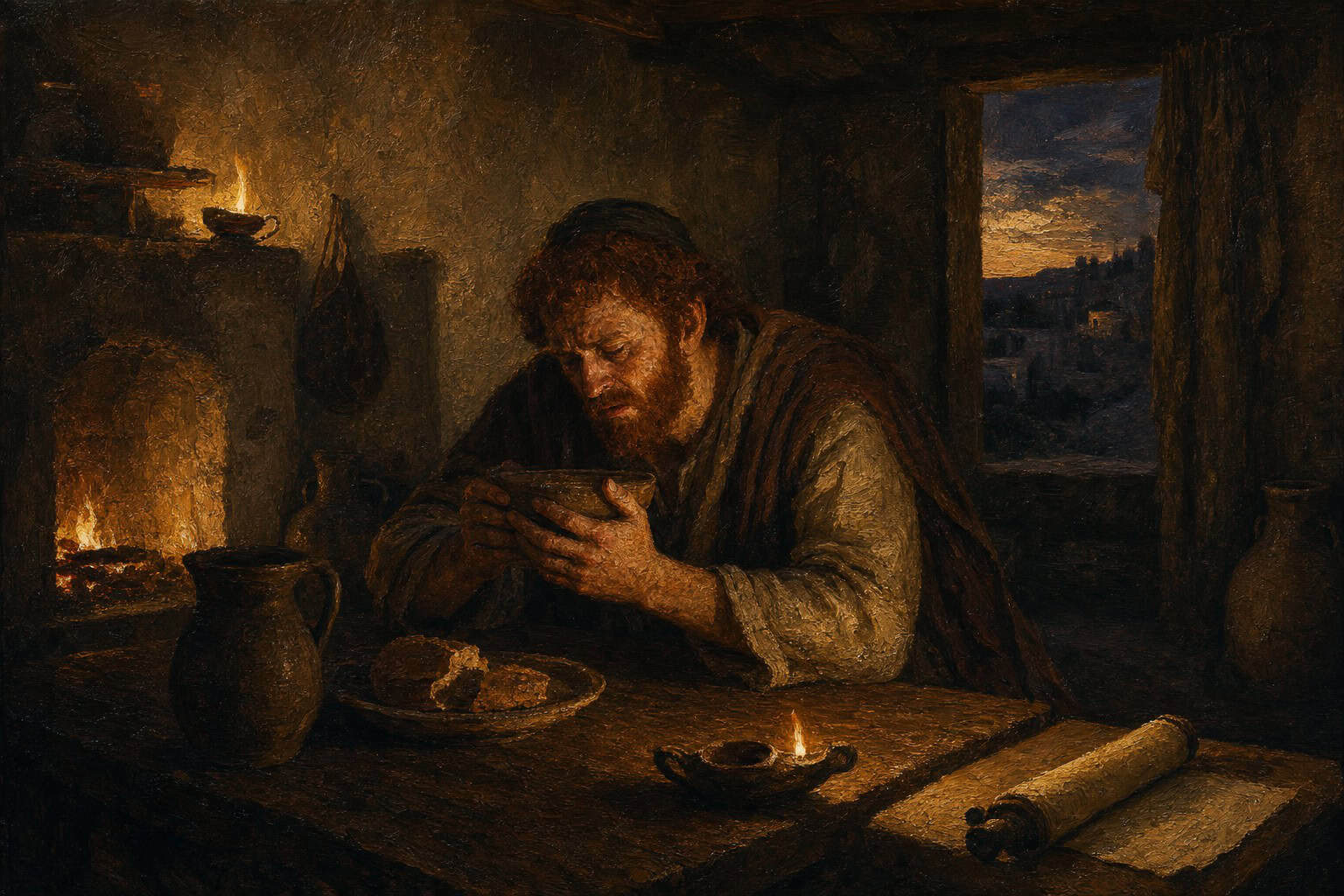
So what happens when you stop feeding it? Not all at once, and not cleanly. The dread does not leave the way a fever breaks. It leaves like a tide, sliding out and creeping back, out and back, and each time it returns you have to choose again not to bow to it. You are at the table again. The phone is face-down again. It hums, or it does not, and this time you leave it lying there. You put both hands around the warm bowl and feel the heat through your palms, and you notice, maybe for the first time in weeks, that the soup is good, that the salt is right, that the person across from you has a small line at the corner of the eye when they smile at you. You notice that this ordinary evening is not a rehearsal for its own loss but a thing complete in itself, handed to you once and never again in exactly this shape. The mortality that terrified you does not vanish. It stands quietly at the edge of the room, patient, unhurried. But it has changed its office. It is no longer the executioner pacing behind you, rehearsing your griefs. It has become something closer to an usher, leaning in to remind you that the hour is short and therefore holy, that the shortness is what makes it worth anything at all. You will still catch yourself building disasters. The reflex is old and deep, worn into you like a rut worn into a dirt road by the same wheels crossing it ten thousand times. You will lie awake some nights and run the refrigerator’s hum into a house fire all over again. Forgive yourself when you do, and turn back. The turning is the whole discipline; there is no arriving, only the turning, again and again. And here is the mercy the worst-case mind can never account for: you are not alone in the dark room. The dread told you that you alone were holding the whole future together by the sheer force of your watching, that if you looked away for one moment everything would come apart. But you were never the one holding it. There is a presence in the very hour you feared, not lifting the fear off you but sitting down inside it beside you, present in the flinch, present in the cooling soup, present in the tears you weep for losses both real and invented. Grace here is not a rescue that hauls you up out of the dark. It is company that stays down in it with you. And that company asks nothing of your vigilance. It only asks, gently, that you stop bowing to the wrong god.
The Bread You Did Not Know You Were Starving For
You will not be argued out of dread, and no clever thought will end it. It ends, when it ends, in the body and in the plain act of receiving what the day actually gives instead of what your fear keeps predicting. Try this. The next time the black stone hums against the wood of the table, do not run the story. Feel your feet flat on the floor. Feel the chair take your full weight. Say, without needing to believe it all the way yet, that you are asking for strength and not for avoidance, that you refuse the offering the dread keeps demanding of you. This is not positive thinking; it is nothing so light as that. It is closer to fasting. You are refusing to feed the appetite, and the first days of any fast are the hungriest, when the whole body screams for the thing you will not give it. But there is another food waiting, and you have been starving for it the whole time you gorged on catastrophe. It is the food of the present hour, the bread of what is actually in front of you, the good thing you would not let yourself taste because you were guarding it against a loss that had not yet come and might never. You do not live on bread alone, but you have been trying to live on dread alone, on the thin gruel of imagined disaster, and it has left you hollow-cheeked and tired. The pruning of that dread is not the amputation of care. You will still love, and love with open eyes, knowing full well that everything you love can be lost. But you will love it in the moment you have it, which is the only place love has ever once happened. This is the raw ground that Anthony Adoré walks in Fractions of the Soul, the discovery that the confrontation with death, met honestly instead of dodged, does not shut life down but breaks it wide open. The book hands you no tidy comfort, makes no promise that the worst will pass you by. It sits with you in the vertigo and points, quietly, to a God found down inside the darkness rather than one who plucks you neatly out of it. If your evenings have become rehearsals for grief, if you go rigid at every ringing phone, then you already know the country this book crosses on foot. Set down the stone. Pick up the bread. The strength you keep asking for will not arrive as the removal of your fear. It will arrive as the quiet, unglamorous ability to keep living inside it, spoonful by spoonful, which is the only life you were ever actually offered.