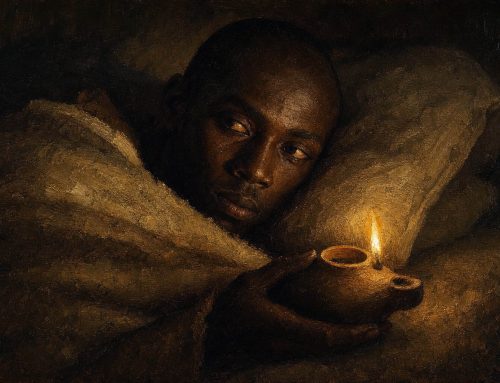
The air comes in carrying dust and detergent and someone’s perfume, down into lungs that never knew innocence, and he suspects his clearest seeing must be forgiven before it can be trusted.
Air Passing Through a Damaged Lens
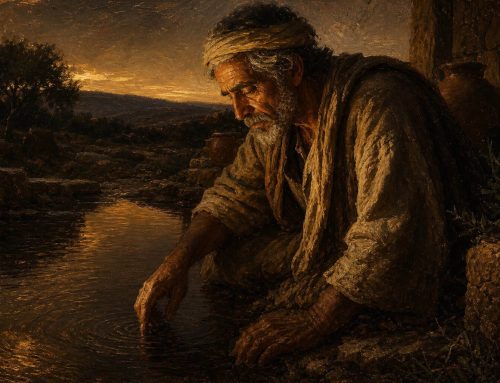
Air enters your nose with its faint mix of dust, detergent, and someone else’s perfume, then slips down your throat into lungs that have never known innocence. The passage stops here and insists: this is Adam’s breath, not as poetry but as simple continuity of matter. The same world-wind that once swelled a clay chest now moves your ribs, but the apparatus that receives it is bent before you even begin to think. A stranger’s face crosses your field of vision, features relaxed, no clear signal of kindness or threat, and yet your heart jumps as if a verdict has already been passed. Before your mind can evaluate, your body has already read danger or promise in the angle of a jaw, the height of a brow. Sight, smell, sound, touch—all filtered through this damaged lens long before you “decide” what you see. You stand there breathing, believing you are taking in neutral data, while in truth every inhalation delivers a world already smeared by an old, invisible thumbprint on the glass.
The Hollow in the Chest That Was There in Eden
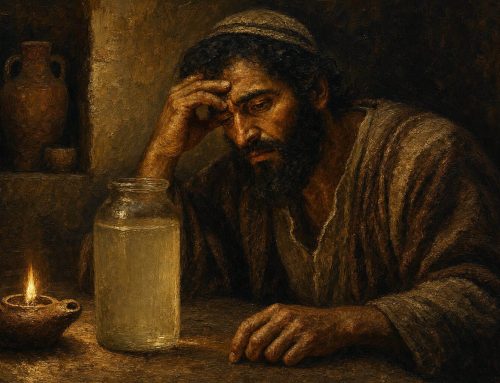
There is a physical place in your body where this passage sets its finger: that low, empty tug just behind the breastbone when the house goes quiet and the phone stays dark. The text insists that this hollowness is not a crack from some later impact but part of the original mold. Before betrayal, before absence, before the first slammed door in childhood, there was already this shaped cavity waiting for another presence. The loneliness does not begin as a symptom; it begins as design. Yet you feel it now as humiliation: the way your hand drifts to your phone again, the way silence turns heavy in your ears, the way sleep will not come without the sound of another breathing in the next room or through a speaker. In that restless ache the passage names something fierce and clean—an architecture of need that was once peaceful and is now laced with fear. The same chest that pulls in Adam’s air is built with this deliberate hollowness, a space meant to resonate in answer to another life.
Footsteps Counted by a Patient Enemy
Imagine a long corridor and you walking it the same way every day: same time, same stride, same hesitation at one framed photograph. The passage turns here to the reality that something has been counting those steps longer than you have been alive. No secrets stolen from inside your skull are needed; your body confesses enough. The way your shoulders rise when a certain name is spoken, the way your pupils flare when a certain kind of affection appears, the way your hand curls slightly away from a Bible but reaches fast for a glowing screen—this is the script written in muscle and rhythm. Evil, in this scene, is not dramatic but studious. It watches your breathing change when you enter particular streets, notes the patterns of your late-night searches, learns which tone of voice makes your spine go soft and which makes your jaw lock. You believe your war is mostly hidden thoughts; the passage says your footsteps have already sketched a map in the dust, and the observer has been tracing it with one slow finger.
We inherit our sight already clouded, every perception carrying the faint stain of the fall, so that even our clearest seeing must be forgiven before it is trusted.
Hands That Keep Sowing into Skittish Chests
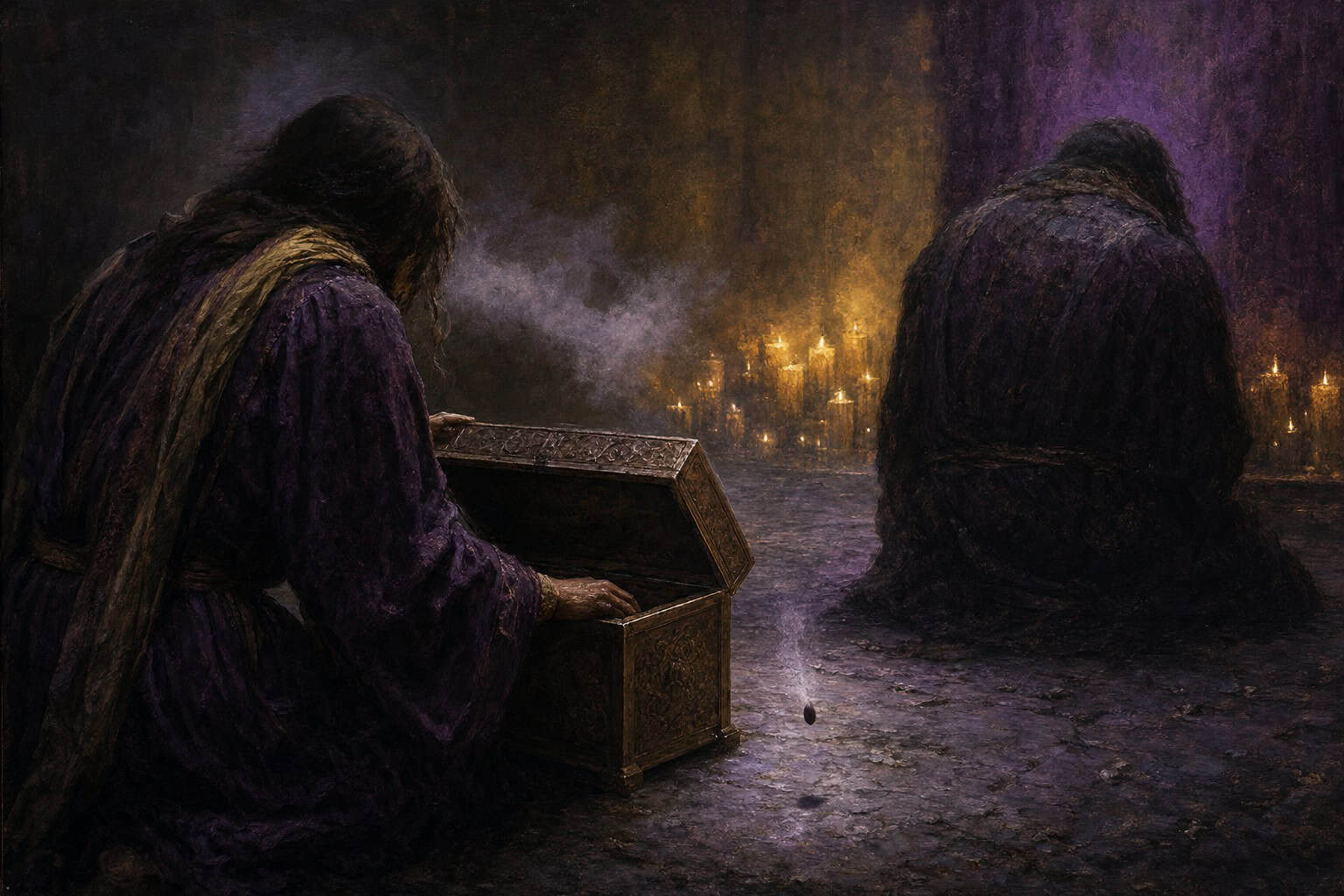
In the middle of this corridor of patterns there is another figure: the one who keeps opening their hands. A teacher exposes a tender insight, a counselor risks naming the core wound, a friend speaks a hard truth gently, a parent offers one more careful warning. The moment hangs like a seed midair between two chests. On one side, the sower’s pulse quickens with both hope and dread; on the other, the receiver’s breathing shifts toward flight. The passage describes that familiar recoil—the sudden change of subject, the joke, the practiced shutdown, the polite agreement that means nothing. The seed falls, not into rich soil, but against a chest tightened by its own well-mapped fears, then slides to the floor of the moment. The giver feels that small internal collapse, that sense of futility spreading through the ribs, but keeps sowing because the command to feed remains, even when every inhale carries the taste of failure. The risk is always the same: to let someone’s flinch convince you to close your own fist around every remaining grain.
A Last Breath Searching for a Living Chest
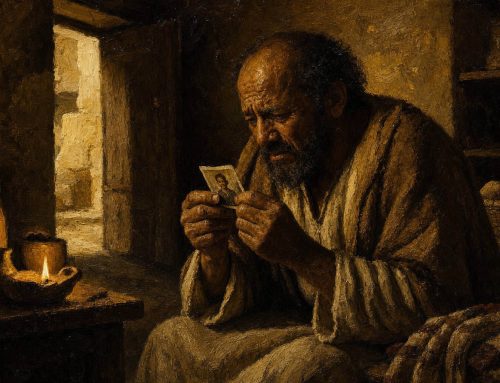
Underneath all this watching and sowing, the passage lowers its voice and admits another pressure: time. The same lungs that share Adam’s air will one day pull it in for the last time, and the knowledge carried in that chest will either find a home or go out like breath in cold winter. Years of studying these patterns—how loneliness was built, how perception is bent, how evil reads gestures—have accumulated like weight in the diaphragm. There is no guarantee that anyone will be willing or able to receive it. The search for a successor here is not grand but almost desperate: scanning faces, listening for that slight steadiness in a voice, that rare way of asking questions that does not tremble or flatter. You can feel the narrowing of days, the sense of pages thinning at the back of a book you cannot rewrite. What remains unresolved in this passage is whether any chest nearby will stay open long enough to let that final, burdened breath press wisdom into living tissue before it disappears into the cold air above a quiet bed.