Does my ex still love me? A stranger’s dance, a haunting song, and the ghost of a woman named Jane answer the question you’re afraid to ask.
A Stranger Leading, and My Song in Her Hands
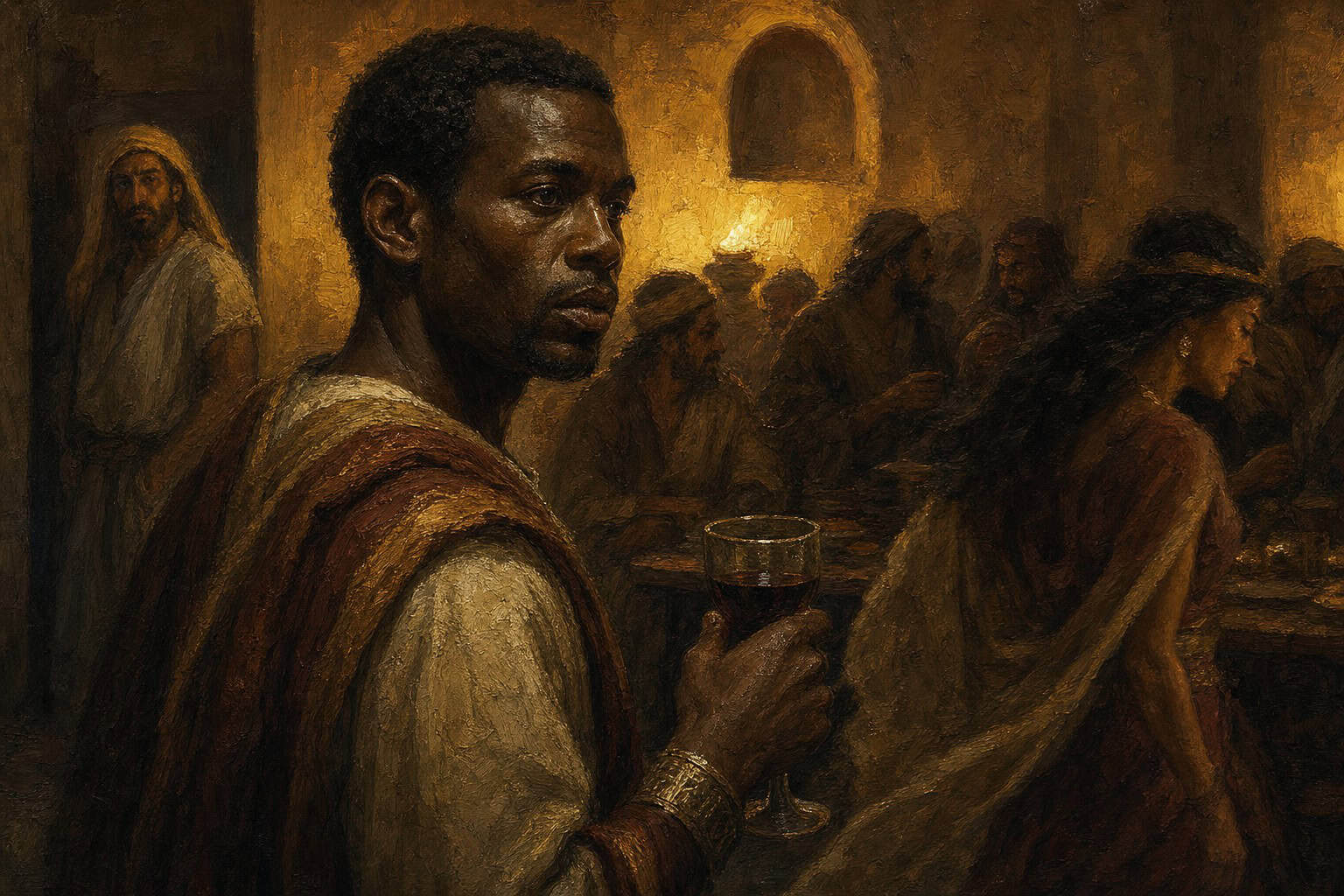
You typed a question into the dark and pressed enter, and now you are waiting for a screen to tell you whether a person still loves you. I know that waiting. In the fourteenth chapter of Confessions to the Empty Chair there is a man standing on a floor thick with academic chatter, a glass of wine in his hand, when a woman moves against him with no name and no explanation. She leads. He is used to leading. He is the one who orchestrates the tempo of every relational dance, who counts the beats before anyone else hears them, who decides when to step close and when to withdraw. Here she flips the script and moves him instead, and the polite murmur of the room drops away as if someone has turned it off. His own song begins to play over the speakers, a song he has heard dozens of times, and in her hands it feels borrowed, as though he never owned it at all. The bass climbs up through the floor and settles in his chest, and her body against his blurs the careful lines he built between his intellect and his hunger, between the theology he preaches and the desire he cannot preach away. Physical touch has always cut straight through his defenses. It does again. He feels himself being read like a page rather than writing one, being chosen rather than choosing, and the reversal undoes something he thought was load-bearing in him. Now hear why this matters to your question. You are asking whether your ex still loves you because you want to be chosen again, the way this man is suddenly chosen without having to ask, without having to perform, without having to earn it with an argument. Being chosen dissolves every wall a person stacks against being hurt, and it does the dissolving fast, in the body, before the mind has agreed to any of it. The skin registers certainty before the brain finds a word for it. But watch what happens even here, with a fearless stranger inches from his face and the whole night lying open. His mind does not stay with her. It slides sideways, stupidly, stubbornly, toward a woman named Jane who is not even in the room, who has no claim on this moment except the one he keeps handing her. That is the shape of your ache too. You are dancing with the present and thinking of the absent. You are being offered something warm and reaching past it toward someone gone cold. The question underneath your question is not really whether your ex still loves you. It is whether you can bear to stand here, in your own body, chosen or unchosen, without a ghost hanging in the corner of your eye.
The Ghost That Came Back Every Time the Music Turned
Grief hides inside desire, and this scene lets you watch it happen in real time, second by second. The song’s meaning had never truly landed before, he admits, though he had played it over and over on ordinary nights when nothing was at stake; only now, with a living woman pressed to him and the whole room dissolved into bass and breath, does the lyric finally cut him open. The ghost keeps coming back, the song says, haunting the mind that tried to silence it. He had tried to silence Jane. He believed he had managed it, filed her away, closed the ledger. And still she rises the instant something better appears, the way an old wound throbs harder in cold weather, the way the body remembers a fall long after the bruise fades. This is the exact hinge of your search. You want to know if your ex still loves you, and beneath that you are asking whether the past is dead or merely sleeping with its eyes open. The honest answer this scene offers is worse than a simple yes or no: the past does not need the other person’s love to keep haunting you. Jane’s actual feelings are not even in question here. Her absence does all the work. She is not present to comfort him or wound him; she is present only as a pull, and the pull is enough. Notice what he cannot untangle. He does not know if what drags him toward her is guilt, or longing, or some misplaced loyalty to a woman who, by his own account, created more doubts than comfort. Sit inside that confusion, because it is yours as much as his. When you check your phone at midnight, when you reread old messages you have already memorized, when you rehearse the speech you would give if they called, you are not always loving. Sometimes you are only being faithful to a feeling, and you have mistaken the feeling for the person who once caused it. He built a fortress of learning and self-control, a new science with a clean equation for everything, and none of it holds against the part of him that still yearns for the world outside his walls. You have built a fortress too. Maybe yours is made of the belief that if you stay loyal enough, long enough, they will finally return and prove your loyalty was wisdom all along. But loyalty to a ghost is not the same as love for a living person. The scene will not let him pretend otherwise. The music turns, the pulse fades, and the ghost is still standing where the fearless stranger stood, asking him to keep paying rent on a house nobody lives in anymore.
Choosing the Ache I Knew Over the Grace I Did Not
Here is the turn, and it is quiet, and it is devastating. The moment arrives when he should have followed the stranger into the shadows, when the whole night bent toward being swept up in a power he did not command and could not choreograph. He does not go. He stays where he is, glass back in his hand, the crowd swallowing her. And he is brutally clear with himself about why: he chose the ache he knew over the grace he did not. He was held in place not by virtue, not by faithfulness to anything holy, not by any goodness he can honestly claim, but by the very ghost of hope. Read those words slowly, because this is the answer you came for, though it is not the answer you wanted. The question was never really whether your ex still loves you. The question is what you are doing with the not-knowing. You are guarding it like something precious. You are choosing the familiar pain of the old bond over the terrifying openness of anything new, and you are calling that choice devotion. It is not devotion. It is fear wearing devotion’s clothes and hoping you will not check the seams. He names it as a truth his careful science had no equation for: that the greatest risks are sometimes the only path to the grace we swear we do not need. The stranger was grace, uninvited, reckless, offered without a contract or a name. Jane was the ache, known and rehearsed and oddly safe in its unhappiness, because at least he understood its rules. He picked the ache. And God is not absent from this failure, which is the strangest mercy of the whole chapter. There is no rescue here, no clean escape, no voice booming from the ceiling to set him straight. But there is a nearness in the dark, an accompaniment inside the very moment of his cowardice, a sense that even the ghost of hope was a hope Someone planted in him before he learned to misuse it. He is not struck down. He is walked with, in his sin, while he makes the smaller choice. You may be doing exactly what he did tonight. You may be refusing a real and living future because it does not smell like the past, because it does not carry the one scent your body has been trained to call home.
We choose the ache we know over the grace we do not, and call the choosing loyalty.
The Mask That Drops Between the Sixth Month and the Twelfth
Now the aftershock, and it demands a colder honesty than most of us want to spend on ourselves. If you are asking whether your ex still loves you, you owe yourself a harder question first: did they ever, did you, and how would either of you even know the difference? The narrator of this chapter has spent years learning to read the gap between real desire and its counterfeit. He can taste it now, the way you taste milk gone off before you can name what is wrong. A woman moving without genuine hunger, he has come to believe, is always moving toward something else, using the reach of a man’s instinct to secure her own footing in the world. The mask, he suspects, slips somewhere between the sixth month and the twelfth, and the thing you swore was passion quietly reveals itself as a transaction that was running the whole time, underneath the warmth, keeping its own books. I do not hand you this to make you bitter about the one who left. I hand it to you because it cuts both directions, and the memoir is honest enough to turn the blade back on the man holding it. What was Jane to him, really? A woman who created more doubts than comfort, by his own confession, and yet he kept her ghost enthroned in the one seat that mattered. Was his loyalty love, or was it a transaction of his own kind, a way of never having to risk the terrifying grace of being fully chosen and fully seen by someone with no agenda? He does not let himself off the hook. Neither should you. When you replay the relationship in the dark, do you remember the actual person, their real face and their real failures, or do you remember the version of yourself you liked best when you were with them? Are you grieving a human being, or grieving the security they represented, the way his body reached for Jane not because she was good for him but simply because she was familiar, because his flesh had memorized her? These are not comfortable questions. They will not deliver the tidy verdict a search engine seems to promise you at two in the morning. But they will do something better and more merciful in the long run. They will pull your gaze off the phantom and back onto your own choosing, your own hunger, your own part in the machinery that finally broke. The scene refuses to tell him whether Jane loves him. It tells him instead that he is the one who keeps choosing her ghost, night after night, and that the choosing belongs to him and to no one else.
Living in the Body That Still Reaches for a Home
So where does this leave you, standing at the same floor’s edge, glass in hand, ghost at your shoulder, the crowd thinning around you? Not with an answer to whether your ex still loves you. That answer, if it exists at all, lives inside a person you cannot control and probably cannot read from this distance, in these messages, on this screen. This chapter of Confessions to the Empty Chair leaves the man exactly there, half cast out from the woman he wanted, half cast out from the man he used to be, wholly a stranger to the fearless stranger who danced with him and dissolved into the crowd without a name. That word, exile, is the truest name for what you feel right now. You are cast out of a home that used to be a person. Your body still turns toward the place they once stood, the way a plant keeps leaning toward a window even after the window has been bricked over. The flesh remembers what the calendar has closed. It remembers touch that cut through every defense in a single motion, and it does not care that the mind has stamped the relationship finished and shelved it. This is the ache the chapter honors instead of curing, and that refusal to cure it is the most trustworthy thing about it. It does not tell him to move on. It does not tell you to move on either. It tells the deeper and harder truth, which is that no fortress protects a man from the part of himself that still yearns for the world beyond his walls, and no verdict about your ex’s heart will quiet the part of you that keeps reaching in the dark. But here is the thing the book keeps whispering under all of it, quiet as a hand on the shoulder. Grace was in the room the whole time. It came dressed as a stranger with no name, offered without a contract, sanctified by the simple certainty in her step, and it will come again in a form you do not recognize, because grace never wears the face of the past. The tragedy is not that your ex may not love you. The tragedy is standing still while a living mercy passes close enough to touch, choosing the ghost of an old hope, and calling the refusal faithfulness. God does not lift the ache out of this chapter. He walks inside it, close as breath on the neck, present in the very failure to choose well. If you want to understand your own reaching, read what this man does with his, and, more painfully, what he cannot bring himself to do. The song ends. The floor empties out. And the question you typed turns quietly back on you, which is exactly where it always belonged.