Do girls like rich guys? A hard, honest look at money, devotion, and the ache of funding someone else’s love while starving for your own.
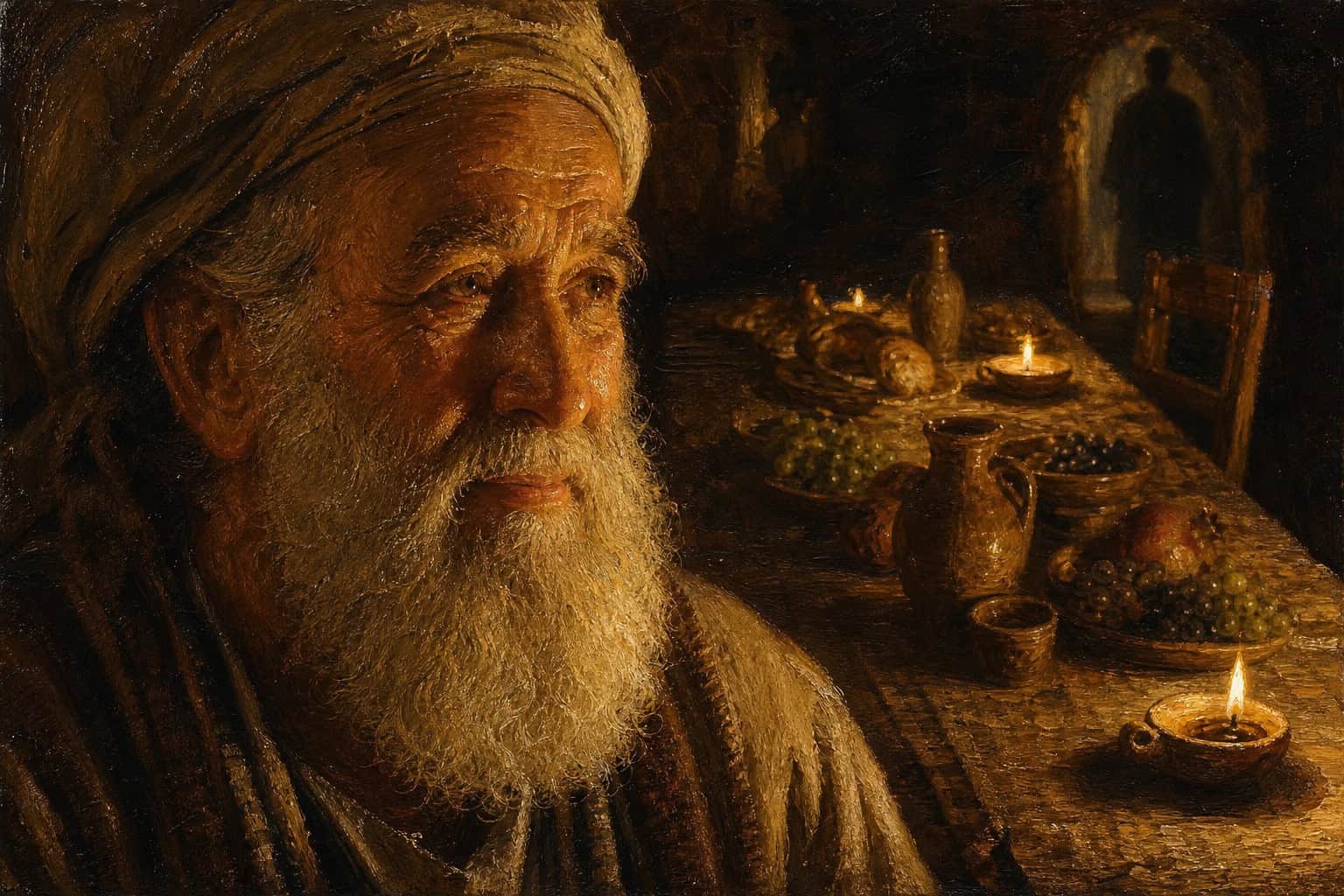
The Table Set With Another Man’s Fruit
I remember the evening I finally understood the question I had been asking wrong for years. I had brought her something, and it had cost me. Not only money, though there was money in it, but the slow hours of my week, the sentences I hoarded all day to say to her alone, the small refusals I made to other people so the whole of me would arrive at her door intact. I set it all down in front of her the way a man lays warm food on a table, proud and a little breathless, waiting to be fed in return. She took it. She smiled. And something in the smile, some small tilt I could not name then, told me the table was not only mine, that other hands had laid their bread on it too, that I was one supplier among several. The question underneath my whole life in those months was the same one a man types alone into a glowing screen well past midnight, ashamed of the typing even as he does it: do girls like rich guys. But I had the question by the wrong end. I thought I was asking about her taste, about what she craved, about whether a fatter wallet would have moved her. I was really asking whether my giving had bought me anything at all, whether a man could purchase a place near a woman’s heart with the coin of his own emptied life. In the second chapter of Fractions of the Soul this exact wound gets named without mercy. The narrator watches a woman run a quiet economy of devotion. Men bring her their labor, their attention, their steady care, and she gathers all of it into her hands. She does not eat it herself. She carries it to another man’s table and prepares the banquet of her body for him, for one who did nothing to earn it but exist. That is the vertigo of the thing. Not the betrayal you can see and point to, but the invisible ledger you were never shown, the columns adding up in the dark while you smile and pour. The rich-guy question turns out to be a question of space, of where exactly you are standing in a room whose shape you cannot make out. Are you near her, or only near enough to be harvested? I stood in that room a long time before I felt its walls with my hands. I told myself I was chosen. I told myself the gifts were welcome, which they were, and that welcome meant something, which it did not. The older man I am now reads the younger one with pity and a hard eye. He was not stupid. He was hungry. A hungry man reads any open hand as love.
The Friendship That Was a Holding Pen
So the tension gathers, and it gathers around a word that ought to be clean: friendship. She called some men that, out loud, in front of others. Best friend, she would say, and she paraded them like something she had won. Other men she kept back in the dark, tucked away in secret, and those she made work harder for the same crumb the paraded ones got for free. I could not see the ranking then. That is the precise cruelty of the arrangement, that it is a hierarchy built to stay invisible to everyone standing inside it. Each man believes he is the near one. Each man measures his distance from her with the wrong ruler and comes away comforted by a number that means nothing. Money enters here, and this is the real answer to the man hunched over his screen at night. Do girls like rich guys? Some do, but not in the way he dreads and not in the way he hopes. What a woman like this one likes is not the rich man but what the rich man can be made to fund. The wealth is never wanted for its own warmth. It is wanted as a resource to be moved, spent, rerouted, carried off to someone else’s plate. The provider becomes a supply line running under the floorboards, and he mistakes his usefulness for his belovedness, and there is no lonelier error a man can make in this life. I felt it in my body long before my mind would sign off on it. A tightening in my jaw when she praised another man to my face. A sick little lift in my chest when she asked me for a favor, because being asked felt like being chosen, and I would not let myself see that being asked and being loved are two entirely separate countries with a hard border between them. The idea underneath is simple and merciless. A bond that only flows one way is not love that has weakened; it is a different creature altogether, wearing love’s borrowed features. It feeds on you. It calls itself friendship because friendship is the perfect disguise, close enough to harvest from, never close enough to let you read the books. And I collaborated. That is the part I still cannot set down without my hands shaking. I wanted the disguise as much as she did, because the disguise let me keep hoping, and hope, even false hope, felt better than the empty room behind it. The dread was never that she would leave. The dread was that if the whole truth ever arrived at once, every rank, every secret man, every gift of mine spent on a stranger, I would have to stand in a space stripped of its comforting haze and know exactly where I stood. Far. I stood far. And I had paid, gladly, for the privilege of standing there.
The Ledger Opened in the Dark
The turn came the way most true turns come, not as thunder splitting a sky but as a quiet arithmetic finishing itself in a dark I could not switch a light into. I saw, all at once and without wanting to, the shape of the economy I had been feeding with my own body and days. The gifts I carried to her were not received; they were routed onward. My care was capital she spent elsewhere, on tables I would never sit at. The banquet she laid, laid with fruit grown patiently in my own field, was set for a man who had done nothing but be there when she wanted him. Here the question a lonely man puts to his screen dissolves entirely, because the answer was never about girls or riches at all. It was about a wound older than money. The woman running this quiet trade is not simply greedy, not merely cold. Underneath the whole orchestration sits a terror older than any man she manages, the settled conviction that she deserves no one, and so must keep everyone, hoarding affection like a starving person hoards bread against a famine she survived long before she learned to cause one in others. The one who preys was prey first. This did not excuse her. It did something worse and far truer: it made her human, and it made my rage lonelier, because you cannot cleanly hate someone whose cruelty turns out to be an old scar doing what scars do. And then the reading turned on me, as it always does. I saw my own hoarding standing plainly inside hers, the same shape in a smaller frame. I too had kept people near for what they handed me. I too had smiled at open hands. I too had feared, above nearly everything, the empty room where no one is bringing me anything and I must simply sit with who I am.
The cruelest theft is not another man in her bed, but that your sacrifice paid for the sheets.
Standing in the Stripped Room
After a revelation like that one, there is no clean grief waiting to receive you. There is only the slow fallout, the string of ordinary days that follow when you keep stumbling on the same truth standing in new corners of your memory, wearing new clothes. I understood, walking through those days, that if she had ever disclosed everything, every rank, every rule she bent for some men and enforced on me, every man kept hidden and every man held up for display, I would have seen my own placement in plain daylight. Some men, seeing themselves ranked high, feel it is simply owed to them, no surprise at all. Others, seeing themselves near the bottom, feel disempowered, unimportant, worth less than a stranger she pursued while she flatly refused to pursue them. I would have been among the disempowered, and some part of me had known it all along, which is exactly why I never once demanded to see the ledger. To ask for the truth was to risk the freedom of leaving, and freedom terrified me more than the cage ever did. This is the vertigo the book keeps circling in its second chapter: a man entirely free to walk out of a parasitical thing, and wholly paralyzed by that same freedom, because to leave was to admit there had never been anything there to leave. Money, again, was never the axis it appeared to be. A poor man can be harvested for his attention as thoroughly as a rich man is harvested for his wallet. The currency changes hands; the theft underneath stays identical. And in the stripped room, when the comforting haze finally thinned and blew off, I did not find God arriving to lift the pain out of me. That is the honest part, the part I refuse to prettify. He did not carry me up out of the dark or press a tidy lesson into my palm to close the wound over clean. He was simply there, near, in a nearness I had not earned and could not have orchestrated if I tried, present inside the very hunger that had ruined me, present in tears I could not have explained to another living soul. Not a rescue. An accompaniment. I sat in the emptiness she had left behind, or rather the emptiness I had furnished with my own hands and then labeled love, and I was not alone in it. That was not comfort in any soft, cushioned sense of the word. It was harder than comfort. It meant I had to keep sitting there, fully seen, with no haze left to duck behind, and let myself be looked upon by One who did not, would not, spend me on anyone else.
What the Empty Field Finally Taught
Where it settles is not where the younger man ached for it to settle. He wanted an answer he could act on that very night: do girls like rich guys, yes or no, a clean verdict so he could hurry off and become rich or turn and become bitter, either one, so long as it ended the aching not-knowing. The older man reading that life back knows now that the question was a disguise stretched over a far deeper one, the only one that ever mattered: am I loved for what flows out of me, or for the plain fact of myself, standing here with empty hands. The terrible grace of it is that no woman, no arrangement, no perfect and total disclosure of every hidden rank could ever have answered that question for me. Only the empty field could. When I finally stopped hauling my fruit to a table already set for another man, when I let my hands sit empty and open for a long stretch, I learned the difference between being wanted and being used, and it was not a difference I had ever been able to see while my arms were full and busy delivering. I had believed reciprocity meant she took what I gave and gave the same back to me in kind, quantity for quantity. Now I think reciprocity is smaller and stranger than that, and heavier: it is two people who can both bear to see each other’s actual placement in the room and choose to stay anyway. She could not bear it. And I will not pretend otherwise; for years, neither could I. This is the country Fractions of the Soul walks you through in its second chapter, without once flinching and without hanging a neat exit at the far end. It refuses to let the harvested man off with a soothing moral, and it just as firmly refuses to shrink the harvesting woman down into a simple villain you can hate and be done with. It holds both of them in the same trembling hand and does not let go. If you have ever sensed you are quietly funding someone else’s romance while starving for your own, the book will not hand you a plan for what to do about it. It will do something harder and more lasting. It will show you the true shape of the room you have been standing in, name aloud the invisible ledger, and let you feel the full vertigo of your own freedom to turn and walk out, along with the older terror that has kept your feet nailed to the floor. And then it will sit down beside you in that dread, the way I was sat beside, not promising to switch on the lights but promising, quietly, that you are not, after all, alone in the dark of it. That is the only answer I have come to trust. The riches were never the point. The nearness was.