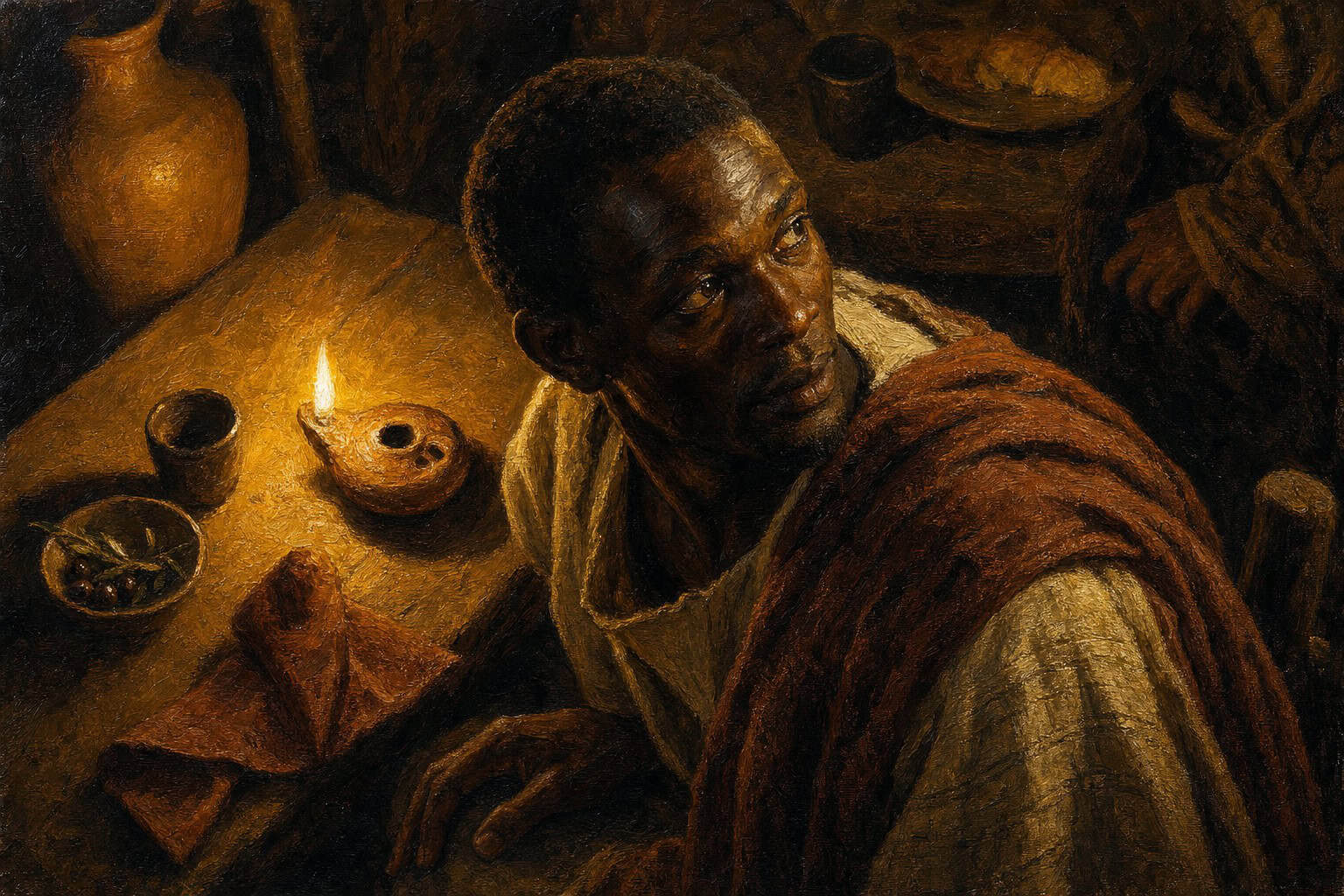
Why do girls like rich men? A raw look at hunger, fear of abandonment, and the ache to be kept—read through Fractions of the Soul.
The Kitchen Where the Lights Kept Cutting Out
You were small, seven maybe, standing in a kitchen where the overhead bulb flickered and then went black. You heard your mother count coins on the counter in the dark. You learned the sound of not-enough before you learned your multiplication tables. That is where this begins, long before the white tablecloths, long before the man with the good watch who orders without checking the prices. So when you type the question into the glowing rectangle in your hand—why do girls like rich men—you think you are asking about other women, about greed, about some ugliness you would rather locate outside yourself. But the question is a mirror, and the honest ones among you already feel the cold of it. You are not asking about money. You are asking why the smell of a warm room, a stocked refrigerator, a bill paid without panic, still loosens something behind your ribs that no lover’s tenderness has managed to touch. A small unclenching happens in your chest at the sight of provision, one finger of an old fist opening. You call it attraction because attraction is a cleaner word than fear. It sounds like choice. It sounds like taste. But underneath the taste is a child who lay awake listening for whether the power would stay on, who read every adult’s face for the weather of the house before she could read a sentence. Money, to that child, was never luxury. It was whether the walls would hold. It was whether tomorrow would arrive intact. This is the exact ground I keep returning to in Fractions of the Soul, though I return to it from the opposite chair—the one who provides, who is spent, who mistakes being needed for being loved. I watched women I cared for tally the room the moment they entered it, and I called them shallow, and I was wrong, and the wrongness cost me years I cannot get back. What sits at that candlelit table is not appetite for objects. It is dread wearing the mask of preference. It is a body that learned, before it had language, that safety must be secured or it disappears. The bulb in that childhood kitchen never stopped flickering behind your eyes. Every warm, well-lit room since has been an argument against the dark you remember. You do not want the man. You want the certainty that the lights will not go out again. And no man alive, however heavy his wallet, can promise you that, though he does not know it, and you do not want to.
The Sum Your Body Adds Before You Consent
You count now without deciding to. It happens in the first thirty seconds. You walk into a room and your nervous system runs a tally your mind never authorized—whose posture says stability, whose hands say they could catch you, who could carry a burden if the burden arrived. It is not calculation the way a merchant calculates. It is a flinch, the way a hand jerks back from a hot pan before the brain has named the heat. You hate that it happens. You have promised yourself you are better than a ledger, that love is not a spreadsheet, that souls are not audited. And yet the columns open on their own the instant desire stirs, and you find yourself weighing a man’s steadiness against the memory of every floor that ever gave way beneath you. Here is the tension you live inside and rarely say aloud: you long to be chosen for your bare and unimpressive self, and you assess men for their capacity to keep you safe, and both are true in the same breath, and neither one silences the other. This is the fracture the book presses on until it aches. A wounded self does not receive the world plainly. Old neglect sediments into a mood you carry everywhere, and it tints every face with the same silent question—will this one leave me too. That question warps what you see the way a flawed pane bends the street beyond the glass. The man with resources reads, through that bent glass, as the man least likely to vanish, and so your body leans toward him and calls the leaning attraction. But you are not chasing profit. You are scanning a mortal, breakable, dying creature for a permanence he cannot possess, because everything human is on its way out even as it walks toward you. The frightened part of you refuses to know this. It insists that with enough security stacked around you, abandonment can be bribed, held off, kept out of the room where you sleep. So you drift toward whoever seems least likely to run. And the cruelty of it is that the scanning itself starves you. When you approach a man as a possible wall against ruin, you cannot approach him as a person, and he cannot reach you either, because you have become two hands testing a beam rather than a face turned toward a face. Intimacy suffocates in the counting. I know this from the far side of it. I felt myself weighed and found sufficient, kept for the shelter I threw over someone rather than for anything I was underneath, and it was the loneliest sufficiency I have ever known. The ledger promised safety and paid out isolation. It sealed the very refuge it was built to protect, and I sat inside it, provided for, invisible, still hearing that kitchen bulb flicker.
The Dread That Sets a Table for Many
Then the floor drops, and you see what has been holding up the whole elaborate structure, and it is not desire at all. It is a conviction so ancient you have mistaken it for a fact about your own worth: that you are owed nothing, that no one is obligated to answer when you cry out, that if a single person ever saw the whole of you at once they would leave, and therefore no single person can ever be allowed to be enough. This is the engine humming under everything. The woman who seems to want the wealthy man does not want him, or not only him. She wants insurance against a loss she is certain is already on its way, because loss was the first language she was ever taught, the grammar of her earliest rooms. So she never lets one hand be her only hand. She fans warmth toward one man while quietly harvesting from another, and she carries the second man’s fruit to the first man’s table, not because she is a schemer plotting in the cold, but because she is starving and cannot believe a single source will hold through the winter. She keeps some men as playthings, some as secrets, some paraded openly as a best friend, each assigned a rank on a hierarchy she alone can see. She fashions the rules and then breaks them for the chosen and enforces them on the rest, and every man, feeling his place without being told it, senses himself disempowered, unimportant, filed away somewhere down a spectrum he never agreed to enter. Fragmentation is not her weapon. It is the only way she has found to survive a world she is sure would annihilate her if it arrived all at once. She lives each compartment as a temporary whole, real inside its walls and sealed from the next. Give her the entire truth of one love and she would buckle under the terror of being wholly known and then, unbearably, left. And so she divides herself the way you divide a small ration among many days, never letting any single portion grow large enough to be missed when it is gone. She calls this survival, and it is, and it is also the quiet murder of every real thing she touches. I recognized her too late, and only because I finally recognized the same terror wearing my own face.
We do not crave the man with resources; we crave the promise that this time no one will leave.
What the Man Who Paid Would Not Look At
So she compartments. She hedges. She prepares a banquet of herself for the one who did nothing but exist, while draining others to stock the kitchen, and the arrangement looks parasitical from the outside, and it is, and it is also a frightened person keeping every candle lit against a dark she cannot name. But do not let me leave you there, pointing only at her, because the accounting was never that simple, and I have sat in the emptied room long enough to know my own half of it. Here is what I had to admit with only my questions for company. I loved being the wall. I loved being the one who steadied, who paid, who kept the lights burning, because being necessary felt like being loved, and I was too afraid to test whether I could be loved without being useful. When a woman scanned me for stability and stayed, I let her, and I named it devotion, and I never once asked whether she saw me or only the shelter I threw over her head. I was not the clean victim I liked to imagine on the drive home. I was a co-author of the whole machine. I wanted to be indispensable more than I wanted to be known, and indispensability is its own hiding place, its own quiet erasure—you disappear behind your usefulness so completely that no one ever gets to reject the man underneath, because the man underneath never steps into the light. So when you ask why girls like rich men and ask it with a bitter edge, as though the guilt sits on one side only, I owe you the other half. The provider often runs the identical fear from the opposite direction. He funds her security because he cannot bear the thought of being loved for nothing, for his plain existence, unearned and unimpressive. He would rather be spent than seen. And so two terrified people find each other and build something that photographs like love and functions like commerce, each feeding the other’s dread, each starving inside a house overflowing with provision. The collapse, when it comes, is not loud. It is a slow vanishing. You wake one morning and cannot recall the last time either of you was actually present to the other, unarmored, uncounting, just two faces without a ledger between them. The transaction ran so smoothly that it quietly ate the persons inside it, and what remains is two functions, two roles, and no one breathing underneath. This is the grief the book refuses to tidy away. There is no villain you can name and then walk off clean. There is only the sober recognition that fear, on both sides of the table, dressed itself in the costume of attraction and provision, and that the real hunger—to be seen and kept without buying the right to it—went unfed the entire time.
The Emptiness Shaped Exactly Like Love
So where does it settle, this ache that made money look like safety and provision look like love? It settles, if you allow it, into a strange and unglamorous honesty. The longing itself was never the sin. The woman at the candlelit table was not shallow, and the man who signed the check was not merely used. Both were reaching, with everything in them, toward the same impossible thing—a love that would not disappear, a keeping that did not depend on how well they performed, a permanence no human being can honestly extend to another. That reaching is the truest thing in you. It points past every man with a heavy watch, past every wall you ever stacked against ruin, toward the only One whose keeping does not run dry and does not bill you for your place at the table. This is not a rescue that lifts you clean out of the ache. I have never once found God arriving that way—tidy, punctual, erasing the wound and leaving no scar. What I have found, in the emptied room, in the long grey hour after the accounting, is a presence that sits down inside the very place I am most ashamed of. He does not scold the frightened woman for tallying the room. He does not lecture the useful man for hiding inside his usefulness. He simply stays, close and quiet, in the exact terror both of them tried to bribe into silence with security. That nearness does not fix the fear. It keeps the fear company. And somehow, slowly, that companionship begins to loosen the old fist in the chest that no amount of money ever loosened for long, because it says plainly what money could only counterfeit: I am not leaving, you did nothing to earn this, and there is nothing you can do to lose it. This is where Fractions of the Soul finally leads, though it walks the whole broken road to arrive. It does not tell you to stop wanting to be kept. It tells you that you have been aiming that enormous want at things far too small to hold it, and that the hollow you feel after every provider, every arrangement, every warm room that went cold, is not proof that you are unlovable. It is a hollow shaped precisely like the love you were made for. So the question you typed in bitterness turns, at the last, into something closer to a confession—not why do girls like rich men, but why does any of us keep trying to purchase what only grace hands over for free. The chair across from you is empty of the men who could not hold you. But it is not, I have come to believe, finally empty. Someone was already there, before the first bill ever came, and He is still sitting down, still setting a place, still saying stay.