For anyone raised by hands that hurt: the empty room your parents built, why the grief is real, and how to stop kneeling to the wound.
Small Socks Set Out for a Body That Never Came
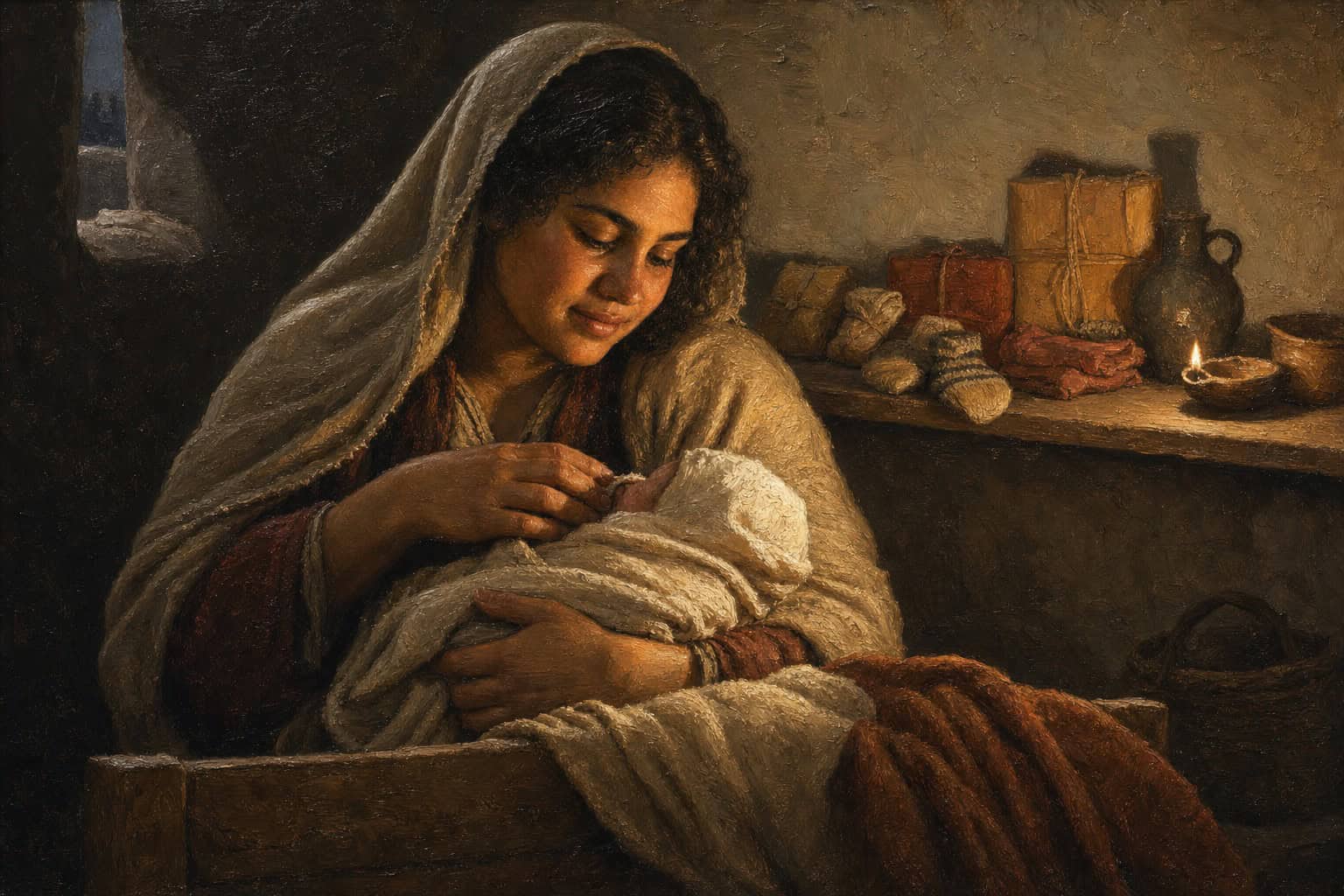
A small room stands ready before anyone has lived in it. In the seventh chapter of Fractions of the Soul, the narrator lingers inside a nursery built around a child who never arrived, and every object there keeps calling out to the one who should have come. The bags of diapers stay sealed at the seam, their edges crisp, never torn by tired hands at three in the morning. The bottles sit rinsed and lined along a shelf, clean necks waiting for a mouth. Socks so small they seem a joke the world played on hope lie folded beside mittens, and toys are arranged with care against a wall no small hand will reach for. Every one of these things was set down by someone who was sure a life was coming to fill this space. The absence itself hardens into a presence you can almost touch. I bring you into this room because it names what you already know in your body if the people who raised you hurt you. You were once a space being furnished too. Someone imagined your life before you could speak, arranged a future for you, laid out the assurances and the promise of a good life. The difference is that you arrived, and the hands that furnished the room turned on the child who filled it. That is its own kind of death, though no funeral marked it and no one brought food to the house. The tenderness meant for you sat sealed in its plastic, promised and never handed over. The protection stayed in its packaging. Your skin learned danger from the same warmth another child’s skin learned to trust, and the learning went in deep, below thought, into muscle. Now you carry a room in your chest stocked with objects that insist you were loved, while your body says plainly you were not kept safe. Both are stored in you at once, and they do not cancel out. There is no faithful answer that skips this ground. Stand in the unlived space and let the plain fact settle: they built for a child and refused the child who came. The accusation of the unused things is the first honest thing you can hold.
The Body That Flinches and Reaches at the Same Time
When the imagined future breaks, it does not break cleanly. In the book it shatters into a thousand little pieces, each shard catching fire and rising as a thin droplet of smoke. That is how the mind of a hurt child works long after the child is grown. You do not grieve your parents once and file it away; you grieve them in fragments, and each time a different piece flares up and burns before it drifts off. A friend’s father crouches to teach his daughter to ride a bike, and a shard ignites in your chest. Someone speaks of a mother who sat up all night at a hospital bedside, and another catches and smokes. You are not weeping over one bad night on a calendar. You are weeping over decades of ordinary tenderness owed and never paid, the whole unlived stretch of what could have been. The loss is measured not by what was taken from your past but by what was stolen from your future. And here is the harder thing. The longing does not die when the harm is named. It sits at the seam between old losses and the joyful things you still hope to build, a low steady pulse reaching toward the parent who never came through. You go on wanting your mother’s arms. You go on wanting your father’s eyes to hold something like pride. So you keep the room. You keep answering the door onto a hand that will strike, bending your whole life around the hope of finally being loved by the ones who cannot love you well. The narrator turns this lens on himself without mercy, asking what he mistook for depth, what he called devotion when it was really the terror of standing alone. That same question belongs to you now and will not let you off easy. Is the ache love, or is it the old habit of hoping? Did you ever truly want your abuser to change, or only want the fantasy parent standing invisibly behind them to step forward at last? Both sides can be true in the same chest. You flinch and you reach in the same breath. This is not weakness; it is the deepest wiring of a creature made for love, doing exactly what it was made to do, pointed at the wrong sky.
When the Wall Gives Way and the Water Was Already There
Then the whole arrangement collapses, and there is nothing gentle in it. The chapter names a dangerous shape of attachment: a bond that works like a wall of packed earth against rising water, holding back everything a person will not face by pressing it onto another. The narrator confesses his own version with brutal plainness. Two frightened creatures lashed together, calling it love, building a dam against the terror of standing alone. When the wall broke, what poured through was not only sorrow but everything he had avoided by leaning there, and what he took for a shared gaze turned out to be only his own eye reflected back, enlarged and hungry, fastened to what could never hold it. Here is the turn that matters most. The day you stop keeping the nursery for the parent who wounds you, a flood arrives, and it feels as if it will drown you, because you built your whole self against that wall and leaned your weight there. But the water does not come from breaking the wall. The water was always there, held back and waiting. Their presence never saved you from the chaos; it only hid the fact that you were already alone with it. This is the secret nobody wants to hold. As long as your parents remain the whole story, the sole villains, you never have to grow up. Their guilt is a dam, and behind it sits your own life, your own choices, your own frightening capacity to become the very thing you swore you never would. The day you reckon fully with what they did is the day the water breaks and you are handed a life that is finally, terrifyingly, yours to carry alone. That is not a punishment. It is the cost of freedom, the price at the door. To grasp your own aliveness you have to grasp it as coming from neither them nor the world outside, but from the strange middle place where a self is born and stands on its own feet. What to do when your parents are abusive is not, in the end, a question about them. It is whether you will stop living in reaction against them and start living toward something of your own making. The room they should have filled with safety is now yours to furnish, and no one is coming to unpack the gifts for you.
You can honor the God who made you without worshiping the wound they left in you.
Give the Grief a Chair, Not a Throne
You can honor the God who made you without worshiping the wound they left in you. After the dam breaks, the temptation is to build a shrine to the water and move in. Grief arrives dressed as a king, demanding worship, demanding you set it at the dead center of your existence. It offers you an identity built entirely from what was done to you, and at first that feels like justice arriving late. Finally the harm is real. Finally the record is set straight. It tells you your suffering is now your truest name, that to let the pain go quiet even for an hour would betray the child you once were. The narrator has knelt at that altar and lit its candles; he has mistaken the kneeling for faithfulness. And he names it exactly for what it is: a kind of idolatry, the last and subtlest idolatry of loss. Grief is real and deserves to be spoken and wept and carried into the light. But grief is not your God, and neither is the parent who hurt you. He does not tell you to leap over the pain or shrink the abuse down to something manageable. He tells you not to worship it. There is a difference between acknowledging sorrow and kneeling to it. One is honest and human; the other is a slow surrender of the soul dressed up as loyalty to your own pain. Pull the grief up a chair at the table. Give it a fair hearing when it speaks. But refuse it the throne. Do not pray for the power to skip the darkness, because that prayer is answered so rarely that leaning on it will break you. Pray for the strength to walk through the dark on your own two feet. And here is the grace the narrator keeps stumbling over: God is most often not the hand that hauls you out of the flood but the presence wading beside you while you are still soaked to the bone. He is not the rescue from the empty room. He is the one sitting on its floor, quiet, close, present in the tears rather than in their drying. That is not the comfort anyone would choose. But company turns out to be the deeper gift, because it means you were never alone in the room your parents left unfurnished.
Two Hands Setting a Table Left Unfinished
So the wall gives way and now you stand in the wet wreckage asking what is left. There is a fierce temptation to burn everything down, to reduce the parent to a monster and make yourself clean by making them wholly evil. The chapter watches shattered hopes turn to droplets of smoke, each rising and vanishing, and part of every wounded child wants to strike that match and be done. But the smoke does not set you free; it only stings your eyes and leaves you coughing in a room still ruined. The harder, more human path is to empty the room slowly, one object at a time. These small socks are a memory of real tenderness that once existed. That toy is a memory of a promise that was broken. You are allowed to hold both in the same hand without lying about either. What you are learning is to stop confusing the objects with the person, and the person with the picture you needed them to be to survive. This is not blaming yourself for the abuse; a child is never to blame for what was done to a child. It is taking back authorship of your life from people who never should have held the pen. In plain terms, this often means real physical distance from a parent who will not stop wounding you. There is no commandment that chains you inside the reach of a raised hand. It means letting your body relearn safety in ordinary moments, until the flinch loosens and a hand on your arm stops meaning danger, because touch is never only touch for a human being; it carries meaning worked down into the flesh, which is exactly why it can be pressed over and rewritten. It means letting a few trusted people see the real you and discovering that being seen does not always end in being found wanting. Some people stay. Forgiveness is not pretending the debt was small; it is refusing to let the debt write the rest of your story. You can grieve the mother or father you deserved and never received and still leave a mercy unlocked, on your terms, from a safe distance. Fractions of the Soul offers no clean ending, because Anthony Adoré received none himself. It pulls up a chair. It lets you weep without checking the clock. The nursery can stay empty. You do not have to.