Do children of controlling parents become controlling themselves? The fear does not stay theirs; it slides under the door and moves into your own hands.
The Kitchen Where Their Hands Never Rested
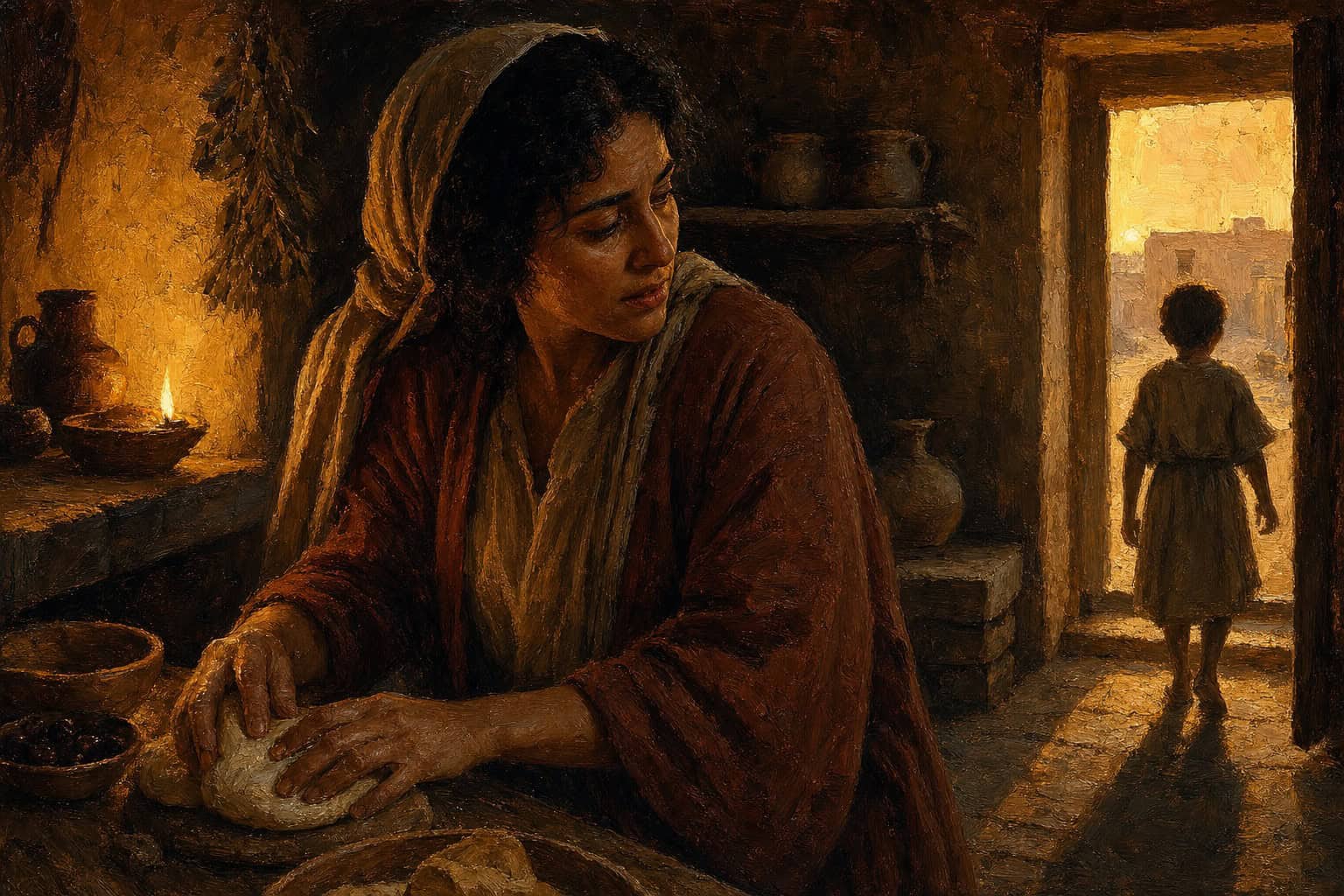
Go back to the kitchen you grew up in. There is a parent at the counter with their back half-turned, chopping an onion or wiping a plate, and yet their eyes never really leave you. You learned this early, before you had words for it. You could feel their attention crawl across your shoulders when you reached past them for the refrigerator, as if pulling out your own glass of milk were a small test you might fail. The room hummed with a low current you could not name. Every ordinary choice carried a second question buried under it: what will they think, what will they say, is this the thing that starts the quiet questioning at dinner. That is where the memory begins for so many people who type the words do children of controlling parents become controlling into a glowing phone at midnight, alone in a bed they finally own, already half-afraid of the answer. It begins not with a scream but with a hovering, a presence that never quite trusted the room to hold you safely without their hands laid over it. You did not analyze it as a child. You only knew your body stayed a little tense inside your own house. You rehearsed your answers before you gave them. You learned to read a face the way sailors read weather, watching for the shift in the jaw, the pause before the reply, the way a mood could turn the whole air heavy. The controlling parent is not always cruel in the way strangers picture. Sometimes they are gentle, even warm, and that is the part that confuses you most, because the grip comes wrapped in care. They pack your lunch and they read your texts. They kiss your forehead and they decide your friends. And you grew up unable to tell where the tenderness stopped and the watching started, because in their hands the two had melted into a single thing you could not pull apart. So you carry a divided memory into adulthood. Part of you knows, without doubt, that you were loved. Part of you knows, with the same certainty, that you were never fully free. The ache lives right there, in the seam, in the fact that both are true at once and neither one cancels the other out. Before you rush to ask whether you will become what they were, sit inside the plain fact of it a while longer. You were watched in your own home. The watching taught your nerves that being seen and being controlled were the same event, arriving together, hard to tell apart. You still feel the echo when someone loves you now and something in your gut braces, waiting for the eyes to become a leash. That early confusion is the soil. Everything else grows out of it, including whatever grip you may one day find in your own hands.
The Verdict They Reached Before You Were Born
Here is what gathers as you grow older and finally begin to see the shape of it. The controlling parent is not really testing you at all. They are testing a verdict they reached about themselves long before you ever arrived. Somewhere in their own childhood they learned a lesson that never left the marrow: love does not stay. Maybe a parent walked out. Maybe a parent stayed in the house but withheld the warmth, doling it out in small rations at the counter of some other kitchen. Maybe they were the small one hovering in a doorway, waiting for an affection that came late and cold, if it came at all. Whatever the shape of it, they carried out of that house a quiet certainty that they are not enough to be chosen freely. If they loosen their grip even slightly, they are sure the people they love will drift toward someone taller, warmer, easier to love than they believe themselves to be. So they build the trap in advance. They lay the mines around the very idea of your leaving, because they cannot bear to hand you the freedom to go, convinced beyond argument that you would use it. This is the terrible logic under the control. It is a prophecy that makes itself come true while calling itself protection. The tighter they hold, the more you strain against the holding, and the more you strain, the more your straining looks to them like proof they were right to grip. Every step you take toward your own life lands on them as evidence for a verdict decided years before your birth. You wanting your own friends becomes proof you never loved them. You wanting a closed bedroom door becomes proof you were always going to leave. They read your ordinary growing up as a slow betrayal in progress, and they answer it by tightening their fingers around the one thing that grip is crushing. And you feel it in your chest, don’t you. You feel the strange exhaustion of being loved by someone who cannot believe they are loved back. You become the living answer to a question they never trust the answer to, no matter how many times you give it. No amount of your staying is ever enough, because the fear was never really about you in the first place. It was installed long before you existed, in some other kitchen, under some other set of watching eyes, in a wound they never named and never let anyone touch. What passes between you and them is not truly a fight about curfew or grades or the phone left face-down on the table. It is a fight about whether love can be trusted at all, whether a person can be seen fully and still not abandoned. And they lost that fight before you drew your first breath, which means you were handed a war you did not start, standing on a field you cannot win by fighting harder inside it. And a verdict no one names can be handed down again, from their hands into yours.
They Are Not Guarding You, They Are Guarding a Wound
Here comes the turn, the thing that quietly reorders everything once you finally let yourself see it. The controlling parent is not, at the deepest level, trying to run your life. They are trying to keep an old wound from splitting open again. That grip on you is the same grip a person keeps on a railing after the ground has already given way once beneath them. It is not strength, though it wears the face of strength. It is terror in the costume of authority, fear that learned to bark orders because pleading felt too dangerous to attempt. When you understand this, you stop hearing their control as a sentence about you and start hearing it as a confession about them. Every rule was a wall thrown up against an old fear. Every question at the door was a hand reaching out in the dark to make sure you had not vanished in the night. Every refusal to trust you was, first and beneath everything, a refusal to trust that they themselves were worth staying for. This does not excuse what it did to you. It does not soften the years you spent shrinking your body and your voice to fit inside the small space their fear allowed. But it changes the thing you are looking at. You were never the prisoner of a tyrant who enjoyed his throne. You were the child of a frightened person who could not say the truest thing out loud, not once, not even to themselves.
Control is what love becomes when a soul cannot believe it would be chosen freely.
Once you hear that, the whole structure shifts under your feet. The hovering at the counter, the reading of your messages, the friends chosen for you, the affection fused with watching until you could not separate the two, all of it turns out to be one long unfinished sentence they could never bring themselves to complete: please do not leave me, I do not know how to make you want to stay, so I will simply hold you in place instead. They could not speak it because speaking it meant admitting the fear, and admitting the fear meant walking back into the wound, and the wound was the one room in the house of themselves they had spent a lifetime keeping locked. So they controlled instead. It was easier to command than to beg. It felt safer to demand your loyalty outright than to risk asking for it and hearing no. And you, the child at the edge of it, absorbed the command in full and never once heard the plea trembling underneath. That is the revelation that dismantles the old story you told about them. You were not being ruled by someone who despised your freedom. You were being clung to by someone drowning in a fear they inherited and never learned how to swim out from under, and that same fear, unnamed, is exactly what can pass to you.
Control is what love becomes when a soul cannot believe it would be chosen freely.
What Their Fear Left in Your Own Hands
Now the harder part, the part nobody warns you about while you are still counting the days until you can leave. The fear does not stay theirs. It moves into you, quietly, the way smoke slides under a closed door, and it takes up residence in your own hands. You grow up and one day you notice that you, too, cannot quite believe love would stay if you loosened your fingers. You test the people you love without ever deciding to. You lay small traps in ordinary conversation and then wait, half-sick, to see whether they step in them. You withhold the plain words, the ones that would cost you nothing and everything, I love you, I need you, please stay, because saying them aloud feels like handing another person a loaded thing they will surely turn on you. You demand proof of their devotion while refusing to offer any of your own. You want to be chosen so badly it aches, but you cannot bear to be seen wanting it, so you dim yourself in the room and then quietly resent whoever shines. This is the inheritance, and it is the cruelest thing about the whole pattern, that the wound reproduces itself faithfully in the very child who swore, with a clenched jaw, never to become the one who raised them. You catch yourself hovering. You catch yourself scanning someone’s face for the first sign of leaving. You catch yourself unable to rest inside being loved, because an old kitchen taught your body that being watched and being loved were the same thing, and now you cannot receive care without bracing for the watching you expect to follow it. The fallout is not only the childhood that got taken. It is the way the fear keeps living in your muscles long after you carried your boxes out that front door. You feel it in the tightness that climbs your spine when someone you love suddenly goes quiet. You feel it in the reflex to test instead of trust, to grip instead of open. And here is where the honest questions begin, the ones you have to sit inside without lunging for a tidy answer. Have you become the thing that hurt you. Have you turned your own love into a courtroom where the verdict was reached before the trial ever opened. Are you clinging to people not because they threaten to leave, but because you cannot believe they would ever choose you if your hands were open and empty. These questions do not resolve in an afternoon, and they are not meant to. But they are the start of something real, because the moment you can see the fear alive in your own hands is the moment it stops being invisible and starts being yours to answer. You cannot loosen a grip you will not admit is a grip. So you sit with it. You feel the tension gathered in your knuckles. And you begin, slowly, to wonder whether you might learn to hold love the way you were never held.
Learning to Let the Open Hand Be Enough
So do children of controlling parents become controlling? Often, yes, until the grip is seen. Where does this settle, if it settles anywhere at all. Not in blame, which only passes the wound back up the line and pretends the story ends with someone else’s failure. Not in the easy forgiveness either, the kind that skips over the lost years and pretends they cost you nothing to survive. It settles instead in a strange, quiet mercy that you have to grow into by inches. You begin to see the frightened person standing behind the controlling parent, and you begin to see the frightened person forming inside your own chest, and you learn to hold them both with something gentler than the judgment you were trained to aim at yourself. This is where a Catholic heart finds its footing, because it turns out grace does not usually arrive by erasing the wound and handing you a clean start. It arrives as a presence that walks straight into the wound and refuses to leave. God does not, as a rule, reach down and undo the years of hovering, the love and fear melted into one substance, the grip you inherited and quietly passed along. What He does is quieter and far more astonishing than a rescue. He is there in the tightening of your own hands, present in the very reflex you hate most in yourself, walking beside you in the exact place you were certain you were most alone and least worth loving. He does not wait for you to become the kind of person who deserves to be chosen. He chooses you inside the fear, before you have loosened a single finger, before you have earned one thing. That is the truth the controlling parent could never once believe, and the truth you were never taught in that watchful kitchen: that love can hold without gripping, that being seen does not have to mean being caught, that you can be chosen freely by One who was never in danger of drowning and never needed you to prove you would stay. Learning to let the open hand be enough is the slow labor of a whole life, and you will fail at it more than once. You will catch yourself testing again, withholding again, bracing again for a leaving that may never come. But each time you catch it, you stand a little freer than the ones who raised you, because they could not even see the grip, and you can. This is the country Anthony Adoré walks through in Confessions to the Empty Chair, not by talking the fear away but by kneeling down inside it and refusing to look away from what it did and what it made of him. If you recognize your own hands anywhere in this, that book will not press a tidy cure into your palm. It will do the better and harder thing. It will sit down with you in the dark you were sure no one would ever enter, and it will let you feel, perhaps for the first time in your life, that you were being held there the whole time.