Emotional signs of abuse in children, read through one man’s memory of the songs that scored his childhood. What the body remembers when the mind hides it.
A Synthesizer Drifting Over a Small Boy’s Room
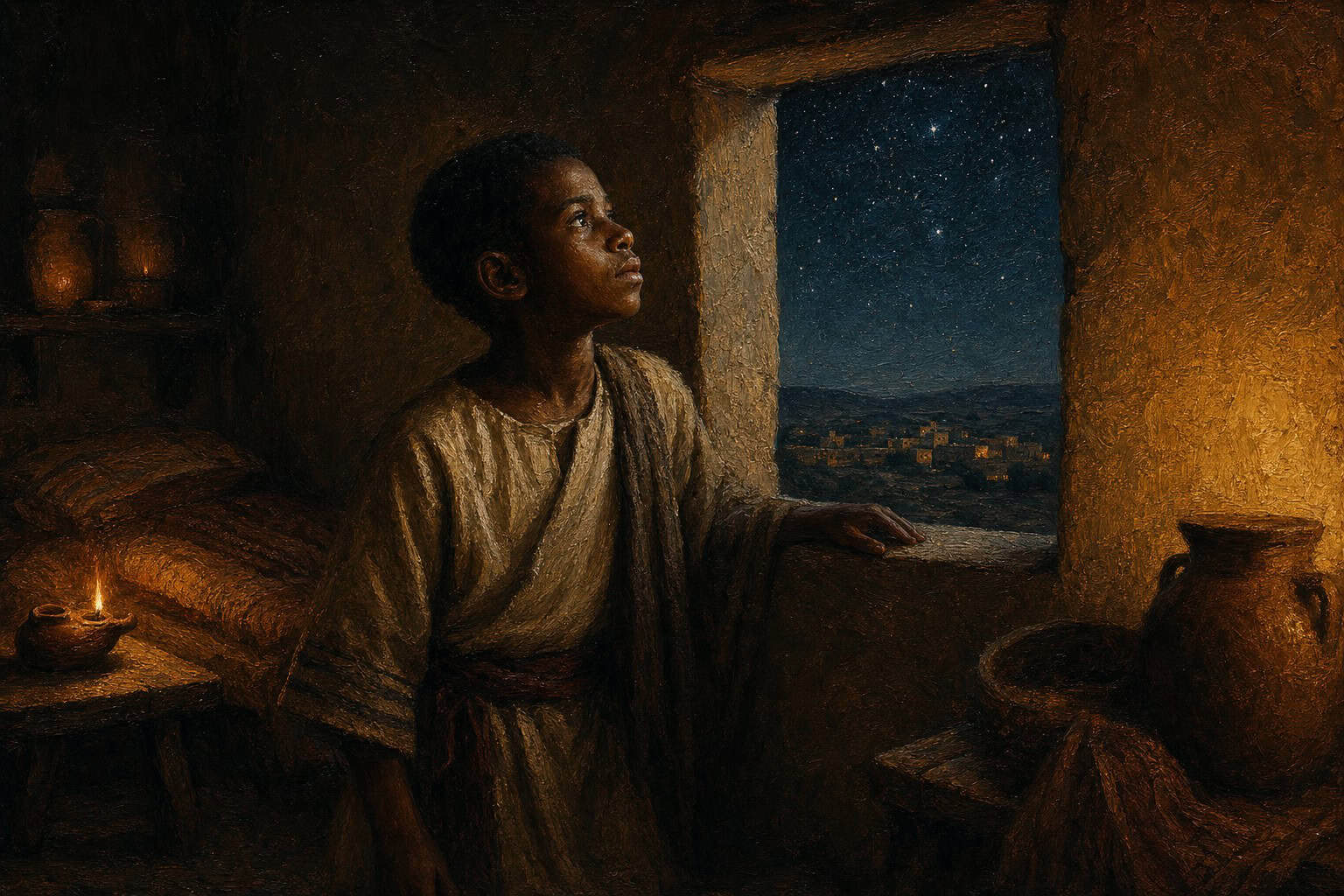
How do you spot the wound in a child who never says a word about it? The older narrator of Confessions to the Empty Chair does not begin with a bruise or a raised voice. He begins with a sound. Somewhere in the early years, before he had language for anything that happened to him, a certain kind of music washed over his small world. Cool, shimmering, electronic. A love song built out of space and echo, all reverb and floating keyboard, the kind of song that seems to come from very far away and want to carry you further. He hears it again now, decades on, and it does not simply remind him of childhood. It restores the whole atmosphere of it. The exact quality of the light through the curtains. The size of the rooms then, which felt enormous, ceilings that seemed to go up forever, corners that held their own weather. The strange, wide, drifting longing of a boy who did not yet know he was longing for anything. He sits with this song the way a man might sit inside an old house he thought was demolished, and finds it standing, furniture and all. This is the ground the scene stands on. Not an event but an air, a weather system of the soul, held inside a melody. And here is the first thing the searcher should understand about the marks abuse leaves on a child. They rarely announce themselves as memory. They hide inside atmosphere. A song, a smell, the hum of a certain machine, the color of a certain evening sky just before the streetlights come on. The boy in this chapter is small and quiet and dreaming toward the far reaches of the sky, and everything looks, from the outside, almost peaceful. He is not crying. He is not hiding under the bed. He is simply gazing up and out, farther than a child should need to see. But peace is not what that drifting really is. That reaching outward, that wish to float free of the room he is in, is already a sign. A child who is safe does not usually yearn so hard to be somewhere else, somewhere vast and weightless and impossibly distant. Safe children stay close. They come home to a lap. The music gives that yearning a shape, a place to pour itself, a permission to leave without leaving. The narrator, looking back, does not name the wound yet. He only notices where his young attention kept going. Up and away. Toward the cold, beautiful stars. Toward anywhere that was not the ground beneath his feet, the walls around his bed, the nearness of whatever he could not yet say and could not yet flee.
Bricks of Scripture Stacked Against an Unnamed Threat
The scene does not stay in that gentle drift. As the boy grows, the sound changes, and so does his behavior, and this is where the searcher looking for emotional signs should lean in close. The narrator remembers building walls. Not literal walls of stone or brick, but walls of sacred text. He memorized verse after verse, stacked them one on top of another, lined them up as armor across the inside of his chest, and stood behind them like a small soldier who has decided the whole world is a siege. From the outside a devout child looks like a gift. Who would worry about a boy who loves scripture, who prays hard, who answers every dark thought that rises in him with holy words like water thrown on a fire? Parents boast about such a child. Teachers hold him up. But watch how the older self reads it, gently and without mercy at once. The intensity is the tell. A child does not raise fortifications against nothing. The height of the wall marks the depth of the flood it holds back. He was defending against temptation, yes, but also against fracture, against some warfare already running loose inside him, some threat he could not name and would not have been believed about if he had tried to speak it. This is one of the hardest signs to see, because it wears the costume of goodness. The abused child often becomes hyper-good, hyper-controlled, desperate to be clean, terrified of his own inner life as if something in there might turn and bite. He polices himself with a severity no adult imposed on him, because the real terror lives somewhere the adults never looked and never asked. The narrator questions himself here, honestly and without flinching. Was that faith or was that fear wearing faith’s clothes? Was he running toward God or running from a room? He does not tie it off. He lets both be true at once, and that refusal to flatten it is precisely what makes the reading trustworthy. A child who accumulates spiritual armor with that kind of hunger is not merely pious. He is under siege from within, and he has decided to hold the line alone. The verses were real and the God behind them was real, but the desperation was information. The fervor was a map drawn in the child’s own frantic hand. Every brick he laid down pointed back, like a compass needle swinging home, to the exact place the wound went in. And nobody around him could read the map, because it looked like holiness, and holiness is the last thing anyone thinks to worry about. The searcher wants signs. Here is a severe one. When a child’s defenses are wildly out of proportion to any danger you can see, the danger is not visible because it is being hidden, and the child is the one hiding it, out of a shame he did not earn and cannot yet understand.
The Note That Resurrects a Whole Lost World
Then comes the turn, and it is quiet, the way the deepest things usually arrive. The narrator realizes he does not remember his childhood the way we are told memory works, as a filing cabinet of dated events waiting to be pulled open. He remembers it as a series of atmospheres, and each one has a sound. There is the space-age wonder of the earliest years, all shimmer and drift. There is the romantic intensity that came later, the heat and confusion of adolescence, a music that ached and swelled. There is a winter’s anger further on, cold and hard and metallic. Each epoch of his becoming carries its own soundtrack, and a single note can drop him back inside a whole vanished world entirely, body and soul, as if no time had passed and the years between were only a held breath. This is the revelation the whole scene has been reaching toward. We do not carry our history as a story we can sit down and tell. We carry it as a place we can be returned to without warning, hurled back through a door we did not know was there. And for a child who was hurt, this is everything. The mind protects itself. It looks away, it forgets, it refuses to hold the unholdable and stacks pillows over it. But the body does not forget, and neither does the atmosphere. The wound sinks into the deepest layers, below thought, below words, into the very way the world feels when you walk into a room. A grown man hears one drifting synthesizer chord in a shop or a passing car and is suddenly small again, aching toward the sky, and only now, only decades later, can he begin to ask what he was aching away from. This is why the signs matter and why they are so easily missed. The child cannot tell you. He may not even know himself. But the atmosphere knows. The longing knows. The armor knows.
We carry within us not memories but whole atmospheric worlds, each with its own music, and a single note can resurrect the child we buried alive.
The narrator sits with this and does not flinch from it. He understands that his younger self was speaking the entire time, just not in sentences, never in the clean words that would have made an adult stop and turn. The wonder that reached too far. The piety that guarded too fiercely. The intensity that ran too hot for the peace it claimed to protect. All of it was testimony. All of it was a boy telling the truth with everything except his mouth, hoping without knowing he hoped that somebody would learn to hear it.
A child who builds walls that early is telling you, without a word, exactly where the fire got in.
What the Grown Man Owes the Boy He Was
After a revelation like that, there is no clean relief, and the book refuses to hand you one. The narrator does not get to congratulate himself for finally understanding, to close the file and feel wise. Instead he sits inside a harder grief that has no easy floor. All those years he thought he was simply a strange, dreamy, devout boy, a little odd, a little too serious, nothing that needed tending. All those years the adults around him thought so too, if they thought about him at all. Nobody read the signs. And here is the part he turns on himself most fiercely, the blade pointed inward: for a long time he could not read them either, even after he was grown, even after he had all the words he had once lacked. He mistook his own longing for a gift and cultivated it. He mistook his own armor for virtue and wore it in daylight. He carried both proudly and never once asked what they cost him or where they came from, never traced the compass needle back to the wound. This is the fallout the searcher needs to sit with, because it is honest and it does not sell you anything. Recognizing the signs in a child does not undo what caused them. Understanding the atmosphere does not lift you out of it into open air. The man who finally hears what the boy was saying also has to bear that the boy said it alone, for years, into a room where no one was listening, and that the man himself joined that silence for a long while. And God? God does not swoop in here and rewrite the past, does not walk back into the boy’s bedroom and unmake the harm. That is not how this book works and it is not how grace usually works in these pages. Instead there is something quieter and, to my mind, far more piercing. God was in the room the whole time. In the drifting song. In the desperate stacking of verses, brick by brick. In the reaching toward the far cold stars. Not removing the wound, not fixing the boy, not answering the terror with a rescue, but present inside his very hiding, seated beside him in the dark he could not name. The narrator does not say this to make it pretty or to soften the account. He says it because it is the only thing that held when nothing else did. The nearness, not the rescue. The company, not the cure. For any adult reading the emotional signs in a real child now, this is the sober word to carry out. You may not be able to lift them out of what has them. But you can refuse to be one more person who looks away and does not listen. You can read the map the child cannot read for himself. You can simply be near, and stay.
Teaching Your Ear to Catch the Ache
Where it settles is not comfort exactly, but something solid enough to stand on. The signs are real and they are legible if you are willing to look past the surface a child presents. A child who drifts too far into dream, always somewhere else, always reaching for a distant weightless place, may be fleeing a nearness that hurts him where he stands. A child whose goodness is fevered, whose defenses tower against threats no one else can see, is telling you the size of the fire by the size of the wall he has raised against it. A child who cannot say what happened may still be saying it in every atmosphere he builds around himself, every song he clings to until it wears thin, every longing that runs stranger and deeper than his few years should allow. These are not clinical checklists tucked into the pages of Confessions to the Empty Chair. They are one man’s honest excavation of his own boyhood, done late, done at real cost, done with the lens turned mercilessly on himself before it turns on anyone else. And that is exactly why it can help a reader see a living child more clearly. The book does not hand you a diagnosis to pin on someone. It hands you an ear. It teaches you to hear the music underneath the behavior, the ache underneath the reaching, the fear underneath the fervor. The narrator’s chapter leaves you inside a truth that is both terrible and strangely hopeful at once. Terrible, because a child can carry a wound for decades before anyone, including himself, ever learns to read it. Hopeful, because it can be read at all, because the atmospheres do not lie the way people do, because the body keeps its faithful witness even after the mouth has been silenced by shame. If you came here looking for the signs, you have found more than a list to check off. You have found a way of seeing, a patient and reverent attention that treats a small, quiet, dreaming child as someone already speaking a full language you were never taught. The rest of the book widens this out into a whole life, into confession and reckoning and the slow, unfinished labor of facing what was done and what was refused. But the invitation begins right here, in a boy staring up at the far cold stars while a synthesizer floats over his room, longing for somewhere weightless, and a God he could not yet see sitting close beside him in the dark he could not yet name. Go and listen to a child that way. It may be the first true thing anyone ever does for them, and it may be the thing they remember when they are old, and finally understand.