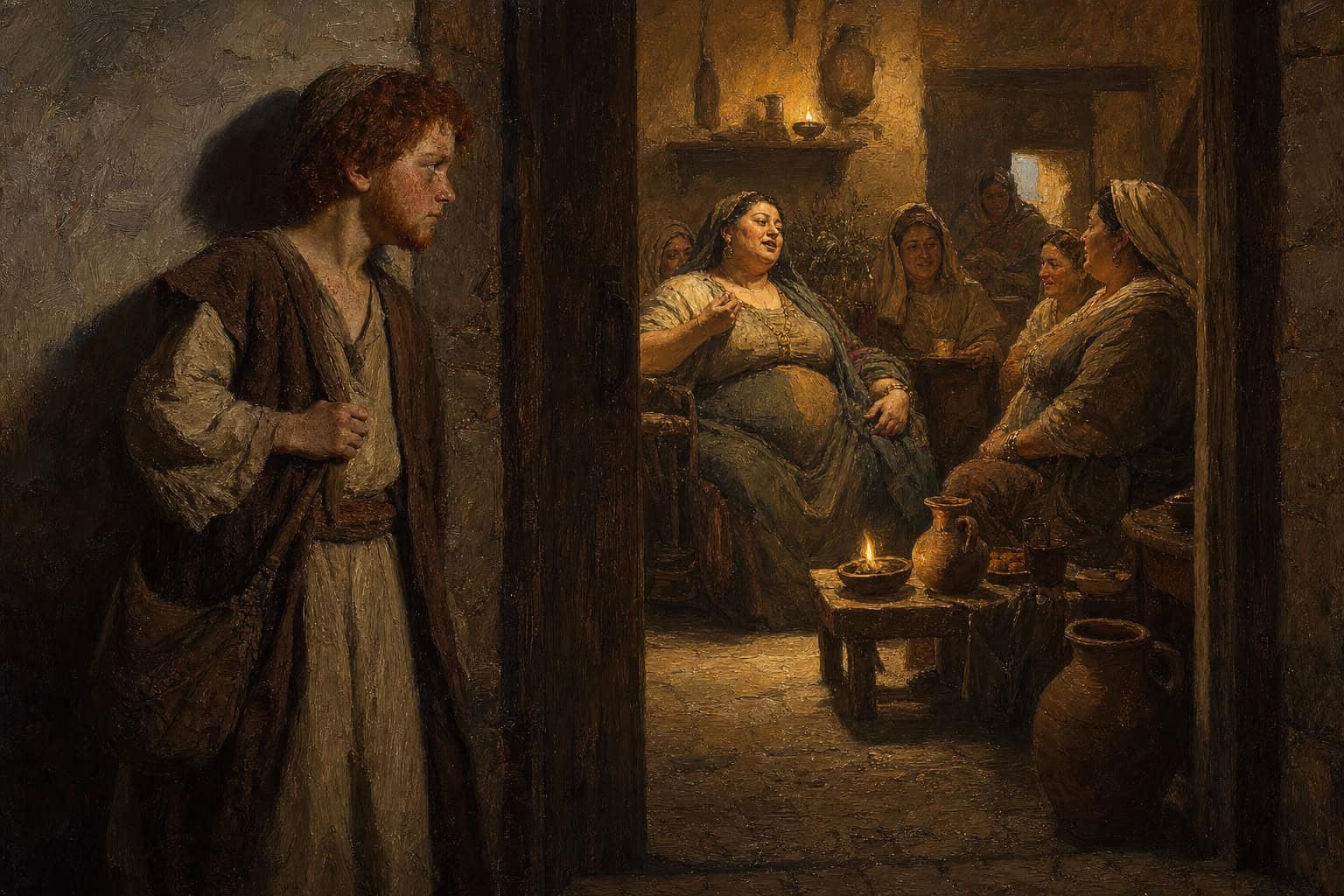
You want to make a hidden pain visible. A raw scene from Confessions to the Empty Chair shows how naming what you refused to see begins the cure.
The Staff Room Where You First Learned to Vanish
Listen to me now, across all these years: the ache you keep trying to drag into the light was born in a room you were too young to name. I see you there, small at the edge of that school, half in the doorway, watching the grown women hold their court. The elder ones sat swollen with comfort, their arms heavy, their voices sharp enough to slice a child clean in two. They distributed smiles the way a rich woman lets coins fall—to their own kind, to the children of families that mattered, never to the boy from the wrong bloodline. You were the underprivileged one. You felt it in your stomach before your mind found the word for it, a cold sinking under the ribs when their warmth landed on someone else and skipped clean over you. That is the first thing I need you to understand, because no one explained it then: the ache came first, raw and wordless, and only much later did you find language to hold it. The younger teachers wore strained smiles like masks pulled a size too tight, falling in line, terrified of being cast out of the warm circle. You watched them bend and something in you learned the lesson without a single word being spoken—safety is bought by shrinking, by making yourself small enough to slip past unnoticed. You told yourself you were only observing, only a boy taking in the room. You were not. You were being ground down, quietly, patiently, in a place that hung its name on the wall as a place of learning. Respect was not earned there; it was assigned, handed out by perceived family status, and you were assigned the low place. And here is the pain you would spend decades hiding beneath everything else: some part of you believed them. Some small betraying part took their verdict as the truth of you. You looked at yourself through their skipping eyes and found yourself wanting, and then you buried that finding so far down you forgot it was there at all. To make a hidden pain visible you must first admit it went hidden for a reason—because seeing it plainly meant agreeing, for one unbearable second, with the very people who despised you. I am not asking you to be brave yet, small one. I am only asking you to stand in that doorway with me again and refuse to look away from the boy already teaching himself to disappear. The pain is not safely in the past. It lives in how you still flinch when someone with power turns a face toward you. That flinch is the buried thing, still breathing under your skin.
When the Body Keeps the Ledger the Mind Denies
You did not know it then, but your body was keeping records your mind refused to sign. Notice how, standing near those women, your shoulders drew inward like something folding to survive the cold. Notice the shallow breath, the way your chest would not fill. Notice the heat crawling up your neck when their attention passed you by, that flush that felt like a small public death. The heat had a name you would not speak for decades: shame. Not guilt—guilt is for something you did—but shame, which is for what you fear you simply are, exposed and found lacking under a hard glare. Your flesh knew before your mind would admit a thing. This is the strange double gift of the body, its mercy and its cruelty at once: it holds the truth you are too frightened to carry, and it holds it for you until you are ready, and sometimes long past when you are ready. Years later a weight settled along your spine, an ache like something that wanted to grow there and could not, a heaviness with no medical name. You wondered where it came from. It came from here. It came from every hour you spent making yourself smaller so the powerful would not truly see you and pass their verdict. Their righteousness was a wall, hard and white and certain, and you learned to press yourself flat against it, to slip down the narrow run of their contempt without being noticed. That narrow path let your body move in only one direction, forward, through, gone. But the cost of never being noticed is that you stop noticing yourself. You lose the ordinary habit of your own gaze, the way a man loses a limb and still reaches for things with it. I want to tell you plainly, because no living soul told me: the reason your pain stayed buried is that you buried it from yourself first, before anyone else could. You could not bear the sight of the boy who had quietly accepted the low seat, so you looked past him the way those teachers looked past the poor children. You became, in a secret you kept even from your own heart, one of the ones who could not meet the underprivileged face—and the face was your own. This is how perception betrays a person. The eye refuses to see what the trembling flesh already knows for certain. So to bring the pain into the light, do not begin with the world’s eyes at all. Begin with your own averted one. Turn, slowly, and look at what you have spent your life refusing to see, and know the first sight will nearly break you: not their cruelty, but your own quiet consent to it. Sit there. Do not rush. The buried thing rises slowly, and it rises first through the body—the flinch, the caught breath, the heat—long before the mind will ever agree to write it down.
The Moment Blame Turns Into Something You Own
Here is the turn, and it is the hardest sentence I will ever hand you. For years you told the truth about those women, and it was true—their entitled stagnation, their voices carrying the flat authority of a jailer, the way they crushed the small and the poor with a wobble of the chin and a splotch of anger under the powder. That truth is real, and you may keep it; I am not asking you to forgive by lying. But there came a day, and you know exactly the day, when the poison they poured into you stopped belonging only to them. It became the way you looked at other people. It became a lens you carried everywhere, ground and blemished by their pressure, quietly distorting the world to fit your own comfort and your own old fear. The serpent’s line does not pass only through blood. It passes through the moment you consciously take up what was merely done to you and make it your own instrument. You had learned in that room that respect is traded on status, that worth is assigned and never earned—and then, God forgive us both, you traded it too. You measured people at a glance. You skipped past the ones who could offer you nothing and warmed toward the ones who might lift you. You incorporated their cruelty into your own manner the way those teachers incorporated a favored child’s whim into a lesson. You became a smaller, quieter echo of the swollen queens who had once made you feel like nothing, establishing your own little hierarchy wherever you were given the chance. And this you hid deepest of all, beneath the wound, beneath the shame, because it was the pain underneath the pain: not that you had been made less, but that you had gone on to make others less. This is the place where the hidden thing must finally come into the light. This is precisely why it stayed buried so long, packed down under years of righteous grievance. It is one thing to grieve what was done to you, and the grieving is honest and good. It is another thing entirely to confess what you did with it once it was in your hands—to name the day the victim became, in some small hidden corner, the one who wounds. That confession is what the ache has been waiting behind. You cannot make the pain visible while you still need to be innocent.
Pain stays hidden not because no one can see it, but because you learned to hide it from yourself first.
What the Grave Says to Everyone Who Bought a Better Seat
After the confession comes the strange gray country where you must keep on living. I will not pretend to you that the light came flooding in and mended everything at once. It rarely does; that is not how mercy usually moves. Mostly you carried on, muted and a little exiled, knowing now what you had spent so long refusing to know, and the knowing did not make you lighter. It made you honest, which is heavier at first, the way a man feels the true weight of a thing only once he stops pretending it is not in his arms. But something did shift in how you saw those women. You had feared their raw dominance—the heavy arms swinging, the double chins wobbling with each reprimand, the red splotches of anger surfacing under the layered makeup. Now, older, I look at them and feel a pity that does not excuse a single thing they did. Their bodies, fattened on privilege and turned away from God, were monuments to lives sealed off from every hardship—and the grave was already quietly writing its sermon across that flesh. The worm does not pause to check your family status. The earth does not ask what seat you bought. Death savors most what life once elevated highest, and everything those women purchased with their contempt—the deference, the flattery, the low places they assigned to boys like you—the ground takes all of it and mocks the whole ledger. I tell you this not so you can stand over their end and gloat, for that would only be their poison wearing your face again. I tell you so you can loosen your grip on your fear of them. They were never gods. They were frightened, comfortable women who had made an idol of their own comfort, and their power was a phantom the soil would swallow in a season. And here is the accompaniment I could not feel then and swear to you now with my whole life: God was in that gray room with you the entire time, unseen, walking close beside the shrinking boy. He was not rescuing you out of it—He so rarely does that, and I have stopped resenting Him for it. He was present in every swallowed tear, near in the exact place of your smallest humiliation. He did not need you to climb to a higher seat. He was already down on the floor beside the outcast, where you were, where you belonged, where, it turns out, the only real throne ever was.
The Empty Chair Where the Ache Finally Speaks
So how do you make a hidden pain visible? You do the thing I only learned to do late, the thing these very pages are: you speak it into the open, even to a chair that sits there looking empty, even into a silence that seems to hold nothing back for you. You stop reciting the formal prayers, the borrowed sentences everyone in the pew murmurs and no one truly means, and you say the real thing in the dark—the ugly, exact, embarrassing thing you have never told a living soul. You tell the silent listener about the staff room. You tell Him you believed the women who despised you. You tell Him the worse thing, the buried thing: that you went out and became one of them. And you write it down, because writing sets a strange distance between you and the ache; the ghostly thing that lived only in your flinching flesh becomes ink, becomes plain fact on a page, becomes something you can hold at arm’s length and look at without being wholly consumed by it. That is how the buried surfaces—through naming, through confession, through the slow, unglamorous courage of no longer covering yourself. The wish to vanish from your own gaze is the true enemy here. Shame wants you invisible. It wants you pressed flat against the wall, slipping past unseen, forever. But the pain cannot heal in the dark of denial. It can only heal in the dark of honesty, which is an altogether different dark, a warmer one, the one where God has been waiting all along. I will not promise you it stops hurting; that would be another lie, and you have had enough of those. I promise you it stops hiding, and there is a mercy in that you cannot yet imagine. The boy at the edge of the room is still alive inside you. Turn now and look at him. Say his true name aloud. Let this older voice reach back to the younger one and tell him what he needed most: you were never less-than, and even in your worst complicity, even in the smallest room, you were never once alone. The whole of Confessions to the Empty Chair is this single act repeated until it becomes prayer—the patient dragging of a hidden ache out where it can at last be seen, and seen not by the cold measuring eye of those women, but by the eye that already loved the boy when he stood small and afraid and hiding in plain sight.