You belong somewhere you feel free. A blunt look at desire, consent, and where freedom actually lives – through Confessions to the Empty Chair.
A Drunk Knock and a Look He Already Knew
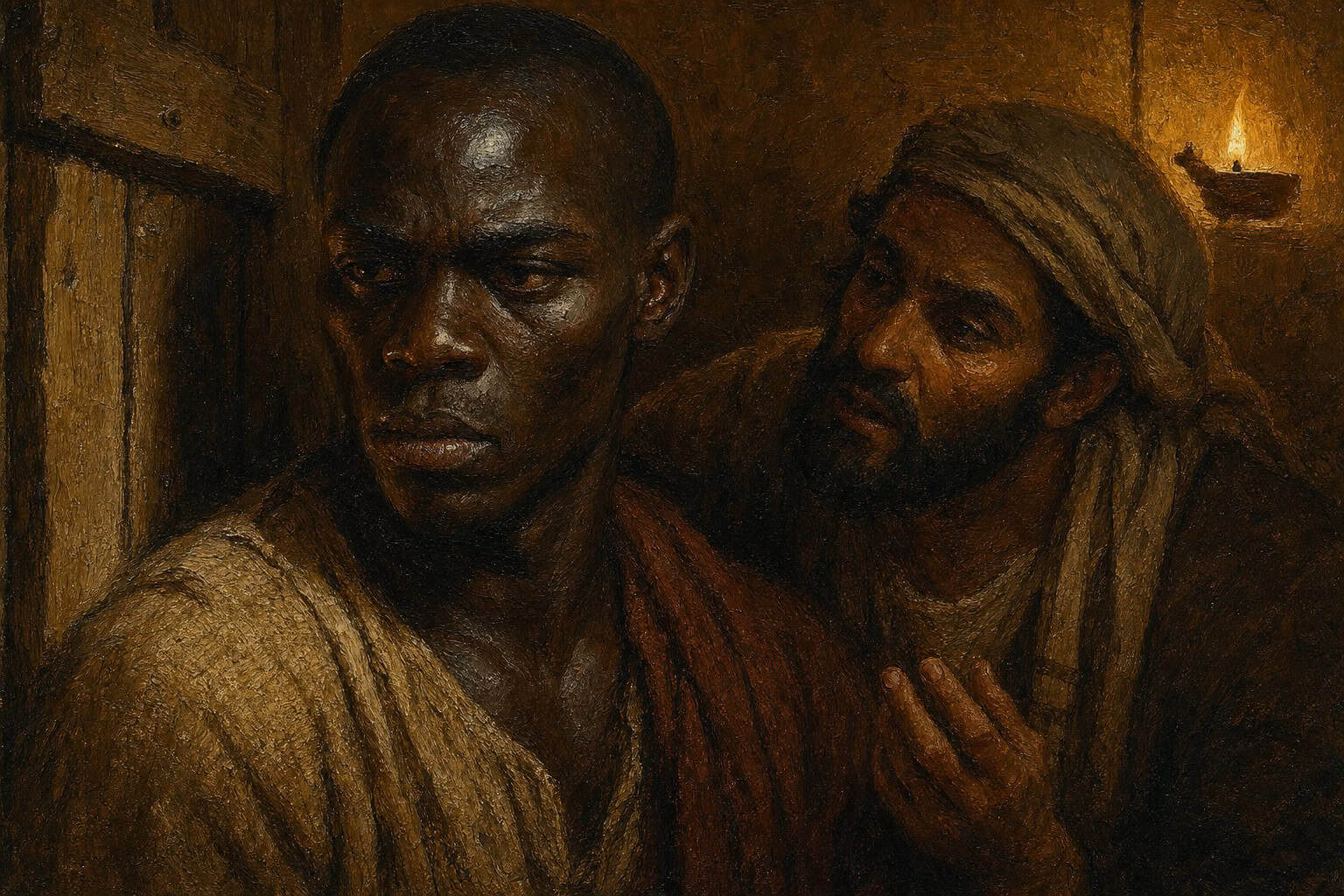
Someone stumbles into the room, and the air changes. That is where Chapter 12 of Confessions to the Empty Chair puts you, standing beside a man who did not ask for what just walked in. A woman named Angela slips past him. Her words come loose at the edges, wet and slurred, the way speech goes when the drink has taken the wheel. She closes the door behind her. She turns and gives him a look, and he knows that look the instant he sees it. His stomach knots. He does not name the feeling as fear or as pity; he names it as a complication he cannot afford, and that single phrase tells you the shape of his whole inner life. He lives by cost. He keeps a ledger in the dark, and every person who enters gets weighed against it. You came here because you want to know where you belong, where you can breathe without holding your own stomach in. Watch this room and you will learn the thing by its opposite. Angela is not free here. She is loosened, not liberated, and there is a hard difference between those two. The wine has pulled her caution apart the way a hem gives out, one thread at a time, until the whole edge hangs undone. She feels bold. She is not bold; she is undone, and she cannot tell the two apart. He can. He sees her state before he sees her heart, and he notices that in himself and does not soften it for your comfort. She is a friend he feels no hunger for, and at the same time she is a body offering itself, and his own past has taught him what he is capable of when a body offers. So he does what he always does. He tests her. He weighs her. He files her under a category and starts calculating the exit. There is no gentleness in this precision, only self-protection dressed as thought. One man stands rigid, one woman leans toward him without her balance, a closed door at her back. But the smallness of the scene opens a wide and uncomfortable question about where a person can actually rest. Because a lowered guard can look exactly like openness while being only collapse. That gap, between how free we feel and how free we truly are, is the whole tension of the passage. And the strange thing is that he, the sober one, is more trapped than she is. She is drowning in what she mistakes for freedom. He is manning a station he mistakes for a home.
The Rule That Guards the Wrong Thing
He has a code, and the first rule of it sounds like something a decent man would keep. Never take advantage of someone not in their right mind. Say it out loud and it could belong to a saint. But he does not let you rest in that reading. He strips his own reason bare, right in front of you, and the honesty of it goes cold down the spine. He does not hold this rule because Angela is precious to him. He holds it because his pride demands a particular kind of victory and a drunken yes would cheat him of it. He needs the woman who comes to him to want him fully awake, hungry, choosing him with clear eyes and no bottle to blame it on afterward. A yes she could later disown is worthless to him. The conquest has to be genuine or it does not feed the hollow place it was meant to fill. So the boundary is real and the root of it is rotten, and both of those things are true at once. This is the tension the book refuses to let you look past: even our virtues can be vanities wearing a clean shirt. We can decline to harm someone and still be feeding ourselves, dressing our self-image in decency while the fit is all wrong. Hold that against your own question. You want a place where you feel free, but freedom built on performance is only a nicer cage. This man has built a home inside his own image, and every rule he keeps is a load-bearing wall of it. He is not free in this room. He is its warden, guarding himself as if he were both the prisoner and the lock. Meanwhile Angela closes the distance. She hugs him, presses herself against him, and he feels the pull of it in his own body even while he refuses her. His voice comes out tighter than he meant, and then he does something deliberate and strange. He reaches on purpose for crude, ugly words, the vulgar language of sex at its most stripped and animal, hoping the crudeness will disgust her and drive her out. It is cruelty aimed as mercy, filth held up as a shield. He would rather apologize for vile speech in the morning than clean up the wreckage of a night that never should have happened. And under all the tactics runs a truth he cannot fully govern. His mind builds defense after defense, but his body answers a call the intellect is straining to refuse. He feels a flicker of the very desire he does not want. That is the loyal traitor of the flesh, the part of us that knows things the head spends years pretending not to know. You feel it too, when you sit in a room that should be safe and your whole skin tells you it is not. Belonging is not an argument you win. The body has already voted.
The Hug That Was a Trap
She seems to surrender. Fine, okay, she says, just one more hug before I go. His shoulders drop a fraction. Something almost tender surfaces in him then, a rare unguarded note in a man who guards every inch of himself: holding a woman always feels good, he admits, and for one breath the admission is simply human. So he opens his arms. The hug is a lie. The moment he holds her, she drives her face up to his and kisses him, and the whole careful structure he has been building comes down at once. He shoves her back. Two feelings crash together in the same instant, revulsion and desire, wet and tangled in his chest like rope that will not come clean, and those are the two feelings you are told you can never hold together. His voice drops cold. He reaches one last time for the crude threat, the final weapon left in his hand, trying to shock the room back under his control. This is the turn of the scene, the exact point where his calculation collides with a body that will not be managed by any rule he writes. He wanted a clean situation. He got the mess anyway. And here is what the moment finally lays open: no rule protects you when your whole life is built on being desired. Angela’s trap was a small one, a feint hidden inside a hug. The trap he built for himself is enormous, and he lives inside it full-time. He cannot be a simple friend refusing a drunk woman, because friendship was never the room he actually lived in. He lives in the transaction, in the running tally of who wants him and how badly, and even his refusal is a move on that board. You asked where you belong, where you feel free. Learn this man’s lesson in the negative and it will save you years. He belongs nowhere. Every room is a stage. Every woman is a mirror he uses to check the state of his own worth. Every act of kindness is a maneuver with an angle. That is the real prison, and the cruelest part is how much it looks like an ordinary life, furnished and lamp-lit and warm. Freedom is not doing whatever the body wants; Angela believed that and she was going under in it. Freedom is not flawless self-control either; he believed that and he was locked inside it with the key in his own pocket. Freedom is not the absence of a locked door but the presence of a self you do not have to guard. Somewhere in that shoved-back moment, in the cold voice and the flicker he hated feeling, the whole hidden cost of his life comes due at once. He does not see the bill yet. You can.
Freedom is not the absence of a locked door but the presence of a self you do not have to guard.
What the Cold Voice Costs Him
The kiss is over. He has pushed her back and dropped the temperature of his voice to something flat and hard, and Angela is left standing there holding the wreck of her own boldness. Something in this scene wounds both of them, though the book does not hand you the tidy morning after, and neither will I. What matters for your question is the debris left on the floor. He protected the friendship. He kept the code. He obeyed his own rule to the letter. And still nobody in that room moved one step closer to the thing you are actually asking for. Angela came reaching for a warmth she could not hold while sober, grabbing at a man who felt like belonging only because he was near and she was undone. That is longing that outruns its object, the ache for wholeness that seizes the closest body and names it home before the mind can object. The book is honest about how ordinary that mistake is. We confuse being wanted with being known. We confuse a warm room with an actual home. He, for his part, walks away with his image polished and his soul no larger than before. His refusal was correct and hollow in the same motion, and that pairing is one of the hardest truths the book carries: you can do the right thing for a reason that leaves you exactly as empty as the wrong thing would have. Shame runs through all of it like a cold draft under the door. Hers will come in the morning, in the memory of a rejection she half-invited and cannot take back. His waits in the mirror he will not look into straight. Shame is the sense of being seen and found wanting, the animal wish to cover yourself and vanish from your own gaze. Angela will feel it as the sting of being pushed away. He will feel it, if he ever lets himself, as the knowledge that even his mercy was working for him. Neither of them is free. Neither of them belongs. They shared four walls and one lamp and remained strangers to each other and, worse, to themselves. This is the fallout the question needs to sit with, without flinching. You do not find belonging by being desired, because desire can be drunk, or counterfeit, or vain, or all three at once. And you do not find it by mastering yourself, because a well-run prison is still a prison, no matter how clean the floors. The place where you feel free has to be a place where you are seen whole and kept anyway, hunger and history and failure and all, and where you no longer have to perform a single thing to earn the keeping. That home does not appear in this chapter. Its absence is the wound the chapter keeps pressing, and the pressing is the whole point of it.
The Home No Rule Can Build
Come back to the words you typed, plain and hopeful: you belong somewhere you feel free. Set them down beside this scene and let the friction do its teaching. Freedom is not the loosened tongue of the drunk who grabs at the nearest warmth and calls it love. Freedom is not the iron code of the man who prices every touch before he allows it. Both of them stand in that one dim room unfree, one dissolving and one on guard, and the distance between their two kinds of unfreedom is the exact size of the loneliness you are trying to walk out of. The book knows a harder and truer thing than either of them does. You feel free where you are fully known and still loved, where the last locked and shameful corner of you is opened and no one bolts for the way out. That is why the flesh keeps telling the truth the intellect keeps denying. The body was made for that kind of being-held, and it will not stop reaching for it even after the mind has quietly settled for less. The man’s tragedy is that he wants the reaching without the surrender. He wants to be desired without being truly seen, because being truly seen would end the game that keeps him fed. You have a choice he has not yet made, and this chapter is where you can watch the two paths split. You can keep hunting for freedom in rooms where you must charm, must impress, must earn your place with usefulness or beauty or a lowered guard, and you will stay a polite stranger in every one of them, forever manning a station and calling it a life. Or you can begin to suspect that belonging is not a place you locate on a map but a face that finds you first, one that has already looked at the very worst of you and stayed in the chair. There is an old Catholic instinct underneath all of this, older than any code this narrator invents for himself. We were made to be known by a love that does not calculate, that keeps no ledger, that does not weigh us at the door. Every counterfeit belonging is a real hunger aimed at that one true thing and missing. Confessions to the Empty Chair will not let its narrator off easy, and it will not let you off either, and that severity is itself a kind of mercy, because it takes your longing seriously enough to refuse you the cheap answers. Go into this chapter and watch a man protect everything he owns and possess nothing that matters. Watch how close warmth can lean in and still be only a stranger’s arms. Then ask, quietly, which rooms in your own life are homes and which are stations you have simply learned to man. The freedom you want is real. It is only that neither of these two people is standing anywhere near it.