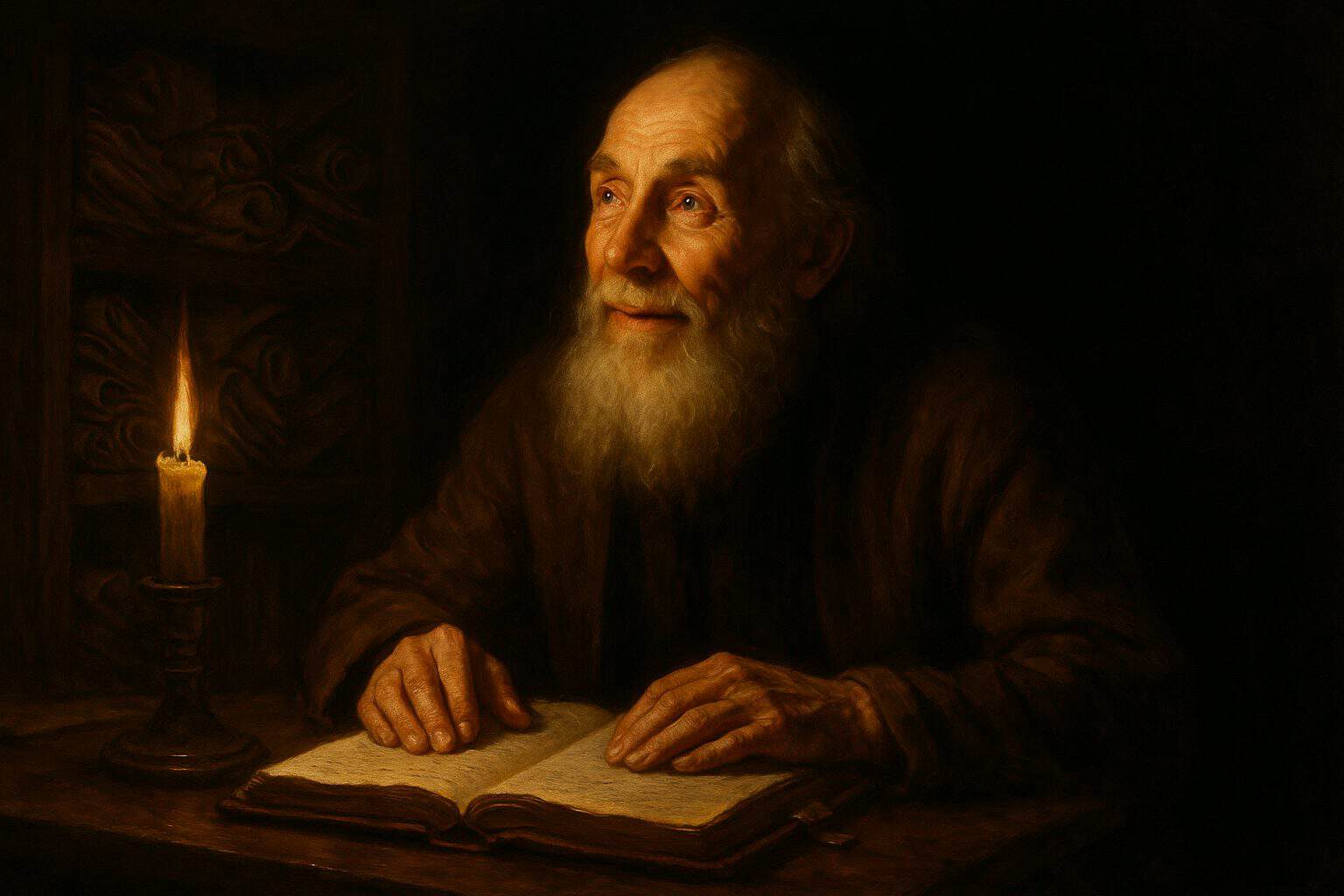
How understanding spirals through a soul’s history, each return revealing what was always there
The phenomenon of understanding does not arrive like a telegram, complete and decoded. It circles back upon itself, a hawk riding thermals of meaning that rise from the lived terrain below. In Anthony Adoré’s two memoirs, we witness this circling as it actually occurs—not as theory but as the very movement through which a life comes to know itself.
The Archaeology of Awareness
“Intelligence feeds awareness and awareness is the catalyst for change,” Adoré writes, naming a structure that pervades both Fractions of the Soul and Confessions to the Empty Chair. But this awareness does not simply accumulate like sediment. It moves in spirals, returning to the same experiences with different eyes.
Consider how he describes the discovery of Jane’s infidelity: “Her behavior, word choice, posture, and distance passed through my instinctual awareness, and I recognized the truth of her infidelity.” The body knew before the mind could articulate. Yet this knowing required a second movement: “Later, the pieces fell into place, each one a sickening click in a lock.” The understanding arrives twice—first as embodied recognition, then as cognitive assembly. Between these two moments stretches the hermeneutic arc of comprehension.
This doubling appears everywhere in his corpus. Old rituals that once served their purpose become visible only after “growing awareness” reveals them as finished, their grooves worn smooth by repetition that no longer corresponds to present need. The awareness must first emerge before it can recognize what it has outgrown. We do not simply wake up understanding; we wake up to the possibility of understanding what we have already lived through.
The Feminine as Hermeneutic Horizon
“Understanding Jane’s actions… required looking beyond our story into the cold, merciless logic of feminine nature: hypergamy.”
The feminine appears in Adoré’s work as that which perpetually recedes from direct comprehension, demanding ever-widening circles of interpretation. “Seeing a woman’s secrets is impossible or as equally possible as illuminating the singularity,” he observes, placing feminine interiority at the event horizon of understanding itself.
Yet this impossibility generates its own method. To understand Jane required “a deep dive into the savage logic of our evolutionary past.” The particular woman dissolves into the species-pattern, hypergamy emerging as the interpretive key that unlocks individual behavior. But even this key turns in the lock without final resolution: “I saw an old impulse at work in the feminine soul that filters and ranks suitors for the best outcome—call it hypergamy.” The phrase “call it” marks the provisional nature of even this hard-won understanding.
The hermeneutic circle here moves between the singular woman and the archetype, between present betrayal and evolutionary inheritance, between emotional wound and biological imperative. Understanding cannot rest in any single register but must continually translate between them, each translation revealing new dimensions while concealing others.
The Laboratory of the Soul
“Here, I first learned to be a scientist of the soul,” Adoré writes, marking a methodological turn that transforms understanding from passive reception into active investigation. But this science operates through a peculiar phenomenology that Husserl might recognize—a bracketing that paradoxically deepens rather than distances engagement.
The precision required becomes itself a spiritual discipline: “communication errors tend to increase as one’s rigor and precision of internal examination concerning personal thoughts and feelings decrease.” The soul must become both experimenter and experiment, observer and observed. This doubling creates the space where understanding can occur—not as external analysis but as internal recognition.
The movement resembles what happens when “considering new ideas allowed you to ‘move’ inward and perceive new things—things not considered in such detail from your original position.” Understanding requires this deliberate displacement, this willingness to occupy different vantage points within one’s own experience. The hermeneutic circle becomes a spiral staircase within consciousness itself, each turn revealing previously hidden angles of the same central mystery.
The Tragedy of Transmission
“Most of the time, my prediction of not being understood comes true. The evidence rests in your absence, dear observer.”
Here understanding confronts its own limits—not in the object to be understood but in the possibility of sharing what has been understood. The hermeneutic circle that operates within the individual consciousness breaks down at the threshold of intersubjective communication. Adoré addresses an absent reader, one whose very absence confirms the failure of understanding to bridge the gap between souls.
This failure appears most starkly in moments of emotional confrontation: “In that moment, I understood that logic, my trusted sword, was utterly useless against the shield of someone else’s emotional reality.” Understanding here splits into two incommensurable modes—the logical and the emotional—each complete within its own circle but unable to penetrate the other’s circumference.
Yet even this failure becomes productive. The recognition that others “create a version of external reality inside themselves and would rather interact with their created derivative” itself constitutes a form of understanding—a meta-understanding that comprehends the limits of comprehension itself.
The Theological Spiral
“These tensions do not mark God as inconsistent; they reveal the terrain where He meets a fallen world without shattering human freedom.”
In the theological register, the hermeneutic circle achieves its widest arc. Divine intention and human freedom create a tensile field where understanding must hold contradictions without resolving them. The tensions do not indicate failure but rather mark the precise points where infinite and finite understanding intersect without merging.
Adoré’s insight that “Unlike angels, we are now born into ignorance and must climb toward wisdom through years of pain and discovery” places the hermeneutic circle within salvation history itself. Human understanding becomes essentially temporal, essentially effortful, essentially painful. We understand backwards what we must live forwards, each return to experience revealing layers that could not have been seen in the first passing.
This theological dimension transforms the entire phenomenology of understanding. “Our love was not a succession of distractions designed for maximum pleasure and minimum discomfort; it was a continual search for deeper meaning.” Love itself becomes hermeneutical—not a state to be achieved but an ongoing interpretation of what binds two souls together, an interpretation that deepens with each revolution of understanding.
The Paradox of Patterns
“Patterns reveal understanding and interpretation—how one situates themselves in their world of involvements,” Adoré observes, identifying the deep structure that makes the hermeneutic circle possible. We understand through patterns, yet the patterns themselves only become visible through understanding—a perfect circularity that might seem vicious except that it actually generates meaning through its very recursion.
The stability of patterns provides the ground for hermeneutic movement: “We do not experience radical and spontaneous transformations of one thing into another… Rather we experience objects and things through their stability.” This stability allows understanding to return, to recognize, to deepen. Without it, each moment would be absolutely novel, and understanding would have no purchase.
Yet patterns also trap. Those “old rituals that served a purpose once upon a time” persist precisely because they have worn grooves in consciousness. The hermeneutic circle must sometimes break its own circumference, must spiral outward into new territory, before it can return with expanded understanding.
The Wisdom of Wounds
“I learned that, for the most part, women communicate interest through action, not direct declaration.” This learning emerges not from abstract study but from lived disappointment, from the gap between expectation and reality that forces consciousness to revise its interpretive frameworks.
Each wound in Adoré’s narrative becomes a hermeneutic opening—a place where old understanding proves insufficient and new understanding must be won through pain. The special awareness that “enables them to choose to endure pain and avoid pleasure, in contradistinction from those simple people and animals bound to instinct” marks the specifically human capacity to transform suffering into comprehension.
The spiral of understanding moves through these wounds, each return bringing not just knowledge but wisdom—the kind of understanding that has been tested in the fire of experience and emerged purified. “I took it all in, trusting that beneath these many different masks, a single, authentic self held everything together.” This trust itself becomes hermeneutical, a faith that meaning exists even when it cannot yet be grasped.
The Eternal Return of Understanding
In Adoré’s lived phenomenology, understanding never completes itself. It remains always in motion, always returning, always discovering in the familiar something that was always there but never before seen. The hermeneutic circle of a life does not close—it spirals outward and inward simultaneously, each revolution both departing from and returning to the center that is the self seeking to understand itself.
“Desire is not meant to be an end in itself… but instead requires an object outside of itself, ‘knowing,’ to pursue in order to actualize its purpose.” Understanding, like desire, reaches beyond itself toward what it seeks to comprehend, yet in that reaching discovers primarily its own structure, its own movement, its own inexhaustible depth.
The memoirs themselves enact this hermeneutic circling—Fractions of the Soul understanding what was lived, Confessions to the Empty Chair understanding what was understood, each book a revolution of the spiral that reveals new depths in the same life. The reader enters this circle, adding their own revolution, their own understanding that understands Adoré’s understanding, the spiral continuing beyond any single consciousness into the shared hermeneutic space where meaning lives between souls even when perfect communication fails.
This is how understanding actually occurs—not as a straight line from ignorance to knowledge but as an ever-widening gyre that encompasses more with each turning, yet always returns to the center where the self stands, trying to understand what it means to be this particular existence, thrown into this particular world, circling toward a wisdom that arrives, when it arrives at all, like grace.