How understanding arrives not as possession but as the widening of where we stand
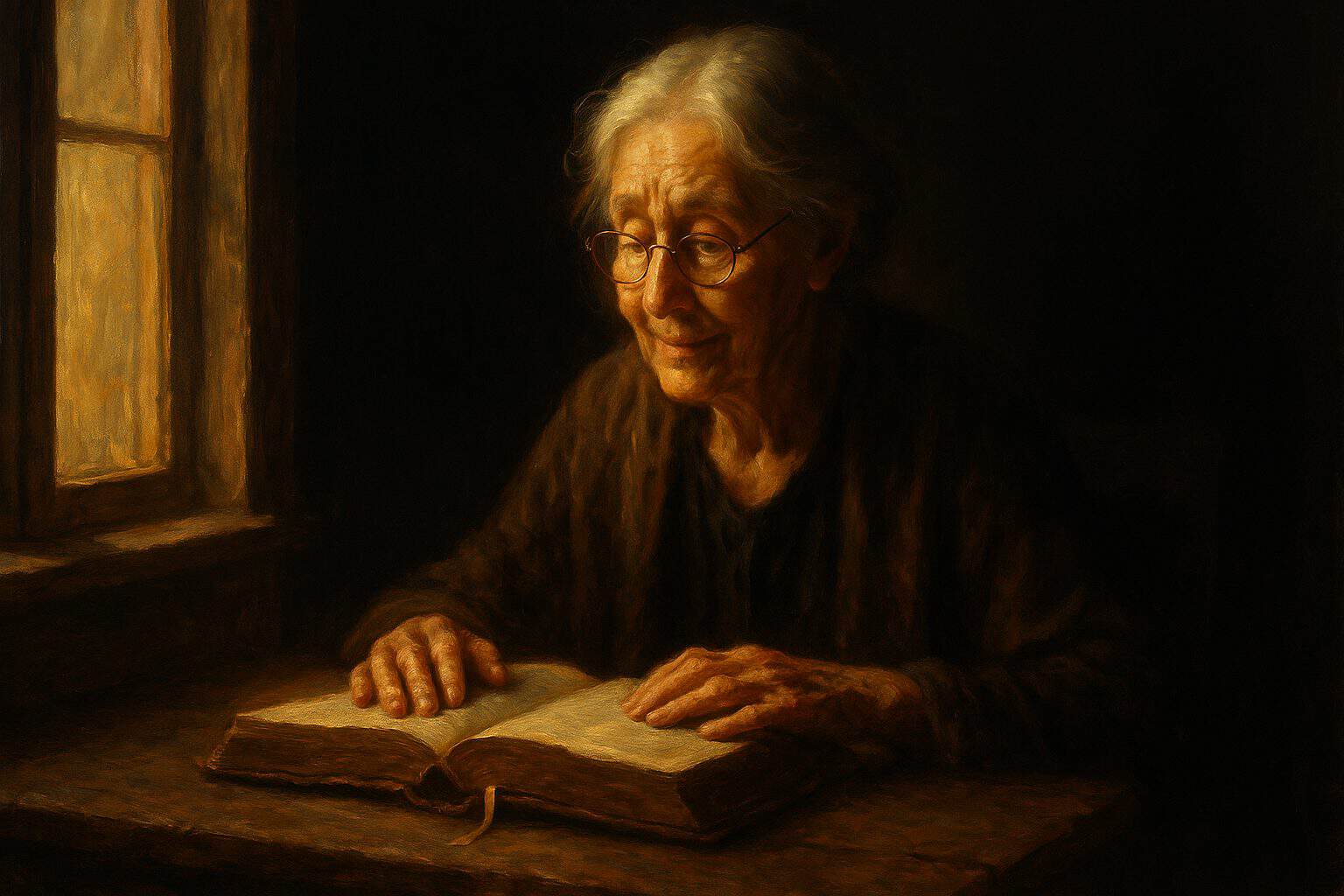
The book lies closed on the table, its spine catching the afternoon light. You reach for it with a peculiar anticipation—not the hunger for information, but something more like the readiness before conversation with an old friend whose depths you’ve never fully sounded. Your fingers know the weight of it before lifting, the texture of its cover speaking to your palm in a language older than words. This is not the approach to an object but an encounter with a presence that has been waiting.
The Horizon We Carry
Every act of reading begins from somewhere. Not merely the physical location—this chair by the window, that bench in the park—but from within a horizon of understanding that we bring to the text before the first word is encountered. We come bearing the accumulated sediment of every book we’ve ever opened, every conversation that has shaped us, every experience that has taught us what words can do. As Gadamer knew, we never read from nowhere.
“Much of what is written in this book passed at least twice through my perceptual lens: first through experience and second through articulation.”
The phenomenology of this pre-understanding reveals itself in the moment before opening a familiar text. Your copy of Augustine’s Confessions, read first in youth, then in middle age, now approached again. The book hasn’t changed—these same words have waited patiently on these same pages. Yet you bring to it now the horizon of losses that have taught you what restlessness means, relationships that have shown you the weight of the phrase late have I loved Thee. The text remains constant; the horizon shifts like a landscape seen from a train window, each reading revealing contours invisible from previous vantage points.
This horizon is not a limitation but a condition. Without it, the words would be mere marks, as meaningless as a musical score to one who has never heard sound. The child learning to read discovers this gradually—how the strange shapes resolve into letters, letters into words, words into worlds. But even the accomplished reader carries this horizon, invisible until it meets its limit. Open a text in a language you don’t know, or from a tradition entirely foreign, and suddenly the horizon announces itself through its inadequacy, like lungs discovering air through breathlessness.
The Living Dialogue
Reading presents itself as dialogue, though the other voice seems fixed in ink. Yet attend to what actually happens: you read a passage about loss in Dostoevsky, and suddenly your own grief, dormant for months, stirs in recognition. The words on the page haven’t simply conveyed information about someone else’s sorrow—they’ve awakened what was already within your horizon, giving it articulation, perhaps for the first time.
This is the hermeneutical circle in its lived manifestation: you understand the text through what you bring to it, yet what you bring is transformed by the encounter. Neither reader nor text remains unchanged. The words that seemed opaque on first reading suddenly bloom with meaning after life has tutored you in their vocabulary. The passage about betrayal that was merely theoretical becomes a mirror after trust has been broken. The text teaches, but only what experience has prepared you to learn.
Watch a reader in deep engagement with a book—how they pause mid-sentence, eyes lifting from the page not in distraction but in recognition. Something in the text has touched something in their horizon, creating a fusion that is neither purely textual nor purely personal but something new, born from their meeting. They might mark the passage, but what they’re really marking is this moment of fusion, this place where understanding leaped the gap between then and now, there and here, author and reader.
The Prejudice That Enables
We approach texts with what Gadamer called prejudices—not in the pejorative sense, but as the necessary pre-judgments that make understanding possible. The teenager opening Crime and Punishment brings their nascent sense of justice, their still-forming understanding of consequence. The mother returning to Anna Karenina after divorce brings a horizon forever altered by the lived knowledge of how marriages unravel from within.
These prejudices are not obstacles to overcome but the very medium through which understanding occurs. Consider how differently the same parable reads to the child, the skeptic, the believer, the scholar. The prodigal son’s return means one thing to someone who has squandered and returned, another to someone who has waited and forgiven, yet another to someone still in the far country feeding swine. The text doesn’t change, but it meets different horizons, creating different fusions, yielding different truths—all legitimate, none exhaustive.
“People are neither mind-readers nor heart-readers; they only know what you show them and tell them, and even then, their apprehension will never perfectly reflect your effort.”
This applies as much to texts as to persons. The author’s intention, that theoretical ghost that haunts interpretation, can never be perfectly recovered. But more importantly, the text exceeds its author’s horizon just as a child exceeds their parents’ dreams. Words set down in one century speak to conditions their author never imagined. Augustine writing in Carthage couldn’t have known how his words would sound to someone reading them in a Manhattan apartment, yet the fusion happens, understanding emerges, truth discloses itself in ever-new ways.
The Temporal Structure of Understanding
Understanding unfolds in time, not as a single act but as a process of return and revision. The books that matter most to us are those we read repeatedly across the years, each reading a new ring in the tree of interpretation. The child reads The Little Prince as a story about a boy and his flower; the adult discovers an allegory of love and loss; the elder finds a meditation on what matters when time grows short.
This temporal structure reveals itself most clearly in the phenomenon of re-reading. You return to a text after years away, and it’s as if you’re meeting a different book. Passages that seemed central fade into background; throwaway lines suddenly bear the whole weight of meaning. It’s not that you misread it before—rather, your horizon has shifted, allowing different aspects of the text to show themselves. The book waited patiently for you to become the reader it needed.
Memory plays its strange part in this temporal unfolding. Often we remember books imperfectly but meaningfully—attributing to them insights they don’t quite contain, remembering scenes that upon return prove different than our recollection. Yet these misrememberings often capture something essential that strict accuracy would miss. The horizon of memory fuses with the horizon of text to create understanding that is neither purely faithful nor simply false but something more like the way a jazz musician interprets a standard—honoring the melody while making it speak anew.
The Wound of Misunderstanding
Not all fusion succeeds. Sometimes horizons meet without merging, like oil and water occupying the same space without mixing. You hand someone a book that changed your life, and they return it with polite indifference. The words that opened worlds for you remain closed doors for them. This isn’t failure—it reveals the genuine otherness of horizons, the real work required for understanding to occur.
The experience of being misread—whether as author or in conversation—illuminates this gap through pain. “I know I disturb more than I console, so I redact myself to preserve a fragile peace. I expect my words to be misread.” This expectation born of experience recognizes that the fusion of horizons cannot be forced. Sometimes the best we can do is create conditions where understanding might emerge, like a gardener preparing soil for seeds that may or may not germinate.
Yet even misunderstanding teaches. The book that frustrates us, the passage that remains opaque despite repeated attempts, the interpretation that seems willfully wrong—these too expand our horizon by showing its limits. We learn not just what we understand but where understanding fails, and this knowledge too becomes part of the horizon we bring to the next encounter.
The Circle’s Expansion
The hermeneutical circle is not a closed loop but a spiral, each revolution wider than the last. Every text truly encountered changes the horizon we bring to the next text. Reading Augustine prepares us for Pascal; understanding Pascal opens new dimensions in Augustine. The conversation between texts within our horizon creates meanings neither text contains alone.
This expansion happens not through addition—simply reading more books—but through genuine encounter that transforms the horizon itself. One profound reading experience can reorganize everything that came before, like a new friendship that makes you see all your previous relationships differently. The horizon doesn’t just grow; it deepens, becomes more complex, more capable of holding paradox and ambiguity.
Consider how certain books become unreadable after others have been absorbed. The simple moralisms that once satisfied now ring hollow after encountering genuine moral complexity in Dostoevsky or Morrison. Not because the earlier books were false, but because your horizon has complexified beyond what they can address. This isn’t loss but transformation—the child’s books remain on the shelf, honored for what they were, no longer needed for what you’ve become.
The Tradition We Inhabit
We read within tradition, whether we know it or not. Every text emerges from a conversation already in progress, addresses questions posed by earlier texts, speaks in languages shaped by centuries of use. To read is to enter this conversation, to take up residence within traditions of interpretation that precede and exceed us.
The phenomenology of this inhabitation shows itself when we encounter truly foreign texts—perhaps ancient Chinese poetry or medieval Islamic philosophy. Suddenly we feel our tradition as tradition, the way a fish might feel water only when lifted into air. The struggle to understand across traditions reveals how much of our reading depends on shared assumptions, common references, inherited patterns of thought.
Yet tradition is not prison but possibility. It provides the initial horizon that makes understanding possible while remaining open to transformation through encounter with other traditions. The Western reader approaching the Bhagavad Gita brings Augustine and Kant as preparation, but if the encounter is genuine, returns to Augustine and Kant with eyes tutored by Krishna’s teaching to Arjuna. The horizon expands to incorporate what was foreign, making it familiar without erasing its otherness.
The Ethics of Reading
Reading emerges as an ethical act, a practice of hospitality toward the other who speaks through text. The good reader, like the good listener, creates space for the text to be itself rather than forcing it into predetermined categories. This requires a peculiar combination of confidence and humility—confidence that your horizon can expand to meet the text, humility that the text may exceed your current capacity to understand.
The phenomenology of careful reading reveals this ethical dimension in its rhythm of approach and withdrawal, assertion and receptivity. You bring your full horizon to bear on a difficult passage, then pull back to let it speak on its own terms. You venture an interpretation, then test it against the text’s resistance. You allow yourself to be addressed, even accused, by words written centuries ago to someone else.
This ethical dimension intensifies when reading texts from wounded traditions—the writings of the enslaved, the colonized, the marginalized. Here the horizon we bring may be precisely what needs transformation. The comfortable reader encountering narratives of oppression must allow their horizon of comfort to be disrupted, their assumptions about the world to be challenged. Understanding requires not just intellectual adjustment but existential transformation.
The Gift of Understanding
When genuine understanding occurs—that moment when horizons fuse and meaning emerges—it comes as gift rather than achievement. You cannot force it through effort alone, though effort prepares the ground. It arrives suddenly, like recognition, like remembering something you never knew you’d forgotten.
These moments of understanding often come obliquely, when you’re not trying. You puzzle over a passage at your desk, then understanding arrives while walking, while cooking, while falling asleep. The horizon needed time to adjust, like eyes adapting to darkness. What seemed opaque suddenly becomes transparent, not because the text changed but because you’ve become capable of receiving what it always offered.
The joy of such moments—and it is joy, even when what’s understood is terrible—comes from the experience of expansion, of becoming more than you were. Your horizon now includes what it couldn’t hold before. You’ve been enlarged by encounter, made more capable of meeting the next text, the next person, the next experience that awaits understanding.
The Endless Conversation
We never finish reading, not really. Even texts we know by heart surprise us, revealing new facets as our horizon continues its lifelong transformation. The circle of understanding doesn’t close but spirals outward, each return to familiar texts a new departure, each new text a return to questions we’ve always been asking.
In this light, reading becomes a figure for existence itself—this ongoing encounter between the self we bring and the world we meet, each transforming the other in the endless conversation that constitutes a human life. We are always within the hermeneutical circle, always understanding from where we stand while that standing place shifts through the very act of understanding.
The book remains on the table, but you are not who you were when you first reached for it. Your horizon carries now what the encounter gave—not information possessed but transformation undergone. And when you next reach for a book, you bring this enlarged horizon to the meeting, ready for the next turn of the circle, the next fusion, the next gift of understanding that awaits.
This is the circle we read within—not a limitation but our human condition, not a problem to solve but the very structure through which meaning emerges, understanding deepens, and we become who we are through encounter with others who speak to us across time, across death, across all that separates and connects us in the human conversation. The circle expands with each genuine encounter, and we expand with it, forever reading, forever read, forever within the movement of understanding that makes us human.