Locked in with a longing you can’t earn or explain? A raw look at the boy who tried to kill desire by dissecting it, and what it cost him.
The Boy Watching the Feast From the Cold
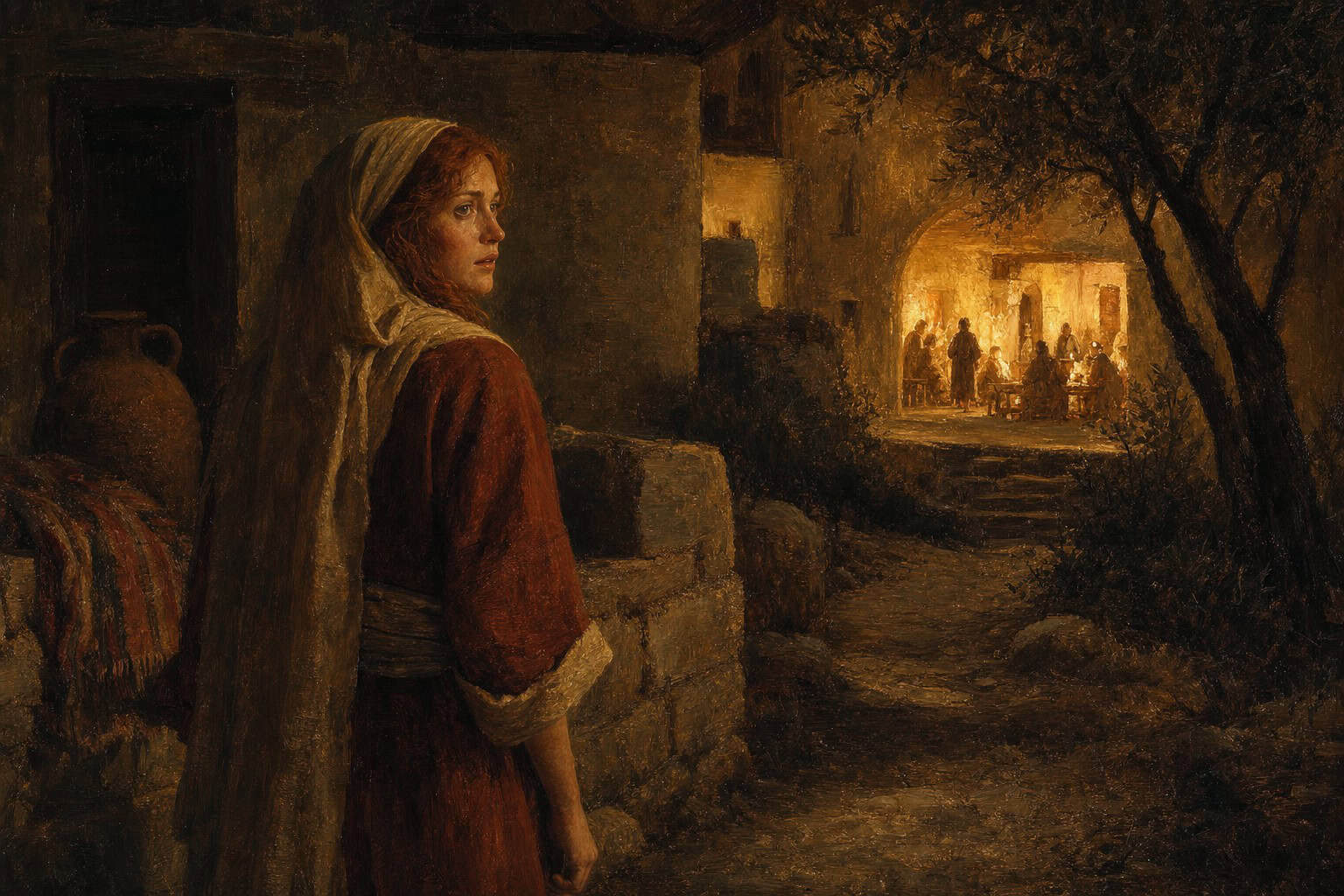
What do you do when the thing you want most refuses to arrive, no matter how good you try to be? That ache hums under this stretch of Confessions to the Empty Chair, and it starts long before any girl breaks his heart. It starts in a hallway of childhood, with a babysitter he could not name his fear of, with adults who spilled their tempers on him like scalding water, with rich kids who lived by rules he was never handed. He remembers the punishment at daycare, the way grown people gave to God what belonged to Caesar and to Caesar what belonged to God, mixing up the sacred and the ordinary until a small boy could not tell which was which. By junior high he has learned his place. He is outside, in the shadow, watching. He sees the pretty ones pair off with a single glance, no need for talk, no need for kindness of spirit. He sees them swap partners like children in a game of musical chairs, moving on to fresh faces when the appetite dulls. And he sees himself pressed against a wall, a contemplative creature staring at a warm hall full of feasting he cannot enter, envy and disgust burning in him at the same time. That doubleness is the wound’s true shape. He wants the feast and he hates the feast. He craves the warmth of belonging and he despises how cheaply it seems handed to everyone but him. Physical beauty, the thing that pulls bodies toward bodies, looks to him both holy and hollow, a gate that swings open for some and stays bolted for him. He is not merely lonely here. He is beginning to rot in a specific way, becoming the thing that circles the light because he was never let inside it. And under the resentment lives a hunger that will not name itself honestly. Not just to be included. To be wanted. To be chosen by a body and a soul at once, the way he watched others get chosen without effort. He has heard in church that he must love the world and not be shaped by it, that he must be made new in his mind and learn what is good. But love from behind a wall is a starved, twisted thing. He obeys, and obedience stings. He reaches for bread and his hand closes on stone. He asks for a fish and feels a snake coil in his palm. This is the cold ground he is standing on, shivering, long before he ever picks up his terrible instrument and decides the pain must be someone’s fault other than the world’s, or God’s, or his own.
Dragging the Living Thing Onto the Table
There comes a point when the ache grows unbearable, and the boy makes a decision that feels, to him, like strength returning to a numb limb. He will stop being love’s victim. He will become its judge. In the book’s own harsh figure, he resolves to drag the whole thing onto a dissection table, cut it open, and expose it as a fraud, a cold machine driven by instinct and pleasure and nothing more. Watch what he is really doing. He cannot have the warmth, so he will deny the warmth is warm. He cannot enter the feast, so he will declare the feast a swindle. If desire is only biology, only the pull of pretty flesh toward pretty flesh, then his exclusion is not a personal failure. It is a mechanism running as it was built to run, and he is simply the one clever enough to see through it. There is a bitter relief in this arithmetic. To reduce the girls to constructs, to appetites walking around inside beautiful skin, is to stop having to feel their pull and his own longing at all. You do not grieve a machine. You do not lie awake begging a machine to love you. But notice the cost hiding inside the maneuver. To put desire on the table, he has to lie down beside it, because it lives in his own chest too. The knife he raises against love is his own heart, and the flesh he opens is partly his. He tells himself he is exposing them, but he is deadening himself, cutting the very nerve that lets a person hope. And there is a lie in the diagram even as his hand draws it. The shallowness he condemns in the popular pairs is the exact thing he wants, badly, to belong to. His contempt is envy wearing armor. His theory of instinct is a story built to make his want look like wisdom rather than wound. He would rather be the cold surgeon than the boy at the wall. He would rather understand than ache. But understanding won from behind glass is not the same as being known, and he is not really seeking truth here so much as an anesthetic dressed up as truth. The older man telling this now can see it plainly. He can feel the young hand shaking as it holds the blade, pretending to be steady, pretending the trembling is precision. That trembling is the tell. No one takes a knife to a thing they truly believe is already dead. You only cut what you are afraid is still breathing, still capable of hurting you, still able to want you back and be lost.
The Machine That Bleeds When You Cut It
Here is where the whole clever operation fails, and where the book’s honesty cuts deepest. A machine, taken apart, does not weep. But the boy weeps. That is the turn. The thing he laid on the table refuses to behave like a mechanism, because it never was one, and neither was he. Reduce a girl to biology, to strategy, to the pull of chemistry toward the strongest match, and you can explain a great deal. You can explain some of it truly. People do choose with their bodies. People do move toward beauty. People do play the swapping game he watched from the dark, drawn and bored and drawn again. That layer is real, and he was not wrong to see it working in the bright hall. But it is one layer, and he built a whole cathedral of contempt on top of it. The girl he wanted to prove hollow was another soul, lived from the inside, carrying her own fears and hungers he never once bothered to imagine. She had a morning face and a private dread and a longing of her own he flattened into a diagram so he would not have to meet it. And the desire he wanted to prove mechanical would not stop aching in the exact place where machines feel nothing. He set out to kill his longing and only sharpened it against the stone of his theory. The dissection did not free him. It sealed him. Every wall he raised against the pain of wanting hardened into the wall of a cell he now had to live in alone. He thought he held the scalpel. He was the thing pinned open. This is the underground truth of the whole scene, the one he could not admit while the blade was in his hand: You cannot cut love open without cutting yourself, because the knife you carry is your own starved heart. What he learns, slowly and without any comfort softening the lesson, is that the coldness he manufactured to protect himself is the very ice that holds him fast. The harder he thrashes to escape the freeze, the more frost he breeds around his own limbs. He wanted to stand above desire, untouched, a man who had finally seen through the whole rigged game. Instead he became a man shut in a room with his own unmet longing, a blade slick with his own blood cooling in his grip, and still, God help him, wanting to be loved by the very people he had just declared incapable of love. The verdict he pronounced over them was the verdict he could least bear to hear pronounced over himself.
You cannot cut love open without cutting yourself, because the knife you carry is your own starved heart.
Living in the Cell the Knife Built
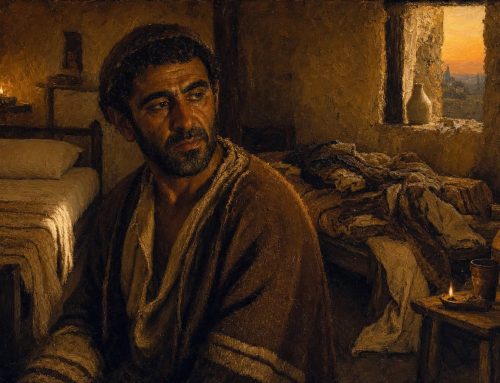
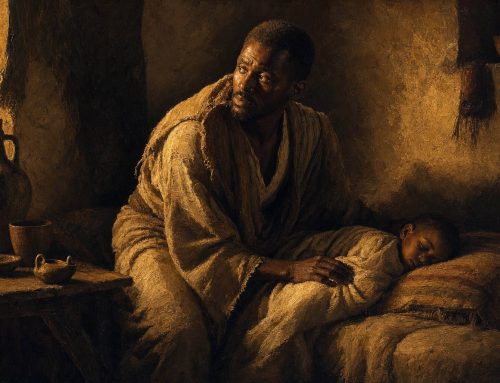
What comes after such a decision is not relief but a long, quiet imprisonment, and the book refuses to rush him out of it. He has his theory now. He has proven, to his own satisfaction, that love is a fraud and girls are constructs and the feast is a cheat. And it has bought him nothing. The world did not grow warmer for the diagnosis. It grew more distant, because a man who dissects everyone can be close to no one. He carries the old wound of exclusion into every room, and now he carries the weapon too, and the weapon keeps away the very warmth that might have closed the wound. This is how a young rage curdles into an old affliction. The hatred he built to shield the boy becomes the slow poison that ages the man across decades, until he can no longer tell where the resentment ends and he begins. He walks around holding himself up on his own aching shoulders, insisting he needs no one, and the effort of that lonely holding is precisely what grinds him down. There is a false potency in the posture, a hard masculine pride that says, I can bear this, I do not need the feast, I am strong enough to stand out here in the cold. But the older narrator sees the con folded inside the pride. Bearing the weight became a way of never once setting it down. And the hardest question he puts to himself has nothing to do with proving love a machine. It is this. Who was he refusing to see when he reduced them to appetites? What tenderness, what private fear, what soul inside each of those girls did he flatten so he would not have to feel his own smallness standing before it? He cannot answer it cleanly. He does not pretend to. He sits inside the not-knowing and lets it be uncomfortable. And where was God while all this cutting went on? Not up in the bright hall, calling him inside to the warmth. Nearer than that, and far stranger. Present in the very room where the boy lay bleeding on his own table, quiet, not fixing it, not melting the ice, not handing over the belonging he begged for. Just there, in every tear the boy would not admit he was crying, close enough to feel his breath. The silence he took for abandonment was a hand resting on his shoulder in the dark, teaching him through the deprivation itself, withholding the easy bread because the stone in his chest had something in it that needed breaking first.
What the Blade Could Not Kill
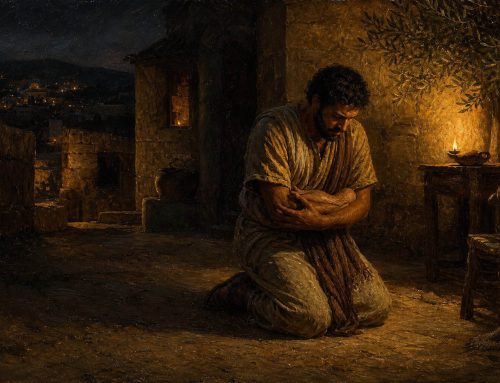
So where does a man land after years spent trying to murder his own longing with a theory? Not in triumph, and not in tidy peace. He lands in the discovery that the thing he tried hardest to dissect is the very thing that kept him alive. The desire for love he called a fraud turns out to be the last honest part of him, the part that would not lie down and play dead, the part that wept on the table when it was supposed to only leak fluid and cool. This is the quiet dignity buried in the grim episode. His hunger for union, for a real other, for a warmth larger than chemistry, survived every argument he built against it. He wanted, in the end, exactly what everyone at that feast wanted. He simply could not admit it without admitting his own exclusion, and so he wrapped the want in scorn and called the scorn insight. The book does not let him off for that. It does not say he was right to reduce them, or that his own suffering earns him the right to their contempt. It sits inside the failure and names it a failure, without flinching. But it also refuses to leave him a machine. It insists, against his younger self’s cold verdict, that he was a soul the whole time, and so were they, every one of them, and that the longing itself was holy even when he handled it with a knife. What Confessions to the Empty Chair offers here is not a cure for the loneliness but a truer name for it. If you have ever tried to think your way out of wanting someone, ever tried to prove love small so it would stop hurting, you already know the cold room he is describing from the inside. You know the frost you breed when you try to stop the ache by outsmarting it. And you may come to suspect, as he slowly does, that the way out was never the blade at all. It was the terrifying, undefended act of staying at the table, letting the living thing stay alive in his open hands, wound and hunger and hope trembling there together, with God seated close in the dark, saying nothing, refusing to leave the room.