Wondering how to eliminate sexual desire? A raw meditation on longing, death, and why the body reaches for another when it cannot bear the silence.
The Phone That Rang Before It Rang
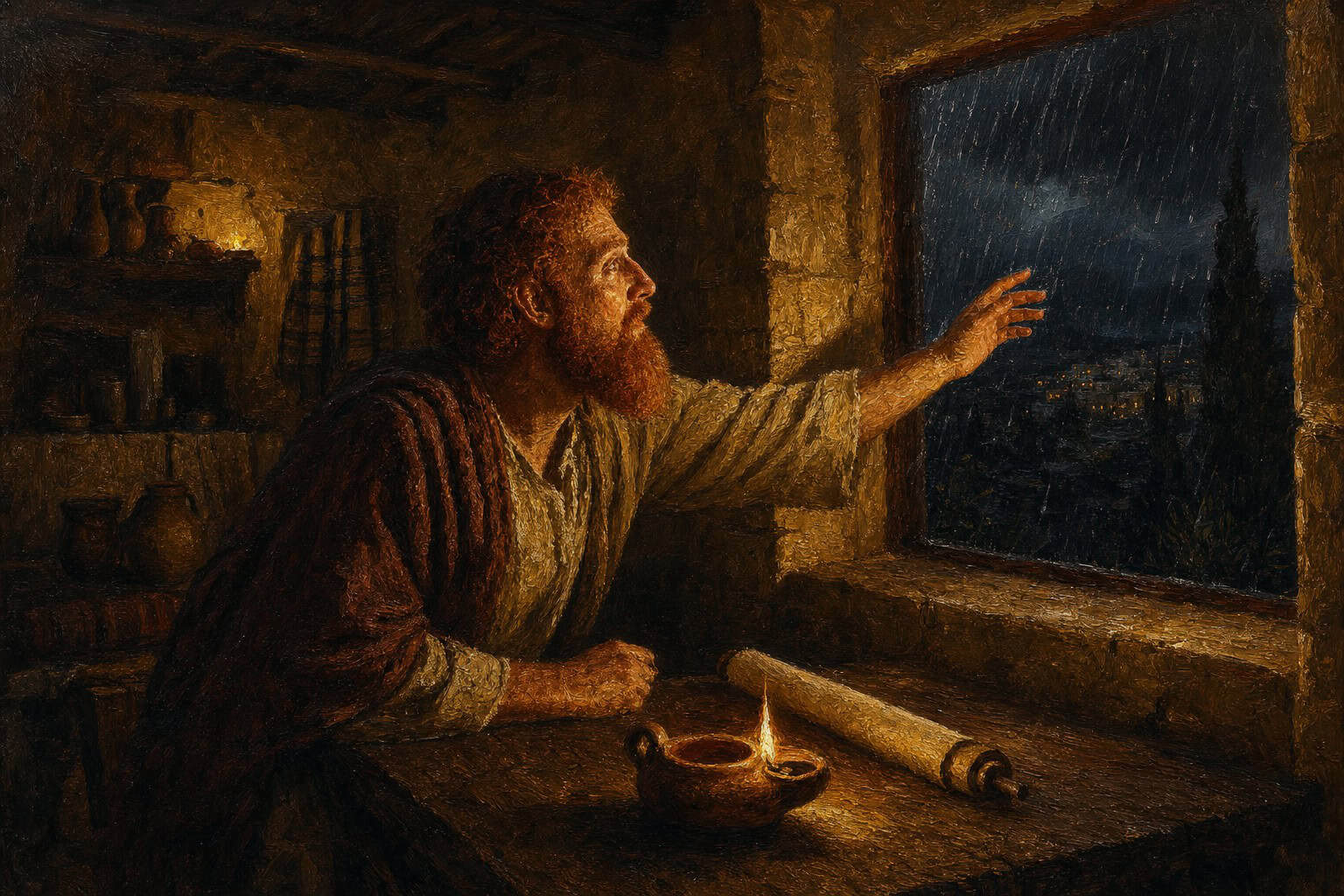
You want to know how to switch it off. The wanting, the pull, the ache that arrives uninvited and stays too long past its welcome. You have prayed against it. You have starved it, shamed it, promised God you would master it by morning, and still it returns like weather nobody ordered. I understand the request because I have made it myself, kneeling on a cold floor in the dark, asking to be delivered from my own body as if the body were a stranger who had broken in. But look first at where such wanting comes from, because in Confessions to the Empty Chair it does not begin in the flesh at all. It begins with a flash of lightning and a clap of thunder that woke a man in the rain, moments before the phone rang. He answered before the caller had said a single word and told her, flatly, ‘I know.’ His grandmother was gone. He had known this kind of thing before, at three years old, known that someone he loved was going to die, and now he knew again, conclusively, the way certain souls are made to know what the rest of us are mercifully spared. This is a man who does not console; he disturbs. He has learned to redact himself to keep a fragile peace, because he expects his words to be misread the instant they leave his mouth. So he had never trusted his grandmother to see him clearly, and he had never trusted God to grant her that sight either. Theirs was not a warm exchange. It was a careful distance he was practiced at holding, a coldness he mistook for protection, and now death had shut the door on any warmth he might still have offered her. The overwhelming thing in the scene is not the premonition, though it stuns. It is the regret pressing up underneath it like water under ice. Words left unspoken. Feeling held back. He calls it a kind of burial, the way the women in his life keep going under the weight of everything he never managed to say aloud. Notice what he does next, because it is the exact thing you came here asking about. Faced with that final silence, that flat negation, he does not fall to his knees in prayer. He turns to bodies. His affairs take on a new and defiant meaning overnight. And that turn tells you something you may not want to hear about your own desire and about the freedom you think you are chasing when you ask how to kill it.
When the Grave Makes You Hungry
He names it without flinching: sex against death. Standing at the raw edge of that fresh silence, he asserts life against negation, pleasure against pain, company against the loneliness that follows a coffin home. This is the part your question keeps missing. You imagine desire as a hunger of the flesh, a simple appetite you might diet away with enough resolve and cold water. But watch him closely and you see it is not appetite at all. It is fear wearing appetite’s clothes, moving through the house at night pretending to be something you could name and manage. He has just lost a grandmother he could not reach while she lived. Seven years before that he stood at the burial of an eighteen-year-old cousin, watched the younger brother’s face come apart, watched a mother and father carry a box no parent should ever have to lift. Death had been circling him for years, patient, certain. And his answer to all of it is to reach for a warm body, because warmth is the one argument he owns against the cold that keeps arriving. Each encounter becomes a small rebellion, a thing he throws at the grave, saying not yet, not me, not tonight. This is exactly why willpower alone never kills the thing you are trying to kill. You are attempting to starve a hunger that was never truly hunger. The body has learned, over years, to answer terror with touch, to reach when it should weep. It knows what the soul cannot say out loud: that we press against one another to prove we are not yet corpses, that the skin is still warm, that the breath still fogs the glass. Consider your own longings honestly for once and you may find the same creature hiding underneath. The nights the pull is loudest are usually the nights you feel most alone, most forgotten, most afraid that no one has ever truly looked at you, and that when your turn comes to go under, as his grandmother went under, no one will have known the first real thing about who you were. Desire is not always lust dressed as itself. Sometimes it is grief that has lost its language and borrowed the only voice left. Sometimes it is the plain panic of a creature built for union, forced to live inside time, watching every face he loves march toward the same silence at slightly different speeds. To eliminate that, you would have to eliminate the fear beneath it, and then the fear beneath that, until you arrived at the bare fact of your own dying, which no discipline on earth erases. He does not solve this. He confesses it. He tells you the plain truth about what his body was doing while his mind still believed it was only chasing a night’s pleasure. And the truth is harder and stranger than simple weakness. It was a form of prayer he did not know he was praying, a thrashing against the dark, a demand made in flesh because the true words would not come.
The Only Lens That Brings a Soul Into Focus
Here is the turn that quietly undoes the question you brought. Standing in his grief, he wonders whether death is the only lens capable of bringing a soul like his into focus. Not as a burden. Not as a threat. Simply as he is, unfiltered, without the careful edits he performs for the living. In life his grandmother could not see him clearly; he was too much, too disturbing, too easily misread, so he redacted himself into silence to keep a peace that cost him everything real. But perhaps now, in God’s presence, she finally sees the man beneath all those erasures, the one he never let her meet across a hospital bed while there was still time. This is the secret buried inside your desire, and it will change what you thought you were asking. You do not, at the deepest level, want a body at all. You want to be seen. You want one other living consciousness to look straight at you, past the edits and the armor, and not flinch, not turn away, not misread you into someone smaller. The chasing of flesh is a substitute for that seeing, a way of being held when you cannot bear to be truly known. His grandmother went under before he ever let her look. He built the distance himself and then mourned it. So the question turns over in your hands and shows its other face. You asked how to eliminate desire. But desire is only the smoke rising off a deeper fire, and the fire is the raw terror of dying unseen, of going under the weight of everything you never said, of being buried at last by people who never once looked at you clearly. You will not put that fire out by refusing to feel warm.
We reach for another body not from strength but from terror, trying to prove with warm flesh that we are not yet cold.
What the Rain Left Behind
The ache does not vanish the moment he sees all this. That is the honesty of the book, and it is the honesty you actually need, not the tidy version you hoped for. Naming the fear beneath desire does not delete the desire; it only stops the lying. He still hated death after this night. He still reached for warm company in the weeks that followed. The rain still fell against his window, and the grief still hollowed him from the inside like a slow spoon. What changed was not the presence of the longing but his grasp of what he had been longing for all along. And that changes everything about how the fight goes, because you have been fighting the wrong enemy in the wrong field. You cannot conquer a hunger for union by pretending you were made for solitude. You were not made for it. The reaching itself is not the sin; the reaching is the plain evidence that you are alive and built for another face. What went wrong in him was where he carried the reaching and what he expected it to heal. He wanted a body to close a wound that only being fully known could ever close. No lover can carry that. No night of company argues permanently with the grave. Every warm encounter ends, the cold walks back in, and he reaches again, and the sentence never finishes. This is why using pleasure as protest against death is doomed even while it feels, in the moment, like the one true thing in the room. Consider how this runs through men and women both, though perhaps along different grain. A man may reach outward, insisting with his body that he still matters, still lives, still holds a place among the breathing. A woman may reach toward something near it but not the same, a certainty of being chosen and kept, of not being set down somewhere and quietly forgotten. I offer this gently, because people vary far more than any tidy pattern allows, and the women in his story each had an inner life he never troubled to enter, fears he was too armored to notice. He treated them as burials waiting to happen rather than as souls waiting to be met across a table while the light was still good. That was his failure, and it was his alone, not theirs to carry. It is worth asking, then, whether your own desire, examined honestly in the dark, is a wanting to give yourself away or only a wanting to be reassured that you are still wanted. The two feel identical at two in the morning. They are not remotely the same thing, and the difference is your whole life.
A Slower, Harder Fire
You will not eliminate desire, and I have stopped believing you should want to. What you can do is quit mistaking it for something it is not. The pull toward another is a true thing pointed at a true need, hijacked along the way by fear and grief and the plain panic of living inside time while the people you love go under, one by one, on a schedule you cannot read. He learned this too late for his grandmother. The words stayed in his throat. The distance held to the end. And the ache he kept trying to drown in company was, the whole time, a homesickness for a seeing he could not manufacture out of any warm body, a communion he was starving for even as he bolted the doors against it. The deep answer the book circles is not extinction but redirection. Not to kill the fire but to feed it slowly and honestly, to let the longing be what it truly is, a reach for union that no single night was ever built to satisfy, and to carry that reach at last to the one presence that does not misread him, does not flinch, does not go under and leave. In the dark, unfiltered, when the phone has gone silent and the rain has finally stopped drumming, he finds that God is already there beside him. Not fixing the wound. Not lifting the desire away like a splinter. Walking beside him inside it, present in the very hunger, present in the grief that keeps the hunger burning, breathing in the same dark. That is no tidy rescue, and the book refuses to sell you one. It is something stranger and truer, a nearness in the exact place he expected only abandonment and cold sheets. Confessions to the Empty Chair does not promise you a cure for wanting. It promises the harder gift of understanding what you have been wanting all along, and Who has been standing quietly nearby while you reached for everything except Him. If you came looking for the switch that turns desire off, you will not find it in these pages. You will find something better and more demanding: a man who stopped lying to himself about what his body was really doing in the dark, and who began, slowly, painfully, to feel his hunger read correctly at last. That reading is where the whole thing begins to turn.