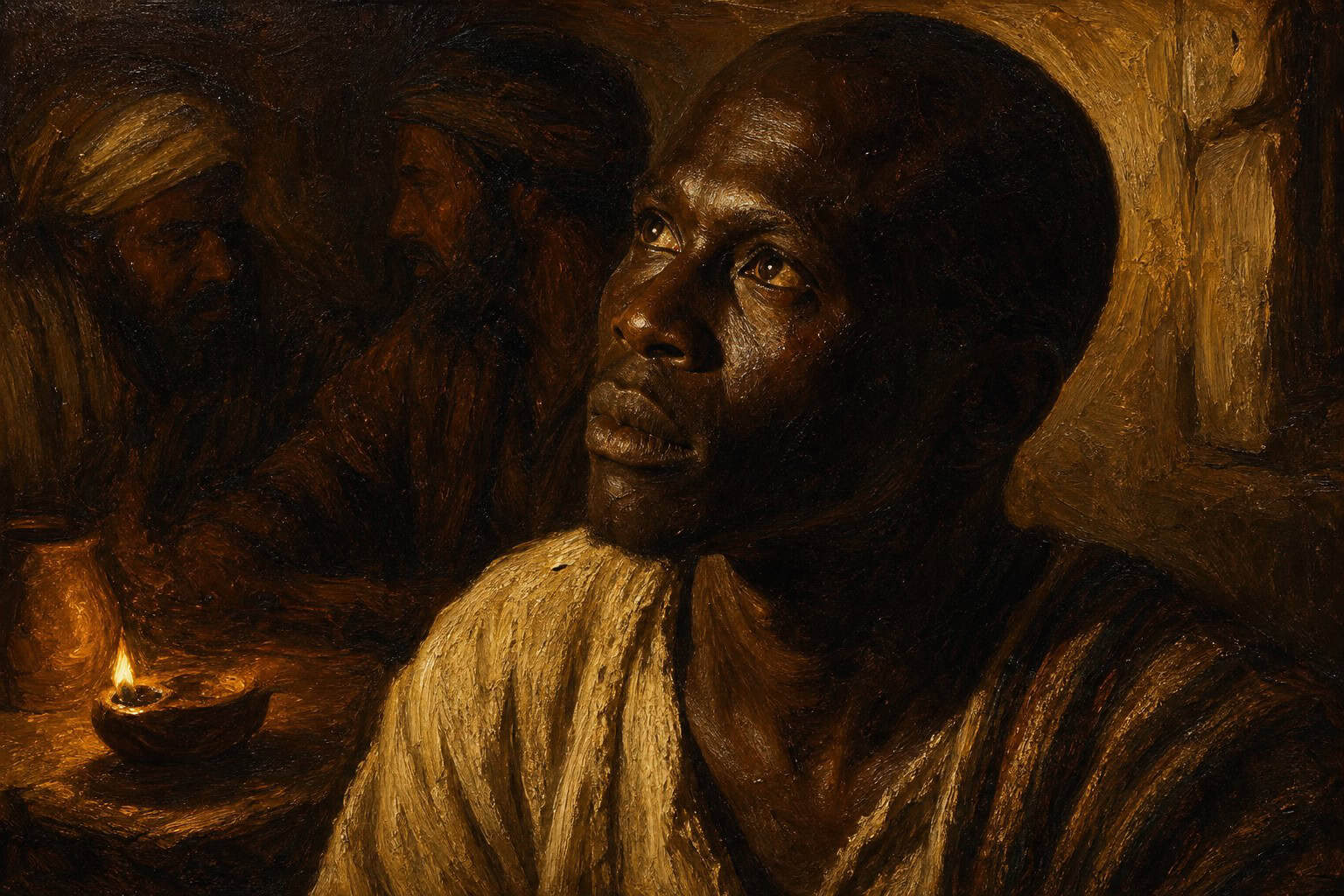
Christian dating and sexuality: why God sits with your loneliness and lust instead of cutting them out – and what that means for how you love.
The Summer He Set Out to Test His Own Charm
Can I want someone and still belong to God? That is the question under the polite word ‘dating,’ and it is the question a young man carries when he comes home at the end of a semester and decides to measure the reach of his own appeal. He goes into public rooms, sometimes alone, sometimes with friends. He talks to strangers. He talks to people he half-knows, the acquaintances whose faces he can place but whose names he must reach for. He rides the rise and fall of a conversation the way a swimmer reads a current, and he watches for the exact moment a woman’s attention bends toward him. He calls this an experiment. He tells himself he is only learning the shape of a gift he has been given, a new power to be tested against its limits. But the body knows the truth before the mind will sign it: the pulse quickens, the voice drops half a step, the eyes hold a beat too long. There is a hunger here that dresses itself as curiosity, that puts on the clothes of harmless practice. His faith is not a mask he set down at the door; it walked into the room beside him, and that is exactly what makes the summer so strange. He wants the altar and he wants the woman, and he has begun to suspect that the same heart reaches for both, that the hand raised in prayer is the hand that reaches across a table. The scriptures he loves have taught him to look past a simple head-count of partners toward the deeper question of what the heart worships. He takes this teaching and turns it into comfort. He decides that a hunger for the pleasure of willing women does not, by itself, break a heart that walks with God. This is where a reader meets him in the eleventh chapter of Confessions to the Empty Chair: mid-argument with his own conscience, laying out a case, calling it discernment. His question is the one you carried in here – can I desire, can I date, can I stay God’s – and he has already begun to answer it in the way a man answers when he badly wants a particular verdict. He does not yet see how much of his reasoning is a wall raised before the flood, a defense drawn up long before the trespass. He believes he is thinking. He is mostly rehearsing. And the summer stretches out ahead of him, warm and open and full of rooms he intends to walk into wanting to be wanted, sure that the wanting can stay clean if he only manages it well enough.
The Case He Builds Before He Needs It
Watch how carefully he lawyers his own appetite. He reaches back into the old texts and reads the great sinners in his own favor. God’s anger with the king who took another man’s wife fell on the murder, he decides, not the lust that opened the door to it. God’s anger with the wise king fell on the turning of the heart toward foreign gods, not on the crowd of loves themselves. From this he draws a line he finds comfortable: the true sin is idolatry, the worship of a false thing set where God should be, and he does not worship a woman. He would sooner push one away with a hard question than fall into her without a thought. He does not manipulate, he tells himself; he draws them close with their full and informed knowing. He does not treat a woman as a thing to be used and dropped; he mingles his soul with hers in something he wants to call friendship. Each of these sentences is true enough to be dangerous. That is the trouble with a well-built argument – it stands strongest when it is guarding a thing already chosen and half-done. Here is the quiet horror underneath his fine reasoning: he is not seeking the truth and then obeying it. He is hunting for the words that will let him keep both the holiness and the hunger, the daytime devotion and the evening thrill. He splits himself so that he never has to stand still and choose. There is the man of the morning, doing what he thinks of as the work of God, and there is the man of the crowded room at night, testing his charm against strangers, and his argument is the bridge that lets him cross back and forth without ever pausing long enough to see that both men share one face. What he cannot yet admit is how the appetite thickens as it feeds. He thinks each conquest will close the loneliness. Instead each answered hunger leaves behind a wider one, the way a mouthful of seawater sharpens the thirst it promised to ease. He prints his own permission and spends it on the attention of women, and some of the women print their own and spend it on him, and both sides agree not to name what the coin is really made of. He tells himself their yes is desire. He does not yet ask what he is purchasing, or what performance he is asking of them, or whether a woman’s agreement is always the same thing as the wanting he needs to see in her. The tenderness he claims and the strategy he denies run through him at once, the same current, and he keeps his eyes off the water.
The Wound He Waited to Have Cut Away
Here is the turn, and he can only see it from years down the road, looking back the way a man reads a fever after it has broken. He had expected God to work like a surgeon. He had pictured a serious faith, a real conversion, going in with a clean blade to cut the loneliness out, cut the lust out, lift them clear of the healthy flesh and leave a neat scar to prove the operation had happened. That was the bargain he thought he was striking at the altar. Take these from me, heal the divided thing, and I will be yours without further argument. But the God who actually came near him did not reach for a knife. The loneliness stayed. The lust stayed. They were not lifted out like a growth from good tissue and carried away. They remained where they had always lived, undisturbed, two children of the same wounded house – and rather than cutting them loose, God lowered Himself and sat down quietly beside them, close enough to touch, and did not move them an inch. This is not the answer a young man is praying for. At first it looks like abandonment, like a physician who folds his hands at the bedside and lets the sickness run. The suffocating heaviness in his chest does not lift on schedule. The appetite does not evaporate at the sound of a hymn. He is left still divided, still hungry, still lonely, still walking into rooms to be wanted by people he will not remember. What kind of mercy leaves the wound exactly as it found it? He would spend years mistaking that patient nearness for absence, that unhurried silence for a shut and bolted door.
Grace rarely comes with a knife; more often it pulls up a chair beside the wound it did not remove.
The Chair He Mistook for an Empty Room
So he lives, for a long stretch, inside a mercy he cannot recognize as mercy. The years pass and the hunger keeps its shape, and every night he expected deliverance and did not get it teaches him, wrongly, that no one is there. He treats the quiet as proof of a locked heaven. This is the raw part, the part that does not tidy itself: the loneliness he begged to lose is still the room he sleeps in, and the lust he confessed and confessed is still the thing that walks him into the crowd. Sanctification, he had assumed, would feel like subtraction – fewer temptations, a cleaner appetite, a lighter chest. Instead it feels like company he did not ask for and cannot yet see. And this is where the honest questions begin to bite. Were the women he tested his charm on ever really persons to him in those rooms, or were they mirrors he leaned into to prove something his mother’s love had never quite settled? Did he see them, or did he see his own reflection warmed by their attention? A thoughtful woman, reading this, might recognize the transaction from her own side – the man who arrives certain of his own decency, who has read enough scripture to feel exempt, who asks for a yes and calls it desire without ever wondering what it cost her to give it. She was another whole life, lived from the inside, thinking her own thoughts about him while he was busy managing his conscience. He did not ask. That refusal to ask is its own kind of sin, quieter than the lust and harder to confess, a failure to grant the other person the full weight of being real. Some of what pulled him could be named in cold, useful terms – the old strategies of wanting, the ancient arithmetic of pursuit and display – and those terms explain one thin layer and no more. Under them was a person aching to be known and terrified of being left. Both were true in him at once. Both were true, he would slowly grant, in the women too. The falling-away here is not dramatic. There is no lightning, no rescue that lifts him clean out of the dark. There is only the slow, uncomfortable dawning that the presence he wanted had been sitting beside him the whole time, in the very hunger he wanted it to remove, and that he had walked past that occupied chair a thousand times calling the room empty.
The Presence That Would Not Take Up the Knife
What finally settles, and it settles low and hard rather than sweet, is that grace did not come the way he ordered it. He wanted an amputation and he was given a companion. He wanted the wounds gone and he was given God in the wounds – present in the loneliness rather than curing it, present in the lust as a nearness rather than a cauterizing fire, walking with him inside the very sin he was ashamed to still be carrying. This is not the resolution a self-help shelf would sell you, and Confessions to the Empty Chair refuses to pretend otherwise. The darkness is not switched off. The hunger keeps its old strength. But the meaning of the darkness changes once he understands who is sitting in it beside him. His younger self had built a whole theology to keep his appetite and his faith in two sealed rooms, and the strange mercy is that God would not honor the wall – would not sit only in the clean daytime room and leave the night to run wild. God came into the room the young man was most ashamed of and stayed. For anyone typing the question of Christian dating and desire into the dark, hoping to be told either that the wanting is fine or that faith will scrub it away, this book offers a harder and stranger gift. It will not cut your loneliness out. It will not promise that a real conversion ends the hunger. What it shows, patiently and without flinching, is a man learning across many years that the hunger and the holiness may run through him at once, the same river, neither one erasing the other, and that the God he mistook for absent was there the whole time – not with a blade, but with the plain, stubborn willingness to stay. The chapter leaves him mid-summer, still building his case, still walking into rooms. What he cannot see yet, and what draws you further into the book, is the long unlearning ahead of him: the slow discovery of who was sitting beside him in every room he thought he entered alone.