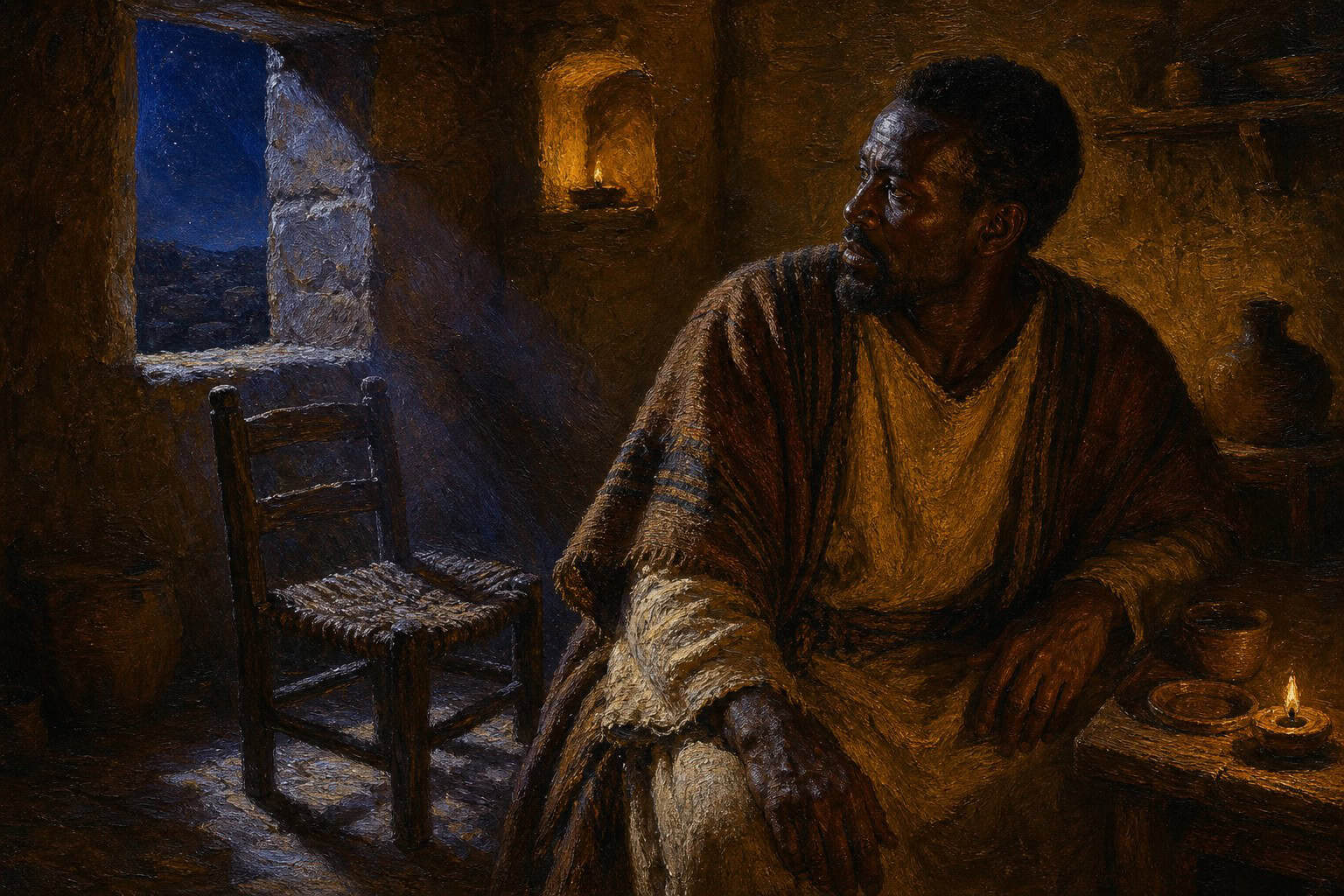
Healing from heartbreak isn’t a fix but an occupation. What happens when the void she left gets claimed by something larger than her ghost.
The Body Still Sets Two Places at the Table
Where does the ache go after someone walks out? You expect it to shrink over the weeks, to thin out like a scar. Instead it settles into the body like a tenant who pays no rent and rearranges the furniture. You wake before the alarm and your hand slides across the sheet toward a warmth that is no longer there, and the cold cotton answers for her. You stand at the counter and pour coffee and then stop, because half the pot is now waste, because the second cup you always poured has no mouth to drink it. Heartbreak is not one clean blow. It is the slow subtraction of small things, repeated hour after hour, each one a fresh, quiet loss counted out against your ribs. She is gone, and somehow she is everywhere at once—inside the song you can no longer let play, in the chair across the table that stays pushed out at the angle she left it, in the phone you check for a message that will never light the screen again. So you perform. You show up to the people around you with your face arranged. You crack the jokes a little too fast. You laugh a beat too long. You make yourself the ridiculous one, the friend who defuses every room with a stupid remark, because if you keep them laughing no one leans in close enough to notice the thing collapsing behind your ribs. This is grief’s first lie, and you tell it well: that you are managing. You call yourself strong because you have not wept where anyone could see. But the weeping comes anyway, alone, at hours with no witness, on the bathroom floor or in the car with the engine ticking, and it teaches you plainly that you were never in charge of it. Here is the worse and simpler truth. The loneliness did not begin with her. She only pulled the cover off a hole that was already dug, a chasm you have hauled around since you were small, long before you knew her name. Her leaving did not create the emptiness. It exposed it. You are not mourning a woman so much as mourning the belief that a woman could fill what stood hollow before she ever arrived. That is the honest accounting most of us will not make while the bed is still half cold. We would rather blame the one who left than study the emptiness she failed to cure—the emptiness we handed her and called love. The severe question waits under all of it. What were you asking her to be that no living person could ever be? What did you set on her shoulders so you would not have to stand alone in front of your own dark? The ache does not travel anywhere. It stays. And the first mercy, if it is a mercy at all, is admitting it was there long before she was.
You Rehearse Her Absence Like a Prayer You Cannot Finish
Then comes the stretch no one warns you about, the bargaining that has no counterpart to bargain with. You start replaying the last conversation until the words wear smooth as river stones. You draft the message you will never send, revise it, delete it, draft it again. You picture her walking back through the door, picture the reunion in full color, and the fantasy tastes like relief for exactly as long as it lasts—and then the room is quiet again, and the drop is steeper than before, because you climbed higher to fall. This is the trap you build with your own hands. You keep the ghost alive because the ghost is company, and a dead thing that still speaks feels better than a silence that answers nothing. So you tend her memory the way you would tend a small fire on a cold night, feeding it your evenings, your sleep, your appetite, feeding it whatever prayers you have left. And if you do pray, the prayer sours into a demand almost before it leaves you. Bring her back. Or if not that, then take the hurt away, seal the thing shut, restore the numb quiet of before I knew her. You want to be fixed. You want the wound closed and the feeling deleted, wiped clean back to before. But grief will not sign those terms. The harder you work to see the pain clearly, to name it and label it and file it where it can be managed, the more it slides out from under the frame you built for it. You cannot out-argue an absence. And beneath the bargaining a colder self-knowledge presses up through the floor. You begin to suspect you loved the wanting more than you ever loved the woman. You put her through tests she never knew she was sitting. You measured her against a future you had already written without asking her. You held back the plain words she needed to hear and told yourself the withholding was strength, that keeping something in reserve kept the desire from going stale. Now that she is gone you get to grieve her purely, and even the grieving has a faint stage light on it—look how deeply this man can feel. The honest accounting strips that too, and it does not flinch. Were you loving her, or loving your own great capacity to love? Did you ever once see her, or only the part you cast her in? The absence eating at you may be the absence of a person you never let become fully a person in the first place. So the prayer you cannot finish is not, in the end, about her at all. It is the sound of a soul finding out it has been talking to itself for years, mistaking its own echo bouncing back off the walls for the voice of someone else. You kneel down inside that discovery. You do not yet know what you are kneeling toward, only that your knees have found the floor.
The Light Does Not Console—It Detonates
Healing, when it finally comes, does not arrive dressed as comfort, and this is the thing no gentle advice will admit. You brace for a warm hand on the shoulder, a slow easing, the ache fading by degrees the way a bruise yellows and thins. What arrives instead, if anything arrives at all, is closer to violence done to a locked room. It cracks. There is a moment—rare, and you cannot summon it, you can only be caught by it—when the thing you have been begging for breaks in, and it does not stroke your hair or lower its voice. It terrifies you. It comes through the closed eyes like a flash inches from the face, an overwhelming, indefinable brightness that does not care that your lids are shut. It lands like a thunderclap in a room with no storm anywhere in the sky. It moves through the chest like an earthquake rolling out and away, and it pours something out of you, some grief you had been clutching so long you no longer felt your own grip. And in that instant you understand the truth you have been dodging with all your bargaining. You were never asking to be fixed. You were asking to be found. The empty chair across the table—the one she left, the one that was empty long before she ever sat in it—does not stay empty. It gets occupied. Not by her return. By something larger, quieter, more imposing than she ever was, that claims the void outright and says: this loneliness was never hers to fill or to abandon; it was Mine to sit in beside you the whole time.
Grief is not a wound that closes; it is a hollow waiting to be filled by someone who will not leave.
That is the terror and the mercy twisted into one rope. The revelation is not that the pain stops, because the pain does not stop. What changes is who occupies the chair. You had made an idol of her, of the wanting, even of the ache itself, and the idol does not break open into consolation. It breaks into fear—clean, honest fear, the kind that comes from standing in front of something actually real after years of standing in front of a mirror and calling the reflection company. This is why real healing feels less like a rescue and more like a reckoning brought to your knees. The light that finds you in the dark does not switch the dark off. It walks down into it. It sits itself in the exact place where you have been most alone, most ashamed, most certain no one could stand to look at what is there. And it looks anyway, without turning away. To be seen like that, whole, in your smallness and your self-deceptions and your performed grief, is not comfort in any easy sense. It is the raw beginning of being free.
Grief is not a wound that closes; it is a hollow waiting to be filled by someone who will not leave.
You Walk Out Into a Sky With No Storm
Afterward you are not repaired, and you have to hold onto that or the whole thing curdles back into the tidy comfort you would rightly spit out. You walk back into your ordinary evening and the ground under your feet is dry. There were no clouds. Whatever cracked open in you left no weather behind to point at, no puddles, no torn branches, nothing you could show a friend as proof. And this is the strange grief that follows the grief: you cannot demonstrate to anyone what happened, least of all to yourself. You spend the following days replaying it, detail by detail, the flash, the noise, the pressure leaving your chest, and you ask whether you conjured it because you needed it so badly. Keep that doubt. The doubt is honest, and honesty is the only ground worth standing on now. But something has shifted, and the shift is quiet, not a trumpet. The frantic bargaining loosens its fingers. You stop feeding the ghost every single evening. You find, to your own unease, that you can let her go on living unburdened by you—that the truest thing you can offer her now is your genuine absence, to quit haunting her freedom with your longing, to open the hand you had kept closed around her memory. That release costs you more than you expected. It means agreeing to be nothing in her story so she can walk forward without your shadow falling across her road. And there is a smaller, sharper accounting in the wreckage too. You look back at the way you performed your grief, the fast jokes, the mask, the whole exhausting act of making yourself ridiculous so no one would catch the collapse, and you begin to wonder who you wore out with all that managing. You wonder what it cost the friends who sat right beside your performance and were never once let inside it. The reckoning does not stop at the woman who left. It reaches backward through every relationship you fortified against being truly known, every wall you mortared with cleverness and cold and mistook for survival. Now the walls are down—not by any decision of yours—and you stand in the rubble more exposed than you have ever been, and, oddly, breathing easier than you have in years. The loneliness has not vanished. But it is inhabited now, and that is a different country from empty. The chair is not empty. This does not make the loss pretty or worth it. It makes the loss bearable, which is a smaller, truer word than healed and one you can actually live inside. You go to sleep. You wake. The reaching-hand reflex still fires some mornings, your palm sliding toward the cold half of the bed. But the hand no longer closes on nothing. It closes on a Presence you cannot see and, having felt the thunder, can no longer quite doubt, and that is enough to rise on.
What the Empty Chair Was Waiting For
So here is where it comes to rest, if rest is even the word. Healing from heartbreak is not the erasure of the person or the pain. It is the slow, unwelcome discovery that the emptiness they left behind was never really theirs to begin with. They rented a room in a house you had kept dark and vacant your whole life, and when they walked out, the vacancy roared so loud you mistook it for the sound of their absence—when it was your own emptiness, finally uncovered and singing. The severe grace of it is that this vacancy can be occupied by something that will not pack a bag in the night. Not a feeling. Not a slogan you repeat until the repetition wears a groove and you call it belief. A Presence, near and imposing, that does not patch the hollow but takes up residence in it, that does not spare you the dark but flatly refuses to leave you in it alone. This is not the neat comfort the wounded heart keeps begging for. It is better and worse at the same time. Better, because it is real and it stays past morning. Worse, because it will not let you keep lying—about who she truly was to you, about what you did and failed to do, about the fortress you raised to hold even love at a safe and manageable distance. To be found in that dark is to be seen entirely, and to be seen entirely is the very thing we spend whole lives dodging and secretly starving for. The honest accounting never fully closes. You will keep wondering how much of your love was love and how much was hunger wearing love’s clothes. You will keep carrying some grief for the man you could not manage to be for her. Sit inside those questions. Do not tie them off with a bow. That unresolved ache is the exact place where an older, truer self is being made, slowly, in the friction. If any of this scrapes against your own hollow evenings—the reaching hand, the practiced laugh, the prayer that curdles into a demand—then you already know the country Confessions to the Empty Chair walks through. It offers you no cure for heartbreak. It offers you company in the dark, one man reckoning aloud with what he did with his loneliness and who at last claimed it. That is the only comfort worth trusting: not the kind that lifts the ache away, but the kind that pulls out a chair, sits down in the ache with you, and stays through the whole long night. The chair was never built to hold her. It had been waiting, all along, for the One who would not walk out the door.